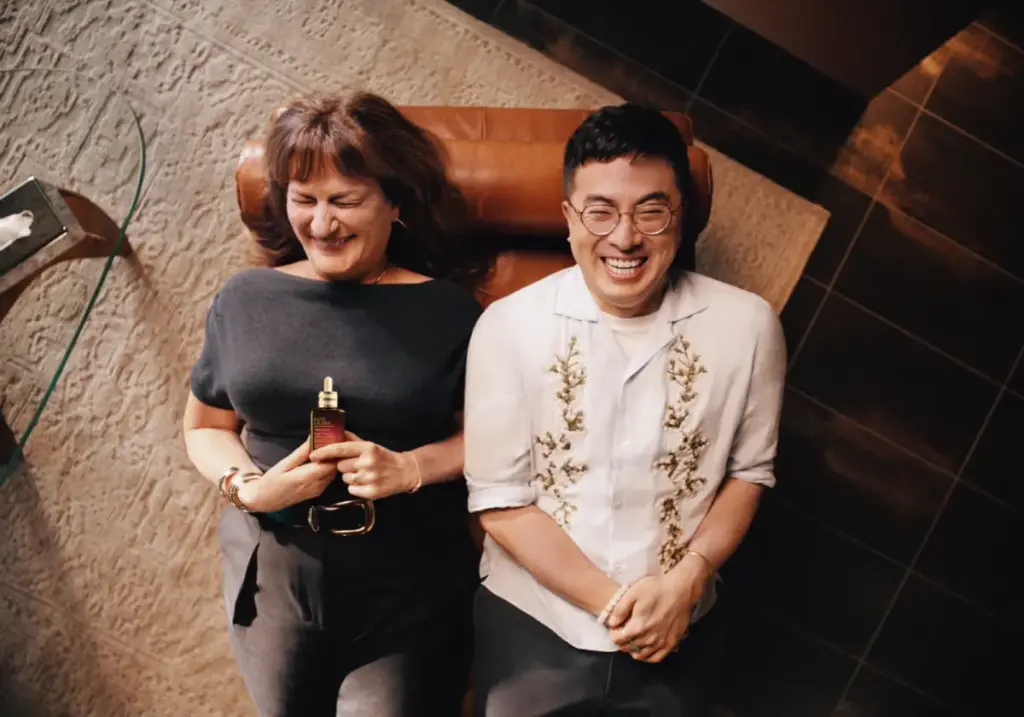
Executive Overview
In the modern digital landscape, few phenomena hold as much sway over consumer behavior as the sacred, unfiltered sanctuary of the group chat. Whether deciding on a life-altering career move, choosing a weekend brunch spot, or vetting a luxury skincare product, modern consumers increasingly rely on their inner circles for validation. Recognizing this profound cultural shift, beauty titan Estée Lauder has launched its newest, highly anticipated campaign for its flagship product: Advanced Night Repair.
Titled Guilty as Skin, the campaign playfully taps into a universal dilemma known all too well by skincare enthusiasts: that fleeting, deeply selfish second when you discover a holy-grail product that yields dramatic results, and you briefly—almost wickedly—consider keeping it a secret. To bring this comedic yet painfully relatable narrative to life, Estée Lauder enlisted two heavyweights of comedy: Emmy-nominated actor and writer Bowen Yang and Emmy-winning, Tony-nominated icon Ana Gasteyer.
Beyond the comedic brilliance of Yang wrestling with his conscience and Gasteyer deadpan-delivering comedic therapy, Guilty as Skin touches on a broader sociological truth. According to recent data from GIPHY and Censuswide, the group chat has evolved into the ultimate arbiters of daily life choices. By seamlessly blending high-brow cosmetic science with contemporary pop culture and digital humor, Estée Lauder is not merely marketing an $88 serum; they are capturing the zeitgeist of modern consumer trust, brand loyalty, and the unbreakable bond of peer recommendations.
Detailed Chronology: The Anatomy of a Skincare Crisis
The narrative arc of Guilty as Skin unfolds with cinematic precision, capturing a scenario that plays out in bathrooms across the globe every single night.
The Epiphany
The campaign opens on Bowen Yang going through his meticulously curated evening skincare routine. As he applies Estée Lauder’s iconic Advanced Night Repair Synchronized Multi-Recovery Complex, he pauses. He catches his reflection in the bathroom mirror and clocks undeniable, glowing, luminous results. The skin looks rested, restored, and visibly radiant.
Instead of feeling pure, unadulterated joy, a shadow of moral panic crosses his face. He looks at his phone. He thinks of the group chat—that omnipresent digital lifeline humming with unread messages, gossip, and instantaneous life updates. A dark, tempting thought flashes across his mind: Should I gatekeep this? What if I keep the fountain of youth entirely to myself?
The Therapeutic Intervention
Enter Ana Gasteyer, stepping effortlessly into the role of Yang’s dry, unimpressed therapist. In a brilliantly deadpan sequence, Gasteyer interrogates the ethical weight of skincare hoarding. She pushes back on the fundamental philosophy of human connection: does withholding a top-tier anti-aging serum from your closest friends constitute a breach of friendship?
The psychological toll mounts. Yang squirms under the weight of his own vanity, realizing that true friendship means sharing the wealth—especially when that wealth involves peptide technology and overnight skin renewal.
The Verdict and the Buy Link
Overcome with guilt and properly shamed by his therapist, Yang experiences a cathartic breakthrough. Abandoning all hopes of maintaining a selfish monopoly on ageless skin, he grabs his phone, opens the group thread, and drops the direct purchase link with an urgent, all-caps command: "Buy immediately."
This playful digital rollout officially launched across digital platforms, social media networks, connected TV (CTV), and retail touchpoints, setting the stage for Advanced Night Repair to flood group chats worldwide.
Supporting Context & Metrics: The Science and Sociology of Sharing
While Guilty as Skin relies on laugh-out-loud comedy, its foundation rests firmly on hard data and decades of dermatological science. Understanding why this campaign resonates requires examining both contemporary consumer psychology and the rigorous engineering behind Estée Lauder’s powerhouse serum.
The Rise of the Group Chat Economy
To quantify the cultural dominance of the group thread, one need only look at recent consumer research. A comprehensive 2025 survey conducted by GIPHY and Censuswide revealed striking insights into how decisions are made today:
- 85% of respondents consult their group chat before making major, life-altering decisions.
- 77% turn to their trusted inner circles for smaller, everyday calls—such as what to wear, where to eat, and, increasingly, which skincare products to invest in.
Skincare has officially graduated from a solitary bathroom ritual into a collaborative, community-driven sport. Recommendations are no longer passive magazine clippings or sterile department store counter pitches; they are vetted, peer-reviewed directives passed down through digital channels.
[Consumer Discovers Holy-Grail Product]
       │
       ▼
[Fleeting Moment of Temptation: "Should I Gatekeep?"]
       │
       ▼
[Social Pressure / Peer Ethics Prevail]
       │
       ▼
[Product Link Dropped in Group Chat: "Buy Immediately"]
Decades of Innovation: The Science Behind Advanced Night Repair
An $88 price tag demands performance, and Advanced Night Repair backs up its lofty reputation with more than four decades of continuous scientific research. As one of the most extensively tested formulas in the global beauty portfolio, the serum boasts over 1,700 clinical evaluations.
At the heart of the formula is Tripeptide-32, proprietary to Estée Lauder and marketed as their signature "Night Peptide." This advanced compound is engineered to support the skin’s natural, innate renewal processes during sleep.
The formulation is deeply rooted in circadian rhythm research—the study of the human body’s biological internal clock. Science has increasingly demonstrated that skin cells possess their own circadian rhythms, cycling between daytime defense mechanisms (protecting against UV rays, pollution, and oxidative stress) and nighttime repair mechanisms (cellular regeneration, collagen synthesis, and barrier recovery). Advanced Night Repair is scientifically optimized to align with these nocturnal biological rhythms, accelerating the skin’s recovery phase while the user sleeps.
Therefore, when Bowen Yang’s character experiences a transformation in his evening mirror, it is not merely cinematic trickery; it is the culmination of molecular biology meeting consumer expectation.
Official Statements: Industry Leaders and Talent Speak
The collaboration between a legacy prestige beauty house and top-tier comedic talent generated profound insights from both corporate leadership and the stars themselves.
Fiona Sainty on Beauty, Trust, and Legacy
Fiona Sainty, Senior Vice President and General Manager of Estée Lauder and AERIN Beauty North America, emphasizes that the campaign bridges the gap between high-science laboratories and real-world human connections.
"Advanced Night Repair has 40-plus years of science behind it and is one of the most extensively tested formulas in the Estée Lauder portfolio," Sainty notes. "But beauty doesn’t live solely in the lab or at the counter. We discover products that we love, think about who needs to know about them, and share our best finds with the people we trust."
Sainty’s perspective highlights a critical pivot in beauty marketing: authenticity trumps clinical jargon every time. Consumers do not buy products based solely on peptide percentages; they buy them because a trusted friend—or in this case, a beloved cultural icon—swears by the results.
Bowen Yang on the Gravity of Beauty Recommendations
For Bowen Yang, the campaign mirrors his own real-life digital habits and the high stakes of group chat etiquette.
"My group chat is where I go for the important stuff: advice, gossip, unsolicited commentary, and links to things I suddenly can’t live without," Yang reflects. "Beauty recommendations are serious business."
By leaning into his authentic persona, Yang anchors the comedic elements of Guilty as Skin in genuine relatability, making the transition from sketch comedy to commercial endorsement feel seamless and organic.
Future Outlook: The Evolution of Beauty Marketing in the Digital Age
As the beauty industry continues to evolve at breakneck speed, campaigns like Guilty as Skin signal a definitive shift in how prestige brands communicate with their audiences. Traditional, overly polished, and aspirational advertising is rapidly giving way to relatable, narrative-driven content that mirrors the actual lived experiences of consumers.
The Death of Traditional Gatekeeping
For decades, beauty secrets were closely guarded by industry insiders, magazine editors, and professional makeup artists. Today, the democratization of information through social media, Reddit threads, and group chats has inverted this dynamic. Consumers expect transparency. When a product genuinely performs—such as Advanced Night Repair delivering visible overnight radiance—the temptation to gatekeep becomes a humorous internal battle, perfectly captured by Estée Lauder’s latest narrative.
What This Means for Future Campaigns
Looking ahead, brands that successfully integrate digital culture, psychological realism, and high-performance efficacy will continue to dominate market share. Estée Lauder has demonstrated that luxury skincare does not need to take itself too seriously to command authority. By acknowledging the playful selfishness of finding a miracle product, the brand has humanized its legacy portfolio, ensuring that Advanced Night Repair remains a staple not only on bathroom vanities, but at the very top of group chat wishlists for generations to come.