Executive Overview
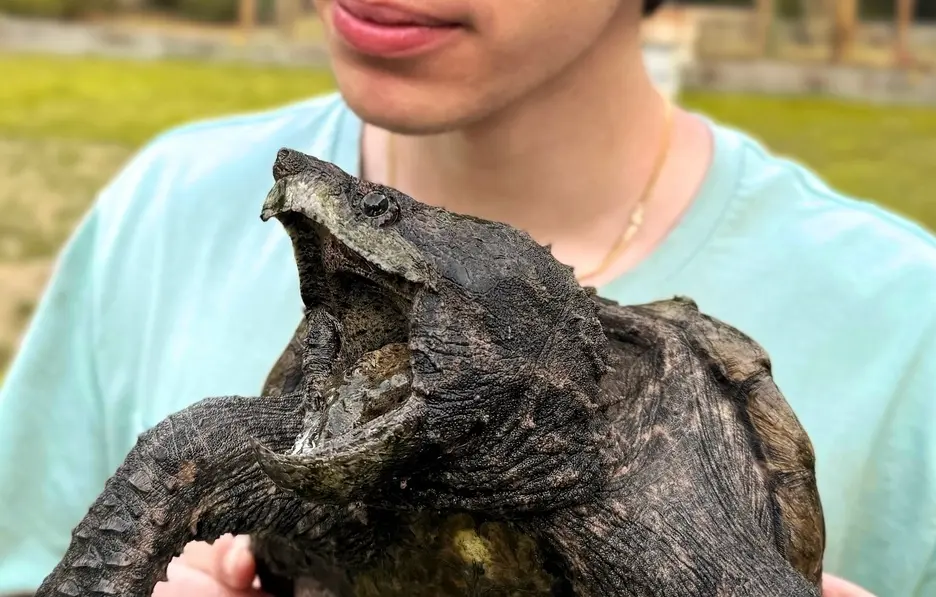
In an era dominated by hyper-accelerated digital content, where the prevailing wisdom of the creator economy dictates daily uploads, relentless trend-chasing, and optimized algorithmic obedience, a seismic counter-movement is quietly unfolding. At the epicenter of this disruption stands 21-year-old Jaron Brower, globally recognized by his digital moniker, Dr. Plants.
Next month, Brower will take the premier stage at VidSummit 2026 to unpack a statistical and creative anomaly: how he averages an astonishing 50 million views for every single video uploaded to his YouTube channel.
To contextualize this achievement, one must examine the staggering asymmetry of his production pipeline. Brower does not post daily vlogs, weekly challenges, or reactive commentary. Since uploading his inaugural video on August 23, 2022—an epic, eight-minute chronicle of a living-room rainforest evolving from a newborn paludarium into a mature, self-sustaining ecosystem—he has published a grand total of just 12 videos across four years.
Operating at a velocity of roughly three polished releases per year, Brower shatters the conventional paradigms of audience retention and channel growth. His current catalog boasts an astronomical average of 56 million views per upload, a figure that scales upward with each successive masterclass in natural history filmmaking.
Rather than succumbing to the burnout inherent in the traditional hamster wheel of content creation, Brower has engineered an entirely different paradigm. His work merges bio-architecture, cinematic storytelling, and uncompromising patience. At VidSummit 2026, running from September 29 to October 1 at the Irving Convention Center in Dallas-Fort Worth, Brower will demystify this blueprint, offering over 4,000 attendees a masterclass on how radical innovation can transcend traditional platform niches and command a global audience.
Detailed Chronology: From High School Editing Desks to Living-Room Rainforests
The genesis of Dr. Plants is rooted not in corporate backing or high-end production studios, but in quiet, meticulous experimentation during the formative years of high school. Long before industrial incubators and specialized cinematographic rigs entered his vocabulary, Brower was a young naturalist obsessed with the intricate mechanics of life.
The Genesis: August 23, 2022
Brower’s digital footprint officially began with a video that served as a profound statement of intent. Taking over a significant portion of his living room, he set out to build a "little chunk of rainforest." This was not a superficial terrarium; it was a complex, multi-tiered paludarium designed to replicate tropical hydrological cycles, complete with cascading water features, micro-fauna, and carefully selected botanical specimens.
The project demanded more than a year of continuous, unfilmed labor just to reach the baseline stage of a mature, stable ecosystem. When he finally pressed "publish" on August 23, 2022, the resulting eight-minute video did not follow the standard tropes of DIY internet tutorials. It functioned as a silent, cinematic documentary—an atmospheric descent into a self-contained biological world.
Crucially, the infrastructure behind this initial viral catalyst was remarkably humble. Reflecting on those early days, Brower reveals:
"I was editing these videos under my desk in high school. And I didn’t have an amazing camera. They were filmed on my phone, and I was recording audio on a mic plugged into my phone."
The early traction was not a byproduct of high-end production value; it was the direct result of an uncompromised commitment to narrative depth. Brower understood that viewers do not merely watch videos—they invest in journeys.
Scaling the Madness: The Ostrich and Quail Experiment
Having proven the viability of his botanical storytelling, Brower escalated the stakes exponentially for subsequent projects. Operating under the philosophical mandate that every new video must out-innovate anything previously published on the platform, he turned his attention to avian embryology and rearing.
His monumental "egg hatching" project pushed the boundaries of residential content creation. Rather than sourcing standard domestic fowl, Brower engineered an undertaking that involved incubating and raising 100 quails, 20 ducks, and 10 ostriches simultaneously.
Executing this vision required transforming a standard residential house into a controlled biological facility:
- Infrastructure Overhaul: Brower installed industrial-grade incubators capable of managing precise thermal and humidity parameters for disparate species.
- Professional Consultation: Recognizing the welfare risks associated with exotic avian husbandry, he brought in a dedicated team of bird-care professionals.
- Environmental Security: The residential yard underwent a complete infrastructural retrofit, featuring specialized, heavy-duty fencing to contain the rapidly growing ratites.
- 24/7 Cinematography: Custom camera rigs were deployed throughout the home to capture round-the-clock behavioral dynamics without disrupting the animals.
When asked about the logistical absurdity of hatching ten ostriches inside a standard kitchen, Brower offers a characteristically grounded reality check:
"My whole life, I’ve always wanted to hatch an egg. Why not hatch ostrich eggs, right? And then I hatched 10 of them in my kitchen… I’m a normal person, by the way."
Supporting Context & Metrics: The Mathematics of Slow Content
In the contemporary attention economy, metrics are heavily skewed toward volume. Multi-channel networks and platform gurus perpetually preach the gospel of consistency, advising creators to feed the algorithm daily Shorts, weekly long-form uploads, and constant community tab updates to prevent algorithmic decay.
Jaron Brower’s channel serves as a compelling outlier that actively defies this orthodoxy.
The Production Pipeline
Because Brower’s projects require biological maturation, complex engineering, and long-term behavioral observation, a sequential workflow is impossible. Instead, he operates a continuous, overlapping production pipeline:
- Parallel Development: Brower routinely manages three to four major video projects simultaneously. While one ecosystem is stabilizing or one batch of animals is maturing, another is in the foundational design phase.
- The Yield: This grueling operational tempo yields an average output of three finished videos per calendar year.
- The Return: This ultra-low-frequency output is met with disproportionately massive returns. Each video currently averages 56 million views, establishing a viewership-to-upload ratio that dwarfs almost every traditional creator in the educational and lifestyle verticals. Furthermore, this metric is not static; it has demonstrated consistent, year-over-year compounding growth as the platform’s audience discovers his back catalog.
The Philosophy of the "Thesis"
For Brower, the secret to sustaining this model lies in the conceptual framework of the video’s thesis. He does not brainstorm topics based on trending search queries or high-volume keywords. Instead, he formulates an uncompromising creative challenge:
"Every time I make a video, I live on a thesis," Brower explains. "That thesis is, I’m only going to do it if I can do it better than anyone else has ever done it. If I’m going to make a video about hatching eggs, it has to be the best video about hatching eggs that has ever been posted on YouTube. It’s the only way I’m going to do it."
This methodology transforms each upload from a transient piece of media into a definitive, evergreen asset. Because the content cannot be easily replicated or superficially imitated, it retains its value indefinitely, driving algorithmic discovery years after its initial publication date.
Official Statements & Industry Implications
Brower’s impending appearance at VidSummit 2026 has sent ripples through the professional creator community. As platforms become increasingly saturated with homogenized content—where creators routinely recycle existing formats, manipulate viral structures, and chase ephemeral trends—Brower identifies a systemic crisis of originality.
Diagnosing Platform Homogenization
In Brower’s view, the platform is suffering from a severe deficit of true innovation:
"So many people just take what already exists out there and manipulate it to make it their own," he observes. "I feel like we have a real lack of creativity and innovation on the platform, and I don’t think people realize how much you’ll get rewarded when you’re really innovating and creating new things, and how easy it actually is to achieve views like this."
This critique strikes at the heart of modern content strategy. While many creators assume that high view counts require massive subscriber bases, expensive agency teams, or daily algorithmic appeasement, Brower argues that uncompromising quality and genuine narrative novelty act as their own powerful distribution engines. The algorithm, designed to maximize user satisfaction, naturally favors content that introduces genuinely novel experiences to the digital ecosystem.
The VidSummit 2026 Blueprint
At the upcoming conference in Dallas-Fort Worth, Brower aims to demystify his methodology for an audience of more than 4,000 creators, marketers, and industry executives. Rather than presenting a vague motivational speech, his session is designed as a rigorous, actionable framework.
"In my presentation, I’m going to give a clear, step-by-step blueprint for creating videos that not only outgrow their niche, but they’re going to be conquering the platform and having the potential to reach the entire world," Brower promises. "I’m 100% confident that every person walking out of this presentation is going to walk out at least learning something. And I can tell you that most people will not look at the platform the same way again."
Brower joins an elite roster of industry luminaries slated to speak at VidSummit 2026. The event, scheduled for September 29 to October 1 at the Irving Convention Center in Dallas-Fort Worth, features a comprehensive itinerary of panels, hands-on workshops, and high-level networking sessions.
Notable speakers sharing the stage with Brower include:
- Caleb Hammer (Financial auditor and creator sensation)
- HopeScope (Review and lifestyle investigator)
- LegalEagle (Pop-culture legal analyst)
- Nick Nimmin (YouTube optimization strategist)
- Monica Khan (Short-form growth expert)
- Jon Youshaei (Creator economy strategist and former YouTube/Instagram executive)
- Other prominent industry voices such as Linus Tech Tips and Maha Abouelenein.
With remaining tickets priced at $995 and availability strictly limited due to venue capacity, industry professionals are rushing to secure their access to what promises to be a watershed event for the creator economy.
Future Outlook: The Evolution of Slow-Form Masterpieces
As Jaron Brower looks toward the remainder of 2026 and beyond, the implications of his success extend far beyond his own channel. He represents a generational shift in how digital media can be produced, valued, and consumed.
Redefining Production Value
For years, the gold standard of high-production-value YouTube content has been dominated by massive ensemble casts, pyrotechnics, multi-million-dollar budgets, and rapid-fire editing inspired by television game shows—exemplified by creators like MrBeast. While this model has proven immensely successful, Brower’s trajectory introduces a vital alternative: the slow-form cinematic documentary.
By anchoring his productions in real-world science, genuine biological stakes, and uncompromising personal dedication, Brower proves that audiences are fiercely hungry for authenticity. Viewers can intuitively discern the difference between a manufactured set piece built for a 48-hour challenge and an authentic ecosystem cultivated over years of patient stewardship.
The Scale of Ambition
As Brower continues to refine his multi-project pipeline, the question on the minds of industry observers is simple: Where does one go after hatching ostriches in a residential kitchen and engineering rainforests in a living room?
If his past trajectory is any indication, the answer lies in expanding the scale of his biological theses while maintaining the intimate, narrative-driven execution that captured his first millions of viewers under a high school desk.
For the creator economy at large, Dr. Plants serves as both an inspiration and a humbling challenge. He demonstrates that in an ecosystem drowning in noise, the ultimate competitive advantage is not publishing faster—it is refusing to publish anything that isn’t undeniably, categorically extraordinary.