Executive Overview
For more than forty years, a quiet mystery lingered in the Pacific Northwest, capturing the imaginations of true-crime enthusiasts, amateur sleuths, and investigators alike. In December 1982, the body of an unidentified man was discovered inside a church in Boise, Idaho. With no identification, no matching fingerprints in local or federal databases, and only a collection of eclectic personal belongings left behind, the man became known to history simply as the "Unknown Wanderer." His enigmatic case crossed generations, gaining national notoriety in 1990 when it was featured on an episode of the iconic true-crime television series Unsolved Mysteries. Yet, despite the widespread broadcast, the man’s true identity remained shrouded in obscurity.
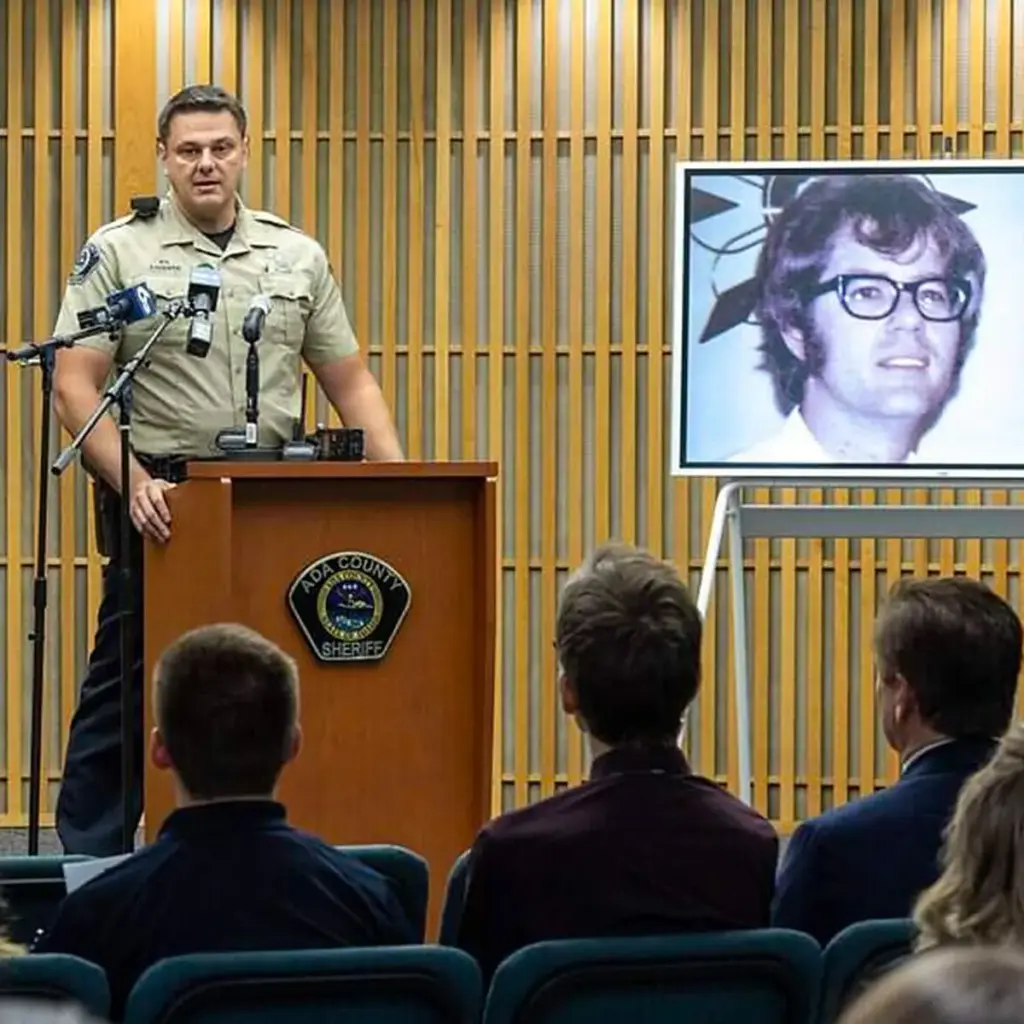
That decades-long stalemate officially ended during a press conference held by the Ada County Sheriff’s Office on September 23. Authorities announced a stunning breakthrough in the cold case, revealing that the Unknown Wanderer was, in fact, Dr. Mathew Francis Betkouski.
The identification is the culmination of a meticulous, years-long re-investigation spearheaded by Ada County Detective Tim Cooper. Reopening the cold case in 2019, Cooper utilized a combination of old-fashioned shoe-leather detective work, geographic profiling, property records, and familial DNA comparison to cross a threshold that had eluded investigators for over four decades.
While the resolution of the case brings a long-awaited name to a faceless set of remains, it also opens up a complex narrative involving Betkouski’s professional background as a scientist, his ties to a prominent Los Angeles family, a sudden disappearance in the fateful year of 1982, and a historical overlap with one of America’s most notorious unsolved mass murders. This comprehensive report explores the timeline of the investigation, the intricate clues that unlocked the mystery, the personal history of Dr. Betkouski, and the broader implications of this remarkable cold case resolution.
Detailed Chronology: From a Boise Church Pwew to a Breakthrough 40 Years Later
December 1982: The Discovery
The chronology of the Unknown Wanderer begins in the winter of 1982. Inside a Boise, Idaho church, the lifeless body of a middle-aged man was discovered. At the time of his passing, he carried no driver’s license, passport, or standard identification cards. Law enforcement officers immediately launched an inquiry, dusting the scene for prints and running his fingerprints through regional databases in Idaho as well as the Federal Bureau of Investigation’s national repositories.
The results were entirely blank. The man’s fingerprints matched no criminal records, military enlistments, or government identification files on record. Pathologists and investigators were left with a physical description but zero historical context. The man was buried as an anonymous decedent, and his case quickly drifted into the realm of cold cases, where it sat stagnant for years.
1990: National Exposure on Unsolved Mysteries
As the years ticked by without a break, local law enforcement sought broader avenues for assistance. In 1990, the producers of the popular and influential NBC television program Unsolved Mysteries picked up the story. The segment detailed the strange circumstances surrounding the man’s death and showcased his unusual collection of personal items. Millions of viewers tuned in, but despite the massive national television audience, the broadcast failed to generate the definitive tip needed to uncover his real name. The moniker "Unknown Wanderer" cemented itself within true-crime lore.
2019: The Case is Reopened
For nearly three decades following the television broadcast, the file gathered dust. Then, in 2019, Ada County Detective Tim Cooper took a fresh look at the forgotten evidence lockers. Recognizing that advancements in forensic technology, genealogical tracking, and digitized public records offered new avenues for historical investigations, Cooper chose to breathe new life into the case. Rather than relying solely on high-tech DNA profiling initially, Cooper began by exhaustively cataloging and analyzing the physical artifacts recovered with the body back in 1982.
The Decisive Clue: A Hardware Store Key and Mills Court
Among the personal effects preserved from the 1982 crime scene were two keyrings holding nearly 30 distinct keys, a wallet entirely devoid of identification cards, and an envelope containing close to $2,000 in cash.
Focusing on the physical keys, Detective Cooper closely examined the stampings and engravings on the metal. His attention was drawn to a specific key bearing a distinct manufacturer’s marking indicating it originated from a hardware store located in Jacksonville, Florida. Digging deeper into this single geographic breadcrumb, Cooper discovered a secondary etching on the key. This obscure alphanumeric or street-indicator etching provided a direct lead to a specific residential street in Jacksonville: Mills Court.
Operating on this geographic lead, Cooper tracked down and obtained historical property deeds from Mills Court dating back to the late 1970s and early 1980s. Scanning through the legal documents, names of former homeowners and tenants were cross-referenced. Among them appeared the name Mathew Francis Betkouski. Remarkably, public records indicated that Betkouski had officially been declared legally dead in 1989—seven years after the Unknown Wanderer’s body was found in the Boise church, yet long before his identity was ever connected to those Idaho remains.
Locating the Family and Confirming DNA
With a solid candidate name established, Cooper expanded his search to living relatives. His investigative work led him to Los Angeles, California, where he successfully located and contacted Betkouski’s surviving brother. Through interviews, the brother confirmed that Mathew Francis Betkouski had abruptly vanished in 1982, plunging the family into decades of agonizing uncertainty regarding his fate.
To bridge the gap between hypothesis and absolute certainty, investigators secured reference DNA samples from Betkouski’s brother. Technicians compared this familial genetic material against the DNA extracted and preserved from the personal possessions found with the Unknown Wanderer—specifically the items handling genetic traces left behind decades prior. The scientific match was definitive. The Unknown Wanderer was scientifically proven to be Dr. Mathew Francis Betkouski.
Supporting Context and Metrics
To fully understand the magnitude of this breakthrough, it is essential to examine the specific metrics and contextual data surrounding the case file, the artifacts recovered, and the professional trajectory of the man behind the mystery.
The Inventory of the Unknown Wanderer
When law enforcement initially processed the scene in December 1982, the physical items left in the man’s possession provided a peculiar psychological portrait of a transient yet financially stable individual. The inventory included:
- Cash Reserve: An envelope containing an estimated $2,000 in physical currency—a substantial sum in 1982, suggesting he was not experiencing immediate destitution.
- The Keyrings: Two distinct keyrings holding a combined total of nearly 30 individual keys, pointing to access across multiple properties, vehicles, storage lockers, or workspaces spanning across geographic regions.
- The Wallet: A standard leather billfold containing miscellaneous papers and notes, but completely stripped of any driver’s license, credit cards, or government-issued photo identification.
Professional Background of Dr. Mathew Francis Betkouski
The revelation that the Unknown Wanderer was a trained scientist added an unexpected layer of complexity to the narrative. According to disclosures made by the Ada County Sheriff’s Office:
- Elite Roots: Betkouski hailed from a prominent family based in Los Angeles, California.
- Relocation to Florida: In 1975, he relocated to Jacksonville, Florida, where he secured employment working for a specialized flavors and fragrances corporation.
- Lockheed Martin Tenure: Following his time in the flavors and fragrances industry, Betkouski transitioned into aerospace and defense research, working as a scientist at Lockheed Martin.
- The 1982 Termination: Authorities revealed that Betkouski’s career took a dark and erratic turn in 1982. He became intensely obsessed with poisons and the methodology of introducing toxic substances into medical pill capsules. This obsession directly resulted in his termination from Lockheed Martin that same year.
Official Statements and Investigative Perspective
The formal announcement of Dr. Betkouski’s identification was made during a high-profile press conference hosted by the Ada County Sheriff’s Office on September 23. The briefing, led by Detective Tim Cooper and agency representatives, highlighted both the technical triumphs of the investigation and the careful parameters surrounding ongoing inquiries.
Detective Cooper emphasized that the primary motivation behind the public announcement was not to close the book on an old curiosity, but rather to invite new information from the public regarding the critical window of 1982.
"While our office may have identified some connection to 1982 events, we’re not naming him as a suspect," Cooper stated plainly during the press conference. "Our goal today is to generate new leads to this case and possibly others."
The distinction is significant. Because Betkouski’s dismissal from Lockheed Martin in 1982 coincided precisely with the timeline of the infamous and terrifying Chicago Tylenol murders—a wave of mass poisonings via cyanide-laced Tylenol capsules that shook the nation in the autumn of 1982—investigators have naturally faced questions regarding potential overlaps.
Authorities have exercised strict professional caution. Law enforcement officials noted that while Betkouski’s specific obsession with poisoning pill capsules occurred during the exact historical epoch of the Chicago murders, there is currently no direct evidence or active case linkage connecting Betkouski to those unsolved crimes. The FBI and municipal police departments handling the Chicago Tylenol investigation have maintained distinct files, and Ada County officials have reiterated that Betkouski’s status in their files remains that of an identified decedent rather than a designated criminal suspect in external jurisdictions.
Future Outlook: Unresolved Questions and the Legacy of Cold Case Innovations
The identification of Dr. Mathew Francis Betkouski serves as a textbook example of the transformative power of modern cold case methodologies. By combining persistent archival research—such as tracing historical property deeds and hardware store markings—with advanced genetic genealogy and familial DNA matching, law enforcement agencies are increasingly capable of returning names to individuals who have been missing for generations.
However, the conclusion of the "Unknown Wanderer" mystery leaves several lingering questions that investigators and true-crime historians will continue to evaluate:
- The Journey to Boise: How did Dr. Betkouski travel from his roots in Los Angeles and his career stops in Florida to a church pew in Boise, Idaho, in the winter of 1982?
- The Missing Years: What transpired in the months and weeks between his termination from Lockheed Martin in 1982 and his eventual death inside the Boise church?
- The Significance of the Keys: While one key successfully pointed investigators toward Mills Court in Jacksonville, the remaining dozens of keys on his 30-key rings still represent unmapped locations, lockers, and residences across his life’s journey.
For the family of Dr. Betkouski, the resolution brings an end to decades of ambiguous grief, confirming the fate of a relative who vanished during a turbulent period in his life. For the Ada County Sheriff’s Office, the case stands as a testament to the dedication of investigators like Detective Tim Cooper, proving that no cold case is truly beyond hope when paired with creative detective work and modern scientific partnership. As the public digests the revelations of the September 23 press conference, law enforcement continues to welcome any historical tips or insights that might illuminate the final chapters of Dr. Mathew Francis Betkouski’s extraordinary and tragic life.