In the landscape of modern physical fitness and everyday biomechanics, the knee joint often bears the brunt of physical exertion without receiving the targeted developmental attention it requires. While high-intensity interval training, heavy barbell squats, and endurance running dominate fitness culture, the foundational architecture that keeps these movements safe—knee stability—frequently goes overlooked. From crossing the finish line of a grueling marathon to the simple, repetitive act of carrying groceries up a flight of stairs or lifting a toddler from the floor, knee stability is the silent partner in human locomotion.
Recent expert consensus from leading orthopedic and physical therapy institutions highlights a critical oversight in standard workout routines: neglecting the complex interplay of muscles, ligaments, and neural pathways that govern knee alignment. According to Carrie Whitelam, PT, DPT, OCS, ATC, a physical therapist at the prestigious Hospital for Special Surgery (HSS) in New York City, virtually everyone can reap substantial physical benefits from incorporating targeted strengthening protocols designed to enhance knee stability.
Rather than relying purely on passive anatomical structures like ligaments, achieving robust joint stability requires an active, coordinated effort from the quadriceps, hamstrings, and hip complex. When these muscle groups operate in harmony, they mitigate the risk of acute injury, alleviate chronic joint pain, and preserve long-term mobility. This comprehensive report explores the anatomical definition of knee stability, the biomechanical rationale for its inclusion in daily training, professional recommendations for progressive overload, and three fundamental exercises essential for fortifying the lower kinetic chain.
Detailed Chronology: Understanding the Evolution of Knee Biomechanics in Rehabilitation
To fully appreciate the modern approach to knee stability, one must examine how clinical understanding of the joint has evolved over the past several decades. Historically, joint health and rehabilitation focused heavily on isolated muscle strengthening—predominantly the quadriceps—or treating structural damage reactively after trauma occurred.
The Shift from Isolation to Integration
Late 20th Century: Rehabilitation paradigms heavily favored open-chain exercises (such as seated leg extensions) to target specific muscles like the vastus medialis obliquus (VMO). While useful for localized hypertrophy, these movements frequently failed to translate into functional stability during dynamic, multi-planar real-world activities.
Early 2000s: Biomechanical research began to pivot toward closed-chain kinetic integration. Specialists recognized that the knee does not function in a vacuum. Instead, it acts as a middleman trapped between the ankle and the hip. Clinicians observed that poor knee tracking during squats and lunges was rarely a localized knee failure; rather, it was frequently driven by proximal deficits at the hip and distal instability at the foot and ankle.
Present Day: Modern physical therapy emphasizes holistic functional movement patterns. Contemporary practitioners like Braidy Solie, DPT, SCS, CSCS, view the hips as the ultimate "steering wheel" for the lower extremities. Current protocols prioritize exercises that train the quads, hamstrings, and hips to communicate seamlessly, ensuring dynamic alignment under load.
Supporting Context & Metrics: The Anatomy and Mechanics of a Stable Joint
To understand why specialized stability exercises are necessary, we must first break down the structural and functional components that govern the knee joint.
Passive vs. Active Stabilizers
Knee stability is maintained through a combination of passive and active structures:
Passive Structures: These include non-contractile tissues such as the anterior cruciate ligament (ACL), the medial collateral ligament (MCL), the lateral collateral ligament (LCL), the posterior cruciate ligament (PCL), and the joint capsule and cartilage. While essential for preventing excessive joint translation, these tissues have limited blood supply and rely on surrounding musculature to shield them from high shear forces.
Active Structures: These are the dynamic, contractile tissues—specifically the quadriceps, hamstrings, and hip complex—that actively manage joint position during movement.
The Functional Triad
Each muscle group plays a specialized, synergistic role in controlling the joint:
The Quadriceps: Primarily responsible for extending the knee joint, these muscles absorb impact and control deceleration during running and descending stairs.
The Hamstrings: Working antagonistically to the quads, the hamstrings flex the knee and provide posterior stability, preventing anterior translation of the tibia.
The Hips (Glutes and Abductors): Acting as the "steering wheel," the hips dictate the rotational and lateral alignment of the femur. Without proper hip engagement, the femur tends to internally rotate, causing the knee to collapse inward (valgus collapse)—a primary mechanical precursor to ACL strain and patellofemoral pain syndrome.
+-------------------------------------------------------------------------+
|                      THE KNEE STABILITY TRIAD                           |
+--------------------------+-----------------------+----------------------+
|       QUADRICEPS         |       HAMSTRINGS      |     HIP COMPLEX      |
|  Extends the knee;       |  Flexes the knee;     |  Acts as the         |
|  absorbs impact &        |  prevents anterior    |  "steering wheel" to |
|  manages deceleration.   |  tibial translation.  |  prevent valgus.     |
+--------------------------+-----------------------+----------------------+
Why Joint Stability Matters
When the active stabilizers are conditioned to do their jobs effectively, they act as shock absorbers. This prevents excessive stress from being transferred onto passive structures like the ACL, meniscus, and articular cartilage. Over a lifetime, maintaining this protective muscular armor preserves independent movement, staves off degenerative joint diseases like osteoarthritis, and ensures longevity in athletic pursuits.
Official Statements and Expert Guidelines
Leading clinical voices emphasize that while knee stability exercises are universally beneficial, they must be approached with mindfulness and proper progression.
Carrie Whitelam, PT, DPT, OCS, ATC (Hospital for Special Surgery)
"Everybody could probably benefit from some sort of strengthening to improve stability of the knee. However, if your knee has repeatedly buckled, if the kneecap has felt like it’s popped in and out of place, and/or if you feel unusual weakness around the joint, get checked out by a physical therapist or doctor before trying these moves. Sometimes there could be underlying damage that you’re unaware of that you could just be making worse with movement."
Whitelam’s warning underscores the importance of differential diagnosis. Symptoms such as joint locking, giving way, or sharp mechanical pain require professional evaluation via imaging or physical assessment before embarking on a new resistance training regimen.
Braidy Solie, DPT, SCS, CSCS (Training HAUS)
"These types of movements have a great crossover for helping build knee stability during functional things throughout the day, whether it’s carrying groceries up the stairs or carrying a child. When you place your foot on top of a step, you’re pre-positioning your limb in the position that you want to maintain throughout the movement."
Solie highlights that effective stability training bridges the gap between the gym floor and the living room, ensuring that individuals are physically resilient against the unpredictable physical demands of daily life.
Practical Application: Three Essential Exercises for Superior Knee Stability
To build robust, functional stability, fitness enthusiasts should incorporate movements that require the quads and hamstrings to work in unison while the hips maintain proper frontal- and transverse-plane alignment.
Below are three foundational exercises recommended by physical therapists, structured for progressive implementation.
1. The Step-Up
The step-up is an exceptional starting point because it forces the practitioner to proactively establish joint alignment before movement begins.
Execution: Stand facing a sturdy box or bench. Place your right foot entirely on top of the box, ensuring your heel and forefoot are secure. Pressing through the right heel, drive your body upward until your right leg is fully extended. Lower yourself back down with control.
Form Cues: Solie emphasizes that your knee must stay directly in line with your foot throughout the entire movement. Do not allow the knee to cave inward (valgus collapse).
Prescription: For beginners, perform in a circuit style: 30 seconds of continuous movement, followed by 30 seconds of rest. Complete 3 to 4 total rounds.
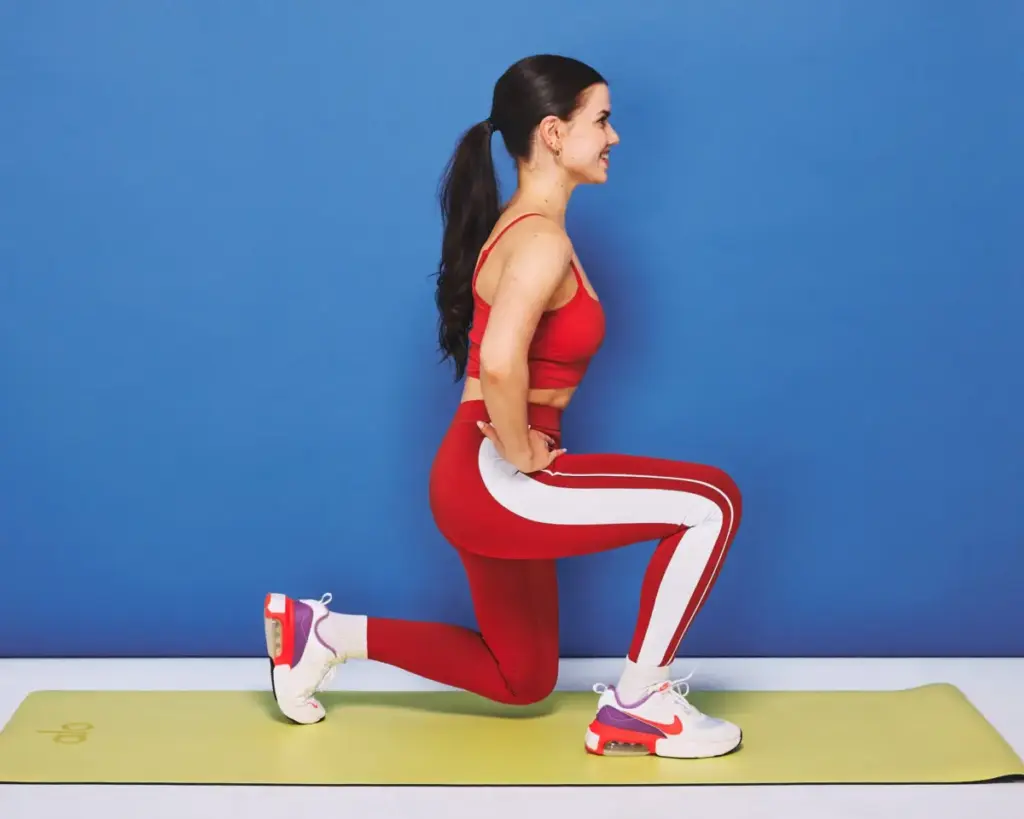
2. The Forward Lunge
The forward lunge introduces a deceleration component, requiring the nervous system and muscular system to brake momentum safely.
Execution: Stand tall with your feet hip-width apart. Take a controlled step forward with your right foot, lowering your hips until both knees are bent at approximately a 90-degree angle. Push off your front foot to return to the starting position.
Variations:
Vertical Torso: Keeps the spine upright, placing maximum emphasis on the quadriceps.
Hinged Torso: Involves a slight forward hinge at the hips, shifting more load onto the glutes.
Regression: If you experience lateral wobbling or poor balance, regress the movement to a standard bodyweight squat until foundational stability improves.
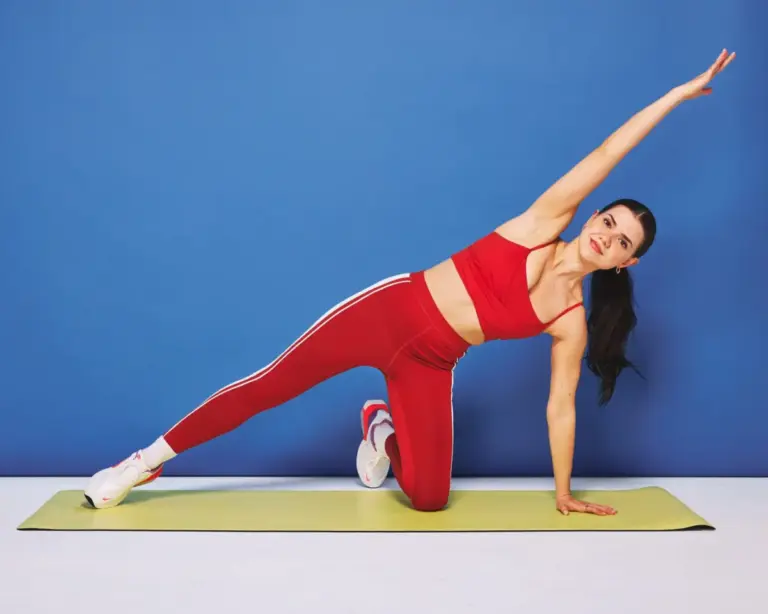
3. The Lateral Lunge
Perhaps the most mechanically complex of the three exercises, the lateral lunge challenges the body in the frontal plane.
Execution: Stand with feet together. Take a wide step out to the right side, immediately bending your right knee and pushing your hips back while keeping your left leg straight. Push powerfully off your right foot to return to the starting position.
Form Cues: Because your body transitions sideways while the knee bends and straightens, this movement demands high coordination. Maintain an upright chest, ensure your working knee tracks over your toes, and prevent your hip from popping out to the side.
Regression: Beginners can utilize static lateral lunges, keeping the feet wide and stationary while lunging side-to-side without lifting the foot off the floor.
Progressive Overload and Future Outlook
Once these three foundational exercises are mastered with pristine bodyweight form, trainees can systematically increase the challenge to promote continuous muscular adaptation.
Scaling Your Routine
Introducing External Load: Integrate dumbbells or kettlebells held at your sides (or in a goblet position for lunges) to increase overall mechanical tension.
Adjusting Repetition and Sets: Shift away from timed intervals and transition into structured set-and-rep programming—targeting 3 sets of 15 to 20 repetitions per exercise.
Long-Term Progression: Gradually increase the amount of weight used while concurrently decreasing the repetition ranges. This ensures the neuromuscular system is continually pushed to adapt, fostering greater muscle fiber recruitment and tendon resilience.
Future Outlook
As the fitness industry continues to embrace longevity-focused training, the paradigm of joint care is shifting from reactive medicine to proactive structural conditioning. By integrating multi-planar, hip-integrated stability movements into regular resistance training regimens, individuals can safeguard their joints against premature wear, enhance athletic output, and preserve independent physical freedom well into their later decades. Investing time in your knees today ensures they will support your ambitions tomorrow.