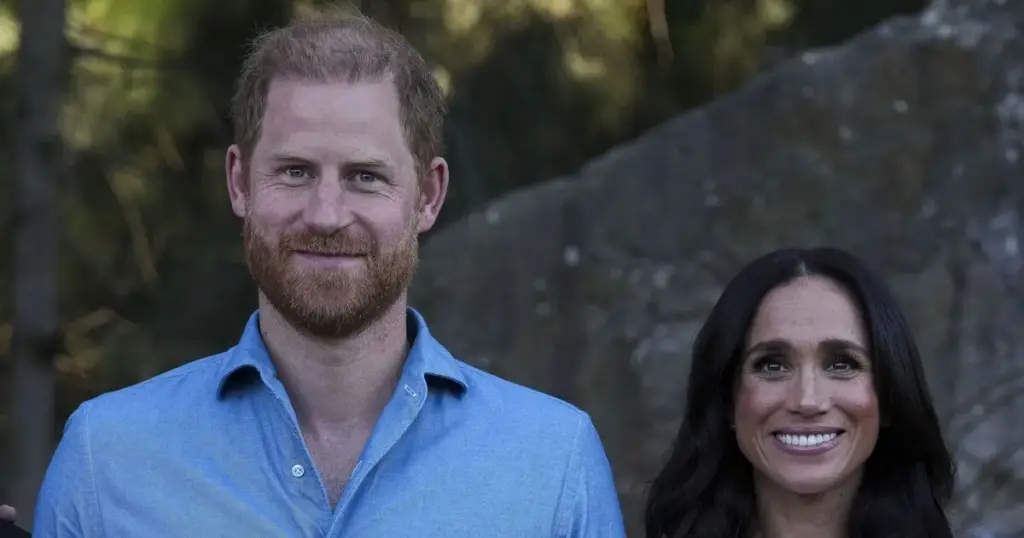
The complex dynamics of the Duke and Duchess of Sussex have once again captured global media attention, following emerging reports that Prince Harry is actively contemplating a long-term return to the United Kingdom. For years, the narrative surrounding Prince Harry and Meghan Markle has been defined by their high-profile departure from royal duties—colloquially dubbed "Megxit"—and their subsequent establishment of a high-net-worth, independent life in the sun-drenched enclave of Montecito, California. However, fresh indicators suggest a significant ideological and geographical pivot: Prince Harry reportedly envisions a return to British soil that could span the next decade to a decade and a half.
This reported shift is not merely a logistical adjustment; it represents a profound realignment of priorities that places the Duke’s desire to raise Prince Archie and Princess Lilibet within the British educational and cultural framework above all else. Yet, this prospective move opens up a myriad of complex questions. Most notably, how will a prolonged British residency sit with Meghan Markle, whose public stance on the UK has historically been marked by profound personal trauma, allegations of institutional neglect, and a fierce prioritization of American independence? Furthermore, the potential transition brings to light logistical hurdles, ranging from family separation—specifically regarding Meghan’s mother, Doria Ragland, remaining stateside—to ongoing, highly sensitive security debates.
This in-depth report examines the cascading implications of Prince Harry’s reported change of heart, analyzing the cultural, familial, and logistical fault lines that could test the structural integrity of the life the Sussexes have painstakingly built over the past several years.
Detailed Chronology: From "Freedom Flight" to the Cotswolds Horizon
To understand the weight of Prince Harry’s reported pivot toward the United Kingdom, one must trace the timeline of the Sussexes’ dramatic exit and subsequent positioning.
The 2020 Departure and the Californian Sanctuary
In January 2020, Prince Harry and Meghan Markle shocked the global establishment by announcing their intention to step back as senior working members of the British Royal Family. What followed was a swift relocation—first to Canada, and subsequently to Southern California. The move was framed by the couple as a necessary escape from intrusive media scrutiny, institutional indifference, and a toxic tabloid culture. Famously characterized by close associates as a "freedom flight," the journey across the Atlantic signaled a definitive break.
For the past 78 months, the couple’s life has been firmly rooted in the United States. Montecito became their sanctuary, a place where they welcomed their daughter, Lilibet, nurtured their Archewell foundation, forged lucrative multi-million-dollar media partnerships with platforms like Netflix and Spotify, and built a tight-knit community.
The Gradual Drift and Changing Priorities
Despite the outward appearance of an entrenched American lifestyle, periodic signals have suggested a persistent tether between Prince Harry and his homeland. Security disputes, sporadic court appearances in London, and high-profile emotional returns—such as for the funeral of Queen Elizabeth II and the coronation of King Charles III—kept the Duke in regular, if often tense, contact with the UK.
However, the recent narrative has shifted from brief, strained visits to a more permanent structural re-evaluation. According to sources close to the couple, discussions have turned toward a long-term relocation centered around the British education system for their children. Reports indicate that the family has cast its gaze toward the affluent, celebrity-dense enclave of the Cotswolds, with preliminary real estate inquiries boasting a budget in the region of £8 million. The core driver behind this reported shift is Prince Harry’s vision of himself as a deeply engaged, hands-on father who wants his children immersed in British traditions—such as watching Prince Archie play weekend rugby—for a projected horizon of the next 12 to 15 years.
Supporting Context & Metrics: Security, Family Dynamics, and Cultural Realities
A potential relocation of this magnitude cannot be viewed in isolation. It brings to the forefront several underlying structural, statistical, and familial pressures that have defined the Sussex narrative.
The Security Conundrum
One of the most contentious flashpoints of the Sussexes’ post-royal life has been the question of security. Since stepping down as working royals, Prince Harry has fought a protracted legal battle to secure taxpayer-funded Metropolitan Police protection when visiting the UK.
Critics frequently point out the apparent contradiction in the couple’s security calculus. Publicly, the Duke and Duchess have repeatedly cited the streets of Britain as unsafe for their family, using this as a primary justification for their departure and subsequent security demands. Yet, this stance invites intense public debate when compared against demographic and statistical realities.
Comparative safety metrics provide a stark backdrop to these discussions:
Homicide and Violent Crime Rates: Historical and recent data consistently highlight systemic differences in violent crime between the United States and the United Kingdom. Statistically, citizens face significantly higher per-capita risks of gun-related violence and overall violent crime in various regions of the United States compared to the UK.
The "Walmart vs. Windsor" Paradox: Commentators and royal observers have frequently questioned why the Sussexes navigate the public spaces of suburban California—such as local commercial hubs—with relative ease, yet demand high-level, state-funded armed protection details during brief excursions in British towns.
Should a multi-year or permanent return to the UK materialize, the debate surrounding the financing, deployment, and legal framework of their security detail will undoubtedly reignite with fierce intensity across British political and public spheres.
The Doria Ragland Factor
Another critical dimension of the proposed move involves family dynamics on the American side. Doria Ragland, Meghan’s mother and a retired social worker, has been an indispensable pillar of support in Montecito. Residing less than two hours away from the Sussex estate, Doria has played an active, daily role in the upbringing of Archie and Lilibet.
Reports indicate that Doria is deeply settled in the United States, surrounded by a robust community of friends and professional networks, and has no intention of relocating permanently to the UK. For Meghan, who has weathered severe familial estrangement on her father’s side, the physical separation from her mother would represent a significant emotional and logistical blow. The absence of daily maternal support could place an unprecedented strain on the Duchess as she navigates a new cultural landscape that has historically been the source of deep personal distress.
Official Statements & Inner-Circle Perspectives
While neither Prince Harry nor Meghan Markle has issued a formal, comprehensive statement confirming a permanent multi-year relocation to the UK, insights leaked through trusted confidants paint a vivid picture of the internal motivations driving the Duke.
According to a source cited in recent reports close to the royal household:
"The way he sees it is that he will be here for the next 12 to 15 years, minimum. He sees himself as a full-time father and he will be here for them spending every Saturday watching Archie play rugby. That is the agenda."
Crucially, those within the Duke’s orbit emphasize that this potential move is entirely divorced from a desire to re-engage with the machinery of the institution or reclaim a public royal platform. The source explicitly noted:
"There is no hankering after a royal status or royal engagements, it is not about that. He specifically doesn’t want to do that. This is about Harry wanting what is best for them and he wants them to be raised British, in Britain, and go to a public school. That is what the move is about."
Despite these assurances, royal analysts remain skeptical regarding whether Prince Harry could entirely sever his psychological tie to his royal heritage. Speculation persists in British media circles that an extended stay could inevitably lead to informal overtures toward King Charles III, potentially reviving discussions around ad-hoc, part-time royal involvement—a prospect that has historically met fierce resistance from both the institution and the public.
Future Outlook: Can Meghan’s World Coexist with Harry’s British Dream?
As the prospect of a British homecoming transitions from a speculative rumor to a heavily discussed logistical possibility, the central question remains: Can this move coexist with everything Meghan Markle has built in the United States?
For Meghan, the UK represents the site of immense personal hardship. From her documented mental health struggles during her brief tenure as a working royal to the intense tabloid scrutiny that characterized her marriage, the Duchess has made little secret of her alienation from British institutional life. Labeling their departure a flight to freedom underscored her desire to forge an autonomous, Hollywood-adjacent empire rooted in American individualism, media production, and entrepreneurial ventures.
Relocating to the Cotswolds—a favored playground for British aristocracy and international celebrities alike—offers a compromise of sorts. It provides the leafy privacy and social networking opportunities that could appeal to the Duchess, while satisfying the Duke’s yearning for his children to experience a traditional British upbringing.
However, the psychological divide remains vast. For Prince Harry, returning to the UK is a return to his roots, his culture, and his identity as a father passing down a specific British heritage. For Meghan, stepping back onto British soil—even within the insulated privacy of an £8 million country estate—risks reopening old wounds, reigniting public polarization, and disrupting the carefully constructed sanctuary she has fought so hard to establish in California.
Ultimately, whether this reported transition becomes a permanent reality or remains another speculative chapter in the ongoing Sussex saga, it highlights the enduring, complex tug-of-war between two vastly different worlds—and the constant tension of trying to bridge them.