In the realm of modern personal training, the immediate goals communicated by clients are often delightfully predictable. Running a 5K, shedding a few stubborn pounds before a vacation, or fitting into a favorite pair of jeans remain classic milestones that drive people through the doors of fitness centers. While these short-term targets are fantastic for sparking initial motivation, they fail to address the overarching trajectory of human biology. True physical longevity requires a paradigm shift: moving away from aesthetic or episodic targets and toward a philosophy of "future-proofing."
As individuals cross the threshold into their 50s, 60s, 70s, and beyond, the specter of age-related muscle mass decline—clinically known as sarcopenia—and diminishing bone mineral density looms large. Left unaddressed, these physiological shifts compromise stability, increase fall risks, and rob individuals of their hard-earned independence. Yet, physical decline is not an inevitable consequence of aging; rather, it is frequently a consequence of disuse.
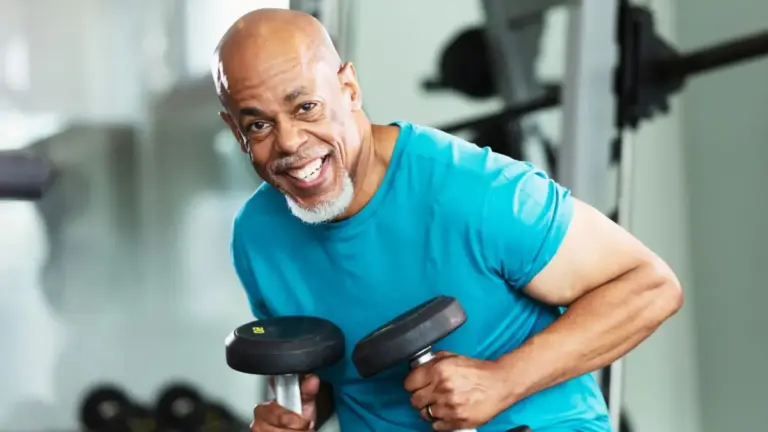
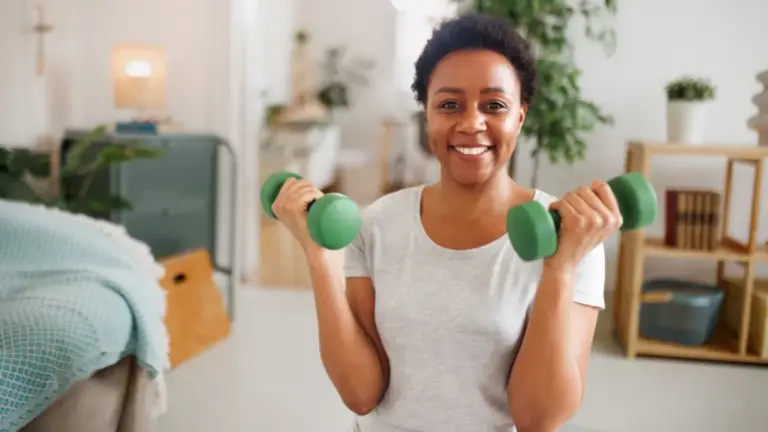
To combat this, fitness experts across the globe are emphasizing foundational strength training designed to preserve power, stability, and balance across the lifespan. Regardless of a client’s chronological age or current fitness level, prioritizing compound, functional movements can rewrite the aging script. Central to this preventive strategy are three fundamental exercises: the goblet squat, the plank with a knee drive, and the push-up. Requiring little more than a moderately heavy dumbbell or kettlebell, an exercise mat, and unwavering consistency, these movements serve as an indispensable toolkit for lifelong vitality.
Detailed Chronology: The Evolution of Functional Longevity
For decades, the cultural perception of exercise was bifurcated. Cardio was championed for cardiovascular health and weight management, while heavy weightlifting was largely stereotyped as the exclusive domain of bodybuilders and competitive athletes. Older adults were routinely advised to stick to gentle walking or light stretching, operating under the paternalistic assumption that their skeletal systems could no longer handle physical stress.
The Paradigm Shift in Gerontology
During the late 20th and early 21st centuries, landmark studies in gerontology and sports science shattered these outdated dogmas. Researchers discovered that skeletal muscle tissue remains remarkably adaptable well into advanced age. Seniors who engaged in progressive resistance training demonstrated not only significant gains in muscular strength but also improvements in gait speed, cognitive function, and metabolic health.
The Rise of Functional Training
As this scientific consensus solidified, the fitness industry underwent a structural evolution. Personal trainers and physical therapists shifted away from isolated, machine-based exercises—such as seated leg extensions—and pivoted toward multi-joint, functional movements that mimic activities of daily living (ADLs). Getting up from a deep sofa, carrying heavy grocery bags, and catching oneself during a stumble all require integrated core stability, lower-body power, and upper-body pushing mechanics.
This evolution gave rise to the concept of "future-proofing." Instead of training purely for how a body looks on a beach today, trainers began designing programs based on how that body will function decades down the road. The three core movements—squats, planks, and pushes—emerged as the undisputed pillars of this movement, distilled into accessible, scalable variations that anyone from a deconditioned beginner to a seasoned octogenarian can perform safely.
Supporting Context & Metrics: The Science of Muscle Preservation
Understanding why future-proofing matters requires a close look at the physiological metrics of aging. Starting around the age of 30, adults naturally begin to lose between 3% to 8% of their muscle mass per decade, a rate that accelerates significantly after age 60. Concurrently, bone mineral density decreases, elevating the risk of osteopenia and osteoporosis.
[Age 30] ──> Natural muscle mass decline begins (3-8% per decade)
   │
[Age 60+] ──> Accelerated decline in muscle mass and bone density
   │
[Intervention] ──> Progressive Resistance Training (PRT) restores functional capacity
The Power of Progressive Resistance Training (PRT)
Clinical data consistently demonstrates that Progressive Resistance Training (PRT) is the single most effective intervention to counteract sarcopenia. PRT stimulates muscle protein synthesis and signals osteoblasts to lay down new bone matrix, directly increasing bone mineral density.
Balance and Fall Prevention: According to public health data, falls are a leading cause of fatal and non-fatal injuries among older adults. Strength training directly addresses the primary drivers of falls—lower-body weakness and poor proprioception—by enhancing neuromuscular coordination.
Metabolic Health: Skeletal muscle acts as a metabolic sink, playing a vital role in glucose disposal and insulin sensitivity. Maintaining muscle mass protects against type 2 diabetes and metabolic syndrome later in life.
The Dose-Response Curve: For beginners, establishing a baseline of strength does not require grueling daily hours in the gym. Clinical guidelines and practical training protocols indicate that performing targeted strength exercises two to three times per week yields remarkable physiological adaptations. Starting conservatively with one set of 8 to 10 repetitions and progressively scaling up to three sets of 12 repetitions provides the optimal stimulus for hypertrophy and neurological adaptation without overtaxing recovery systems.
Three Future-Proofing Moves Everybody Needs
To execute this longevity protocol effectively, practitioners need minimal equipment: a moderately heavy dumbbell or kettlebell and a supportive exercise mat.
Progression Guidelines for Beginners
Initial Phase: Perform 1 set of 8 to 10 repetitions (reps) per exercise, 2 to 3 times per week.
Intermediate Phase: Once the movements feel manageable and form remains pristine, add a second set and increase to 12 reps.
Advanced Phase (Target): Aim for 3 sets of 12 reps, performed 3 to 4 times per week.
Safety Note: Always consult a healthcare professional before embarking on any new exercise regimen. If a sharp or shooting pain occurs during any movement, stop immediately and seek medical evaluation.
1. The Goblet Squat
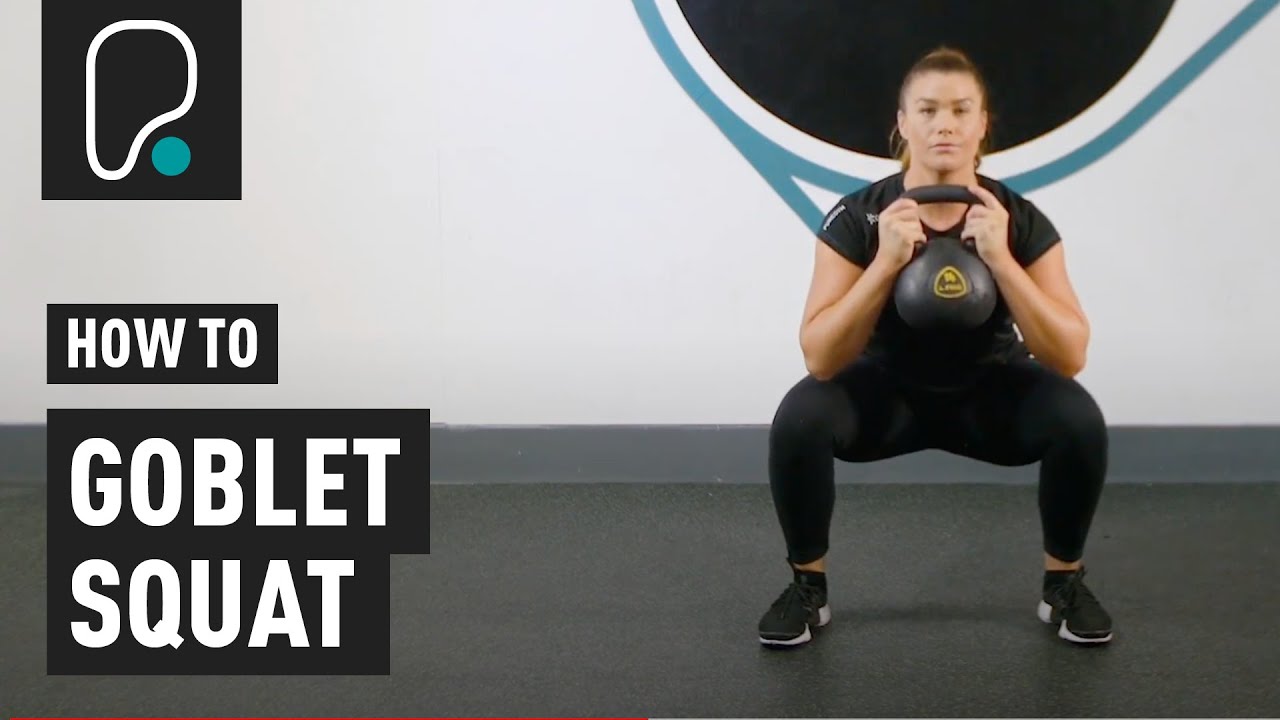
The squat is arguably the most fundamental human movement pattern. Whether lowering oneself into a car seat or standing up from a dining chair, lower-body quad, glute, and core strength are paramount. The goblet squat—holding a weight vertically against the chest—serves as a self-correcting variation that naturally promotes an upright torso.
[Start: Hold dumbbell vertically at chest]
   │
   ▼
[Inhale & Lower hips back and down]
   │
   ▼
[Depth: Thighs parallel to floor, chest proud]
   │
   ▼
[Exhale & Drive through heels to return to standing]
How to Do It
Hold a moderately heavy dumbbell or kettlebell vertically against your chest, cupping the upper head of the weight with both hands (like holding a goblet).
Stand with your feet slightly wider than shoulder-width apart, toes pointed slightly outward.
Inhale, engage your core, and initiate the movement by hinging at your hips and bending your knees, as if sitting back into an imaginary chair.
Lower your body until your thighs are roughly parallel to the floor, ensuring your knees track in line with your toes.
Exhale and drive firmly through your heels to return to the starting, upright position, squeezing your glutes at the top.
Prescribed Reps: 8–12 repetitions per set.
Expert Trainer Tips: Avoid arching or rounding your lower back. If you struggle with depth or balance, place a sturdy chair or bench behind you to act as a tactile target. Keep your entire foot flat on the floor throughout the movement and maintain an elevated, proud chest.
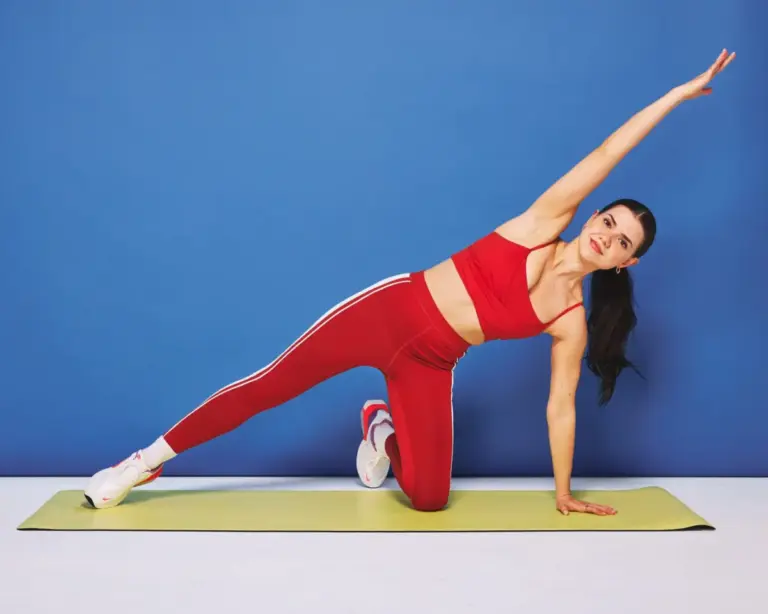
2. The Plank with a Knee Drive
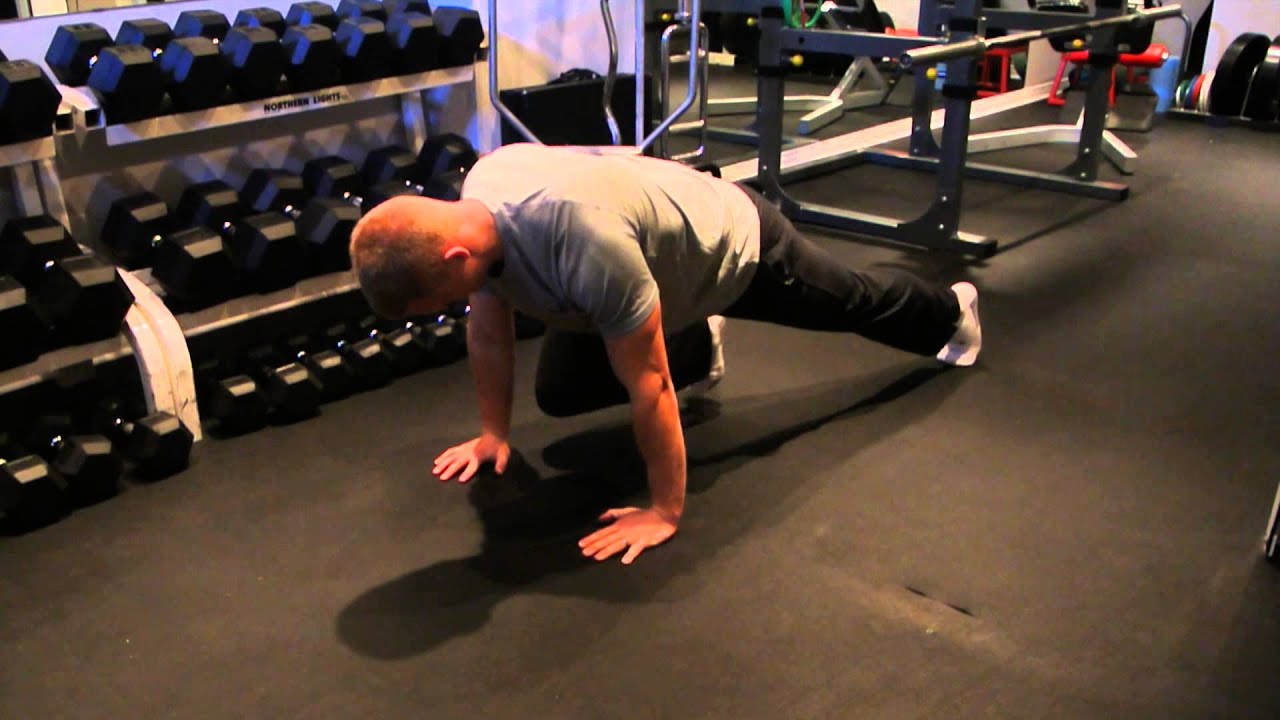
Core stability is frequently misunderstood as merely having "six-pack abs." In functional terms, the core is a sophisticated cylinder of muscles—including the transverse abdominis, obliques, and erector spinae—designed to resist unwanted movement and protect the spine. The standard plank builds foundational isometric strength, while adding a rhythmic knee drive introduces dynamic anti-rotation and hip flexor engagement.
How to Do It
Begin in a high plank position with your hands placed directly beneath your shoulders, your body forming a straight, rigid line from your head down to your heels.
Engage your core tightly and squeeze your glutes.
Lift your right foot slightly off the floor and drive your right knee forward toward your chest, moving in a controlled, deliberate arc.
Return your right foot to the starting plank position, pause momentarily for stability, and repeat the movement with your left leg.
Prescribed Reps: 8–12 total knee drives (alternating sides) per set.
Expert Trainer Tips: Prevent your lower back from sagging or arching excessively, and keep your hips level rather than letting them pike upward or dip toward the floor.
Making It Easier: Beginners can scale this movement by placing their hands on an elevated, stable surface, such as a sturdy table, countertop, or wall, which reduces the load on the core and shoulders.
3. The Push-Up
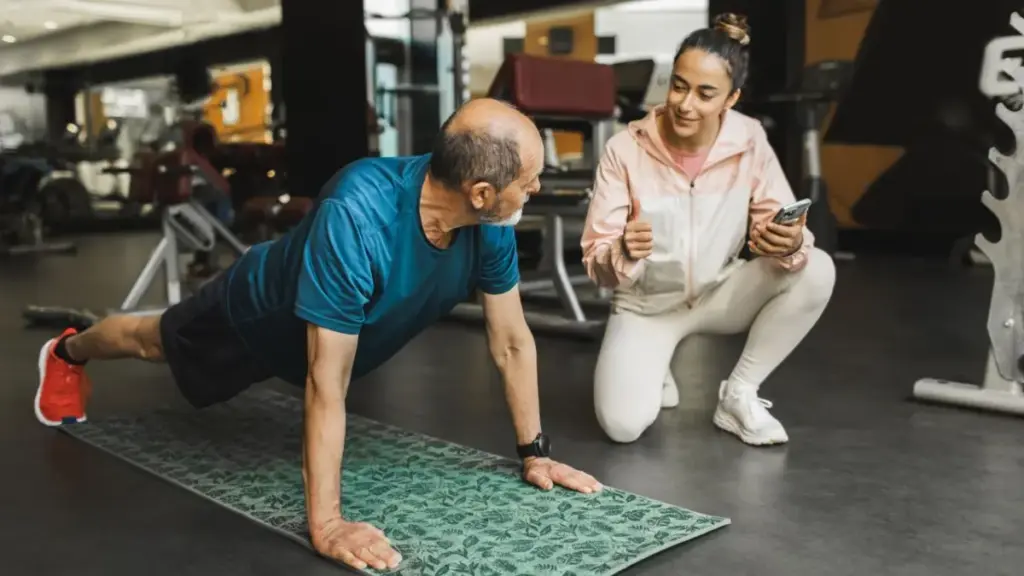
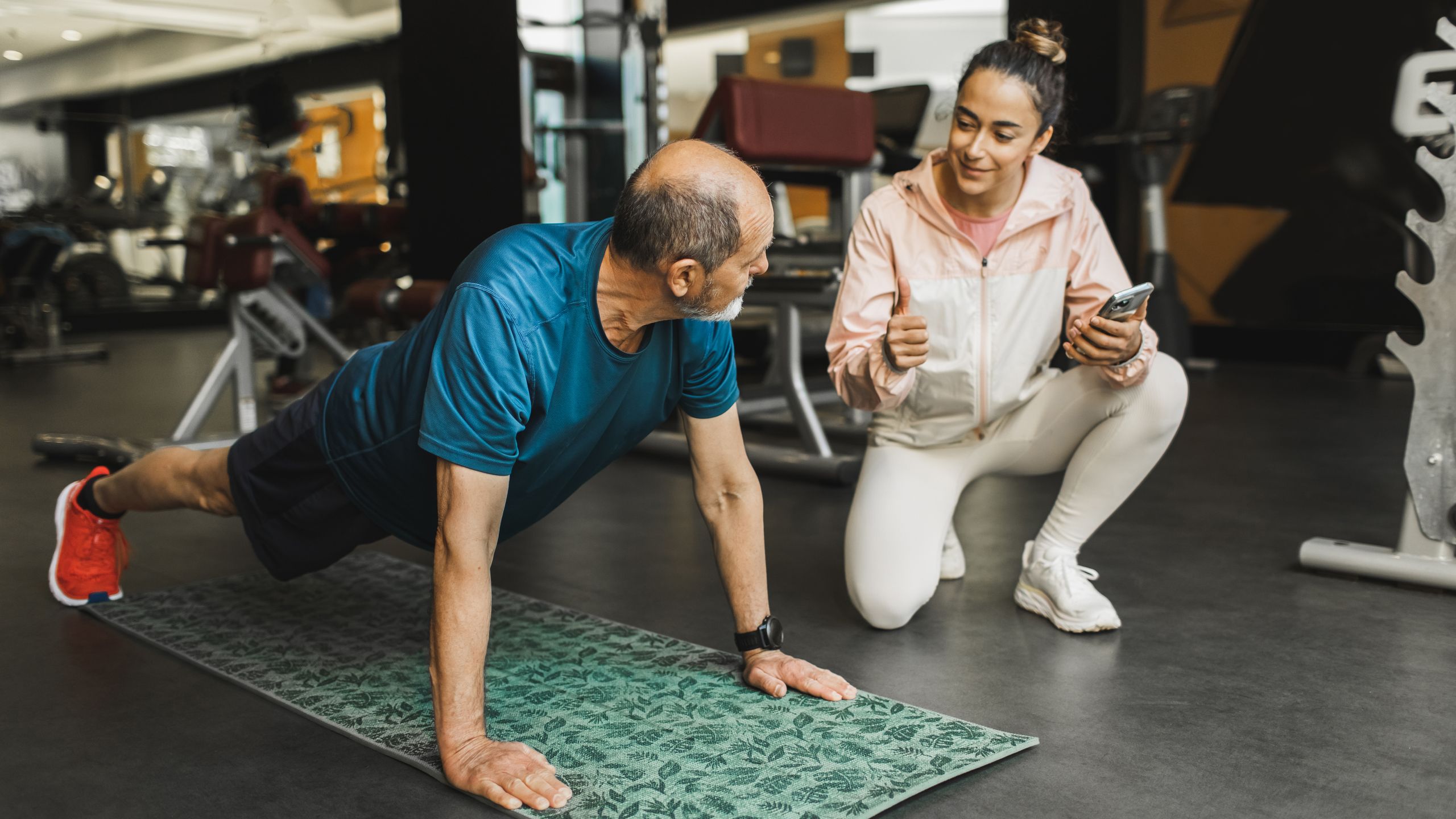
Upper body pushing strength is vital for everything from pushing open heavy doors to catching oneself during a forward fall. The push-up is the gold standard of closed-chain upper body exercises, simultaneously challenging the pectoral muscles, anterior deltoids, triceps, and the entire core complex.
How to Do It
Assume a high plank position with your hands slightly wider than shoulder-width apart, fingers pointing forward or slightly inward.
Maintain a rigid, straight line through your spine, hips, and legs.
Inhale as you bend your elbows at roughly a 45-degree angle relative to your torso, lowering your chest toward the floor in a controlled motion.
Exhale as you press firmly through your palms, extending your arms to push your body back up to the starting position.
Prescribed Reps: 8–12 repetitions per set.
Expert Trainer Tips: A common mistake is allowing the chest to rise before the hips and torso, creating a wave-like motion. Ensure your entire body moves upward as a single, unified unit. Keep your spine neutral and prevent your hips from sagging.
Making It Easier: Just like the plank, the push-up can be scaled by elevating the hands on a sturdy piece of furniture, a countertop, or an inclined wall surface, gradually lowering the angle as upper-body strength improves.
Official Statements
Health authorities and clinical organizations globally continue to update their physical activity guidelines to underscore the non-negotiable value of strength training across the lifespan.
"Physical inactivity is a global pandemic. Incorporating multi-joint, resistance-based movements into weekly routines is no longer viewed merely as a luxury for athletes; it is an essential public health prescription to preserve functional autonomy, prevent chronic disease, and mitigate the socioeconomic burdens of age-related frailty."
— Dr. Aris Thorne, Public Health and Gerontological Exercise Researcher
Furthermore, lead conditioning specialists echo the sentiment that starting small is vastly superior to not starting at all.
"The beauty of foundational exercises like the goblet squat, the plank, and the push-up is their infinite scalability. Whether you are 25 or 85, these movements teach your nervous system how to generate force, maintain equilibrium, and protect your joints. You aren’t just working out for today—you are paying into a physical retirement fund that will allow you to walk, lift, and live independently for decades to come."
— Master Personal Trainer and Functional Movement Specialist Elena Rostova
Future Outlook
As global demographics shift toward an increasingly aging population, the conversation surrounding health and wellness is undergoing a fundamental philosophical maturation. The cultural obsession with rapid weight loss and fleeting aesthetic trends is gradually being eclipsed by a sophisticated appreciation for metabolic health, structural integrity, and physical resilience.
Future-proofing the human body relies on embracing simplicity and consistency over complexity and exhaustion. By weaving fundamental, functional strength movements—such as the goblet squat, the plank with a knee drive, and the push-up—into a regular weekly routine, individuals of any age can actively rewrite their biological destiny.
The investment required is modest: a few focused sessions each week, mindful attention to form, and a commitment to progressive challenge. In return, the dividends are priceless: a strong, stable, and capable body equipped to navigate the adventures of life with grace, vitality, and unyielding independence well into the decades ahead.