Executive Overview
Mention the Colorado mountain town of Aspen, and a hyper-specific cultural lexicon instantly springs to mind: pristine black-diamond ski slopes, celebrities sporting designer sunglasses, impossibly expensive boutique hotels, and haute-couture outerwear. It is a destination traditionally imagined as existing in a perpetual state of frost, populated by an elite echelon who look effortlessly chic navigating high-end ski chalets.
Yet, arriving in the middle of summer—with not a single ski in sight—reveals an entirely different dimension of the Roaring Fork Valley. Far from being a dormant "off-season," summer in Aspen and its neighboring enclave, Snowmass, strips away the commercial veneer of winter tourism to expose a vibrant, multifaceted alpine ecosystem.
Here, the great outdoors is not merely a pretty backdrop for a luxury holiday; it is the holiday. Seamlessly blending world-class culinary innovation, a thriving live music scene, rich contemporary art institutions, and deep-rooted Western heritage, summer in Aspen and Snowmass offers a masterclass in modern alpine leisure. For travelers seeking a high-altitude escape defined by crisp mountain air, brilliant gastronomy, cultural depth, and the rare luxury of mental decompression, this dual destination makes an undeniable case for swapping the beach for the mountains.
Detailed Chronology: A Journey Through High-Altitude Summer
First Impressions: Reorienting the Mountain Experience
Upon arrival during the peak of summer, initial expectations of a quiet, ghost-like ski town quickly evaporate. While the signature designer boutiques, upscale hotels, and high-end gastronomy remain fixtures of the downtown grid, they are dwarfed—quite literally—by the surrounding landscape.
Without the white blanket of winter, the Elk Mountains transform into a dense tapestry of emerald-green pine forests and sprawling alpine meadows blanketed in wild lupine, paintbrush, and columbine. The entire rhythm of the region reorganizes itself around a single, liberating premise: go outside.
Unlike destinations that demand meticulous, color-coded itineraries and crowded spreadsheets, Aspen invites spontaneity. Trails begin remarkably close to the town center, and an efficient local transit network connects Aspen directly to Snowmass, located just nine miles away. A typical morning query of "What should we do today?" is easily answered by simply pointing toward a towering peak and setting off on foot.
Ascending the Terrain: From Jeep Tours to Alpine Trails
An early introduction to the region’s rugged interior begins via an off-road Jeep excursion toward Taylor Pass with Blazing Adventures. Starting deep within dense groves of aspen and pine, the vehicles climb steadily upward until the canopy breaks open into high-altitude alpine meadows.
At elevations exceeding 11,000 feet, the panorama is staggering: jagged peaks roll out in every direction beneath an impossibly blue sky, accompanied by that profound, absolute mountain silence. This journey also highlights the unhurried, deeply social fabric of the local trail culture. Unlike densely packed urban environments—such as London or New York—strangers on these trails readily exchange greetings, offer route advice, and share trail insights.
Snowmass amplifies this outdoorsy ethos, engineered directly into the contours of the mountains rather than merely dropped onto them. Boasting over 90 miles of interconnected hiking trails, mountain biking routes, gondolas, and chairlifts, the village caters to every capability level. Gentle, flat paths like the Ditch Trail contrast with the aspen-lined curves of the Tom Blake Trail and the expansive vistas found at Spiral Point. More ambitious hikers can tackle vertical routes toward Elk Camp, while those seeking a more relaxed pace can utilize the lift infrastructure to gain altitude without the physical endurance test. For adrenaline-seekers, the Lost Forest offers ropes courses, climbing walls, and the high-speed Breathtaker Alpine Coaster weaving through the tree line.
The Crown Jewel: Maroon Bells and Crater Lake
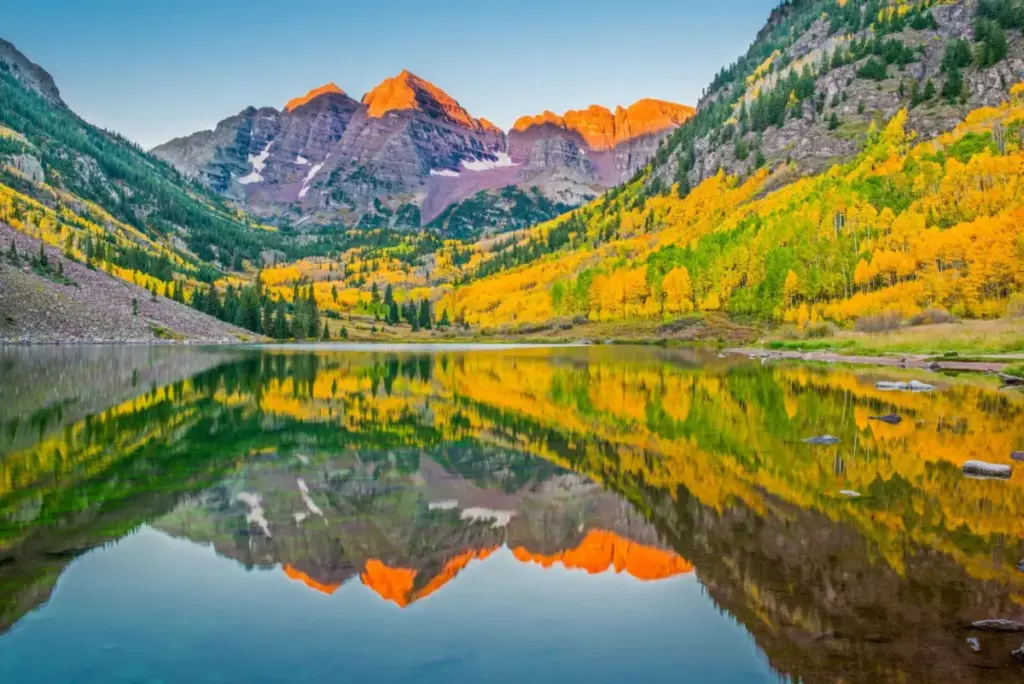
No summer exploration of the region is complete without visiting the Maroon Bells. Rising sharply above the glassy waters of Maroon Lake just outside Aspen, Maroon Peak and North Maroon Peak are among the most photographed landmarks in North America. Yet, seeing them in person defies the risk of over-familiarity; the jagged, maroon-hued stone, deep forests, and mirror-like water look almost digitally enhanced.
Hiking the trail from Maroon Lake to Crater Lake offers a masterclass in immersive geography. Walking directly through the landscape—rather than merely driving to a scenic overlook—engages every sense: the crisp scent of pine, the shifting temperatures beneath the forest canopy, and the rhythmic sound of rushing glacial streams. Arriving at Crater Lake leaves the legs pleasantly fatigued and the mind remarkably clear, offering a striking antidote to the constant hyper-connectivity of modern life.
Supporting Context & Metrics: Culture, Commerce, and Cuisine
The Culinary Landscape: Foraged Fine Dining
The physical exertion of high-altitude exploration naturally fuels a world-class culinary scene. Aspen and Snowmass refuse to pigeonhole mountain dining into a single, predictable category. While hearty post-hike fare and casual roadside tacos remain staples, the region punches far above its weight in fine dining.
In Snowmass, restaurants like Kenichi deliver world-class sushi characterized by exceptional freshness and precision. However, the true showstopper of the valley’s culinary identity is Bosq, a Michelin-starred establishment in downtown Aspen helmed by chef and owner Barclay Dodge. Having foraged the Elk Mountains and the Roaring Fork River since the 1990s, Dodge anchors his menu in foraging, fermentation, and local agriculture.

A dinner at Bosq serves as an edible extension of the surrounding wilderness. Guests traverse a deeply regional menu featuring items like succulent lobster bathed in a vibrant herby green sauce, expertly prepared wagyu beef, and a signature pine-infused ice cream that captures the aromatic essence of the forest without ever feeling artificial.
A Symphony of Sound: The Music Scene
Live music forms the cultural heartbeat of Aspen and Snowmass. Founded in 1991, Jazz Aspen Snowmass (JAS) has evolved from an intimate three-day jazz festival into a powerhouse non-profit organization offering year-round performances, large-scale outdoor festivals, and robust educational programming. Over the decades, its stages have welcomed legendary acts including Stevie Wonder, Sting, Lenny Kravitz, the Foo Fighters, and John Mayer, spanning genres from soul and funk to blues and rock.
Downtown Aspen’s permanent home for this culture is the Paul JAS Center, which hosts intimate JAS Café performances throughout the summer. Meanwhile, classical music enthusiasts can experience orchestral performances by students of the Aspen Music Festival and School at the summit of the Silver Queen Gondola, where audiences listen to world-class performances thousands of feet above the valley floor against a backdrop of sweeping alpine vistas.
Art, Heritage, and Western Roots
The cultural footprint extends seamlessly into the visual arts. The Aspen Art Museum, housed in a striking, open-mesh structure designed by renowned architect Shigeru Ban, offers free public admission, inviting casual drop-ins followed by lunch on the roof at Swedish Hill. In Snowmass, the Anderson Ranch Arts Center has served as a creative sanctuary for artists since the 1960s, offering workshops, active studios, and sculpture-filled grounds.
For a touch of local history and quiet reflection, the John Denver Sanctuary sits alongside the Roaring Fork River. Dedicated to the legendary singer-songwriter who made Aspen his home, the contemplative gardens feature perennial flowers, cascading water, and massive boulders etched with his most famous lyrics.
This reverence for history smoothly transitions into the region’s vibrant Western identity. Retail institutions like Kemo Sabe offer an immersive, high-volume fantasy of cowboy culture—complete with custom boots, turquoise jewelry, and handcrafted Stetson hats. This authentic Western thread culminates weekly at the Snowmass Rodeo, where visitors gather against a backdrop of fading mountain sunsets to witness traditional barrel racing, bull riding, and the beloved, chaotic spectacle of "mutton bustin’."
Official Statements and Destination Insights
Tourism authorities and hospitality leaders emphasize that the magic of Aspen and Snowmass lies in its intentional duality. According to regional tourism representatives from the Aspen Chamber Resort Association and Snowmass Tourism, the summer months allow visitors to experience a more grounded, community-focused side of the Roaring Fork Valley.
"The whole place seems to reorganise itself around one simple idea: go outside." — Soraya Gaied Chortane
Hospitality executives echo this sentiment, noting that high-end properties are shifting their guest messaging away from strictly winter sports toward holistic summer wellness, cultural immersion, and eco-tourism. Whether staying at marquee properties like the Viceroy Snowmass (with summer standard rates starting from $375 per night) or the historic White Elephant Aspen (with rates starting from approximately $1,995 per night), contemporary travelers are increasingly curating itineraries that balance indulgent luxury with unpretentious outdoor adventure.
Future Outlook: The Evolution of the Summer Alpine Escape
As global travel trends increasingly pivot away from overcrowded, heat-battered coastal beach resorts in favor of elevated, nature-focused retreats, destinations like Aspen and Snowmass are uniquely positioned for sustained growth.
The future of mountain tourism in the Roaring Fork Valley lies in its commitment to sustainable development, expanded cultural programming, and year-round accessibility. Initiatives focusing on trail preservation, local agricultural sourcing, and carbon-neutral community events ensure that the fragile alpine ecosystem remains pristine for generations to come.
Ultimately, visiting Aspen and Snowmass in the summer reframes preconceived notions of what a world-class mountain resort can be. When the winter snows recede, the region reveals its true character: a harmonious intersection of untamed wilderness, world-class culinary mastery, cutting-edge art, and unhurried hospitality. For the discerning traveler seeking a sophisticated escape that successfully marries physical invigoration with mental tranquility, the Colorado Rockies offer an invitation that is simply too compelling to ignore.
Quick Planning Guide & References
- Official Information: Aspen Chamber | Snowmass Village
- Featured Accommodations:
- Viceroy Snowmass (Summer rates from $375/night; Winter from $850/night) — Visit Website
- White Elephant Aspen (Rates from approx. £1,500/night for two) — Visit Website
- Photography Credits: Jeremy Swanson, Bridget Crosby, Sam Ferguson, Jake Wheeler, and Eliza Voss.