Executive Overview
In the fast-paced ecosystem of contemporary music festivals, a last-minute artist cancellation is typically managed as a logistical crisis—a sudden scramble to adjust set times, issue refunds, or appease disappointed ticket-holders. However, when pop-rock phenomenon Olivia Rodrigo found herself facing a late-breaking lineup void at her inaugural Daisy Chain Fields festival, she did not merely patch the hole; she orchestrated a cultural milestone.
Held at the sprawling Great Park in Irvine, California, the one-day, all-women, queer-inclusive music festival was already tracking as a major success, boasting an impressive lineup that included visionary artists like Chappell Roan and Doechii, alongside a staggering philanthropic footprint of $10 million raised for non-profits supporting women and girls. Yet, the day’s narrative shifted dramatically when Yeah Yeah Yeahs frontwoman Karen O was forced to withdraw due to unforeseen personal matters.
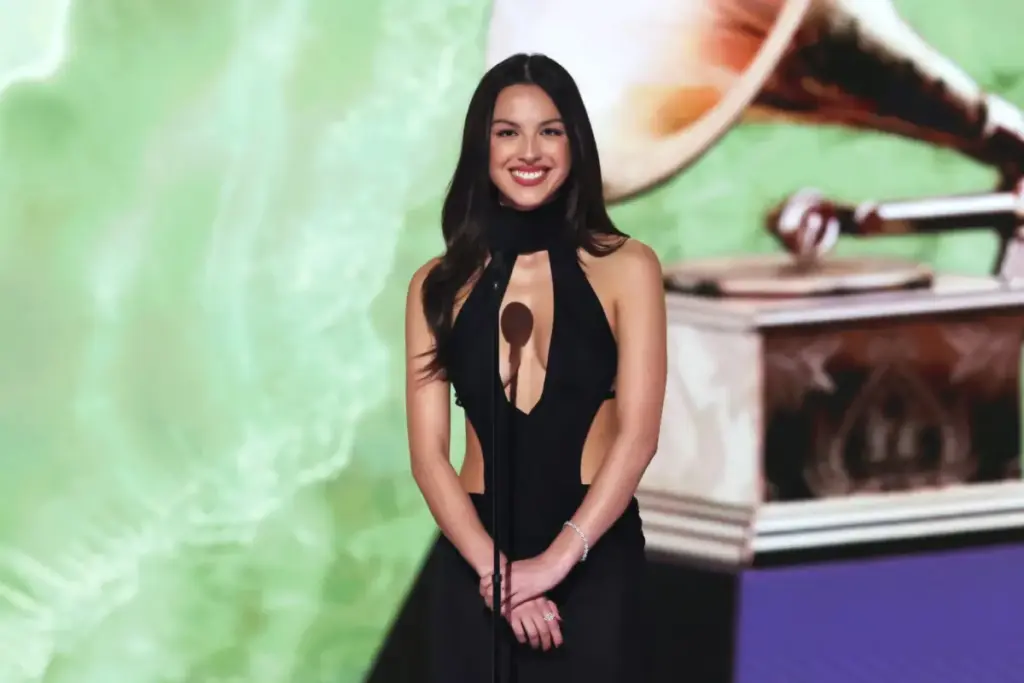
Stepping into the breach with effortless poise, Rodrigo addressed the audience directly before introducing a surprise guest who bridged generations of uncompromising female alternative-pop royalty: Alanis Morissette. The ensuing duet of Morissette’s 1995 generational anthem “Ironic” quickly transcended the boundaries of a standard festival fill-in set. Complete with a subtle, witty lyric flip that celebrated the event’s inclusive ethos, the performance served as a powerful testament to mutual artistic reverence.
Coming on the heels of a historic commercial peak for Rodrigo—marked by the chart-dominating success of her third studio album, You Seem Pretty Sad for a Girl So in Love—this spontaneous collaboration reinforced her status not just as a chart-topping pop star, but as a deeply knowledgeable custodian of modern alternative rock history.
Detailed Chronology: From Lineup Disruption to Stage Triumph
The events of Saturday, August 29, unfolded against a backdrop of meticulous planning that had turned Irvine’s Great Park into a vibrant sanctuary for female-forward artistry. Daisy Chain Fields was designed from its inception to challenge industry norms, prioritizing representation, intersectionality, and community impact. Yet, live events remain subject to the unpredictable nature of human lives and personal emergencies.
Hours before her scheduled performance, Karen O—widely regarded as a pioneer of indie-rock performance art and one of the festival’s most anticipated foundational bookings—notified organizers that she could no longer make the appearance. For a festival heavily marketed on its tightly curated, all-women bill, losing an act of the Yeah Yeah Yeahs’ stature could have deflated the afternoon’s momentum. Instead, the production team, in close coordination with Rodrigo, mobilized behind the scenes to secure a replacement of equal, if not greater, cultural magnitude.
Rather than letting rumors circulate or hiding behind a standard social media statement, Rodrigo chose transparency. Stepping onto the stage herself, she opted for direct communication with her fanbase:
"The bad news is Karen O is not able to make it tonight," Rodrigo told the captivated crowd, her tone balancing empathy with candor. "She was one of the first people who said yes to Daisy Chain, but she has a personal matter that requires her to be elsewhere."
The collective murmur of disappointment from the festival grounds, however, was short-lived. Without missing a beat, Rodrigo introduced the silver lining, welcoming Alanis Morissette to a deafening wave of applause.

The two artists immediately launched into a high-energy rendition of “Ironic,” the anchor single from Morissette’s nine-times-certified-diamond 1995 masterwork, Jagged Little Pill. The performance was electric, anchored by the stark contrast and ultimate synergy of two generations of vocal powerhouses sharing a single microphone.
Midway through the performance, the duo delivered a moment that would immediately dominate social media discourse and music journalism circles. Singing the song’s iconic narrative about life’s unexpected ironies, they intentionally altered a famous lyric, shifting the reference from a “beautiful wife” to a “beautiful husband.” This brief, deliberate lyrical pivot acted as a sharp, celebratory wink toward the inclusive, queer-friendly ethos of the Daisy Chain Fields festival—a subtle nod that resonated deeply with the progressive audience gathered at Great Park.
Supporting Context & Metrics: A Convergence of Legacies and Commercial Might
To understand the weight of the Rodrigo-Morissette collaboration at Daisy Chain Fields, one must examine the broader cultural and commercial vectors intersecting at the event.
The Evolution of a Mentorship
The pairing of Rodrigo and Morissette was far from a random pairing of convenience; it represented the latest chapter in a well-documented mutual admiration society. For Rodrigo, whose acerbic lyricism, emotional vulnerability, and guitar-driven pop-punk sensibilities frequently draw comparisons to 1990s alternative rock, Jagged Little Pill has long served as a North Star.
Their artistic paths have crossed before in high-profile settings. In 2022, Rodrigo honored the Canadian-American singer-songwriter by inducting her into the Canadian Songwriters Hall of Fame, delivering an impassioned speech detailing how Morissette’s fearless articulation of female rage and insecurity gave subsequent generations permission to take up space. Later that same year, the mutual appreciation manifested live when Morissette joined Rodrigo on stage during the Los Angeles stop of her Sour tour to trade blistering verses on "You Oughta Know."
By bringing Morissette out at Daisy Chain Fields, Rodrigo effectively framed the older artist not as a nostalgic relic, but as an active, vital force in contemporary feminist music culture.
Rodrigo’s Historic Commercial Apex
The festival also arrived at the absolute zenith of Rodrigo’s professional trajectory. Her third studio album, You Seem Pretty Sad for a Girl So in Love, arrived in June to staggering commercial numbers, debuting at No. 1 on the Billboard 200 with 485,000 equivalent album units. Not only did the figure represent the largest streaming and sales week of Rodrigo’s career, but it also secured the record for the biggest debut week of 2026 for any solo artist across the global music industry.
Furthermore, the album’s lead single, "Drop Dead," instantly claimed the top spot on the Billboard Hot 100, marking Rodrigo’s fourth career-defining No. 1 debut. With this milestone, Rodrigo cemented herself in the history books, joining Beyoncé as the only artists in music history to send each of their first three studio albums straight to No. 1 on the Billboard 200 while simultaneously generating at least one Hot 100 chart-topping single per era.
Philanthropy and Community Impact
Beyond the charts and setlists, Daisy Chain Fields distinguished itself through unprecedented charitable commitments. The one-day gathering successfully raised $10 million for non-profit organizations dedicated to uplifting women and girls. By combining commercial viability with grassroots advocacy, Rodrigo utilized her immense industry capital to construct an ecosystem where art, commerce, and social responsibility reinforce one another.

Official Statements and Industry Reception
Reactions from music industry insiders, cultural critics, and fans alike highlighted the brilliance of how the crisis was handled. While talent cancellations frequently expose the fragility of festival bookings, the pivot at Daisy Chain Fields was celebrated as a masterclass in crisis management and artistic agility.
In statements released following the festival, organizers praised both Morissette’s willingness to step in at the eleventh hour and Rodrigo’s leadership in maintaining the event’s thematic integrity. Musicologists and culture critics noted that the intentional alteration of the lyrics to "Ironic" demonstrated a sophisticated understanding of intersectional performance spaces.
"When an artist takes a classic track written three decades ago and tweaks it to explicitly honor the queer-inclusive makeup of a modern festival audience, they aren’t just performing—they are actively listening to the room," noted one festival attendee and music journalist in a widely shared digital review.
Morissette herself expressed enthusiasm for the collaboration backstage, praising Rodrigo’s continuous dedication to authentic, guitar-based storytelling and her efforts to carve out platforms dedicated exclusively to lifting up female and non-binary artists.
Future Outlook: The Road Ahead
As the dust settles on the triumphant debut of Daisy Chain Fields, Olivia Rodrigo shows no signs of slowing down her relentless momentum. The festival itself served as a high-profile runway for what promises to be one of the most anticipated global outings of the decade.
With the festival successfully executed and its philanthropic goals comprehensively met, Rodrigo’s immediate focus shifts toward the impending launch of her massive Unraveled Tour. Industry analysts predict that the tour will capitalize heavily on the record-breaking success of You Seem Pretty Sad for a Girl So in Love, translating the introspective depth and commercial dominance of her latest studio work into stadium-scale spectacles.
Furthermore, the spontaneous success of the Morissette collaboration raises intriguing possibilities for Rodrigo’s touring plans. As she continues to bridge the gap between contemporary pop-punk sensibilities and the rich lineage of 1990s alternative rock, audiences can likely expect more unpredictable, cross-generational collaborations on the horizon.
Ultimately, the afternoon at Great Park proved that when faced with unexpected hurdles, an artist of Rodrigo’s caliber does not merely improvise—she elevates the moment into cultural history, ensuring that a simple lineup change becomes the enduring headline of the season.