Executive Overview
In the upper echelons of contemporary European cinema, few stamps of approval carry the weight of an endorsement by Finnish master Aki Kaurismäki. When the veteran auteur described Markus Lehmusruusu’s futuristic speculative drama The Squirrel as a "masterpiece" akin to Stanley Kubrick’s 2001: A Space Odyssey, but elevated by a deeper, more resonant humanism, the global film community took notice.
Shortly after Kaurismäki’s high praise, The Squirrel was officially selected as Finland’s submission for the Best International Feature Film category at the upcoming Academy Awards. For Lehmusruusu, a director who has spent his career navigating complex thematic landscapes, the honor represents both a validation of high artistic risk and a triumph for uncompromising storytelling.
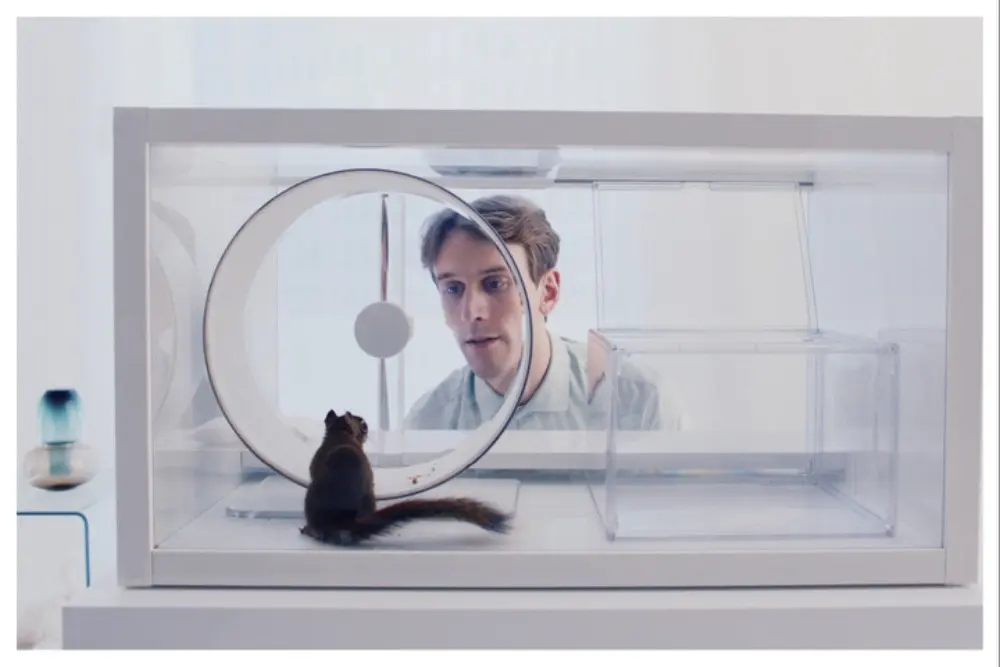
Set in a sterile, hyper-controlled tomorrow where nature, wildlife, and even raw human impulses have been systematically engineered out of existence, The Squirrel follows Pasi, a designer of artificial pets. Pasi’s predictable, sanitized world is upended when he stumbles upon a genuine, living squirrel—potentially the last of its kind on Earth. Bringing the wild creature into his sterile domestic environment triggers a philosophical, psychological, and biological crisis that mirrors humanity’s dangerous detachment from the natural world.
Boasting a powerhouse Nordic cast featuring Miro Lopperi (Codename: Annika), Mimosa Willamo (Sisu), and Hannu-Pekka Björkman (the upcoming Red Snow), the film has already begun turning heads on the international festival circuit, including a prominent screening at Fantastic Fest. Handled globally by REinvent International Sales and produced by an elite coalition of European production powerhouses—including Bufo, Pallas Film, Volya Films, and Zentropa Sweden—The Squirrel stands as a bold rebuke of conventional sci-fi tropes, replacing laser-wielding antagonists with a far more insidious and recognizable villain: human indifference.
Detailed Chronology
The genesis and ascent of The Squirrel trace a fascinating trajectory through the labyrinth of European co-productions, risk-taking development, and international festival circuits.
Development and Production Phase
Conceived as a philosophical counter-narrative to traditional dystopian science fiction, Lehmusruusu’s project required a multi-national coalition to bring its meticulously designed, sterile future to life. Production duties were spearheaded by Finland’s Bufo, alongside Germany’s Pallas Film, the Netherlands’ Volya Films, and Sweden’s Zentropa Sweden.
Rather than relying on CGI-heavy, post-apocalyptic wasteland aesthetics, the production design focused on a pristine, clinical tomorrow—a world where the absence of nature is masked by perfection. To anchor this high-concept premise, Lehmusruusu cast Miro Lopperi as Pasi, supported by critically acclaimed talent Mimosa Willamo and seasoned actor Hannu-Pekka Björkman. The filmmakers made the crucial artistic decision to use a real animal rather than a digital recreation for the titular rodent. This commitment to tangible reality extended to the animal’s behavior: the production team resisted the temptation to anthropomorphize the creature, insisting that it behave strictly like a wild rodent rather than a cuddly Disney cartoon character.
Festival Circuit and Critical Breakthrough
Following its completion, The Squirrel began generating underground buzz within Nordic industry circles before making its international splash. A key milestone in its distribution journey was its selection for Fantastic Fest, one of the genre film community’s most influential launchpads. It was here that the film’s refusal to adhere to rigid genre boundaries was met with critical fascination.
Simultaneously, the film caught the eye of industry heavyweights, most notably Aki Kaurismäki. Kaurismäki’s unsolicited declaration of the film as a superior, more humanistic successor to 2001: A Space Odyssey instantly elevated the profile of Lehmusruusu’s sophomore-stage project.
The Oscar Nomination Campaign
The momentum culminated when the Finnish Oscar selection committee chose The Squirrel to represent the country in the Academy Awards’ International Feature Film race. Historically, Finland has favored entries that eschew the safe, traditional Oscar mold—championing gritty crime dramas like Euthanizer, domestic tragicomedies like Family Time, and boozy satires like 100 Liters of Gold. Yet, despite Finland’s rich cinematic history, the nation has secured only a single Oscar nomination in this category to date: Aki Kaurismäki’s own The Man Without a Past.
Lehmusruusu and his team now face the formidable task of mounting an international campaign, backed by REinvent International Sales, to introduce this genre-defying speculative human drama to voting members of the Academy.
Supporting Context & Metrics
Finland’s Academy Awards Track Record
- Total Submissions: Over 35 official submissions to the Academy of Motion Picture Arts and Sciences.
- Nominations: 1 (The Man Without a Past, directed by Aki Kaurismäki, 2002).
- Recent Trend: A distinct preference by the Finnish selection committee for idiosyncratic, anti-formulaic cinema that challenges viewers rather than ticking conventional Oscar-bait boxes. Recent years have seen submissions ranging from character-driven family examinations to eccentric comedies.
Production and Distribution Footprint
- Production Companies: Bufo (Finland), Pallas Film (Germany), Volya Films (Netherlands), Zentropa Sweden (Sweden).
- International Sales: REinvent International Sales.
- Key Cast Members:
- Miro Lopperi (Codename: Annika)
- Mimosa Willamo (Sisu)
- Hannu-Pekka Björkman (Red Snow)
- Festival Launch: Fantastic Fest.
Thematic Matrix of The Squirrel
- Primary Premise: A sterile, post-nature future where technological omnipotence has replaced organic friction.
- Catalyst: The discovery of what is believed to be the world’s last wild squirrel by an artificial pet designer.
- Core Metaphors:
- The Rodent: Represents both the fragility of taken-for-granted ecosystems and the chaotic, destructive nature of true wildness.
- Sexuality: Examined as the ultimate remaining primal, bodily force in an age where modern youth increasingly recoil from bodily fluids and organic intimacy.
- Villainy: Replaced entirely by the psychological concept of "the consequences of indifference"—good intentions taken to clinical, destructive extremes.
Official Statements
Director Markus Lehmusruusu and legendary supporter Aki Kaurismäki have offered deep insights into the philosophical underpinnings and creative risks associated with The Squirrel.
Aki Kaurismäki on the Film’s Legacy
"Aki Kaurismäki called it a masterpiece. He said it was like ‘2001: A Space Odyssey,’ but better because it’s full of humanism. I really loved that,"
— Markus Lehmusruusu, recounting Kaurismäki’s reaction to Variety.
Markus Lehmusruusu on Humanism and Hubris
"I hope that it can work on two levels. It’s full of humanism, but it also shows that as humans, we shouldn’t always put ourselves first… Thanks to technology, we sometimes feel omnipotent. But wouldn’t something be missing if we replaced nature with something that doesn’t have its downsides?"
— Director Markus Lehmusruusu.
Addressing Modern Detachment and Sexuality
"This also led to sexuality being a big part of the film because we keep hearing about people not having sex anymore. Young people just aren’t interested, partly because they’re repulsed by bodily fluids. Sexuality is perhaps the most primal force we have left, and we are becoming detached from it."
— Markus Lehmusruusu on the intersection of ecology and intimacy.
On Rejecting Conventional Cinematic Evil
"I wanted to go against this dystopian science fiction where evil is always lurking. In a way, it feels even darker to say that people aren’t bad; they are just making bad choices. As a species, we’re responsible for a lot of shit… If you look at the bigger picture, the horror of it all slowly sneaks up on you. But I wanted this film to work also if you’re not willing to do that. I want people to find it entertaining, funny and joyful."
— Markus Lehmusruusu on the banality of ecological destruction.
Future Outlook
As The Squirrel prepares for its high-stakes Oscar campaign, its trajectory signals a broader shift in how European cinema approaches speculative storytelling. By refusing to lean on the tired tropes of dystopian doom-mongering, Lehmusruusu has crafted a narrative that speaks directly to contemporary anxieties surrounding technological alienation, ecological grief, and the erosion of raw human instinct.
For the international sales agent REinvent International Sales, the film represents a premium arthouse asset with cross-over potential, capable of bridging the gap between high-concept sci-fi and intimate psychological drama. Territories worldwide are currently eyeing the film not merely as a novelty submission from Finland, but as a sharply observed, darkly funny, and emotionally resonant warning from a plausible tomorrow.
Looking ahead, Lehmusruusu’s career is poised for a significant upward leap. While his current work luxuriates in the sterile, high-concept architecture of a post-nature future, the director notes that his upcoming projects are tilting back toward naturalism. Yet, his core fascination remains unchanged: using the cinematic medium as a "magic trick" to expose and explore the hidden depths of human interiority. Whether The Squirrel ultimately secures a coveted Academy Award nomination or simply cements its status as a cult masterpiece endorsed by Aki Kaurismäki, it has already established Markus Lehmusruusu as one of the most daring and visionary voices in modern European filmmaking.