Executive Overview
As the sweltering heat of late August heralds the official arrival of US Open season in New York City, the intersection of elite athletics and high fashion once again commands the global style conversation. While Grand Slam tournaments inherently dictate the athletic calendar, their cultural shockwaves inevitably ripple far beyond the asphalt and clay of Flushing Meadows, embedding themselves deeply into the sartorial vocabulary of metropolitan street style.
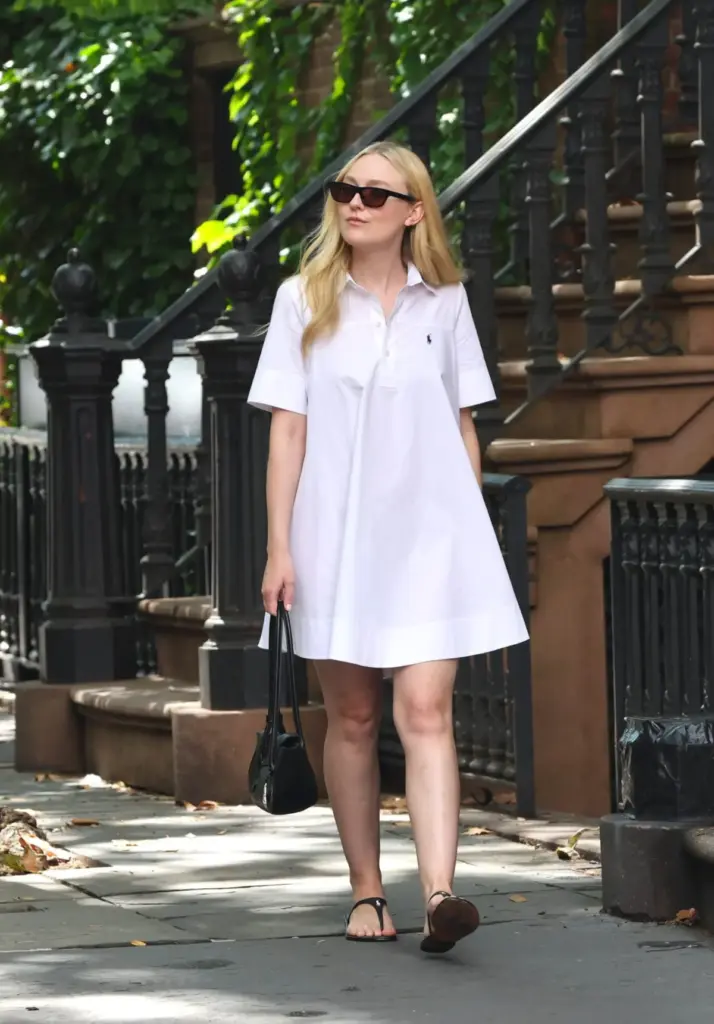
Enter actress Dakota Fanning. Spotted on the bustling streets of Manhattan while filming a commercial, the acclaimed star delivered a masterclass in transitional, late-summer dressing. Leaning heavily into the timeless allure of "tenniscore"—a macro-trend that continues to dominate runways, social media feeds, and retail indexes alike—Fanning stepped out in a pristine, breezy Ralph Lauren cotton A-line shirtdress. Effortlessly marrying preppy heritage with a contemporary downtown edge, her ensemble proved that tennis whites are no longer reserved strictly for the baseline.
Far from a mere random wardrobe choice, Fanning’s look underscores a broader phenomenon: the ways in which major sporting events serve as catalysts for consumer behavior and macro-fashion trends. By pairing her court-ready shirtdress with minimalist leather sandals and one of the season’s most coveted new accessories—the Polo Ralph Lauren Polo Blaze bag—Fanning expertly blurred the boundary between activewear prestige and everyday luxury. This report explores the anatomy of her viral off-duty look, the socio-cultural ripple effect of New York sporting events on local style, the strategic mechanics of tenniscore, and what this moment signals for the future of luxury athletic collaborations.
Detailed Chronology: A Snapshot from the Manhattan Pavement
The morning of August 24, 2026, in New York City was typical for the tail end of summer: humid, fast-paced, and brimming with the chaotic creative energy characteristic of a metropolis gearing up for autumn. Amidst the production trailers, camera rigs, and curious onlookers, Dakota Fanning materialized on set to film an upcoming commercial project, instantly drawing the focus of street-style photographers.

The Foundation: The Ralph Lauren Cotton A-Line Shirtdress
At the core of Fanning’s ensemble was a garment synonymous with understated American elegance: the Ralph Lauren Cotton A-line Shirtdress, retailing at $298. Crafted from crisp, breathable white cotton, the dress featured a structured button-front collar and a fluid, trapeze-shaped silhouette that danced between athletic functionality and relaxed tailoring. The architectural A-line cut offered both visual volume and essential airflow, making it an optimal choice for navigating a high-temperature workday in the city.
The Accessories: Grounding the Look with Downtown Ease
Rather than leaning into an overtly traditional country-club aesthetic—which might have called for canvas sneakers or classic tennis shoes—Fanning opted to anchor the outfit with footwear that lent a sharp, urban sensibility. She slipped into the Polo Ralph Lauren Polo Play sandals ($345 at select retailers like Farfetch), a refined thong-style leather shoe featuring a delicate T-strap design and the brand’s signature discreet equine hardware. The sandals offered an exposed, breezy footwear option that elevated the daytime dress without tipping into overly formal territory.
In her hand, Fanning carried the crown jewel of her accessories lineup: the small-size iteration of the Polo Ralph Lauren Polo Blaze bag ($598), rendered in sleek black leather with gleaming silver-tone hardware. The bag, which takes its intriguing name from a horse’s distinct facial blaze marking, represents one of the brand’s most strategic recent handbag launches. Its structured yet supple silhouette provided a stark, sophisticated contrast against the pristine backdrop of her white dress, solidifying the outfit’s balance between athletic heritage and metropolitan sharpness.
Supporting Context & Metrics: The "Sporting Effect" on Urban Fashion
The phenomenon of sports culture dictating citywide fashion trends is a well-documented economic and cultural engine, particularly in a trendsetting metropolis like New York City. When major sporting events captivate the public consciousness, the visual language of those sports becomes the de facto uniform for the urban populace.

The Precedent: From the Hardwood to the Hard Court
Consider the massive cultural wave generated earlier in the summer by the New York Knicks’ deep NBA championship playoff run. Overnight, the city’s thoroughfares transformed into a sea of vibrant blue and orange. Sidewalk style was flooded with vintage jerseys, tailored trousers paired with team caps, and color-blocked outerwear. This direct translation of athletic allegiance into everyday luxury styling demonstrated an insatiable consumer appetite for sports-adjacent aesthetics.
The US Open exerts an identical—if not more refined—sartorial ripple effect. As the final Grand Slam of the tennis calendar, the tournament converges at a unique nexus of high-society tradition and pop-culture spectacle. Over the past several years, the "tenniscore" movement has evolved from a niche aesthetic inspired by 1970s country clubs into a multi-season powerhouse. According to retail data analytics from platforms like Lyst and Edited, searches for pleated skirts, polo collars, and tennis whites consistently spike by upwards of 40% globally during the late-August tournament window.
The Economics of Athletic-Luxury Crossovers
Brands have been quick to capitalize on this rhythmic seasonal shift. Ralph Lauren, serving as the official outfitter of the US Open for decades, has mastered the art of translating on-court performance wear into commercially viable, high-end lifestyle pieces. The integration of items like the Polo Blaze bag and the A-line shirtdress into celebrity street style is a masterclass in modern earned media. By positioning these pieces on high-profile actors during unscripted public appearances, heritage labels successfully bridge the gap between legacy sports heritage and contemporary Gen-Z/Millennial lifestyle desires.
Official Statements and Industry Perspectives
While Fanning herself has remained characteristically understated regarding her off-duty wardrobe choices, fashion historians, retail experts, and brand representatives have weighed heavily on the broader implications of the "tenniscore" evolution.

Fashion industry analysts note that the enduring popularity of athletic-inspired dressing points to a deeper consumer craving for comfort married with clean, classic structures.
"We are witnessing a post-athleisure fatigue where consumers still demand comfort and breathability, but they want it packaged in cleaner, more elevated silhouettes," explains Dr. Elena Vance, a senior lecturer in fashion sociology at the Fashion Institute of Technology. "A shirtdress like the one Dakota Fanning wore provides the ease of a t-shirt dress while instantly telegraphing status, heritage, and intentionality. It requires zero effort to look put-together."
Furthermore, representatives from Ralph Lauren have previously emphasized the brand’s commitment to creating timeless pieces that transition seamlessly from the spectator stands to the city streets. The design philosophy behind the Polo Blaze bag and seasonal cotton separates centers on versatility—the idea that a handbag named after equine anatomy or a dress cut for a country club should feel equally at home navigating a hectic day of filming in Manhattan or grabbing espresso in SoHo.
Future Outlook: Where Tenniscore Goes From Here
As we look toward the remainder of the 2026 fashion calendar and beyond, the trajectory of athletic-inspired style shows no signs of slowing down. However, the nature of the trend is maturing.

From Novelty to Wardrobe Staple
Initially characterized by hyper-literal interpretations—such as actual tennis skirts worn with athletic sneakers—tenniscore is entering a more sophisticated, understated phase. As demonstrated by Fanning’s styling choices, future iterations of the trend rely less on active sportswear pieces and more on the codes of tennis culture: crisp whites, structured collars, breathable natural fabrics, and minimalist leather accessories.
The Convergence of Film, Sports, and Fashion
The synergy between cinema and sports is also deepening. With major tennis-themed cinematic projects and high-profile athlete partnerships dominating media consumption, public figures like Dakota Fanning act as the vital bridge between entertainment and fashion retail. Expect upcoming red carpets and off-duty street-style moments to increasingly feature hybrid pieces that blur the lines between athletic performance wear and high-fashion ready-to-wear.
Ultimately, Fanning’s downtown moment serves as a timely reminder: you don’t need to hold a carbon-fiber racquet or master a backhand slice to participate in the grand tradition of end-of-summer sport style. Sometimes, all it takes is a brilliant white shirtdress, a meticulously crafted leather shoulder bag, and the confidence to wear your game-day best wherever the city takes you.