Executive Overview
If you happen to sit next to Mima Mendoza on a train or stand behind her in a checkout line, you might get an earful about the transformative benefits of lifting weights. "I’ve become like the person at the train station saying, ‘Have you heard the word of God recently?’ Except I’m like, ‘Have you thought of strength training recently?’" she says.
Mendoza, a 34-year-old resident of Severna Park, Maryland, is far from a lifelong fitness fanatic. She got serious about lifting in 2024, intersecting with the timeline of her physician prescribing the GLP-1 medication Zepbound to support her weight-loss efforts. "I wanted to sustain this weight loss long term, and I wanted to manage metabolic illnesses like type 2 diabetes, high cholesterol, and high blood pressure that I was genetically predisposed to, and the answer to that was really building muscle," she explains.
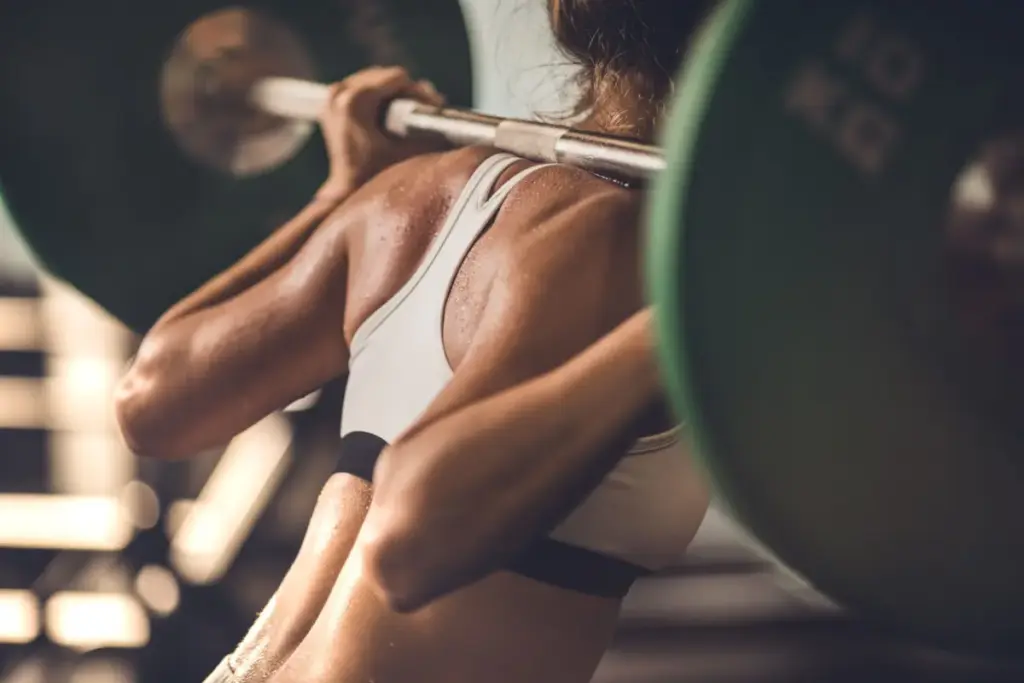
Mendoza is part of a sweeping, cultural demographic shift. Millions of individuals are taking to the weight room shortly after starting a GLP-1 medication, fundamentally transforming the landscape of fitness facilities across the United States. Between 2024 and 2025, the utilization of free-weight equipment saw a stark, measurable surge in gyms nationwide. According to a forthcoming report from the Health & Fitness Association—a premier fitness-industry trade organization—gym members are now 6.7% more likely to use dumbbells, 3.8% more likely to use barbells, and 3.6% more likely to use kettlebells. Looked at through a wider lens, dumbbell use has skyrocketed by 28% compared to 2021, the landmark year Wegovy first received FDA approval.
"Available data suggest that the growing interest in strength training is part of a structural, long-term trend, which in part is accelerated by GLP-1s’ increasing popularity," notes Anton Severin, vice president of research at the Health & Fitness Association.
While weight-loss medications are a primary catalyst, they are not operating in a vacuum. Broader cultural currents centered on longevity and functional fitness were already pushing society toward resistance training. However, the advent of GLP-1 receptor agonists added an undeniable clinical urgency. Because these drugs are clinically associated with a loss of lean muscle mass alongside fat tissue, strength training has morphed from a generic wellness suggestion into a nonnegotiable medical necessity.
Detailed Chronology: How Medicine and Science Shape Exercise Recommendations
The phenomenon of pharmacology dictating fitness culture is not entirely unprecedented. Throughout modern history, major scientific discoveries and medical paradigms have continually dictated how humans move, sweat, and build strength.
"The fields of health and medicine are always shaping how we are recommended to exercise and how we actually do exercise," explains Natalia Mehlman Petrzela, a history professor at The New School and author of Fit Nation: The Gains and Pains of America’s Exercise Obsession.
The Cardio Boom of the Late 20th Century
The intersection of modern medicine and physical culture dramatically accelerated in the late 1960s. Prior to this era, heavy physical exertion—particularly cardiovascular stress—was often viewed with suspicion or outright fear, with many believing it could strain the heart to a dangerous degree.
However, breakthroughs in medical research definitively proved that cardiovascular exercise protected against heart disease and improved overall circulatory health. "Big innovations in science, such as the discovery in the late 1960s that cardio is good for your cardiovascular health and won’t make your heart explode, really shifted the way people exercised at that moment," Petrzela notes. This landmark realization triggered a decades-long cardio boom, culminating in the high-energy dance aerobics craze of the 1970s and 1980s, which drew millions—particularly women—into fitness studios.
The 1990s and 2000s: The Rise of Resistance Training
As the decades progressed, the cultural pendulum swung once again. By the 1990s and 2000s, emerging clinical research began highlighting the vital role of resistance training in preserving bone mineral density and preventing osteoporosis. Lifting weights transitioned from a niche pursuit practiced primarily by bodybuilders to a mainstream prescription for aging populations, particularly post-menopausal women seeking to stave off bone degradation.
The 2020s: The GLP-1 Era and Muscle Preservation
Now, more than twenty years after the turn of the century, the explosive popularity of GLP-1 receptor agonists for chronic weight management is driving yet another paradigm shift. By offloading the burden of severe caloric restriction and rapid weight loss onto pharmacology, these medications have cleared mental and physical space for individuals to prioritize structural strength, metabolic health, and long-term functional independence.
Supporting Context & Metrics: Why Strength Training is Nonnegotiable on a GLP-1
To understand why gym floors are transforming, one must examine the physiological mechanics of rapid weight loss. Any form of substantial weight reduction—whether achieved via aggressive caloric restriction, bariatric surgery, or advanced pharmacotherapy—inevitably leads to a reduction in both fat mass and lean muscle mass.
"The most protective things we can do to prevent a higher percentage of muscle-mass reduction are eating enough protein and resistance training consistently," explains Dr. Jyotsna Ghosh, an obesity medicine physician at Johns Hopkins Medicine.
This clinical guidance is vital because skeletal muscle mass is not merely an aesthetic asset; it is a critical endocrine and metabolic organ tied directly to overall health, metabolic rate, and longevity. As people age, the natural decline of muscle mass (sarcopenia) accelerates functional decline. Therefore, maintaining muscle tissue while taking a GLP-1 is critical for preventing long-term metabolic slowdown and frailty.
The Gym Industry Response: Metrics and Adaptation
Fitness facilities are actively reallocating square footage to meet this massive cultural pivot. According to industry observations shared by Professor Petrzela and trade data from the Health & Fitness Association, commercial gyms are quietly clearing out underutilized rows of traditional cardio machines—such as stationary bikes and elliptical trainers—to make room for expanded weight racks, deadlifting platforms, and functional turf zones.
The empirical data mirrors these physical renovations:
- Free-Weight Utilization: Dumbbell use has surged 28% since 2021. Between 2024 and 2025 alone, gym members saw a 6.7% increase in dumbbell usage, a 3.8% increase in barbell utilization, and a 3.6% increase in kettlebell training.
- Personal Training Demand: One-on-one personal training sessions experienced an impressive 22% jump between 2024 and 2025, driven largely by novices seeking professional instruction on safe lifting mechanics.
Official Statements and Industry Insights
Gym operators, fitness executives, and medical professionals are actively reshaping their service models to accommodate the influx of pharmacologically assisted fitness seekers.
Specialized Protocols and Education
Forward-thinking fitness brands are rolling out targeted education campaigns for their coaching staff. Kelvin Gary, CPT, CEO and head coach of Body Space Fitness—a semiprivate personal training gym in New York City—notes that his team receives continuous education regarding GLP-1 medications to better serve their clientele.
"The key for us is helping [these clients] maintain lean muscle mass," Gary states. "Our point is making sure that everyone has a sound understanding of the importance of maintaining their lean muscle mass, and when you’re not eating as much, that might mean we need to modify your workout a little bit." Gary points out that reducing workout intensity or adjusting programming to account for side effects such as nausea is often necessary for clients navigating the early stages of GLP-1 therapy.
Major commercial fitness brands are also codifying these practices on an enterprise scale. Equinox launched a research-backed "GLP-1 protocol" designed to guide personal trainers in creating specialized regimens for clients taking the medications. Meanwhile, mega-fitness brand Life Time launched Miora, a spin-off longevity and performance clinic offering integrated medical oversight, personal training, recovery therapies, and access to GLP-1 prescriptions. Budget-friendly fitness giant Planet Fitness has also leaned into the trend through strategic partnerships with telehealth providers specializing in weight-loss medications.
Redefining the Purpose of Exercise
Historically, Western fitness culture has sold exercise primarily as a punishment for caloric intake or a direct tool for shedding pounds. However, the rise of GLP-1s has decoupled physical activity from the sole objective of weight loss.
"If people are using GLP-1s as their primary strategy to lose weight, fitness is going to be for accomplishing all sorts of other things, whether that’s building muscle, finding community, or cultivating discipline and newer healthy habits," Professor Petrzela observes.
This cultural shift is visible in clinical settings as well. Dr. Ghosh notes a striking evolution in patient mindsets: "One cultural shift that I see is that women are more excited to be strong." She adds that outdated tropes regarding women fearing that lifting weights will make them "bulky" have largely dissolved, replaced by a desire for functional strength and physical autonomy.
Future Outlook: Building a Lasting Habit
For early adopters like Mima Mendoza, outsourcing the struggle of initial weight loss to a GLP-1 prescription provided the cognitive freedom required to embrace sustainable lifestyle habits. "Zepbound helped me clear away space in my brain to actually focus on the evidence-based journey for strength training," she reflects. Although she eventually transitioned off the medication, her commitment to the barbell remains unwavering.
Industry experts anticipate that this newfound appreciation for resistance training will outlast the current pharmaceutical wave. "There is the longevity part of strength training that I think people are going to realize—Yes, we do feel better. We’re at a lower risk for injury," Gary notes.
Mendoza summarizes the sentiment shared by a growing generation of health-conscious adults: "If we want to live independently in our old age, especially women, building muscle is so important. It has really become a huge part of my life."
Practical Starting Tips for Beginners
For individuals inspired to embark on their own muscle-building journey—whether utilizing a GLP-1 medication or simply pursuing longevity—Dr. Ghosh offers the following expert-backed recommendations:
- Employ the Buddy System: Navigating a crowded weight room for the first time can be intimidating. Bringing a friend, partner, or family member helps alleviate gym anxiety and makes accountability much easier.
- Take a Class or Hire a Trainer: Consider starting with a beginner-friendly group fitness class to learn fundamental movement patterns. Alternatively, take advantage of complimentary introductory personal training sessions offered by many fitness facilities.
- Start Slowly and Prioritize Form: Avoid the trap of doing too much too soon, which invites injury and burnout. Focus first on consistency and safe biomechanics before chasing heavy loads.
- Schedule Workouts Like Business Meetings: Treat your gym sessions with the same unwavering priority as professional appointments. Putting workouts directly into your calendar reduces the likelihood of skipping them when scheduling conflicts arise.
- Time Your Visits Strategically: If crowded peak hours induce anxiety, try visiting the gym during off-peak windows when the floor is quieter and equipment is readily available.