Executive Overview
For decades, the narrative surrounding women in Hollywood operated under a rigid, expiration-dated clock. Once an actress crossed the threshold of midlife—traditionally marked by the onset of menopause—she was quietly ushered toward the periphery of the cinematic landscape. Mainstream media historically relegated mature women to background tropes: the nagging wife, the eccentric neighbor, the bitter adversary, or the senile matriarch. Youth and commercial viability were treated as synonymous, while aging was viewed as a creative liability.
However, a profound cultural and industrial reckoning is currently underway. Propelled by award ceremonies like the 2025 Golden Globes and the recent Emmy Awards, a vibrant, unapologetic wave of mature female talent is commanding the spotlight. Dubbed "Old Lady Energy," this phenomenon is more than a fleeting social media trend; it is a powerful reclamation of space by women who are thriving in their abundant maturity.
Far from retreating into quiet obscurity, iconic actresses in their fifties, sixties, seventies, eighties, and nineties are delivering career-best performances, commanding leading roles, and dominating the awards circuit. Yet, this renaissance exists in a complex tension. Even as individual icons smash glass ceilings on the red carpet, institutional data reveals a contradictory landscape: behind the scenes and across streaming platforms, the overall representation of women in creative and major on-screen roles remains precarious.
This article investigates the surging power of mature women in entertainment, examining the cultural shift toward embracing aging, the hard metrics of industry representation, the systemic barriers that still persist, and the resilient voices driving this cinematic revolution.
Detailed Chronology: A Season of Unprecedented Recognition
The paradigm shift toward celebrating mature female brilliance has unfolded steadily across recent high-profile industry events, transforming red carpets and acceptance speeches into masterclasses in seasoned grace and vitality.
The 2025 Golden Globes: A Precursor of Change
The movement first crystallized in the public consciousness during the 2025 Golden Globes ceremony. Observers noted a delightful and undeniable saturation of what could only be termed "Old Lady Energy." A remarkable sixteen women between the ages of 50 and 70 received competitive nominations.
While the term initially sparked a debate among online commentators—some of whom reflexively viewed "old lady" as a pejorative—it ultimately catalyzed a much-needed cultural conversation about ageism. Those who bristled at the terminology overlooked a fundamental truth: treating the word "old" as the ultimate insult is itself an inherently ageist construct.
As advocates of the term pointed out, the women embodying this energy are hardly shrinking violets. They are individuals backpacking solo around the world, authoring best-selling literary masterworks, launching million-dollar entrepreneurial ventures, and actively mentoring younger generations. The Golden Globes proved that brilliance and vitality do not expire with a milestone birthday.
The Emmy Awards: Validating the Power of Maturity
If the Golden Globes laid the groundwork, the recent Emmy Awards ceremony cemented the dominance of mature female talent. The evening was a masterclass in resilience, longevity, and star power.
The red carpet was resplendent with legendary figures who refused to hide their years. Michelle Pfeiffer, radiant at 68; Lisa Kudrow, luminous at 63; and Sheryl Lee Ralph, breathtaking at 69, commanded the flashbulbs. When asked about her impending 70th birthday, Ralph delivered an iconic declaration that instantly became a rallying cry:
"I am 70 and I’m still doing it! Take a close-up, zoom in, don’t be afraid."
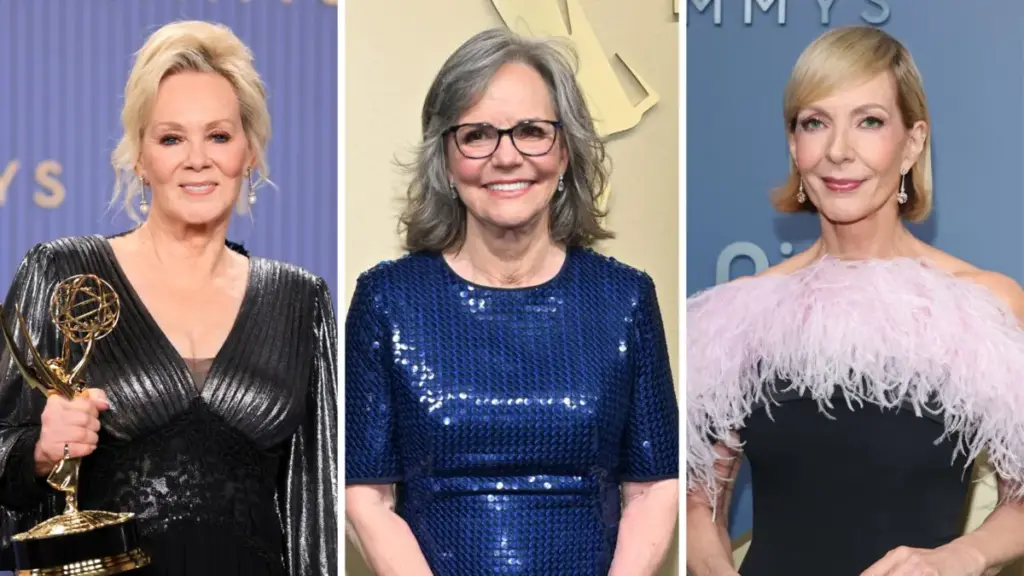
The momentum continued straight into the winner’s circle. In a stunning sweep of the female acting categories, four of the five major awards went to women firmly over the age of fifty:
- Sally Field (age 79)
- Jean Smart (age 75)
- Allison Janney (age 66)
- Rhea Seehorn (age 54)
The generational triumph extended to the Creative Arts Emmy Awards the preceding week, where the legendary Julie Andrews was honored at the vibrant age of 90. To put these achievements into perspective, the average age of the female acting category winners at this year’s Emmys stood at an impressive 63 years old. (By comparison, the youngest female actor to secure an Emmy win this cycle was 34-year-old Shailene Woodley, who took home the prize for best guest actress in a drama).
The Maestro of Ceremonies
To cap off the evening, the glittering event was hosted by 62-year-old Mariska Hargitay. Pacing the stage with effortless charisma, Hargitay joked about her status as "America’s sweetheart sex cop" before executing a series of breathtaking wardrobe and hairstyle changes over the course of the three-hour broadcast. Her dynamic presence underscored a vital reality: mature women are not merely participating in the upper echelons of entertainment—they are anchoring its biggest nights.
Supporting Context & Metrics: The Paradox of Hollywood Representation
While the red-carpet triumphs of icons like Jean Smart and Sally Field paint a picture of triumphant progress, quantitative data reveals a more complicated industrial reality. The entertainment industry remains locked in a tug-of-war between the undeniable star power of veteran actresses and systemic biases embedded within studio and streaming executive suites.
The Historical Marginalization of Older Women
Historically, Hollywood has operated under the persistent, stale myth that middle-aged and older women lose their creative and commercial value once they pass through menopause. Sociological research—including landmark studies from as recently as 2019—consistently highlights how older women are marginalized in visual media. When cast, they are frequently relegated to flat supporting roles or boxed into predictable, unflattering caricatures: the grumpy neighbor, the frumpy housewife, or the senile relative.
Backstage at the Emmys, legendary actress Sally Field offered a candid assessment of this drought. When asked what projects lay ahead following her victory for her acclaimed role in Remarkably Bright Creatures, Field didn’t mince words:
"It’s very hard to find projects for old women."
The Streaming and Broadcast Metrics (2025–2026)
Data compiled by The Center for the Study of Women in Television & Film illustrates that structural equity remains an uphill battle. Across original U.S. programs on streaming services for the 2025–2026 cycle, the percentages of women working behind the scenes as creators and directors experienced a sharp downturn.
On-screen representation mirrored this behind-the-scenes contraction:
- Streaming Programs: Female characters comprised 44% of major characters in the 2025–2026 window, representing a noticeable decline from 49% in the 2024–2025 cycle.
- Broadcast Programs: Female characters in major roles experienced a minor dip, moving from 47% in 2024–2025 down to 46% in 2025–2026.
When the macro-level volume of female characters contracts, the impact on older female characters is exponentially more devastating. Given this data, how can we account for the sudden, thrilling wave of recognition for older actresses?
The answer lies in sheer, undeniable excellence. Having been benched from the game for decades, these women represent some of the most gifted, seasoned players in the field. Furthermore, because they no longer attempt to conform to Hollywood’s increasingly narrow, unrealistic ideals of youthful perfection, their raw individualism offers a refreshing antidote to the cookie-cutter ingenues who flood casting offices.
Official Statements & Industry Perspectives
The shift toward embracing mature talent is not happening in a vacuum; it is being actively championed by the artists who have navigated the industry’s shifting tides for decades. Their voices offer critical insight into how the landscape is evolving—and where it still falls short.
Sheryl Lee Ralph: Refusing Invisibility
Sheryl Lee Ralph’s defiant red-carpet declarations have become a masterclass in aging on one’s own terms. By inviting cameras to "zoom in" and refusing to soften her presence for comfort, Ralph directly challenges the cultural conditioning that teaches women to apologize for growing older. Her career trajectory—stretching from early theatrical triumphs to her celebrated television renaissance—serves as proof that artistic vitality compounds over time.
Allison Janney: Expanding the Narrative Horizon
For Emmy winner Allison Janney, the landscape of available roles is undergoing a slow, welcome expansion. Reflecting on the evolving nature of her character work, Janney noted:
"There are more and more and more interesting roles. We don’t have to be the girlfriend or the wife anymore. We can be so many more things."
This sentiment strikes at the heart of the "Old Lady Energy" movement. By shedding the restrictive, auxiliary roles of the past—the supportive spouse, the romantic foil, the maternal anchor—mature actresses are stepping into complex, flawed, multifaceted protagonists who drive the narrative forward on their own terms.
Future Outlook: The Horizon for Mature Talent in Entertainment
As the dust settles on another award season, the entertainment industry stands at a critical crossroads. The resounding success of mature actresses at the Emmys and Golden Globes proves that audiences voraciously consume stories anchored by experience, wisdom, and seasoned talent. Viewers are clearly fatigued by youth-obsessed homogeneity; they crave authenticity, emotional depth, and characters who have lived enough life to understand the nuances of the human condition.
However, true systemic transformation requires structural alignment between public celebration and behind-the-scenes commissioning. To sustain this momentum, studio executives, streaming platforms, and financiers must convert red-carpet applause into greenlit projects.
Key Imperatives for Industry Evolution:
- Investment in Writers’ Rooms: Studios must actively fund and develop scripts centered on the rich, complex lives of women over fifty, moving past tokenism into genuine narrative depth.
- Behind-the-Camera Parity: Reversing the recent declines in female directors and creators on streaming platforms is vital to ensuring authentic storytelling that reflects the female experience across all life stages.
- Challenging Beauty Norms: The industry must continue to dismantle restrictive beauty standards, making space for unvarnished, authentic physical appearances that celebrate aging rather than mask it.
The embrace of "Old Lady Energy" is much more than a pop-culture catchphrase. It is a cultural reclaiming of power, visibility, and respect. If Hollywood is wise enough to heed the message delivered by Michelle Pfeiffer, Sheryl Lee Ralph, Sally Field, Jean Smart, and their peers, the future of entertainment will be defined not by how young a performer can look, but by how deeply she can feel, create, and resonate. The players on the field are seasoned, they are brilliant, and they are only just getting started.