Executive Overview
In an era where digital archives rarely forget, pop star Lily Allen has brought closure to one of early internet history’s most enduring pop-culture relics. Speaking candidly in a recent interview with Perfect Magazine, the 41-year-old "Smile" singer issued a formal and unprompted apology to Scottish radio and television presenter Edith Bowman. Twenty years ago, the two found themselves at the center of a vitriolic, headline-grabbing feud hosted on the then-ubiquitous social networking site, MySpace.
Allen confessed that there was "absolutely no f***ing reason" for her to have launched a verbal assault against Bowman in 2006—a tirade that famously branded the veteran broadcaster a "trollop." This retrospective act of contrition highlights a broader cultural reckoning regarding the permanence of teenage and early-twenties digital footprints, capturing a moment when the wild west of early social media collided with the volatile realities of skyrocketing celebrity culture.
Beyond revisiting ancient history, Allen’s interview shed light on her current life chapter: navigating a romance with 29-year-old PR scion Jonah Freud, touring her critically acclaimed theatrical concert West End Girl, and continuing to process the fallout from her high-profile divorce from Stranger Things star David Harbour.

Detailed Chronology: The Genesis and Evolution of the Feud
The 2006 MySpace Inciting Incident
To fully understand the gravity of Allen’s recent apology, one must look back to the cultural landscape of 2006. MySpace was the primary digital watering hole for musicians, teenagers, and culture writers alike. Allen, then on the precipice of global stardom with her debut studio album, Alright, Still, utilized her blog space not merely for self-promotion, but as an unfiltered, abrasive diary.
During this period, Allen took specific exception to the BBC Radio 1 programming choices of Edith Bowman. In a fiery blog post that would become legendary among pop music chroniclers, Allen complained about being "rudely awoken" by Bowman’s morning broadcasts. She weaponized the derogatory term "trollop" against the presenter and ridiculed Bowman’s professional proximity to the indie-rock landscape of the mid-2000s—specifically mocking her penchant for being "BESTEST friends" with musicians who favored "skinny jeans and stripey cardigans." The rant culminated in a sarcastic takedown of Bowman’s vocal support for the indie band The Magic Numbers, finished with an exasperated, capitalized punctuation mark: "AGAIN."
At the time, the lines between fan, artist, and media figure were increasingly blurred by the democratization of the internet, but Allen’s aggressive direct-address style was largely unprecedented for a rising mainstream artist.

The Face-to-Face Confrontation at T in the Park
Despite the ephemeral nature of early web culture, offline reality quickly caught up with digital bravado. As Alright, Still spawned a string of chart-topping hits—including the ubiquitous "Smile"—Allen’s promotional obligations brought her face-to-face with the targets of her online barbs.
Edith Bowman, possessing a long memory and a professional duty to interview the era’s biggest breakout stars, found herself assigned to speak with Allen backstage at the T in the Park music festival. In subsequent interviews, Bowman recalled the tension of the encounter. Striding up to the singer—who was characteristically outfitted in a striking mix of a prom dress, a weather-beaten poncho, and trainers—Bowman demanded accountability.
"Hello, what’s the problem? What have I done to offend you?" Bowman asked the singer.

According to Bowman, Allen’s defense was disarmingly candid. The singer admitted that she had been obsessively tuning into Radio 1 every morning, desperately hoping DJs would playlist her independent releases. When her music failed to secure immediate rotation, Allen confessed, she simply "lashed out" out of frustration. Offering a rudimentary defense that would become a hallmark of her early career persona, Allen allegedly told Bowman, "I’m the type of person who speaks before I think," a concession that resulted in a quiet, localized truce at the time.
Supporting Context & Metrics: The Digital Archaeology of Celebrity Feuds
The resurrection of a 2006 grudge offers a fascinating study in the mechanics of modern digital memory. In the mid-2000s, social media architectures were built for ephemera; users assumed that blog posts would fade into obscurity as platforms evolved. Instead, the migration of personal journals into searchable archival databases transformed these youthful indiscretions into permanent liability.
- The MySpace Era (2005–2007): At its peak, MySpace was valued at $580 million by News Corp and served as the incubator for the MySpace music scene, launching acts like Lily Allen, Arctic Monkeys, and Kate Nash. It predated the algorithmic content curation of modern Instagram and TikTok, functioning instead as a wild, text-heavy frontier of raw HTML and unchecked candor.
- The Scale of the Retraction: Allen’s decision to voluntarily dredge up the Bowman incident during her Perfect Magazine profile highlights a deliberate pivot toward self-reflection. In an era where PR training usually dictates ignoring past controversies unless explicitly subpoenaed by journalists, Allen’s unprovoked mea culpa stands out as an exercise in radical, albeit late, accountability.
Official Statements and Personal Reflections
When prompted by Perfect Magazine to select a single person in the public eye to whom she owed an apology, Allen did not hesitate to name Bowman, cutting through years of industry awkwardness with characteristic bluntness:

*"I called Edith Bowman a trollop in one of my very early MySpace posts, for absolutely no f**ing reason, and I apologise."
This reflective tone extended far beyond a two-decade-old internet spat. In the same interview, Allen offered a remarkably vulnerable appraisal of her interpersonal dynamics, addressing her romantic life and psychological vulnerabilities with equal measure.
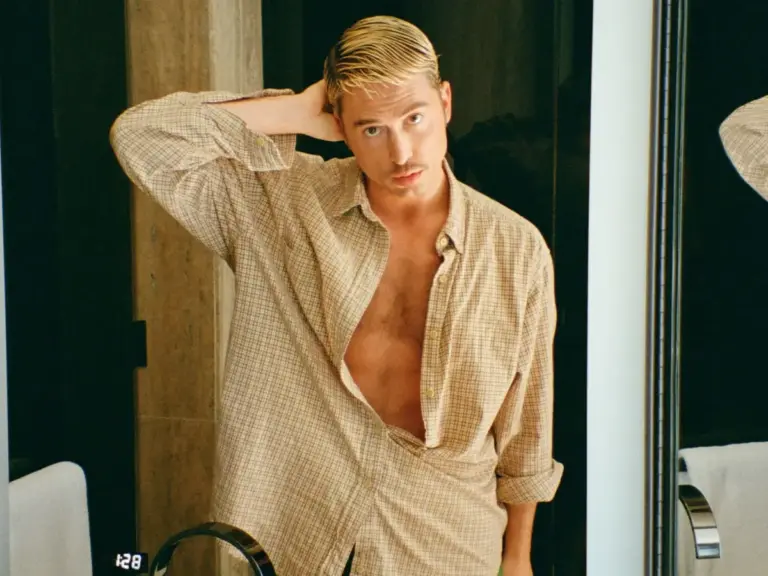
Discussing her relationship with 29-year-old Jonah Freud—with whom she has been romantically linked for approximately eight months—Allen painted a picture of a pop star who has traded substance-fueled chaos for a quieter life, yet remains intensely emotionally demanding. Freud, a notable figure within elite British circles as the son of PR executive Matthew Freud and the great-nephew of painter Lucian Freud, represents Allen’s first serious relationship following the dissolution of her marriage to actor David Harbour.

"I’m high maintenance in a relationship," Allen admitted frankly. "I’m like, ‘Do you love me?’ ‘Are you gonna leave me?’ ‘I’m ugly, aren’t I?’ I need a lot of validation."
Future Outlook: Art, Tour Life, and Moving Forward
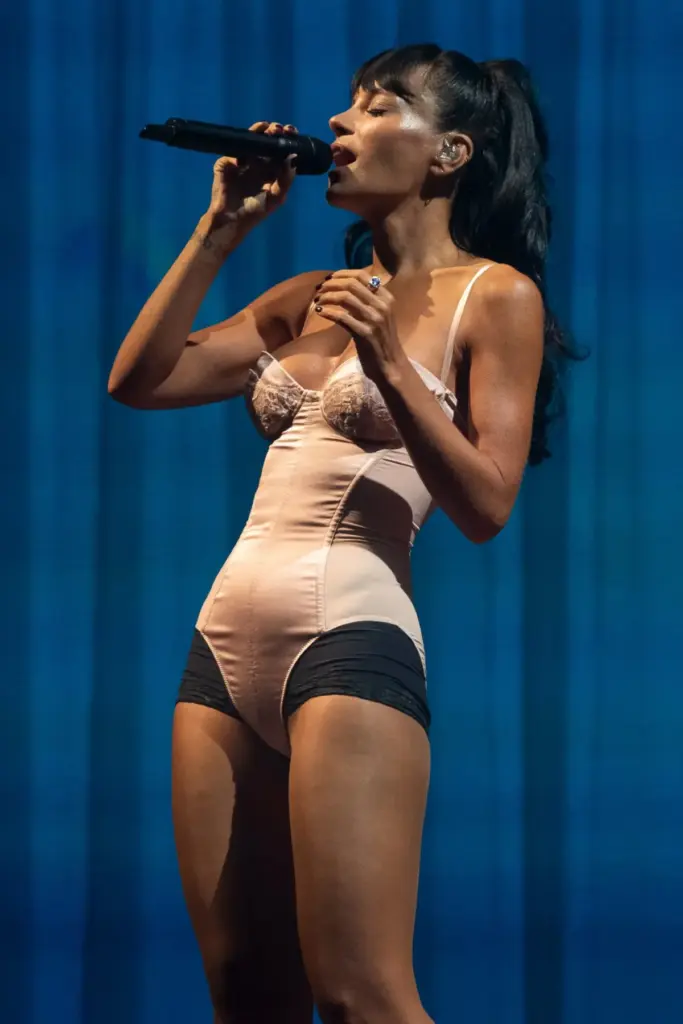
As Lily Allen embarks on her sweeping European and North American tour for her critically acclaimed theatrical album, West End Girl, the themes of personal reckoning and public performance continue to merge. Staged less like a traditional pop concert and more like a minimalist, avant-garde play, the production leans heavily into the emotional detritus of her recent personal life—most notably the high-profile collapse of her four-year marriage to Stranger Things star David Harbour.
The album, which features 14 tracks exploring betrayal, grief, and the anatomy of a failed high-profile relationship, has forced both artists into uncomfortable public conversations about the boundaries between private trauma and commercial art. While Harbour recently addressed the record in an interview with Variety, describing the experience of hearing the album as "weird" while acknowledging that "it wasn’t my experience," Allen has consistently maintained that the record functions as a complex blend of autobiography and theatrical fiction.

With her personal life settling into a stable, albeit high-maintenance, rhythm alongside Jonah Freud, and long-standing grievances like the Edith Bowman MySpace war formally laid to rest, Allen’s public persona appears to be entering a mature, post-chaos epoch. Whether the peace will hold across digital and physical realms remains to be seen, but for now, the ghost of 2006 has finally been laid to rest.