By Sarah Hooper Live News Reporter
Published: October 5, 2026
Executive Overview
Diplomatic tensions between the United Kingdom and Israel have escalated dramatically following a contentious vote at the Green Party’s autumn conference in Brighton. In a move that has sent shockwaves through domestic politics and international relations, the Green Party of England and Wales officially passed a policy motion defining Zionism as a form of racism.
Although Green Party leader Zack Polanski did not personally participate in the vote, the Israeli government swiftly retaliated. Israeli Foreign Minister Gideon Sa’ar declared Polanski persona non grata, implementing an immediate ban preventing the party leader from entering the country.
The decision has triggered profound polarization. Proponents of the motion argue that it is a principled defense of universal human rights and a condemnation of the historic and ongoing displacement of Palestinians. Conversely, Israeli authorities, alongside prominent British Jewish organizations, have vehemently denounced the resolution as antisemitic, arguing that it delegitimizes the State of Israel, threatens the security of Jewish communities in the UK, and effectively brands the majority of British Jews as racists.
This crisis compounds an already volatile period in UK-Israel relations. It follows closely on the heels of Foreign Secretary Ed Miliband’s controversial announcement regarding sweeping UK sanctions on illegal Israeli settlements in the occupied West Bank—a policy that has already prompted retaliatory threats from Jerusalem, including the impending closure of the British consulate in Jerusalem.
Detailed Chronology: The Brighton Conference and the Ban
The escalation began on Friday, October 2, 2026, as the Green Party of England and Wales convened its annual autumn conference at the Brighton Centre in East Sussex. Against the backdrop of fluctuating national polling figures—which saw the party hover around 10% following a historic Westminster by-election victory in Gorton and Denton earlier in the year—internal debates on foreign policy took center stage.
On Sunday, October 4, 2026, party members debated and ultimately passed a policy motion concerning the Israeli-Palestinian conflict. Brought forward by Green Party member Lubna Speitan, the motion asserted that the "real, material, manifestation of Zionism has been the historic and ongoing dehumanisation, displacement, dispossession, disenfranchisement and destruction of Palestinians." Furthermore, the text of the resolution equated Zionism with racism, endorsed armed struggle, and called for the realization of a Palestinian state "from the river to the sea."
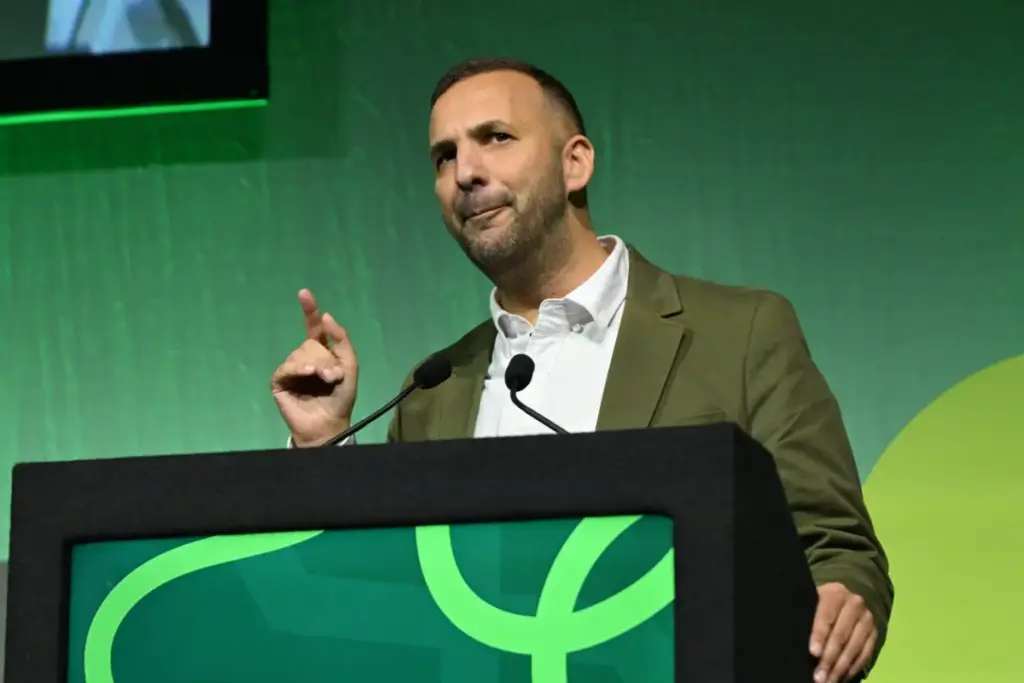
While Zack Polanski was present at the conference to deliver keynote speeches and set out the party’s domestic agenda, he did not take part in the vote on the motion. Nevertheless, as the face and leader of the political organization, he bore the immediate political and diplomatic consequences.
Within hours of the motion passing, the Ministry of Foreign Affairs in Jerusalem responded with swift punitive measures. Foreign Minister Gideon Sa’ar announced that Polanski was officially barred from entering Israel, characterizing the Green Party’s resolution as an existential attack on the State of Israel and a legitimization of antisemitism under the guise of political discourse.
Official Statements and Reactions
The fallout from the Brighton conference has drawn sharp lines between the Green Party leadership, Israeli state officials, and British Jewish representative bodies.
The Green Party and Motion Proponents
Defending the motion, Lubna Speitan framed the resolution as a consistent application of anti-racist principles. "We stand united against all forms of racism and discrimination—no exemptions," Speitan stated during the conference debates. Supporters of the motion argued that holding the Zionist movement accountable for state policies in the West Bank and Gaza is a legitimate exercise of human rights advocacy.
The Israeli Government
The Israeli Foreign Ministry issued a scathing critique of the UK Green Party, linking the resolution directly to the incitement of violence against the Jewish state.
Foreign Minister Gideon Sa’ar stated:
"Today, the Green Party in Britain adopted a resolution equating Zionism with racism, legitimising armed struggle against Israel, and calling for the establishment of a Palestinian state ‘from the river to the sea’—meaning the destruction of the State of Israel."
By banning Polanski, Jerusalem signaled that political formations crossing what it defines as the line between legitimate criticism of Israeli government policy and the denial of Israel’s right to exist will face severe diplomatic repercussions.
British Jewish Leadership
The reaction from the UK’s Jewish community was swift and deeply alarmed. In a joint statement, the Board of Deputies of British Jews and the Jewish Leadership Council condemned the Green Party’s resolution in the strongest possible terms.
The organizations stated:
"Zionism is anti-racism, creating a refuge for Jews in their ancient homeland after millennia of persecution outside it. Branding most British Jews and Jewish institutions ‘racist’ stokes anti-Jewish hatred after a year in which British Jews have been murdered attending their synagogue, stabbed in the streets, and seen their community buildings firebombed."
Community leaders emphasized that defining the foundational belief in self-determination for the Jewish people as inherently racist places an unacceptable target on the backs of British Jews, exacerbating safety concerns amid a documented rise in antisemitic incidents across the United Kingdom.
Supporting Context & Metrics: A Broader Diplomatic Crisis
The Green Party’s motion does not exist in a vacuum; it arrives amid a cascade of severe diplomatic friction between London and Jerusalem.
In early September 2026, Labour’s Foreign Secretary Ed Miliband announced a robust package of unilateral UK sanctions targeting illegal Israeli settlements in the occupied West Bank. The policy initiatives included:
A comprehensive ban on the import of commercial goods originating from Israeli settlements in the West Bank.
Targeted financial and travel sanctions against foreign individuals and corporate entities providing material services or support to these communities.
Justifying the measures, Miliband asserted that successive Israeli administrations had "turned a blind eye" to the "ethnic cleansing" of Palestinians in the West Bank perpetrated by "settler terrorists." He vowed that the UK government would not "acquiesce in the destruction of the two-state solution."
The UK sanctions drew immediate condemnation from both the Israeli government and the United States administration, which viewed the British policy as overly confrontational. In response, Foreign Minister Sa’ar warned that Israel would implement reciprocal countermeasures, including the closure of the British consulate in Jerusalem—a historical diplomatic mission handling relations with the Palestinian territories.
The addition of the Green Party’s resolution to this tense landscape compounds the diplomatic isolation facing parts of the UK political establishment in the eyes of Jerusalem, creating a multi-front diplomatic clash.
Future Outlook
As the dust settles on the autumn conference season, the long-term ramifications of these developments remain uncertain.
For Zack Polanski and the Green Party, the travel ban and the ensuing domestic controversy present a significant leadership challenge. While the party’s grassroots membership has clearly signaled a hardening of its foreign policy stance on the Middle East, the leadership must now navigate accusations of fostering an environment hostile to British Jews—a charge that could alienate broader voter segments as the party seeks to capitalize on its recent electoral breakthroughs.
On the international stage, the hardening positions of both the UK government—through Miliband’s sanctions—and fringe political entities like the Green Party suggest that bilateral relations between London and Jerusalem will remain deeply strained for the foreseeable future. With Israel willing to deploy travel bans against domestic British political figures and threaten diplomatic closures, the traditional diplomatic channels governing UK-Israel relations are facing their most severe strain in decades.