Executive Overview
In the modern consumer landscape, the historical boundaries separating distinct retail sectors have effectively dissolved. A casual glance across social media feeds, department store shelves, and digital storefronts reveals an unprecedented wave of cross-industry experimentation. Beauty houses are partnering with century-old snack conglomerates, performance sportswear brands are aligning with artisanal grocery stores, and personal care companies are borrowing the exact scent profiles of nostalgic comfort foods.
This is not merely a passing marketing gimmick or a collection of isolated stunts; it represents a fundamental restructuring of how intellectual property (IP) operates in the twenty-first century. Brands are no longer confined to their legacy product categories. Instead, they are actively mutating, trading on cultural capital, nostalgia, and novelty to capture an increasingly fragmented consumer base.
Driving this phenomenon are twin economic and cultural realities: the relentless demands of the "attention economy" and the shifting role of nourishment in contemporary society—accelerated, in part, by the cultural saturation of weight-loss pharmaceuticals like GLP-1 agonists. As brands scramble to stop the digital scroll, the merging of consumable goods and lifestyle aesthetics has transformed food from a simple biological necessity into a vibrant design medium, an olfactory playground, and a powerful currency of cool.
Detailed Chronology: The Great Cross-Industry Collide
The current landscape is defined by an astonishing velocity of unexpected pairings. Reviewing the product pipelines of major lifestyle, fashion, and beauty corporations reveals a nearly dizzying array of joint ventures designed to capture headlines and drive short-term conversion spikes.
Among the most prominent collaborations flooding the market are:
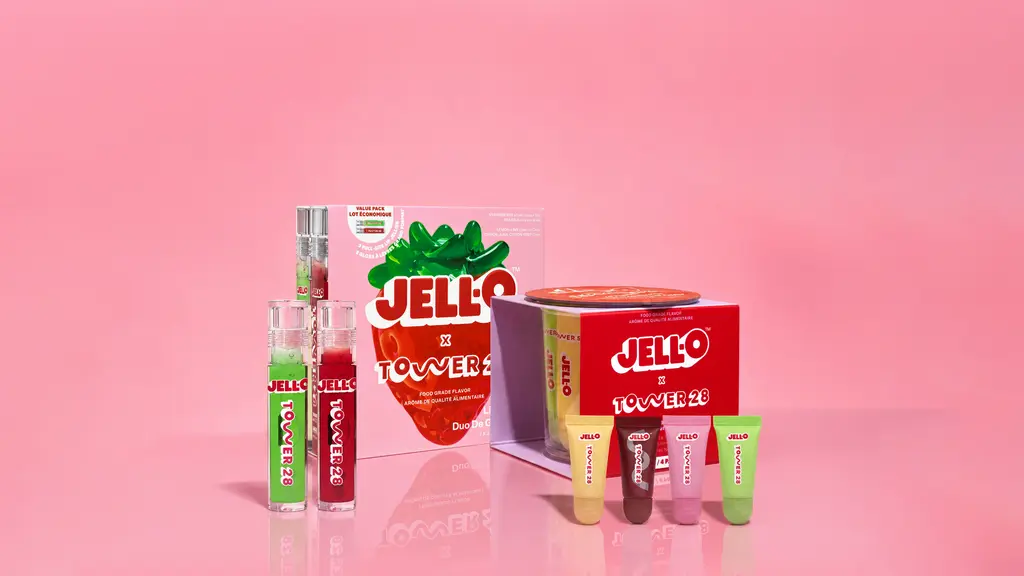
- Tower 28 and Jell-O: A clean beauty brand partnering with a 129-year-old Kraft Heinz snack icon to release scented lip glosses and balm duos packaged in throwback gelatin boxes.
- Mane and Cinnabon: A hair-care specialist teaming up with the iconic bakery chain to evoke the comforting, unmistakable aroma of freshly baked cinnamon rolls.
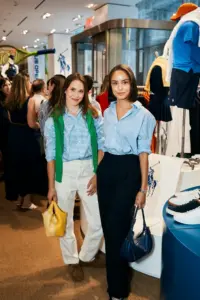
- On Running and Erewhon: A high-performance athletic footwear brand forging a lifestyle alliance with the cult-favorite, celebrity-adjacent Los Angeles grocery store.
- Goodwipes and Liquid Death: A juxtaposition of personal hygiene and canned mountain water that pushes the boundaries of edge-marketing.
- Too Faced and Yogurtland: A cosmetics giant and a frozen yogurt franchise merging makeup collections with sweet-treat aesthetics.
- Swarovski and Nespresso: A luxury crystal purveyor aligning with a high-end coffee system to elevate everyday morning rituals into high design.
- Malin+Goetz and Carbone: A prestige fragrance and skincare brand collaborating with New York City’s most notoriously exclusive red-sauce Italian restaurant.
- Logitech and La La Land: A tech peripheral manufacturer partnering with a trending coffee chain.
- Dedcool and Emi Jay: A fragrance house teaming up with a hair accessory brand to cross-pollinate loyal consumer bases.
This surge of cross-overs extends far beyond traditional co-branding exercises. Brands are independently diving headfirst into food-inspired sensory territories without even needing a direct consumer-facing corporate partner. Within a single multi-week window, candy manufacturer Brach’s released a Candy Corn-inspired perfume; hand-sanitizer disruptor Touchland launched a series of rich, caramel-scented formulations; and fabric-softener titan Snuggle rolled out sweet vanilla treatments designed to make laundry smell like a dessert bar.
No one within the retail ecosystem predicted the sheer scale or velocity of this trend, yet the strategic rationale behind these unlikely marriages is becoming increasingly clear to industry insiders.
Supporting Context & Metrics: The Mechanics of Modern Nostalgia
To understand why a consumer would purchase a lip gloss scented with artificial strawberry gelatin or a hand sanitizer that smells like spun sugar, one must examine the psychology of contemporary retail. We live in an era characterized by intense economic uncertainty, digital fatigue, and relentless micro-trends. In response, consumers routinely seek out safe harbors of comfort and familiarity.
Nostalgia marketing has proven time and again to be a potent antidote to modern anxiety. Previous case studies demonstrate the sheer financial horsepower of this strategy. In 2023, heritage brand Beekman 1802 partnered with Nestlé Toll House to launch a limited-edition collection rooted in olfactory nostalgia—specifically, the comforting aroma of freshly baked chocolate chip cookies. The entire inventory sold out within a blistering single hour, generating over $1 million in revenue.
This playbook has since been replicated across virtually every consumer category:
- Vacation and Pepsi: Sunscreen brands aligning with global beverage giants to infuse nostalgic summer memorabilia with the distinct scents of carbonated refreshment.
- Poppi, Tower 28, Cocokind, and Olipop: A continuous loop of functional sodas collaborating with clean beauty brands to cross-market wellness and indulgence.
- Kiehl’s, Korres, Crown Affair, and Saltair: A massive wave of personal care lines leaning into frozen yogurt aesthetics, flavor profiles, and textures.
According to long-time fashion executive and industry consultant Ana Andjelic, these moves are indicative of a larger cultural evolution. Andjelic, who has held executive roles at iconic brands including Banana Republic, Esprit, Mansur Gavriel, and Rebecca Minkoff, is the co-founder of Tasteful, an industry symposium focused on the intersection of food, culture, and commerce.
"These days, everyone is in everyone else’s business, so to speak," Andjelic notes. "Why is a company like Saint Laurent making movies? Why is Carbone or Apollo Bagels creating apparel? Why is On [Running] partnering with a grocery store? [Brands] are all playing multiple roles in culture… This is all about, ‘How does your IP exist beyond your core business?’"
Andjelic stresses that successful modern partnerships must transcend simple logo-swapping. "A successful partnership is the one that creates cultural capital," she explains. "If you have fandom, community, a unique aesthetic and point of view, a special callout and context, and something that’s recognizable… and a specific promise that’s differentiated from every other one… If you create something new in that sense, it’s not just cultural distillation, it’s harvesting culture."
Furthermore, the backdrop of this cross-category feeding frenzy has been fundamentally altered by the meteoric rise of weight-loss and diabetes management drugs, commonly known as GLP-1 receptor agonists (such as Ozempic and Wegovy). These medications have fundamentally upended the traditional packaged food industry, forcing legacy food conglomerates to reassess consumer appetite, volume consumption, and dietary desires.
In a cultural feedback loop, GLP-1s have also inadvertently liberated food from its traditional biological constraints. "Food is now liberated from being consumed and is free to move completely in a static domain, like decoration," Andjelic observes. "A lot of fashion brands are now using food as a backdrop for their shows, events, and VIP experiences; they’re creating beautiful food structures that are incredibly Instagrammable. So now, food has really moved into the domain of aesthetics."
Official Statements & Case Studies: Inside the Tower 28 x Jell-O Partnership
Perhaps no recent collaboration better exemplifies the calculated risks and operational realities of this movement than the alliance between clean beauty brand Tower 28 and Kraft Heinz’s Jell-O.
For Tower 28, a Sephora-backed clean skin-care and cosmetics label known for catering to sensitive skin, the partnership was engineered to achieve three distinct commercial objectives: expand its existing demographic reach, manufacture viral media buzz, and secure early holiday season momentum.
"We’re all trying to stop the scroll, right?" says Amy Liu, CEO and founder of Tower 28. "This is the attention economy, and it’s so hard to stay relevant. It’s so hard to compete. There are so many brands. I don’t think I’ve ever seen what we’re seeing now."
The collaboration, which rolled out at Sephora retail locations, features two distinct custom-packaged offerings. The first is a Jell-O-scented lip gloss duo retailing for $24, housed within authentic-looking throwback Jell-O gelatin boxes. The second is a pack of mini pudding-inspired balms priced at $20, packaged in a clever peel-off pudding cup design.
In a testament to the meticulous execution required for such projects, Jell-O actually approached Tower 28 directly to pitch the collaboration—marking the first beauty partnership of its kind for the 129-year-old food brand. Eschewing synthetic, chemical-smelling artificial perfumes, the development team utilized actual food-grade ingredients to ensure the products smelled eerily identical to their edible counterparts.
Flavor selections were rigorously mapped against Jell-O’s historical best-sellers. The lip glosses were cast in strawberry and lemon-lime, while the balm sets feature nostalgia-inducing variants including banana cream, strawberry cheesecake, chocolate vanilla swirl, and pistachio. Rather than operating as a permanent addition to the catalog, these items are designed to replace Tower 28’s traditional holiday value kits, remaining on shelves strictly until inventory is exhausted.
Remarkably, profitability was not the primary key performance indicator (KPI) for the launch. "The unit economics still have to make sense… but my goal is not to make a ton of money," Liu admits candidly. "My goal is really to surprise and delight the customer. And in this particular instance, we’re doing it for a value kit, [which] typically is hard to make money on anyway, especially during the holidays."
To amplify the digital and physical footprint of the launch, Liu and her team deployed a multi-channel marketing blitz. This included an immersive pop-up activation in the Venice neighborhood of Los Angeles, where visitors were treated to free Jell-O-inspired confections alongside the physical product line.
Crucially, the brand bypassed traditional beauty influencer silos. Instead, they seeded the collection to an entirely new roster of digital creators. "We went out to not just beauty people, but also to food TikTokers and people who are on that side of the world," Liu notes. "We were trying to do something a little bit different with this one."
Future Outlook: The Evolution of Cultural Harvesting
As the retail calendar moves deeper into the fourth quarter and brands finalize their strategic roadmaps for the upcoming year, the intersection of food, fashion, beauty, and wellness shows zero signs of cooling down. Industry gatherings like Ana Andjelic’s upcoming Tasteful summit in New York—which boasts an elite attendee roster featuring high-ranking innovation executives from Chanel, Estée Lauder Companies, Goldbelly, Hilton, J.Crew, Kohler, Lyst, Nike, and Open Table—demonstrate that institutional investment in this convergence is maturing rapidly.
What began as playful, isolated marketing stunts have matured into sophisticated exercises in brand extension and cultural anthropology. In an oversaturated marketplace where traditional advertising channels face diminishing returns and consumer skepticism is at an all-time high, brands can no longer afford to remain in their functional silos.
The future belongs to the corporate shapeshifters. Whether it is a luxury crystal maker designing around coffee culture, a clean beauty line channeling retro gelatin desserts, or athletic apparel companies anchoring themselves in the local bodega, the directive is clear. Brands must look beyond their immediate product categories, harvest the raw materials of popular culture, and transform everyday commodities into unforgettable aesthetic experiences. In the attention economy, the most successful brands are those that realize everyone is ultimately in the business of culture—and culture is meant to be tasted, worn, shared, and endlessly reinvented.