Executive Overview
For decades, the medical community and the public alike have associated menopause with a predictable checklist of symptoms: vasomotor disruptions like hot flashes and night sweats, mood fluctuations, metabolic shifts, and structural changes in bone density and skin elasticity. Yet, a silent, highly disruptive ocular symptom has largely remained on the periphery of routine clinical evaluations: dry eye disease (DED).
Recent data presented at The Menopause Society’s Annual Meeting has brought this oversight into sharp focus, revealing that the prevalence and severity of dry eye symptoms are significantly elevated among postmenopausal women compared to their perimenopausal counterparts. Spearheaded by prominent clinical researchers—such as Buenos Aires–based gynecologist Dr. Debora Yankelevich—the medical community is increasingly mobilizing around a singular, urgent recommendation: dry eye evaluations must be integrated into routine, standard menopause screenings.
The systemic fallout of hormone-induced ocular surface disease extends far beyond minor physical discomfort. It compromises visual acuity, disrupts professional performance, complicates daily grooming and social engagement, and diminishes overall quality of life. As healthcare providers look toward a more holistic model of midlife women’s health, understanding the physiological bridge between declining estrogen and androgen levels and ocular surface degradation is no longer optional—it is a clinical imperative.
Detailed Chronology: Uncovering the Hormone-Ocular Axis
To understand how dry eye disease became recognized as a core component of the menopausal transition, it is helpful to examine the evolution of clinical research surrounding hormonal receptors in ocular tissues.
Early Observations in Endocrinology and Ophthalmology
Historically, ophthalmologists treated dry eye disease primarily as a local pathology—attributing it to environmental factors, excessive screen time, contact lens wear, or localized meibomian gland dysfunction (MGD). However, clinicians frequently noted an unexplained epidemiological skew: postmenopausal women presented with chronic, severe dry eye symptoms at rates disproportionately higher than men of the same age group.
In the late 20th and early 21st centuries, basic science research began identifying estrogen, progesterone, and androgen receptors within human lacrimal glands, meibomian glands, conjunctiva, and cornea. These discoveries confirmed that the eye is not an isolated organ, but an endocrine-responsive target tissue deeply intertwined with systemic hormonal homeostasis.
The Landmark Argentine Study
The conversation shifted from theoretical endocrinology to empirical clinical reality with a major population-based study presented at The Menopause Society’s Annual Meeting. Led by Dr. Debora Yankelevich, researchers surveyed 3,547 women with a median age of 52 using the validated Ocular Surface Disease Index (OSDI) questionnaire.
The study stratified participants by their exact stage in the menopausal transition. The findings were stark: postmenopausal women—those who had entered the permanent final stage of reproductive aging—demonstrated a significantly higher prevalence and severity of dry eye disease symptoms compared to women in the perimenopausal phase. This pivotal dataset provided the statistical weight needed to challenge existing diagnostic protocols, prompting Dr. Yankelevich and her colleagues to issue a direct call to action: dry eye screening must become a standard pillar of routine gynecological and primary care checkups for midlife women.
Supporting Context & Metrics: The Mechanics of Menopausal Dry Eye
What Is Dry Eye Disease?
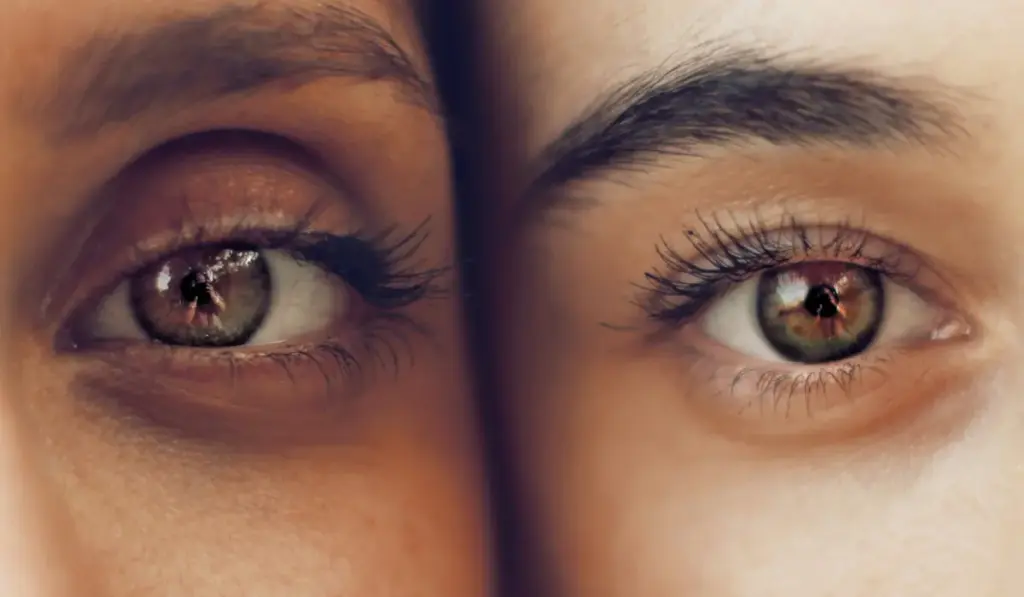
To appreciate the disruptive nature of the condition, one must understand the physiology of the tear film. Optometrist Nicola Alexander, founder and CEO of Peep Club, defines dry eye disease as a multi-factorial condition occurring when the eyes fail to produce sufficient tears, or when the lipid (oily) layer of the tear film degrades too rapidly, causing the aqueous layer to evaporate prematurely.
This breakdown yields a cascade of uncomfortable symptoms:
- A persistent dry, gritty, or burning sensation
- Intermittent or constant blurry vision
- Ocular redness, fatigue, and localized inflammation
- Photophobia (sensitivity to light)
Paradoxically, one of the most socially and cosmetically distressing symptoms of chronic dry eye is reflex tearing.
"One of the most disruptive symptoms is watery eyes that make it look like you’re crying, which ruins makeup and leaves customers feeling like they can’t wear mascara or attend big moments—weddings, work—without carrying tissues everywhere," notes Dr. Alexander.
"This is a protective mechanism known as reflex tearing: Your eye senses that it’s irritated and responds by flooding itself with watery tears. By the time dry eye disease is chronic, it genuinely affects how people show up in their lives."
The Endocrinological Link: Estrogen, Androgens, and Inflammation
The vulnerability of the ocular surface to midlife hormonal shifts is rooted in biochemistry.
"Our eyes are very sensitive to hormonal shifts throughout our menstrual cycle, not just menopause," explains Dr. Alexander.
The protective mechanisms break down along two primary pathways during the menopausal transition:
- Estrogen Depletion: Estrogen exerts a potent anti-inflammatory effect on bodily tissues. Because ocular tissues are exceptionally susceptible to micro-inflammation, the systemic withdrawal of estrogen removes a critical biological shield, allowing chronic inflammatory cascades to damage the lacrimal and surface epithelial cells.
- Androgen Fluctuations: While testosterone is often stereotyped as a "male" hormone, it is vital for women’s health—particularly for the meibomian glands, which rely on androgens to regulate lipid production. As androgen levels drop precipitously during menopause, the oil-producing glands along the eyelid margin begin to atrophy or block, leading to evaporative dry eye. This precise hormonal sensitivity explains why women also frequently report transient dry eye symptoms during other high-hormonal-shift periods, such as pregnancy.
Official Statements and Clinical Perspectives
As multidisciplinary awareness grows, medical professionals across gynecology, ophthalmology, and optometry are aligning on the need for proactive intervention.
- Dr. Debora Yankelevich, Lead Investigator and Gynecologist: Emphasizing the necessity of systemic integration, Dr. Yankelevich asserts that waiting for patients to spontaneously report ocular discomfort is failing midlife women. By embedding simple ocular symptom questionnaires into routine menopause assessments, clinicians can catch meibomian gland dysfunction and aqueous deficiency before they result in permanent corneal damage.
- Dr. Nicola Alexander, Optometrist and Peep Club Founder: Highlighting the behavioral barriers to treatment, Dr. Alexander stresses that consistency is the cornerstone of ocular surface rehabilitation. Traditional remedies, such as manual hot compresses, often fail because modern patients lack the time and patience to maintain a 10-minute daily regimen. Compliance requires ergonomic innovation that transforms clinical care into a seamless self-care ritual.
- Dr. Kimberly Friedman, Optometrist and Chief Medical Education Officer at EyePromise: Addressing therapeutic advancements, Dr. Friedman notes that modern dry-eye pharmacotherapy has evolved beyond basic saline drops. The integration of advanced biopolymers—such as high molecular weight hyaluronic acid—allows for targeted, preservative-free surface protection that mirrors the eye’s natural lubricating architecture.
Future Outlook: Modern At-Home and Clinical Therapeutics
For women navigating the various stages of menopause, receiving a formal diagnosis from an eye care specialist is the vital first step. While severe cases may warrant prescription anti-inflammatory drops or in-office procedures (such as thermal pulsation or intense pulsed light therapy), the consumer health market has rapidly innovated to provide highly effective, clinical-grade at-home solutions.
Three standout interventions illustrate the future of accessible, high-tech dry eye management:
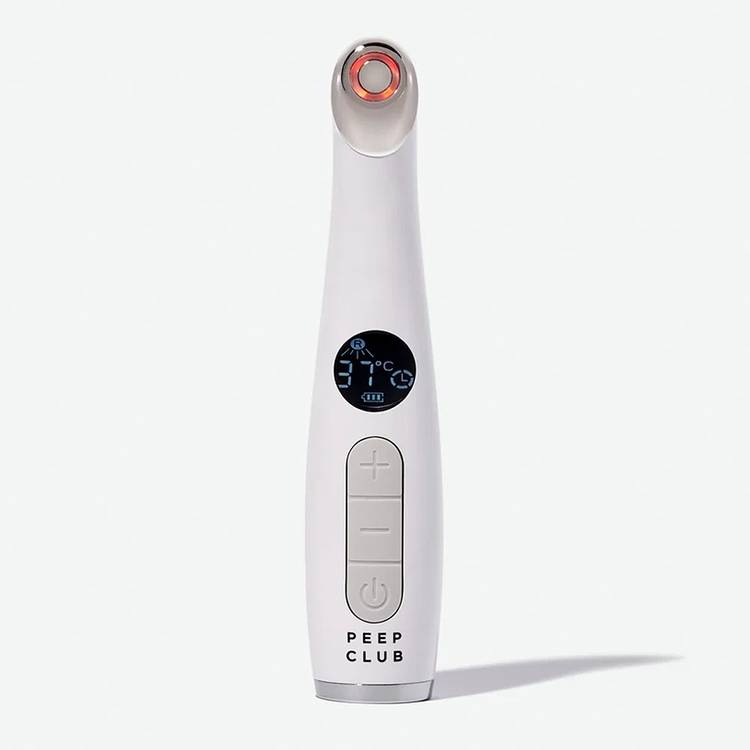
1. Peep Club Heated Eye Wand LED + ($120)
- The Mechanism: Standard ophthalmological care has long prescribed thermal compresses to liquefy solidified oils trapped within the meibomian glands. However, traditional cloth compresses cool down too rapidly.
- The Innovation: The Peep Club Heated Eye Wand is engineered to deliver precise, constant thermal energy directly to the lash line, governed by an integrated five-minute automatic shut-off timer. Furthermore, it incorporates red LED light therapy. According to brand-backed user compliance studies involving 250 participants, 87 percent utilized the Wand far more consistently than traditional compresses, proving that design psychology and targeted technology directly drive therapeutic outcomes.
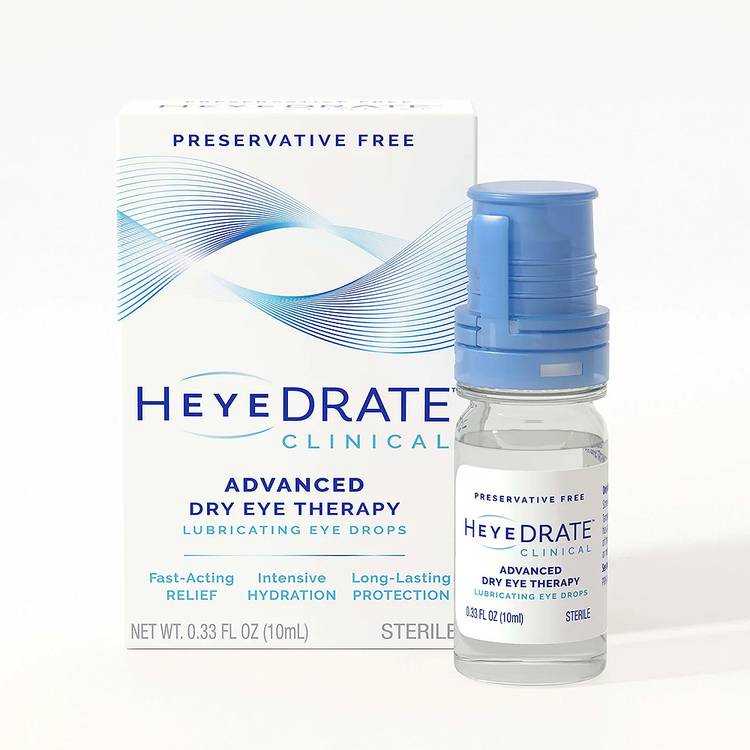
2. EyePromise Heyedrate Clinical Artificial Tears ($25)
- The Mechanism: Conventional over-the-counter eye drops often rely on harsh preservatives or offer fleeting relief that evaporates within minutes.
- The Innovation: Heyedrate Clinical represents a new frontier in preservative-free artificial tears. By merging povidone with Hylan A—the highest molecular weight hyaluronic acid available in the United States—these drops form a resilient, moisture-locking matrix over the cornea. Backed by over a decade of clinical trust in European markets, it provides immediate, soothing palliation for inflamed, post-menopausal eyes without the risk of chemical toxicity from frequent dosing.
3. Blinkjoy Hydrating Sleep Mask 3 ($79)
- The Mechanism: Environmental factors during sleep—such as overhead ceiling fans, central heating, and low bedroom humidity—frequently accelerate overnight tear evaporation, leaving patients waking up with severe, painful corneal dryness.
- The Innovation: The Blinkjoy Hydrating Sleep Mask creates a dedicated, humidified microenvironment around the orbital socket, sealing in natural moisture while physically blocking drafts. Redesigned with specialized configurations for both back and side sleepers, the mask utilizes 100-percent medical-grade silicone eye cups that easily pop out for rigorous daily sanitization, bridging the gap between comfort, hygiene, and ocular health.
Conclusion
The emerging dialogue surrounding menopause-induced dry eye disease marks a profound shift toward more comprehensive, whole-body women’s healthcare. By recognizing that the endocrine system’s influence extends directly to the tear film and ocular surface, medical practitioners can dismantle long-standing diagnostic blind spots. As routine screenings catch these symptoms earlier, and as innovative consumer health technologies make daily management intuitive and accessible, millions of women can reclaim their comfort, confidence, and quality of life during and beyond the menopausal transition.