Executive Overview
The creator economy is undergoing a massive structural shift, defined by aggressive platform expansions, high-stakes corporate restructurings, and unprecedented cultural intersections. This week’s developments reveal an industry aggressively maturing while simultaneously pushing deeper into uncharted technological territories.
From legacy gaming giants directly positioning themselves against user-generated content (UGC) heavyweights to high-profile executive exits in digital media and entertainment conglomerates, the boundaries between traditional media, gaming, and creator culture are dissolving.
Meanwhile, viral culture continues to produce surreal, headline-grabbing moments—ranging from grandmaster chess upsets celebrated with impromptu wardrobe changes to the rise of AI-generated "sleep slop" exploiting automated streaming metrics. This report delivers an in-depth, authoritative analysis of the trends, updates, and business maneuvers shaping the global creator ecosystem.
Detailed Chronology & Segment Breakdown
1. Creator Commotion: Triumphs, Books, and VTubers
The human element of content creation remains as erratic, brilliant, and unpredictable as ever. This week saw grandmasters humbled, trauma processed on the printed page, and anime avatars invading urban landscapes.
- The Checkmate and the Pants: In what is fast becoming a bizarre recurring motif for elite chess, world-renowned grandmaster Magnus Carlsen suffered a stunning defeat at the hands of Bulgarian Twitch streamer "Witty Alien." True to the chaotic energy of modern internet culture, the victor celebrated his triumph by stripping off his pants live on stream. This incident adds another bizarre chapter to Carlsen’s ongoing history with attire; in 2024, the chess champion notably withdrew from the World Chess Championship after facing penalties for wearing jeans.
- Chris Olsen’s Raw Memoir: TikTok star Chris Olsen opened up to Variety regarding his new book, I Think My Therapist Hates Me. Describing the writing process as feeling "like I was just kind of like stabbing myself over and over again," Olsen emphasized that the painful deep-dive into youth substance abuse and familial addiction was designed to make struggling individuals feel "less alone." It is a notable move for a digital-native creator, bridging the gap between algorithmic short-form performance and deeply vulnerable, long-form literary expression.
- VTubers Take Manhattan: Tokyo-based virtual YouTuber (VTuber) agency hololive has launched a sweeping global marketing campaign to promote hololive Dreams, its inaugural video game title. Towering 20-foot-tall anime avatars have begun appearing in high-traffic urban centers like New York’s Times Square. The rhythm game boasts over 150 original songs and features appearances by more than 50 hololive personalities. Despite the high-visibility rollout, early player feedback on Steam has been mixed, highlighting the challenges of translating niche virtual-talent fandoms into traditional gaming engagement.
2. Platform Headlines: Mojang’s UGC Ambitions and Instagram’s Pay-to-Play
Platforms and foundational game developers are aggressively jockeying for creator mindshare and monetization models.
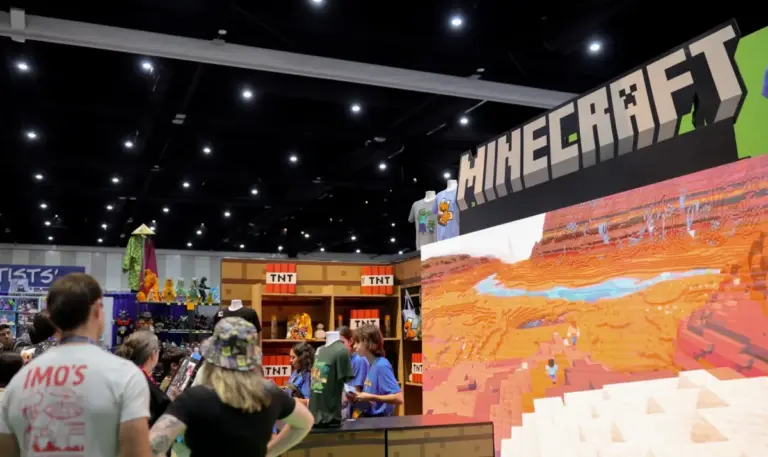
- Mojang Sets Its Sights on Roblox and Fortnite: In a move signaling a major strategic pivot, Minecraft developer Mojang is rapidly expanding its creator economy division. Recent job listings explicitly identify UGC titans Roblox and Fortnite as direct competitors. Mojang is actively recruiting for a Director of Creator Programs and Ecosystem Marketing, Principal and Senior Program Managers for its partner developer relations team, and a Senior Director of Creator Monetization. This hiring surge indicates that Minecraft—long a bastion of independent community creation—is formalizing and scaling its corporate creator infrastructure to safeguard its market dominance.
- Instagram’s "Boosted" Live Streams: Instagram is leaning further into pay-to-play mechanics, rolling out a feature that allows creators to "boost" their live broadcasts directly from the app. Similar to Twitch’s front-page promotion model, these boosted streams bypass traditional discovery algorithms to secure prime placement in the main Instagram feed alongside Stories and Reels. While this offers creators an immediate avenue to spike viewership, it also deepens concerns over pay-to-visibility models that favor monetized accounts over organic discovery.
3. Exits and Entrances: Corporate Restructuring Across Media and Golf
The business side of content creation and entertainment is experiencing seismic shifts at the executive level, driven by scandals, mergers, and strategic realignments.
- Good Good Golf Bleeds Leadership: Creator-led golf lifestyle brand Good Good has suffered another double blow to its executive ranks with the departures of Head of Content Logan Spence and Head of Events Hung Tran. These exits follow the earlier resignations of CEO Matt Kendrick and President Joe Flannery. The leadership exodus traces back to a catastrophic Callaway driver advertisement that alienated key institutional partners, resulting in the termination of Good Good’s lucrative partnerships with the PGA Tour, the Golf Channel, and Callaway. The brand faces a difficult and protracted road toward institutional rehabilitation.
- Paramount-Warner Bros. Streaming Consolidation: Ahead of the entertainment giants’ formal integration into Skydance, executive restructuring is well underway. Cindy Holland, who assumed the role of Paramount streaming chief in 2025, has exited the company. Concurrently, Casey Bloys, Chairman and CEO of HBO and HBO Max Content, has been appointed to oversee all streaming operations for the newly combined conglomerate, signaling a centralization of prestige and mainstream streaming strategy.
- Motion Strengthens Distribution Arm: Creator content distribution company Motion Society has appointed former Spotify, Meta, and Fullscreen executive Chanel Simmons as its U.S. Managing Director. Simmons will helm the deployment of a proprietary system designed to audience-test content at scale. According to the company, Motion Society evaluates approximately 30,000 videos monthly across platforms for top-tier creators such as Jesser, Stephen Sharer, and Lizzy Capri.
4. The Internet is a Strange Place: AI Slop, Robo-Raccoons, and Tech Oligarchs
The outer fringes of the internet continue to produce bizarre phenomena, technological curiosities, and systemic controversies.
- MrBeast Enters the Shark Tank: Jimmy Donaldson (MrBeast) and Beast Industries CEO Jeffrey Housenhold made their official debut as guest investors on the Season 18 premiere of ABC’s Shark Tank. For audiences without traditional television or Disney-backed streaming subscriptions, select pitches from the episode have been published to the official Shark Tank YouTube channel.
- The Rise of "Sleep Slop": A parasitic new content ecosystem has emerged targeting users who are asleep. Capitalizing on ASMR, soundscapes, white noise, and long-form video game "Let’s Plays," AI-generated content operations are flooding platforms with hours-long media designed to play out overnight. Exploiting ElevenLabs voice technology and automated recommendation loops, bad actors are cashing in on passive algorithmic views, creating an economy of automated "sleep slop."
- CH1PP13 the Robo-Raccoon: Animatronic creators Wicked Makers have constructed a custom, built-from-scratch robotic raccoon named CH1PP13. Programmed with bespoke spooky special effects, the animatronic critter is set to roam the halls of Pittsburgh’s Hundred Acres Manor haunted house, offering visitors an uncomfortably interactive, high-tech fright.
- Alex Gibney’s Musk Documentary Controversy: A new four-hour documentary characterizing Elon Musk as a stock-pumping "bullshitter" has ignited a fresh clash between independent journalism and tech oligarchs. Prominent platforms YouTube and Meta initially blocked trailers for the film, citing automated error systems—a decision that was swiftly reversed following public media scrutiny.
- Mike Tomlin’s Architectural Marvel: Beyond his storied 12-year tenure as head coach of the Pittsburgh Steelers, Mike Tomlin spent his downtime pursuing an unexpected passion project: constructing one of the most intricate and detailed virtual cities in Minecraft.
Supporting Context & Metrics
To fully comprehend the trajectory of the modern creator economy, we must examine the quantitative shifts underpinning these headlines:
- The UGC Market Valuation: The race between Minecraft, Roblox, and Fortnite is fueled by staggering market demand. User-generated content games account for tens of billions of hours of engagement annually, with platforms like Roblox boasting over 70 million daily active users. Mojang’s structured push into creator monetization reflects an industry-wide realization that player retention is inextricably linked to creator empowerment.
- AI Content Saturation: The proliferation of "sleep slop" underscores the vulnerability of recommendation algorithms. With automated systems prioritizing watch-time duration over active engagement, long-form passive media has become a lucrative exploit vector for programmatic content farms.
- Corporate Consolidation: The Skydance-Paramount-Warner Bros. merger signals the end of an era of fragmented streaming growth. Legacy media companies are cutting redundancies and consolidating leadership under proven prestige executives like Casey Bloys to optimize profitability over pure subscriber acquisition.
Official Statements
- Chris Olsen on Literary Vulnerability:
"It’s a lot about young people who have maybe struggled with their own substance abuse issues or they’ve been in families where addiction was a big issue and getting through, that they felt very alone… [A]nd I think that is the point of writing a story like that, writing a memoir, feeling less alone and relating to people and that’s really all I wanted."
- Filmmaker Alex Gibney on the Musk Documentary:
Describing the tech billionaire’s core operational genius as an exercise in "pumping stock" and media manipulation rather than traditional industrial innovation.
Future Outlook
As we look toward the remainder of the year, several critical trajectories will define the creator ecosystem:
- The Institutionalization of UGC: Mojang’s recruitment blitz signals that independent sandbox games can no longer rely purely on organic community goodwill. Expect more traditional gaming ecosystems to roll out developer revenue-share models that rival Fortnite’s Unreal Editor (UEFN).
- Algorithmic Guardrails vs. Automated Slop: Platforms like YouTube and Meta will face increasing regulatory and public pressure to rein in programmatic, AI-generated low-effort content ("sleep slop") that manipulates watch-time analytics at scale.
- Traditional Media Realignment: With legacy streaming leadership consolidating under unified banners like Bloys’ combined entity, content budgets will likely tighten, forcing independent creators to seek diversified funding outside traditional studio partnerships.