Executive Overview
In the high-stakes landscape of modern skincare, the conversation has largely shifted away from overnight miracles and toward proactive physiological preservation. While cleansers purify and moisturizers hydrate, a specific category of topical treatments stands out as the ultimate safeguard against the relentless ticking of the biological clock: the antioxidant serum.
Far more than a fleeting beauty trend, antioxidant serums serve as a secondary line of defense—supplementing, rather than replacing, the primary barrier of daily sunscreen. Every single day, human skin is subjected to a relentless onslaught of environmental stressors. Ultraviolet (UV) radiation, atmospheric pollution, blue light, and urban smog constantly bombard the epidermis, generating rogue molecules known as free radicals. Over time, these unstable chemical species wage a destructive war on cellular structures, breaking down foundational structural proteins like collagen and elastin, triggering hyperpigmentation, and accelerating premature aging.
Topical antioxidants act as the biological equivalent of a neutralizing shield. By readily sacrificing an electron to these hungry free radicals, antioxidants halt destructive chain reactions in their tracks before they can compromise the integrity of skin cells. While the protective benefits are largely preventative—meaning users are investing in a future version of their skin rather than witnessing an overnight transformation—the cumulative impact over years of consistent application is profound.
As dermatological science advances, the formulation of these serums has evolved from single-ingredient vitamin C solutions into sophisticated, multi-antioxidant "cocktails." Today’s top-tier market offerings blend ingredients like ferulic acid, resveratrol, and beta-glucan into lightweight, high-concentration delivery systems. This comprehensive guide explores the science of oxidative stress, breaks down expert perspectives from leading board-certified dermatologists, and examines the definitive curated selection of the industry’s finest antioxidant serums tailored to every skin type, concern, and budget.
Detailed Chronology: The Evolution of Topical Photoprotection
To truly appreciate the sophisticated formulations available on beauty counters today, it is essential to trace the historical trajectory of how modern medicine and cosmetic chemistry came to understand skin oxidation.
The Discovery of Free Radical Damage (Late 20th Century)
For decades, chronological aging was viewed as an inevitable, genetically predetermined descent. However, groundbreaking dermatological research in the latter half of the 20th century introduced the Free Radical Theory of Aging, pioneered by researcher Denham Harman. Scientists began to realize that intrinsic aging (internal cellular decline) was heavily compounded by extrinsic aging—a process heavily driven by environmental oxidation. Researchers identified that environmental aggressors like UV light create reactive oxygen species (ROS), which steal electrons from healthy molecules, destabilizing skin cells and degrading the extracellular matrix.
The Rise of Vitamin C as a Pioneer (1990s)
Throughout the 1990s, dermatological laboratories began exploring how to stabilize unstable active ingredients for topical use. L-Ascorbic Acid (pure Vitamin C) emerged as the undisputed pioneer. Early formulations were notoriously unstable, oxidizing rapidly upon exposure to light and air (turning yellow or brown and losing efficacy). However, once biochemists mastered stabilization techniques and optimized pH levels for skin penetration, Vitamin C transformed from a niche chemical compound into the gold standard of brightening and photoprotection.
The Synergistic Breakthrough: Ferulic Acid and Vitamin E (Early 2000s)
A major turning point in cosmetic chemistry occurred when researchers discovered that antioxidants do not merely work in isolation; they thrive in synergy. Studies revealed that combining Vitamin C with Vitamin E and ferulic acid exponentially increased the photoprotective capabilities of the formulation—multiplying the skin’s natural defense against UV radiation up to eightfold. This era marked the birth of the high-performance "antioxidant cocktail," shifting the industry from single-note products to multi-pathway formulas.
The Modern Era: Tailored Delivery Systems and Multifunctional Serums (Present Day)
Today, antioxidant serums are no longer one-size-fits-all treatments. Advances in delivery systems—such as micro-encapsulation, waterless bases, and specialized lipid complexes—allow sensitive skin types to reap the rewards of potent actives without irritation. Furthermore, modern formulations seamlessly integrate hydration-boosting agents (like beta-glucan and hyaluronic acid) and barrier-repairing peptides, transforming the traditional antioxidant serum into a comprehensive, multi-tasking powerhouse.
Supporting Context & Metrics: Understanding the Science of Oxidation
To grasp why dermatologists universally champion antioxidant serums, one must look at the hard metrics of environmental skin damage and the cellular mechanics of oxidation.
[Environmental Stressors: UV, Pollution, Smoke]
       │
       ▼
[Generation of Free Radicals (Unstable Molecules with Unpaired Electrons)]
       │
       ▼
[Cellular Attack: Stealing Electrons from Healthy Skin Cells & Collagen]
       │
       ▼
[Visible Consequences: Collagen Breakdown, Fine Lines, Dark Spots, Loss of Elasticity]
       │
       ▲
[The Intervention: Topical Antioxidant Serums Neutralize Free Radicals Instantly]
The Biology of Oxidation
The human body naturally produces free radicals during normal metabolic processes, but external factors drastically amplify their production. When UV rays penetrate the skin, they trigger a cascade of inflammatory mediators that break down collagen fibrils and inhibit the production of new structural proteins.
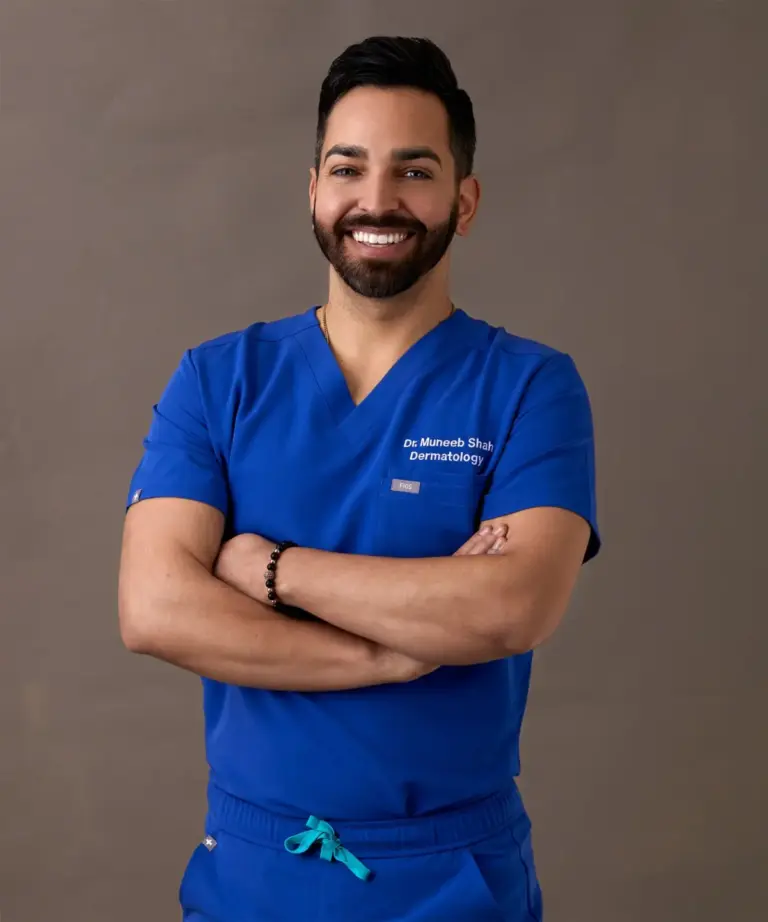
Dr. Melanie Palm, a board-certified dermatologist in La Jolla, CA, emphasizes the stealthy nature of this damage:
"Every day, we’re exposed to things like UV radiation, pollution, and other environmental stressors that generate free radicals. Those free radicals can over time contribute to pigmentation, collagen breakdown, and other signs of premature aging."
Key Metrics and Facts in Antioxidant Efficacy
- 8x Photoprotection: Peer-reviewed dermatological studies have demonstrated that a well-formulated topical serum containing 15% L-Ascorbic Acid, 1% Alpha Tocopherol (Vitamin E), and 0.5% Ferulic Acid provides the skin with advanced environmental protection equivalent to eight times its natural defense mechanisms.
- The Collagen Timeline: Dermal collagen degrades at a rate of approximately 1% per year after the age of 20. Antioxidants help mitigate this decline by neutralizing enzymes (matrix metalloproteinases, or MMPs) that chew up collagen in response to sun exposure.
- The Sunscreen Duo: While a high-SPF sunscreen blocks or reflects incoming UV rays, roughly 55% of UV-induced free radicals still penetrate the skin’s barrier. Antioxidant serums act as the essential internal cleanup crew, neutralizing the free radicals that sunscreen alone cannot stop.
Official Statements & Expert Insights
Navigating the crowded marketplace of active skincare requires guidance from clinical professionals who evaluate these formulations on a daily basis. Here is what leading dermatology experts have to say about integrating antioxidant serums into a sustainable regimen.
Dr. Melanie Palm on Preventive vs. Corrective Benefits
Dr. Palm underscores the dual-action nature of powerhouse ingredients like Vitamin C:
"Vitamin C, for example, is involved in collagen synthesis and can help address uneven pigmentation, so you’re getting both preventive and corrective benefits. We are all encountering UV and environmental oxidative stress, whether we see it happening or not."
The Superiority of Serums Over Creams
When asked why consumers should opt for a serum rather than relying on antioxidants found in heavy moisturizers or sunscreens, Dr. Palm explains the physics of formulation:
"Serums are lightweight and can be formulated with relatively high concentrations of active ingredients without the heavier components you might find in a cream or a moisturizer." This low-viscosity vehicle allows active molecules to penetrate deeper and more efficiently into the stratum corneum.
Dr. Wu on the Universality of Environmental Stress
Echoing the necessity of these formulations, clinical experts point out that oxidative stress spares no one. According to dermatological evaluations, lifestyle factors such as urban commuting, indoor blue light exposure from screens, and psychological stress all contribute to systemic and localized free radical generation. Therefore, once daily sun protection is secured, a targeted antioxidant serum is widely considered the single most valuable addition an adult can make to their preventive routine.
Curated Market Analysis: The Best Antioxidant Serums for Every Skin Profile
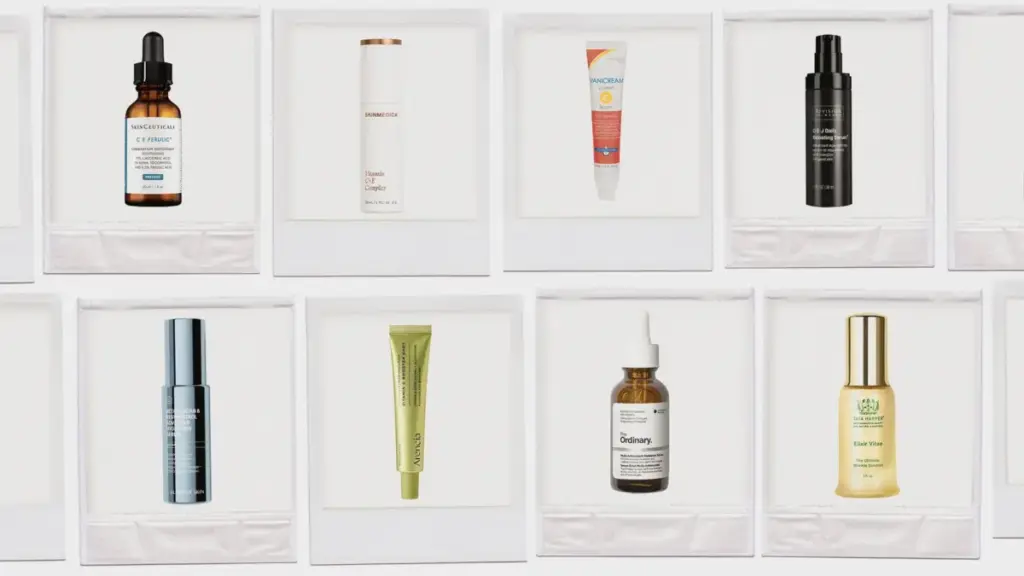
Based on rigorous editorial testing, expert consultations, and consumer feedback, the following curated selection represents the definitive gold standard in antioxidant skincare across various categories.
1. Best Overall: SkinCeuticals C E Ferulic
- Key Ingredients: 15% L-Ascorbic Acid, 1% Alpha Tocopherol, 0.5% Ferulic Acid
- Why It Wins: Widely recognized as the undisputed industry benchmark, this patented daytime Vitamin C serum delivers advanced environmental protection, neutralizes free radicals, and visibly improves the appearance of fine lines, wrinkles, and loss of firmness while brightening the complexion.
2. Best for Mature Skin: SkinMedica Vitamin C+E Complex
- Key Ingredients: Vitamins C and E, innovative suspension system
- Why It Wins: Designed to support aging skin, this silky, fast-absorbing formula provides continuous antioxidant protection throughout the day while smoothing the skin’s texture and restoring youthful radiance.
3. Best for Early Signs of Aging: Revision Skincare D·E·J Daily Boosting Serum
- Key Ingredients: Postbiotic ferment, antioxidant peptides, acetyl calsyntenin-1
- Why It Wins: A brilliant non-acid booster that harnesses the power of daily energy pathways in the skin. It addresses early signs of aging, supports the dermal-epidermal junction (DEJ), and enhances overall firmness and elasticity without irritation.
4. Best for Sensitive Skin: Vanicream Vitamin C Serum
- Key Ingredients: Stabilized Vitamin C (THD Ascorbate), ceramides
- Why It Wins: Formulated specifically for reactive skin types, this gentle yet effective serum bypasses the stinging often associated with traditional L-Ascorbic Acid. It brightens and protects while respecting a compromised skin barrier.
5. Best for Dry Skin: Allies of Skin Beta-Glucan & Resveratrol Advanced Hydrating Serum
- Key Ingredients: Beta-Glucan, Resveratrol, Hyaluronic Acid
- Why It Wins: A moisture-locking marvel that pairs heavy-hitting antioxidant defense with intense, multi-depth hydration. It rescues parched, dehydrated skin while neutralizing free radicals and soothing redness.
6. Best for Dark Spots: Arencia Vitamin C Booster Shot
- Key Ingredients: Plant-based Vitamin C extracts, brightening botanical complexes
- Why It Wins: A cult-favorite booster designed to tackle stubborn hyperpigmentation, sun spots, and post-inflammatory acne marks, infusing the skin with an instant luminous glow.
7. Best Budget: The Ordinary Multi-Antioxidant Radiance Serum
- Key Ingredients: Specialized antioxidant peptide complexes, botanical extracts
- Why It Wins: Proof that high-performance skincare does not require luxury pricing. This accessible formula delivers broad-spectrum defense against environmental stressors, boosting radiance on a budget.
8. Best for Advanced Wrinkles: Tata Harper Elixir Vitae Serum
- Key Ingredients: 72 high-performance botanical ingredients, Spanish lavender extract, natural peptide technology
- Why It Wins: A luxury heavyweight designed to target the deepest expression lines and wrinkles. It acts as a natural volumetric filler, offering firming, smoothing, and potent antioxidant protection in one decadent step.
Future Outlook: What Lies Ahead in Antioxidant Skincare
As cosmetic chemistry and biotechnology continue to converge, the future of antioxidant serums is poised to become even more personalized and scientifically advanced.
1. Microbiome-Friendly Antioxidants
Future formulations are increasingly exploring how the skin’s microbiome interacts with topical actives. Researchers are developing antioxidant compounds that not only protect human skin cells but also nourish beneficial resident bacteria, fostering a balanced, resilient skin barrier from the outside in.
2. Smart Delivery Systems and Encapsulation
Stability has historically been the Achilles’ heel of potent antioxidants like Vitamin C. Emerging technologies in drone delivery systems and microscopic lipid capsules ensure that active ingredients remain entirely inert until they penetrate the precise depth of the skin where they are needed most, maximizing potency and eliminating degradation.
3. Exosome-Infused Antioxidant Cocktails
As regenerative medicine gains momentum in dermatology, the next frontier involves combining traditional antioxidants with plant- and stem-cell-derived exosomes. These microscopic messengers signal skin cells to accelerate repair mechanisms, merging pure antioxidant defense with active cellular regeneration.
Summary Checklist for Consumers
- Layering Order: Always apply your antioxidant serum to clean, dry skin in the morning, right after cleansing and before your moisturizer and sunscreen.
- Consistency is Key: Remember that antioxidants are a long-term investment. Do not look for overnight miracles; trust the preventive science.
- Packaging Matters: Look for opaque, air-restrictive, or pump packaging to prevent your serum from oxidizing prematurely on your vanity.