Executive Overview
The global anti-aging skincare market is flooded with thousands of products, each promising to turn back the clock, erase wrinkles, and restore a youthful, dewy glow. However, navigating the complex formulations of modern skincare can be a daunting task, particularly for those dealing with mature skin. As skin ages, its cellular turnover slows down, collagen and elastin production decreases, and moisture barriers become increasingly delicate. Finding the right active ingredients is no longer just a matter of aesthetic preference; it requires an intentional, science-backed approach.
This comprehensive guide dives deep into the nuances of formulating, selecting, and applying face serums for mature skin. Drawing on insights from leading board-certified dermatologists, cosmetic chemists, and rigorous beauty-industry testing standards, we explore the gold standards of anti-aging ingredients, the vital differences between serums and facial oils, and how to safely navigate potent formulations without triggering irritation. Whether you are addressing fine lines, loss of firmness, stubborn hyperpigmentation, or persistent dryness, understanding the mechanics of your skincare routine is the first step toward achieving lasting skin health.
Detailed Chronology: The Evolution of Anti-Aging Skincare
To understand where modern anti-aging skincare stands today, it is helpful to look back at how topical treatments have evolved over the past several decades.
- The Early Era of Simple Emollients (Mid-20th Century): For generations, anti-aging skincare was synonymous with heavy cold creams and oil-based moisturizers. The primary objective was surface-level occlusion—trapping moisture inside the epidermis to temporarily relieve the tight, parched feeling of dry skin. Little was understood about cellular-level changes or targeted active ingredients.
- The Retinoid Revolution (1970s–1980s): The landscape shifted dramatically with the medical introduction and subsequent cosmetic adoption of topical retinoids (such as tretinoin and over-the-counter retinol). Initially prescribed primarily for acne, dermatologists quickly observed that patients experienced significant improvements in skin texture, firmness, and the reduction of fine lines. This marked the birth of performance-driven, results-oriented skincare.
- The Rise of Molecular Hydration (1990s–2000s): As cosmetic chemistry advanced, researchers began isolating specific molecules capable of holding massive amounts of water. Hyaluronic acid entered the mainstream, revolutionizing how formulators approached hydration by drawing moisture directly from the atmosphere into the skin layers rather than merely sealing the surface.
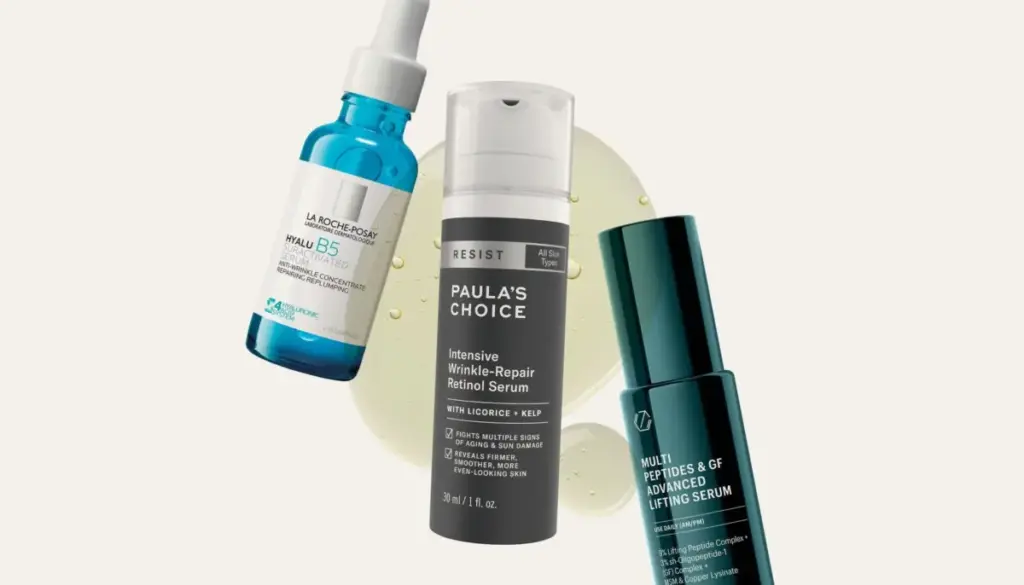
- The Targeted Actives Boom (2010s–Present): Today’s skincare market is characterized by specialized, high-potency formulations. Consumers now have access to targeted exfoliating acids (glycolic, lactic, salicylic), brightening agents (azelaic acid, vitamin C, niacinamide), and barrier-repair lipids (ceramides, squalane). Serums have emerged as the primary delivery system for these powerful actives, designed to penetrate deeper than traditional creams.
Supporting Context & Metrics: Decoding Ingredients for Mature Skin
When formulating a routine for mature skin, dermatologists emphasize that quality far outweighs quantity. You do not need to layer every active ingredient on the market to see results; rather, you must curate a regimen based on your skin’s specific physiological needs.
1. The Gold Standard: Retinoids
According to leading dermatologists, retinoids remain the undisputed gold standard in anti-aging skincare. Dr. Sun explains that retinoids work on a cellular level to decrease the appearance of fine lines and wrinkles. More importantly, they actively stimulate collagen production, yielding firmer, smoother-looking skin over time.
2. Moisture and Plumping: Hyaluronic Acid and Squalane
Hydration is a cornerstone of mature skincare, primarily because chronic dryness can exacerbate the appearance of fine lines and uneven texture.
- Hyaluronic Acid: A potent humectant that draws ambient moisture into the skin, imparting an immediate plumping effect.
- Squalane: A biocompatible emollient that mimics the skin’s natural sebum, softening dry patches and locking in moisture without leaving a greasy residue.
3. Exfoliation and Brightening: Acids for Every Concern
Discoloration and rough texture frequently accompany skin maturation. To combat this, formulators utilize various acids:
- Glycolic and Lactic Acids (Alpha Hydroxy Acids): These water-soluble chemical exfoliants loosen and sweep away dead surface skin cells, revealing a brighter, more radiant complexion.
- Salicylic Acid (Beta Hydroxy Acid): Oil-soluble and ideal for clearing out congested pores and refining uneven texture.
- Azelaic Acid: A stellar brightening agent that targets stubborn dark spots and redness, making it exceptionally well-suited for sensitive or reactive skin types.
| Ingredient Category | Primary Function | Ideal For |
|---|---|---|
| Retinoids | Stimulates collagen, smooths fine lines | Loss of firmness, deep wrinkles |
| Hyaluronic Acid | Draws moisture into the skin | Dehydration, loss of volume |
| Squalane | Softens skin, reinforces lipid barrier | Dryness, tightness, flakiness |
| AHA/BHA Acids | Exfoliates dead cells, clears pores | Rough texture, dullness, dark spots |
| Azelaic Acid | Brightens tone, reduces discoloration | Hyperpigmentation, uneven skin tone |
Official Statements & Expert Guidance
Navigating active ingredients on delicate or thinning mature skin requires a strategic, cautious approach. Dermatologists Dr. Sun and Dr. Foad offer critical guidelines on safety, formulation differences, and application techniques.
Are Face Serums Safe for Sensitive or Thinning Mature Skin?
As skin ages, it often becomes thinner and more prone to irritation. However, face serums remain exceptionally safe when chosen thoughtfully.
"If you have irritation-prone or sensitive skin, use gentle, well-tolerated forms of active ingredients," advises Dr. Foad.
To mitigate potential adverse reactions:
- Opt for Lower Strengths or Encapsulated Formulas: Encapsulated retinoids release active ingredients slowly over time, delivering collagen-boosting and smoothing benefits with significantly less irritation.
- Support the Skin Barrier: Incorporate barrier-supporting ingredients such as niacinamide, bisabolol, and ceramides to maintain a steady, comfortable epidermal barrier.
- Introduce Products Gradually: Dr. Foad strongly recommends introducing only one new product at a time. Avoid layering multiple strong actives (like high-strength retinoids and potent exfoliating acids) into the exact same routine.
- Always Patch Test: Because mature skin can be delicate, performing a patch test before applying any new serum to the entire face is an essential precautionary step.
The Critical Difference: Serums vs. Facial Oils
A common point of confusion in anti-aging regimens is whether face serums and face oils can be used interchangeably. According to dermatological experts, they serve entirely distinct, complementary purposes.
- Face Serums: Lightweight formulations engineered to deliver high concentrations of active ingredients (such as retinoids, antioxidants, peptides, and hyaluronic acid) deep into the skin. They target the underlying causes of aging by supporting cellular renewal and defending against environmental stressors.
- Face Oils: Formulations that focus primarily on moisturizing and reinforcing the skin’s protective lipid barrier. While excellent for sealing in hydration and preventing moisture loss, they generally do not contain active ingredients at concentrations high enough to drive structural cellular change.
In a mature skincare routine, serums do the heavy lifting by addressing deep-seated signs of aging, while facial oils can be applied on top to lock in moisture and comfort the skin barrier.
Future Outlook: The Intersection of Rigorous Testing and Inclusive Beauty
The future of anti-aging skincare lies in radical transparency, rigorous scientific validation, and inclusive testing methodologies. Modern consumers are no longer willing to accept vague marketing claims; they demand proof that products deliver on their promises across diverse demographics.
The Allure Testing and Review Methodology
When top-tier beauty publications evaluate anti-aging products, the process is multifaceted. Editors examine formulations from every conceivable angle:
- Ingredient Analysis & Efficacy: Scrutinizing the concentration and bioavailability of active compounds.
- Scientific Validation: Cross-referencing brand claims with peer-reviewed medical and dermatological literature.
- Expert Vetting: Collaborating with leading professionals in dermatology, cosmetic chemistry, and medicine.
- Performance Metrics: Rating products across five core pillars—efficacy, packaging, fragrance, texture, and product wear.
The Importance of Diverse Testing Panels
A core tenet of modern beauty journalism is the recognition that personal care is deeply individualized. A skincare product cannot genuinely be labeled the "best for mature skin" if testing is restricted to a narrow demographic. Inclusive testing panels—encompassing diverse age groups, skin tones, hair textures, and gender identities—are vital. Assessing how active serums perform on thinning skin over 50, pigmented skin types, and sensitive complexions ensures that product recommendations are genuinely authoritative, safe, and effective for everyone.
As cosmetic science continues to innovate, the integration of targeted serums with barrier-supporting care will remain the gold standard for achieving healthy, vibrant, and resilient aging skin.