Executive Overview
The direct-to-consumer (DTC) landscape of the 2010s was characterized by a distinct brand archetype: minimalist aesthetic, digital-first acquisition strategies, venture-backed hyper-growth, and a promise to disrupt legacy retail. Yet, as the industry matures into the mid-2020s, that landscape looks remarkably different. The casualties of this era are well-documented. Some pioneers have collapsed entirely under the weight of unsustainable customer acquisition costs, while others have executed bewildering pivots—ranging from traditional apparel closures to unexpected transformations into artificial intelligence infrastructure companies.
Amidst this digital retail graveyard, a select few brands have managed not only to survive, but to profoundly scale. Among them, Rothy’s stands out as a definitive success story. Marking its 10-year anniversary, the sustainable footwear and accessories brand is entering an aggressive new phase of growth, underpinned by a thriving omnichannel presence, over $225 million in annual revenue, a robust wholesale network, and a growing physical footprint of more than 40 brick-and-mortar storefronts.
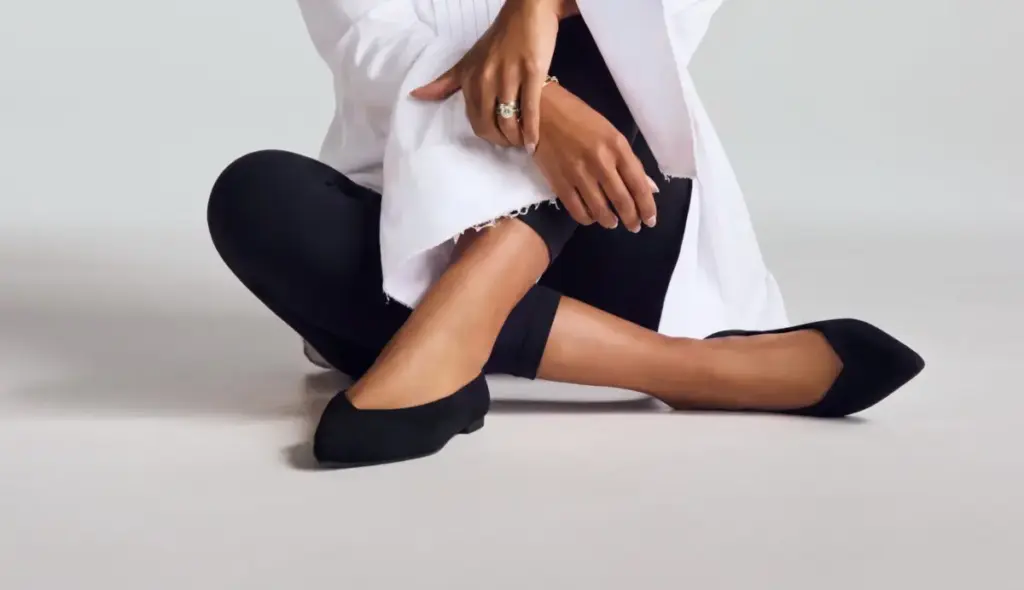
Rather than resting on its laurels or scrambling to chase fleeting digital trends, Rothy’s is celebrating its decade milestone by launching its most expensive and widest-reaching marketing campaign to date. Entitled "Point of View," the multimedia blitz coincides with the debut of a completely revamped third-generation iteration of its iconic shoe, the Point.
This strategic move offers a masterclass in modern retail positioning. At a time when consumers are shopping with heightened selectivity and DTC fatigue has reached an all-time high, Rothy’s is doubling down on brand equity, editorial marketing, and product consistency. By consciously eschewing traditional internet influencers in favor of cultural arbiters, authors, artists, and journalists—and by pioneering deep integrations with publishing platforms like Substack—Rothy’s is proving that enduring retail success in the 2020s requires balancing digital innovation with timeless brand-building.
Detailed Chronology: From Digital Upstart to Omnichannel Powerhouse
To understand Rothy’s current market position, one must trace its trajectory over the past ten years. Launched in an era when Facebook and Instagram ad arbitrage fueled exponential DTC growth, Rothy’s entered the market with a clear, compelling value proposition: sustainable footwear crafted from recycled plastic water bottles, fused with modern comfort and sleek design.
The Early Years: Product Focus and Digital Dominance
In its formative years, the brand maintained a hyper-focused product assortment. Eschewing the traditional retail playbook of launching dozens of seasonal silhouettes, Rothy’s anchored its entire identity around two core shapes: the Flat and the Point. This disciplined approach allowed the supply chain to remain nimble, reduced manufacturing waste, and established a distinct visual signature that consumers could easily identify on the street.
As digital acquisition channels grew more expensive in the late 2010s, many of Rothy’s contemporaries fell into the trap of over-expansion. They flooded the market with trendy, short-lived product categories, diluting their brand identity in a desperate bid to show month-over-month top-line acceleration. Rothy’s, by contrast, focused on perfecting its core construction, refining its proprietary 3D-knitting technology, and building intense customer loyalty through word-of-mouth and exceptional product performance.
The Pivot to Omnichannel and Wholesale Expansion
Recognizing the structural limitations of a purely digital-first model, Rothy’s executed a calculated pivot toward omnichannel retail. The brand understood that long-term survival required meeting the customer wherever they preferred to shop—whether that meant scrolling on a smartphone, walking down a high-end shopping street, or browsing the shoe department of a legacy department store.
Over the years, this diversification strategy has paid monumental dividends. Today, Rothy’s boasts a thriving network of over 40 standalone retail stores across key metropolitan markets. Simultaneously, its wholesale division has flourished, accounting for just under a third of the company’s total revenue. By partnering with heavyweights like Nordstrom, Bloomingdale’s, Anthropologie, Amazon, and international prestige retailers such as Le Bon Marché in Paris, Rothy’s transitioned from a digital-native darling into a globally recognized lifestyle brand.
The 10-Year Milestone and the "Point of View" Era
Now, celebrating its decade anniversary, Rothy’s is entering a new chapter. The brand’s annual revenue has climbed steadily to surpass the $225 million mark, proving its financial resilience. To commemorate its tenth year, leadership has orchestrated a massive marketing pivot—moving away from performance marketing metrics and pouring resources into brand equity.
This milestone is anchored by the rollout of the third generation of the Point. Rather than reinventing the wheel, Rothy’s has carefully optimized its most iconic silhouette, introducing it in a dozen new colors alongside exclusive iterations designed specifically for wholesale partners. Combined with the "Point of View" campaign, this product reintroduction signals that Rothy’s is entering its second decade with supreme confidence in its core identity.
Supporting Context & Metrics: The Anatomy of Modern Retail Survival
The broader retail ecosystem of the mid-2020s demands a fundamentally different playbook than the one that birthed the DTC boom. Venture capital funding has dried up, customer acquisition costs (CAC) on social media platforms have skyrocketed due to privacy changes and ad saturation, and consumers are increasingly cautious with their discretionary spending.
The Economics of Wholesale and Brand Identity
For years, the dogma of the DTC movement was that middlemen were obsolete and wholesale partnerships eroded profit margins. Rothy’s, however, recognized early on that wholesale distribution serves a dual purpose: it acts as a powerful revenue driver and a massive top-of-funnel marketing engine.
When a consumer encounters a pair of Rothy’s neatly displayed on a table in Nordstrom or sitting on a shelf in Le Bon Marché, the physical touchpoint builds immediate trust in a way a digital ad never could. However, this multi-channel presence introduces a new challenge: brand fragmentation. When your product is distributed globally across diverse retail environments, the brand identity must remain impervious to dilution.
Anna Doré, Rothy’s VP of brand and communication, highlighted this exact operational reality:
"When you’re on shelves all over the place, you need a strong brand identity more than ever… Whether we’re on a shelf in Le Bon Marché or on a table in Nordstrom, we want the customer to know what we stand for, which means taking a more editorial approach to marketing."
Rejecting the Creator Economy Mold
In crafting its anniversary campaign, Rothy’s made a deliberate tactical departure from contemporary marketing norms. While the vast majority of apparel and accessory brands continue to pour budgets into TikTok creators, micro-influencers, and unboxing videos, Rothy’s looked entirely outside the digital marketing playbook.
The brand tapped 16 notable women whose work has fundamentally shaped cultural discourse, including ESPN host Malika Andrews, artist Jane Moseley, actress Nathalie Love, and music producer Julianne Jordan. By intentionally bypassing traditional influencers in favor of writers, artists, photographers, and ceramicists, Rothy’s positioned itself as an intellectual, sophisticated brand that appeals to discerning, thinking consumers.
Furthermore, Rothy’s embraced innovative digital real estate by partnering deeply with Substack writers. Instead of launching its own corporate newsletter, the brand integrated itself into existing, highly engaged literary communities. By collaborating with prominent Substack authors like Emily Sundberg (writer of Feed Me) and Erika Veurink (writer of Long Live), Rothy’s invited these writers to reflect on how their lives have evolved over the past decade. This literary, essayistic approach to brand-building is a far cry from the punchy, 15-second video loops that dominate modern social commerce, underscoring Rothy’s maturity and distinct market positioning.
Official Statements and Strategic Insights
Leadership at Rothy’s has been remarkably transparent about the philosophical shifts driving the brand’s second decade. In interviews surrounding the anniversary campaign, executives have shed light on the discipline required to resist short-term trends in favor of long-term brand equity.
Anna Doré on the Dangers of Chasing "Newness"
Reflecting on the mistakes made by other 2010s-era DTC brands that ultimately folded or pivoted away from apparel, Anna Doré pointed directly to the trap of constant reinvention:
"The temptation to chase newness at the expense of a consistent brand identity has been a problem for many of the DTC brands that launched in the 2010s. At a time when consumers are shopping more selectively, Rothy’s is betting on a strategy of consistency and strengthening brand codes over constant evolution."
This sentiment strikes at the heart of modern consumer psychology. In an economic climate marked by choice overload, consumers crave reliability. They want to know that the items they invest in will retain their relevance, quality, and aesthetic appeal season after season. By re-releasing the Point in its third-generation format rather than overhauling the product lineup with unproven styles, Rothy’s is communicating stability and mastery.
Streamlining the Assortment
Doré also elaborated on how the brand is rationalizing its product portfolio to maximize operational efficiency and brand clarity:
"If you look at our portfolio, we traditionally had two silhouettes: the Point and the Flat. Over time, we went a little broader and launched more styles. Now, we’re trying to come back to a more focused assortment and build a bigger business around our core silhouettes."
This contraction of scope is a rare and courageous move in an industry obsessed with SKU proliferation. By narrowing its focus back to foundational icons, Rothy’s is reducing inventory complexity, protecting its supply chain margins, and reinforcing the very items that built its reputation a decade ago.
Future Outlook: What the Next Decade Holds for Rothy’s
As Rothy’s steps past its ten-year milestone, the brand’s strategic roadmap offers a compelling blueprint for the future of intelligent retail. Several key pillars will define its trajectory through the late 2020s and beyond:
1. Deepening Omnichannel Integration
With over 40 brick-and-mortar stores performing strongly and a robust wholesale network spanning domestic and international markets, Rothy’s has successfully bridged the digital-physical divide. Future growth will likely see a calculated expansion of its retail footprint, focusing on experiential flagships that immerse consumers in the brand’s sustainability narrative—highlighting closed-loop manufacturing, recycled marine plastics, and zero-waste 3D-knitting processes.
2. Intellectual Brand Positioning
The success of the "Point of View" campaign and the Substack literary partnerships proves that Rothy’s customer base values substance alongside style. Moving forward, we can expect the brand to continue investing in editorial, thought-leadership-driven marketing that elevates cultural creators, artists, and intellectuals. This positions Rothy’s not merely as a footwear company, but as a lifestyle marker for modern, intellectually engaged professional women.
3. Product Perfection Over Proliferation
Rather than chasing every micro-trend that surfaces on social media, Rothy’s will likely maintain its disciplined approach to product development. By continually refining its core silhouettes—the Point, the Flat, and select supporting categories—the brand will cement its status as a closet staple. In an era defined by fast-fashion burnout and sustainability scrutiny, durable, timeless design paired with advanced recycled materials will remain an unbeatable competitive moat.
Conclusion
Rothy’s journey over the past ten years encapsulates the ultimate evolution of modern retail. By surviving the turbulent shakeout of the 2010s DTC boom, mastering the delicate balance between digital storytelling and physical wholesale expansion, and choosing timeless product consistency over frantic trend-chasing, Rothy’s has secured its place as a enduring retail institution. As the brand embarks on its second decade with the expansive "Point of View" campaign and a refined third-generation classic, it serves as an inspiring proof-of-concept for what contemporary brand-building can achieve when driven by clarity, quality, and uncompromising identity.