Executive Overview
In the relentless whirlwind of modern celebrity culture, few figures command the global stage quite like Kim Kardashian. Between scaling multi-million-dollar business empires—such as SKIMS and Skkn by Kim—managing a high-profile legal studies journey, and anchoring a nonstop media presence, the reality mogul’s calendar is an exercise in hyper-efficiency. Yet, amid this dizzying vortex of global commerce and public visibility, one non-negotiable anchor remains untouched: her physical training regimen.
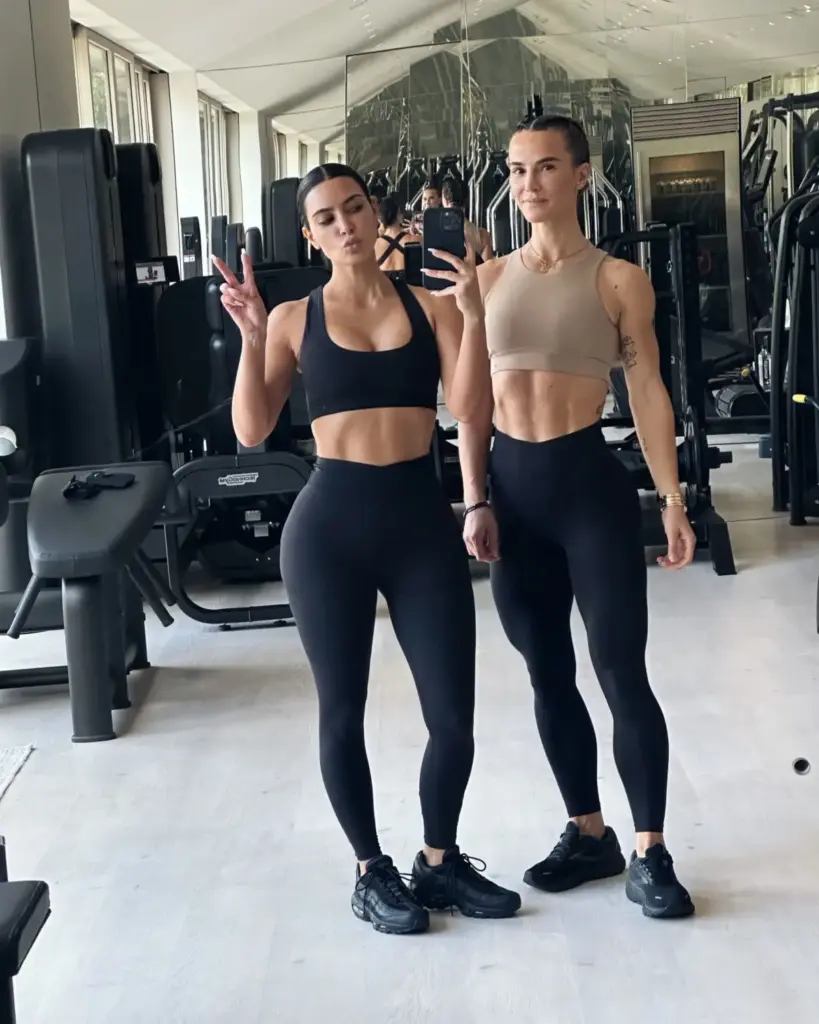
For Kardashian, working out is not merely an aesthetic pursuit or a superficial checkbox; it is a vital psychological reset and a rigorous physical commitment. To achieve sustainable results while navigating a punishing schedule, Kardashian relies on the elite guidance of Senada Greca—an MBA graduate, founder of the WeRise fitness platform, and a NikeSkims athlete.
Greca, renowned for her uncompromising approach to functional fitness and her large digital following, brings a philosophy to celebrity training that diverges sharply from transient Hollywood fads. Rather than leaning into grueling, high-volume cardio regimens or rapid-weight-loss protocols, Greca champions a paradigm centered on functional strength, metabolic resilience, and long-term vitality.
This in-depth investigative feature explores the mechanics of Kardashian’s fitness routine, dissecting the philosophy of functional longevity, the structural breakdown of her workouts, and the specific strength movements that form the bedrock of her physical transformation. By examining the synergy between Kardashian’s disciplined schedule and Greca’s pedagogical approach to movement, this article illuminates how strength training has evolved into the ultimate form of self-care and empowerment for one of the world’s most influential public figures.
Detailed Chronology: The Evolution of Kardashian’s Training Philosophy
To truly understand Kim Kardashian’s current physical condition, one must trace the evolution of her relationship with exercise. For years, public perception of celebrity fitness was dominated by extreme measures: hours of steady-state cardio, calorie-restricted diets, and rapid fluctuations designed solely for red-carpet appearances. Kardashian herself has historically cycled through various high-volume endurance protocols. However, the maturation of her fitness journey reflects a broader cultural shift within the wellness industry—a pivot away from how a body looks toward how a body performs and feels.
From Cardio to Iron: A Mindset Shift
Greca’s own athletic evolution mirrors the philosophy she imparts to high-profile clients like Kardashian. Having transitioned away from excessive endurance work, Greca discovered that nothing replicates the profound psychological and physical transformation delivered by progressive strength training.
"My philosophy is simple: It’s building strength that lasts," Greca explains. "Aesthetics are a by-product. The real goal is longevity, resilience, and the confidence that comes from strength training."
This ethos became the foundational bedrock of her work with Kardashian. When Greca steps into a training session with the media icon, the methodology remains anchored in foundational mechanics. Despite Kardashian’s astronomical fame and the unique pressures of her lifestyle, the iron does not care who is lifting it. Respect for the movement patterns, precision of form, and absolute consistency are mandatory.
The Non-Negotiable Routine
The cornerstone of Kardashian’s success in the gym is not innate athletic talent or a surplus of leisure time; rather, it is radical accountability. In a life characterized by chaotic variables—sudden travel, overnight global meetings, and endless media obligations—Kardashian’s workout schedule is treated as an immutable appointment.
"She’s very busy—but she prioritizes working out. It’s in her schedule. She shows up. There’s no negotiation," Greca notes.
This ironclad discipline transforms exercise from an obligatory chore into a sanctuary of control. By protecting this time, Kardashian leverages strength training not just to sculpt her physique, but to fortify her mental bandwidth, proving that physical endurance directly feeds professional resilience.
Supporting Context & Metrics: The Science of Longevity and Functional Strength
The partnership between Kardashian and Greca is underpinned by exercise science, biomechanics, and a forward-thinking approach to metabolic health. In an era where lifestyle diseases and age-related physical decline are major public health concerns, strength training has transitioned from a niche bodybuilding pursuit to an essential medical recommendation for long-term healthspan.
The Biological Imperative: Muscle and Bone Density
Greca often refers to the human body as a "home"—a living ecosystem that requires continuous investment, maintenance, and structural reinforcement. As individuals age, natural physiological processes lead to progressive muscle loss (sarcopenia) and a decline in bone mineral density (osteopenia and osteoporosis).
[Lifelong Strength Training]
       │
       ├──> Prevents Sarcopenia (Preserves Muscle Mass)
       ├──> Stimulates Osteoblast Activity (Combats Bone-Density Loss)
       ├──> Optimizes Insulin Sensitivity (Metabolic Health)
       └──> Enhances Neuromuscular Coordination (Falls Prevention)
By prioritizing heavy, compound, and unilateral strength training, clients like Kardashian are actively safeguarding their future health. Resistance training stimulates osteoblast activity, increasing bone density to withstand the rigors of aging. Simultaneously, building and maintaining skeletal muscle mass enhances metabolic health, improves glucose regulation, and supports cardiovascular function far more effectively than chronic steady-state cardio alone.
Moving with Mindfulness: The Greca Methodology
Greca’s training philosophy rejects the "no pain, no gain" brutality of early-2000s boot camps in favor of intelligent, mindful progression. Her methodology follows a strict biological hierarchy:
- Master the Movement: Perfecting the fundamental biomechanics and motor patterns using bodyweight or minimal load.
- Integrate Breathing Patterns: Tying intra-abdominal pressure and diaphragmatic breathing to spinal stabilization.
- Progressive Overload: Gradually increasing external loads (dumbbells, resistance bands, cables) safely and systematically.
Crucially, Greca insists that this disciplined structure must never devolve into monotony. "It should feel like playtime," she says, challenging the cultural narrative that exercise must be a punitive experience. "We’ve built this mindset that working out is something we have to do, instead of something we get to do."
Official Statements & Expert Breakdown: Inside the Workout Split
A typical training week for Kim Kardashian is strategically segmented to maximize muscular recovery while ensuring balanced development across the entire kinetic chain. Rather than engaging in random, uncoordinated sweat sessions, her routine is divided into targeted sessions: lower-body days focusing on the glutes, hamstrings, and quads; upper-body and core sessions targeting the back, shoulders, and deep abdominal wall; and occasional full-body circuits to elevate cardiovascular conditioning.
To execute these sessions at an elite level, Greca incorporates specific equipment that challenges stabilization, grip strength, and core integration. The essential toolkit includes:
- Heavy dumbbells
- High-grade resistance bands
- Access to a pull-up bar for vertical pulling mechanics
Below is an expert breakdown of Kardashian’s favorite strength moves, detailing the mechanics, muscular targets, and physiological benefits of each exercise as outlined by Senada Greca.
┌─────────────────────────┬──────────────────────────┬─────────────────────────────────────────────────────┐
│ Exercise                │ Primary Muscle Groups    │ Core Training Benefit                                       │
├─────────────────────────┼──────────────────────────┼─────────────────────────────────────────────────────┤
│ Dumbbell Romanian Deadlifts │ Glutes, Hamstrings   │ Reinforces proper hip-hinge mechanics and posterior chain   │
│ Assisted Pull-ups       │ Lats, Upper Back, Biceps │ Improves upper-body pulling power and grip endurance        │
│ Weighted Hollow Crunches│ Transverse Abdominis     │ Builds deep core tension and spinal stability               │
│ Suitcase Carry Marches  │ Obliques, Core, Grip     │ Challenges unilateral balance and anti-lateral flexion      │
│ Bulgarian Split Squats  │ Quads, Glutes, Adductors │ Isolates single-leg strength, balance, and coordination     │
└─────────────────────────┴──────────────────────────┴─────────────────────────────────────────────────────┘
1. Dumbbell Romanian Deadlifts (RDLs)
- The Movement: Executed by holding a pair of heavy dumbbells, hinging at the hips with a soft bend in the knees, lowering the weights along the shins while maintaining a neutral spine, and driving the hips forward to return to a standing position.
- Trainer’s Insight: "This foundational hinge movement strengthens the glutes and hamstrings while reinforcing proper lifting mechanics, helping build total-body strength and stability through a controlled range of motion," Greca explains.
- Why It Matters: The hip hinge is arguably the most critical movement pattern for modern humans, counteracting the postural damage of prolonged sitting while building the powerful posterior chain muscles necessary for athletic power and lower back protection.
2. Assisted Pull-ups
- The Movement: Utilizing a resistance band or an assisted pull-up machine, the trainee pulls their chest toward the bar by engaging the latissimus dorsi, rhomboids, and biceps, maintaining strict control throughout the eccentric (descending) phase.
- Trainer’s Insight: "This upper-body staple strengthens the back and arms while improving grip and overall body control, teaching you to lift and stabilize your own bodyweight," Greca states.
- Why It Matters: Vertical pulling movements are frequently neglected in standard fitness routines, particularly among women. Incorporating pull-ups corrects postural imbalances caused by forward-facing tasks (like typing on phones or computers) and builds functional upper-body strength.
3. Weighted Hollow Body Crunches
- The Movement: Lying supine on the floor, the lower back is pressed firmly into the mat as the shoulders and legs are elevated into a "hollow body" hold. Holding a light weight, the practitioner performs micro-crunches, maintaining constant tension on the deep abdominal wall.
- Trainer’s Insight: "This exercise strengthens the deep abdominal muscles by maintaining tension through a hollow position, while the added weight increases intensity and control throughout the movement," notes Greca.
- Why It Matters: Moving beyond superficial surface crunches, this movement targets the transverse abdominis—the body’s natural corset—providing essential spinal support and enhancing core transfer during heavy lifts.
4. Suitcase Carry Marches
- The Movement: Holding a heavy dumbbell or kettlebell in one hand (like a suitcase), the practitioner marches in place or walks slowly, resisting the urge to lean to the side by engaging the core and obliques.
- Trainer’s Insight: "This unilateral core exercise builds stability; the marching pattern challenges balance and also improves grip strength," Greca explains.
- Why It Matters: Suitcase carries train anti-lateral flexion, teaching the nervous system how to stabilize the spine under asymmetrical loads. This directly translates to functional real-world strength, such as carrying heavy grocery bags or luggage.
5. Bulgarian Split Squats
- The Movement: With one foot elevated behind on a bench or platform, the trainee drops their back knee toward the floor in a deep lunge position, maintaining an upright torso before driving through the front heel to return to standing.
- Trainer’s Insight: "This single-leg movement builds strength, balance, and stability, isolating each leg while challenging coordination and control through a deep range of motion," Greca says.
- Why It Matters: Unilateral leg training exposes and corrects left-to-right strength imbalances, enhances ankle and knee stability, and builds tremendous lower-body endurance without requiring spinal compression from heavy barbell back squats.
Future Outlook: The Next Frontier in Celebrity Wellness
As the wellness industry matures, the cultural footprint of fitness icons like Kim Kardashian and thought leaders like Senada Greca signals a profound paradigm shift. The era of starving for the camera is decisively giving way to the era of building strength for life.
By framing the human body as a permanent home that deserves investment, respect, and rigorous care, Greca’s methodology provides a blueprint for sustainable health that transcends celebrity culture. For Kardashian, the daily discipline of lifting heavy, protecting her schedule, and prioritizing functional movement is not about chasing an impossible aesthetic standard—it is an investment in longevity, resilience, and unshakeable self-belief.
As this philosophy continues to infiltrate mainstream consciousness, the message is clear: true strength is not measured by how much weight you can shed in a week, but by how much life, vitality, and power you can build for the decades to come.