Executive Overview
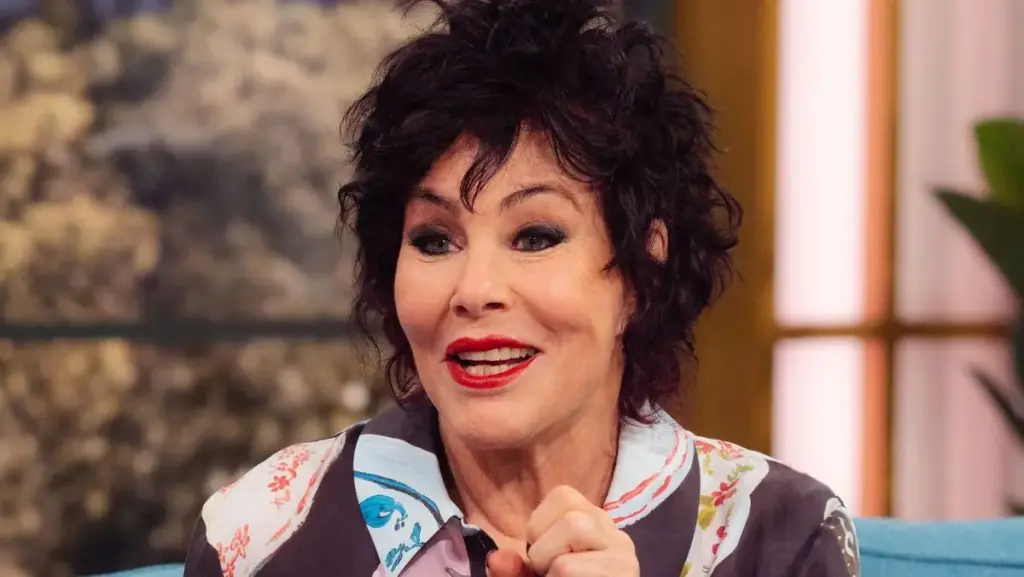
Mental health campaigner, broadcaster, and comedian Ruby Wax is throwing open the doors of her private Notting Hill residence for an intimate, high-stakes gathering that marries radical vulnerability with high-end self-care. On November 17, the 73-year-old entertainer will host twenty paying strangers for a six-hour, £550-a-head immersive retreat featuring guided mindfulness, catered lunch and tea, brutally honest interpersonal dialogues, and perhaps even a peek inside her legendary wardrobe.
The announcement, revealed exclusively ahead of her appearance on Annalie Howling’s Happy After podcast, highlights a growing cultural shift toward tactile, screen-free human connection. Wax, who holds a master’s degree in mindfulness-based cognitive therapy from Oxford University and was awarded an OBE in 2015 for her tireless services to mental health, argues that modern society is suffering from an epidemic of digital isolation. By charging a premium for physical proximity and unvarnished truth, the former Absolutely Fabulous star is testing a radical hypothesis: that true healing happens not in clinical isolation, but when twenty strangers look each other in the eye, strip away their digital armor, and speak from the heart.
Yet, this exclusive gathering also shines a light on the ongoing, deeply personal war Wax wages against her own psychological demons. A vocal advocate who has long traded her glittering showbiz persona for raw psychological transparency, Wax continues to navigate the unpredictable terrain of clinical depression. This in-depth report examines the mechanics of her Notting Hill retreat, the philosophy of connection driving it, her decorated academic and advocacy background, and the harrowing, lifelong battle with mental illness that underpins everything she does.
Detailed Chronology & Event Architecture
The genesis of this unique residential retreat lies in Wax’s mounting frustration with the superficiality of modern digital communication. Over the past decade, as social media algorithms and screen-based interactions have come to dominate daily life, the comedian observed a corresponding decay in authentic empathy. The upcoming November 17 event is structured precisely to counteract this trend.
The Anatomy of a Six-Hour Sanctuary
The itinerary for the twenty attendees is meticulously curated to foster rapid psychological safety and deep emotional resonance:
- Arrival and Grounding (Morning): Guests cross the threshold into Wax’s private Notting Hill home—a space usually shielded from the public eye. Stripped of their smartphones and digital devices, participants are immediately forced to confront the quietude of a screen-free environment.
- Mindfulness and Centering: Drawing on her extensive academic training in cognitive therapy, Wax leads the group through structured mindfulness exercises designed to quiet the incessant noise of the "default mode network" in the brain.
- "Brutally Honest" Circles: The core of the retreat centers on facilitated group dialogues. Moving away from polite small talk, participants are encouraged to speak absolute truths about their lives, fears, and failures.
- Catering and Informal Bonding: Lunch and afternoon tea are shared communally, offering unstructured time for participants to forge deeper bonds, browse the domestic environment, and catch a glimpse of the host’s famous wardrobe.
Speaking on the Happy After podcast, Wax elaborated on the mechanics of these gatherings, emphasizing the immediate physiological and psychological relief they provide.
"Retreats are about connection and it’s for people to speak from the heart," Wax explained. "People go on and they speak honestly [about] what’s going on. And by watching somebody else open up it makes you relieved, like you go, ‘I’m not alone’. So, when you feel heard you feel validated as a human."
Wax contends that physical presence triggers distinct neurological responses that virtual meetings simply cannot replicate.
"When people aren’t on their phones and they’re just on the screen, you see the whites of their eyes and that bonding chemical, that oxytocin spreads like wildfire," she noted. "And whenever I get off, it’s like I’ve been to church or something because people opened up."
Supporting Context & Metrics: Wax’s Evolution from Sitcom Star to Academic Pioneer
To understand the gravity of a £550-per-head mindfulness day at Wax’s home, one must trace her extraordinary professional and personal evolution. For decades, audiences knew Wax as the brassy, fearless American comedian interviewing British royalty and Hollywood icons with razor-sharp wit. However, beneath the showbiz veneer lay a profound, often debilitating struggle with clinical depression that ultimately redirected the course of her life.
Academic Rigor and Public Recognition
Recognizing that comedy was no longer enough to manage her psychological landscape, Wax pivoted toward rigorous scientific inquiry:
- Oxford Master’s Degree: Wax earned a master’s degree in mindfulness-based cognitive therapy from the University of Oxford, anchoring her intuitive understanding of mental health in empirical neuroscience.
- Academic Appointments: Her contributions to the field were formally recognized when she was appointed Visiting Professor in Mental Health Nursing at the University of Surrey.
- The OBE Honor: In 2015, her tireless efforts to destigmatize mental health issues culminated in her being awarded an Officer of the Order of the British Empire (OBE).
- Literary Contributions: Wax has authored multiple bestselling books exploring the workings of the human brain, mental health crises, and practical coping mechanisms for a hyper-connected world.
The Neuroscience of Connection
Wax’s retreat model aligns closely with emerging psychiatric research regarding loneliness and neurobiology. Modern urban populations face historic levels of isolation, compounded by screen fatigue. By engineering a high-trust, face-to-face environment, Wax is capitalizing on what neuroscientists term "co-regulation"—the capacity of human nervous systems to calm one another through eye contact, vocal tone, and shared physical space.
While a £550 price tag has inevitably drawn scrutiny regarding accessibility, supporters argue that the intimate cap of twenty people necessitates substantial logistical, emotional, and spatial resources within a private London home. For Wax, the barrier to entry ensures that participants are genuinely invested in doing the deep, uncomfortable work required during the six-hour session.
Official Statements & Personal Revelations
Despite her academic credentials and extensive platform, Wax remains brutally honest about the fact that she has not "cured" her depression. Mental illness, in her view, is not a broken bone that heals neatly; it is a chronic vulnerability that requires eternal vigilance.
Recognizing the Tipping Point
In previous frank disclosures, Wax detailed the warning signs of her downward spirals and the sanctuary behaviors she employs when her mental health begins to fracture:
"I used to be able to see it [depression] coming and pull back everything," she reflected. "I’d know to cancel, cancel, cancel. I’d go to my room, a safe place where nobody can get me, and where I can see the doorknob—because I have a fear of being locked in."
These episodes of withdrawal are not brief; Wax has noted that she has sometimes remained isolated in her safe room for weeks, waiting for the return of dopamine rather than enduring psychiatric hospitalization. Yet, she admits that recovery is never linear, and the warning signs can easily be missed:
"Instead of having to go to a hospital, I’d wait for the dopamine. Before that, I used to keep working and overriding it, then I’d get really ill. I usually know the tipping point. But this time, I missed it."
The Illusion of the "Front"
Perhaps most harrowing is Wax’s description of the sheer exhaustion required to maintain a public persona while battling internal agony. Married to TV and film producer Ed Bye, with whom she shares three grown-up children, Wax has enjoyed a stable domestic life alongside a high-flying career. Yet, domestic stability does not insulate one from neurochemical storms.
Describing the unvarnished reality of depressive illness, Wax pulled no punches:
"The black hole of diseases, where you sit helpless as your mind hammers you with accusations. Your thoughts attack like little demons biting chunks out of your brain. It’s hard to stay alive and listen."
In a final, profoundly poignant admission that underpins her entire philosophy on radical honesty, she confessed:
"I’ve spent a lifetime creating a ‘front’ to give the illusion that all is well. It wasn’t, and it isn’t."
To combat this internal darkness, Wax has pursued healing across the globe—from visiting refugee camps in Greece to undertaking a grueling month-long silent mindfulness retreat in San Francisco, and even swimming with whales in the Dominican Republic. Yet, she returns always to the fundamental truth that connection with ordinary human beings is the ultimate antidote to isolation.
Future Outlook: The Commercialization of Vulnerability vs. Authentic Healing
As Ruby Wax prepares to welcome twenty strangers into her Notting Hill sanctuary on November 17, the event serves as a microcosm for the modern wellness industry. In an era dominated by digital noise, wellness has increasingly become a luxury commodity, with high-net-worth individuals paying premium rates for exclusive access to gurus, holistic practitioners, and celebrity-led retreats.
Critics may question the democratization of mental health when entry is restricted to those possessing £550 to spare. However, proponents argue that Wax is offering something far more valuable than a standard wellness seminar: she is offering her own home, her lived experience, and her unshielded presence.
For the twenty participants who secure a spot, the day will undoubtedly be an intensive psychological boot camp. By stripping away phones, demanding radical honesty, and leveraging the neurological power of oxytocin and eye contact, Wax is attempting to scale down the complex science of mental health into an intimate, domestic afternoon.
Looking forward, Wax’s continued expansion into boutique, high-touch mental health events signals a broader cultural pivot. As institutional mental health services remain overstretched and digital fatigue reaches an all-time high, figures with cultural capital like Wax are stepping into the breach. Whether this model can be replicated or whether it remains an exclusive luxury for the few, Ruby Wax has once again proven that she is willing to put her own home, her history, and her hard-earned wisdom directly on the line in the battle for human connection.