Executive Overview
For decades, the cultural script dictating the grooming habits of women was absolute, uncompromising, and relentlessly smooth. From the hyper-plucked brows and meticulous Brazilian waxes of the late 1990s and 2000s to the slicked-down, hairless ideals peddled by mainstream media, the message delivered to women and femme-identifying individuals was clear: body hair is an evolutionary oversight, an indicator of poor hygiene, and, above all, inherently unfeminine.
Today, that monolithic standard is fracturing. A profound shift is underway as a growing number of women and gender-diverse individuals actively reject the societal imperative of artificial hairlessness. No longer viewed merely as a cosmetic choice, the decision to grow out, style, or entirely leave body hair untouched has become deeply intertwined with broader conversations surrounding gender identity, bodily autonomy, sexuality, and self-expression.
However, this cultural rebellion does not exist in a vacuum. It operates within a landscape still defined by sexist double standards, where natural traits on women—such as dense arm hair, facial fuzz, or underarm growth—are frequently coded as "masculine," while the same characteristics on men go entirely unquestioned.
To understand this paradigm shift, we must look beyond the surface. By examining personal testimonies from individuals who have abandoned hair removal, analyzing the historical evolution of beauty standards, and contextualizing the socio-political implications of body hair, this report explores how something as simple as a follicle is helping to rewrite the modern playbook of womanhood.
Detailed Chronology: From the 90s Smooth Ideal to the Modern Body-Positive Movement
To fully grasp the current renaissance of natural body hair, one must trace the historical pendulum of societal expectations.
The Era of Hyper-Hairlessness (1990s – Early 2000s)
The closing decade of the 20th century and the dawn of the new millennium marked the zenith of intensive, high-maintenance hair removal. Pop culture, fashion runways, and mainstream cinema heavily promoted an aesthetic of prepubescent smoothness for adult women. Eyebrows were subjected to merciless tweezing until they resembled little more than pencil-thin arches. The total eradication of pubic hair via Brazilian waxing transitioned from an exotic luxury service to an expected baseline of grooming hygiene. During this era, any deviation from complete hairlessness—particularly on legs, underarms, and the bikini line—was treated as a social faux pas or a sign of personal neglect.
The Counter-Cultural Awakening (2010s)
As the 2010s unfolded, the proliferation of digital platforms and decentralized media began to dismantle traditional gatekeeping in the beauty industry. Grassroots feminist movements, body-positivity campaigns, and intersectional discourse opened up digital spaces where women could question why hair removal was treated as a mandatory tax on femininity. Celebrities and influencers began sporadically posting photos featuring unplucked eyebrows or natural leg hair, sparking fierce public debates and planting the seeds for broader mainstream tolerance.
The Contemporary Landscape: Personal Autonomy vs. Double Standards
Today, society finds itself in a transitional phase. While commercial pressures to buy razors, laser hair removal packages, and waxing subscriptions remain a multi-billion-dollar global industry, a counter-movement has firmly taken root. More individuals are embracing full brows, natural intimate hair, and untreated underarms.
Yet, this transition is far from uniform. The choice to stop shaving frequently brings women face-to-face with deep-seated societal conditioning. While some find that letting their hair grow is a liberating exercise in self-acceptance, others continue to navigate the frustrating reality of sexist double standards—where natural bodies are scrutinized, judged, and expected to conform to patriarchal definitions of acceptability.
Supporting Context & Metrics: Voices from the Ground
To understand the personal motivations driving this movement, we turn to the lived experiences of individuals who have consciously chosen to step off the hair-removal treadmill. Their testimonies reveal a complex interplay of comfort, identity, psychology, and social dynamics.
The Comfort Imperative and Sensory Realities
For many, the catalyst for ditching the razor is remarkably pragmatic: physical comfort. Shaving, waxing, and chemical treatments often cause skin irritation, razor burn, folliculitis, and ingrown hairs.
"I didn’t shave anywhere on my body. My skin doesn’t tolerate shaving well, and I think my body should look like this," shares one individual. "In the summer, most people stare at my underarm hair, which I find strange. If you raise your arm and everyone is totally shocked… that’s silly. Some people really find it gross, but I haven’t really gotten any strong negative reactions to it. My parents always tell me I should shave, but whatever."
Another notes the sensory shift of simply letting nature take its course: "I let my underarm hair grow just for myself, and it was a totally empowering feeling. They feel very comfortable, and when I see other women with unshaven underarms—for example, in the subway holding onto an upper pole—it feels like we’re part of some secret club or something."
Redefining Femininity and Sexuality
For decades, hairlessness was packaged as the ultimate expression of female grace. By rejecting that premise, many women report experiencing a surprising psychological pivot: growing body hair actually makes them more connected to their femininity, not less.
"I love body hair and see no reason not to have any if you like it," explains a contributor. "I stopped shaving my armpits because I realized that hairless armpits don’t automatically make me look feminine. I actually felt more feminine with body hair, so I decided to just let it grow. I feel super about it, and I’m all the more happy when I see more and more women ditching their underarm shaves. Yes, ladies!"
This sentiment is echoed by those reclaiming terms like "bush" with pride. Describing their intimate grooming choices with humor and ownership, one participant remarks: "I used to rock a proper ’70s bush and just let it sprout. Today, I trim it into more of a shape. I call it ‘Downton Abbey’ because it looks as manicured as a British lawn." Another adds simply: "With my bush, I feel mature and feminine."
Breaking the Heteronormative Matrix
For queer and non-binary individuals, the decision to stop removing body hair frequently intersects with a broader deconstruction of gender presentation and societal myths.
"When I came out as a queer woman and explored that identity a bit, I stopped shaving," shares a participant. "At the same time, it also had to do with my very sensitive skin. I think, for the most part, it was about looking at gender anew and trying out all the facets of what a woman or femininity can look like… As a queer person, you feel like once you really deal with cultural myths, you quickly realize they’re all just made up."
This realization often extends far beyond beauty routines. Questioning the compulsory nature of hair removal opens the floodgates to interrogating other societal blueprints: "You are repeatedly given the heteronormative narrative of what your life ‘should’ be—and when you question that and realize it’s all nonsense and doesn’t work for you, you eventually start questioning the compulsion to heterosexuality too. I think it really opens your eyes to those myths."
Navigating the Social Gaze: Curiosity, Shock, and Acceptance
While the internal journey toward self-acceptance can be deeply liberating, the external reactions of friends, family, and romantic partners vary wildly.
Some find that their partners are enthusiastically supportive of their bodily autonomy. "My partner encourages me to leave my body hair alone wherever I want," says one participant. "He wants me to do what makes me happy. It’s your body—and therefore your business how you present yourself."
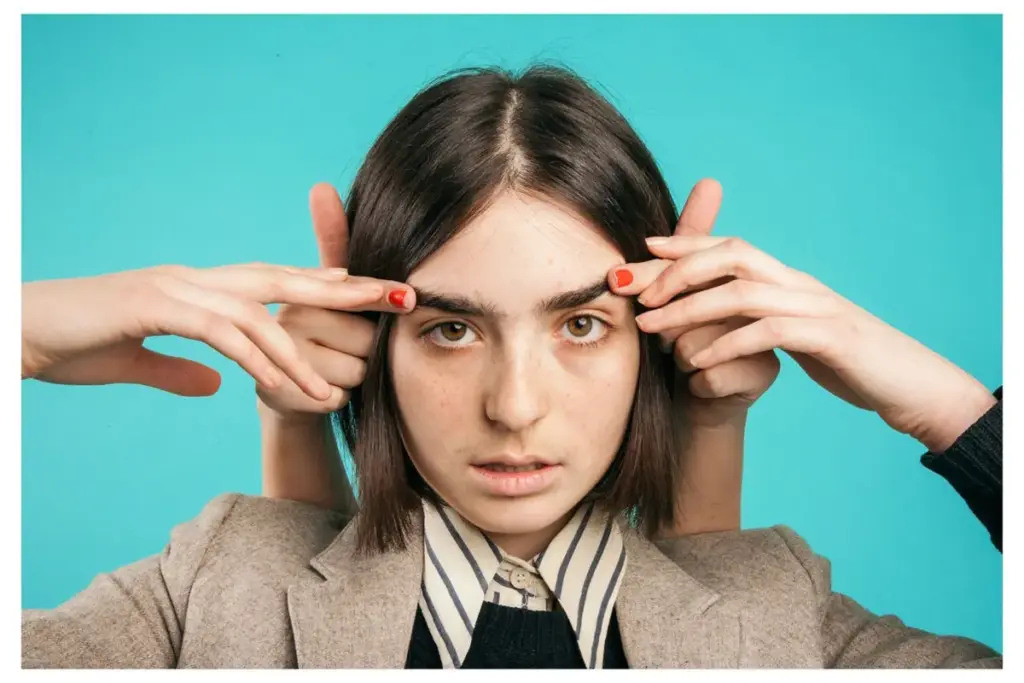
Others encounter a mix of curiosity, occasional shock, and generational friction. While dating, reactions can be a litmus test: "The people I dated mostly didn’t mind at all. Some did, though. But I was never ready to change anything about my hair—I just don’t see the point." Childhood insecurities regarding dense arm hair or prominent eyebrows often dissolve over time, replaced by a fierce pride in features that once caused shame. As one individual reflects on their prominent eyebrows: "They make me look strong, and I feel that way too. And when people tell me I remind them of Frida Kahlo… that’s very flattering; she was a great painter and a strong woman after all."
Official Statements & Sociocultural Analysis
Sociologists, cultural anthropologists, and gender studies scholars view the resurgence of natural body hair not as a passing aesthetic fad, but as a micro-revolution within the broader macro-landscape of bodily autonomy.
According to cultural analysts, the commercialization of hair removal in the 20th century was largely driven by razor manufacturers capitalizing on manufactured insecurities. By pathologizing natural human biology—framing women’s hair as unclean, uncivilized, or masculine—industries successfully created a recurring, lifelong maintenance cycle.
When women choose to step off this treadmill, they are performing a micro-act of resistance against the commodification of their bodies. Scholars emphasize that true bodily autonomy means the total absence of penalty, whether that penalty is social ostracization for having hair or patriarchal pressure to look a certain way. The goal of the modern movement is not to mandate that all women must be hairy, but rather to ensure that the choice to shave, wax, or let grow is entirely uncoerced.
Future Outlook: Where Do We Go From Here?
As we look toward the future, the cultural conversation surrounding female body hair is steadily shifting from one of scandal to one of indifference.
- Mainstream Desensitization: As more public figures, athletes, and everyday individuals display natural body hair across digital platforms and public spaces, the shock value diminishes. What was once viewed as a radical political statement is increasingly being normalized as simply one aesthetic choice among many.
- Intersection of Gender and Beauty: The rigid binaries that assign hairlessness exclusively to femininity and hairiness to masculinity are continuing to break down. As non-binary, trans, and gender-non-conforming voices gain visibility, society is learning to decouple biological traits from gender performance.
- The Rise of True Choice: Ultimately, the future of grooming is personalization. Whether an individual prefers the silky smoothness of a fresh wax or the soft warmth of untouched leg hair, the defining triumph of the modern era is that the decision belongs entirely to the individual whose body it is.
As one participant aptly summarized when reflecting on her relationship with her own body: "I actually don’t think about my body hair that often. It’s just there." And in that simple state of unbothered existence lies the true heart of the movement.