Executive Overview
For a full century, Marks & Spencer (M&S) has occupied a unique, almost sacred space in the British cultural and sartorial psyche. From providing generations of families with hardworking, unpretentious weekly staples to quietly anchoring the high street with reliable undergarments and school uniforms, the high-street giant has long been the backbone of the UK wardrobe. Yet, the high street of the 21st century is a fiercely competitive arena—buffeted by the relentless velocity of fast fashion, the shifting tides of e-commerce, and an increasingly sophisticated consumer base that demands both trend-led vitality and uncompromising quality.
To mark its centenary year of fashion retail, M&S has delivered its most audacious and symbolically significant maneuver to date: a blockbuster, see-now-buy-now runway presentation at London Fashion Week for Autumn/Winter 2026. Rather than resting on the laurels of its formidable heritage, the brand thrust itself directly into the high-octane epicenter of British high fashion.
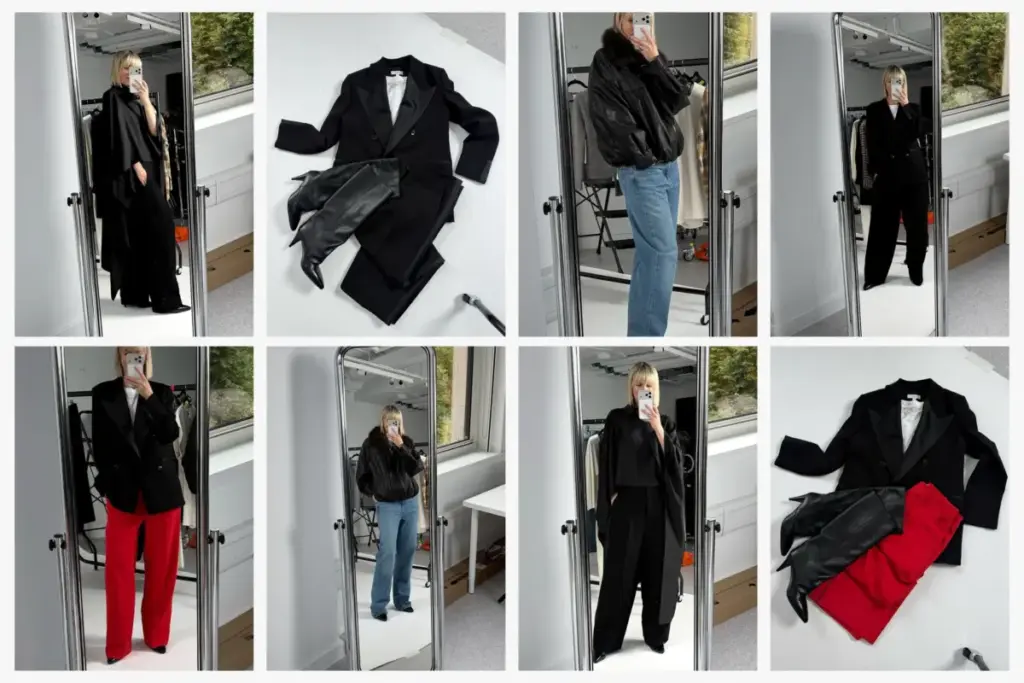
By mining its own extensive archives and reimagining vintage silhouettes—including a celebrated iteration of a classic St Michael jacket that has scarcely aged a day—M&S demonstrated a newfound design confidence. Ahead of the physical runway extravaganza, Vogue’s Global Fashion Network Deputy Director, Laura Ingham, stepped into the fitting room for an exclusive preview of the collection via the Just Browsing series. Testing everything from fabric composition and structural drape to overall fit and feel, Ingham’s curation of hero pieces—ranging from razor-sharp tuxedo tailoring to fluid 1920s-inspired capes—signals a watershed moment for a British institution determined to redefine its narrative for the next hundred years.

Detailed Chronology: A Century in the Making
To understand the magnitude of M&S showcasing its collection on the hallowed runways of London Fashion Week, one must retrace the historical trajectory that transformed a humble Penny Bazaar into a global retail powerhouse.
The Formative Decades (1926–1970s)
Though Marks & Spencer was founded in the late 19th century by Michael Marks and Thomas Spencer, the year 1926 officially marks the genesis of its dedicated fashion enterprise. In its early decades, the retailer focused on standardizing sizing, guaranteeing value, and introducing durable fabrics to a working- and middle-class population eager for reliable clothing. The post-war era ushered in the introduction of the legendary St Michael brand name in 1928 (though it truly dominated from the mid-20th century onward), becoming a seal of trusted British quality. Throughout the swinging sixties and seventies, M&S adapted quietly to shifting hemlines and synthetic innovations, cementing itself as an indispensable fixture of the British high street.
The Modernization Push (1980s–2010s)
As the retail landscape evolved, M&S faced periods of intense turbulence and fierce competition from specialized global chains. The turn of the millennium forced the retailer to rethink its design architecture. Collaborations with high-profile designers and models—most notably the iconic collaborations with Twiggy in the 2000s—began shifting public perception, proving that comfort and value could successfully coexist with modern style. However, the prevailing industry view remained that M&S was a destination for essentials rather than high-concept fashion trends.

The Architectural Shift to Runway (2020–Present)
In recent years, an aggressive internal overhaul of the M&S design and buying teams began bearing fruit. The brand leaned heavily into contemporary cuts, elevated fabrications (such as traceable wools, premium leathers, and fluid satins), and trend-forward palettes. The culmination of this multi-year metamorphosis arrived in 2026. By choosing London Fashion Week as the stage for its centenary collection, M&S abandoned its traditional advertising playbook in favor of an immersive, cultural statement. The "see-now-buy-now" format shattered the barrier between aspirational runway fantasies and accessible high-street realities, bridging the gap for millions of consumers overnight.
Supporting Context & Metrics: The Anatomy of a High-Street Titan
The decision to stage a London Fashion Week runway show is underpinned by strategic retail metrics and changing consumer behaviors within the UK market.
Market Positioning and Consumer Demographics
M&S commands an extraordinary market penetration within the UK clothing sector, historically outfitting a vast percentage of British households. However, modern retail analytics reveal that the brand’s most vital growth vector lies in capturing younger, fashion-literate demographics without alienating its fiercely loyal core customer base. The AW26 collection achieves this delicate tightrope walk by merging timeless tailoring with contemporary proportions—such as exaggerated shoulders, relaxed-leg silhouettes, and bold bursts of color like pillbox red.

Material Innovation and Sourcing
A central pillar of the Just Browsing evaluation is an uncompromising look at fabric and quality. For too long, high-street fashion has battled accusations of disposable consumerism. In response, M&S’s in-house design team has heavily invested in premium fabrications:
- Tailoring: Heavyweight twills, structured crepe, and crisp cotton poplins that mimic Savile Row craftsmanship.
- Outerwear: Supple faux leathers paired with plush faux-fur trims that offer cruelty-free luxury without sacrificing warmth or durability.
- Eveningwear: Liquid satins engineered to drape effortlessly, capturing light with a fluidity typically reserved for high-end designer labels.
Official Statements and Editorial Insights
The intersection of high fashion and high street generated substantial industry commentary, most notably through the hands-on critique provided by Vogue’s Laura Ingham.
Archival Revival Meets Modern Proportions
Speaking on the design ethos behind the centenary collection, M&S’s in-house design team emphasized a philosophy of "evolution, not revolution." By studying garments housed deep within the company archives, designers isolated structural templates that have proven timeless.

"My wardrobe features primarily neutral shades, but when I do venture into colour, I tend to style it with more pared-back staples," notes Laura Ingham, reflecting on her styling session with the collection’s standout pieces. "These bright red trousers caught my eye, and I wanted to let them be the focal point of the look, so I styled them with a simple white tee and a tuxedo jacket."
Deconstructing the Hero Looks
Ingham’s curated selections from the changing room offer a masterclass in how to style the AW26 collection for maximum impact:
- The Peak Lapel Tuxedo & Twill Trousers (£85 jacket / £45–£50 trousers):
A traditional men’s tailoring silhouette reimagined for women with carefully graded proportions. Featuring striking side stripes on the legs and a sophisticated two-tone lapel on the jacket, it redefines eveningwear through a sharp, gender-fluid lens. Paired here with pillbox red straight-leg trousers, it proves that tailoring need not be muted to be sophisticated. - The Satin Funnel Neck Longline Cape (£55):
A direct nod to the glamorous, liberated silhouettes of the 1920s. This liquid satin piece envelops the shoulders and cascades gracefully down the body, acting as a "one-and-done" evening statement piece that requires minimal styling effort. - The Faux Leather Flight Jacket (£75) & Twisted Seam Wide-Leg Jeans (£42):
A masterclass in autumnal texture play. The faux-fur-trimmed flight jacket offers robust outerwear protection with an edgy, utilitarian aesthetic. When styled with slouchy, architectural wide-leg denim and finished with pointed stiletto knee-high boots (£140), the ensemble bridges the gap between rugged utility and refined urban polish.
Future Outlook: Where Next for M&S?
As the dust settles on London Fashion Week, the broader implications for Marks & Spencer are profound. By successfully executing a runway-to-retail model for its centenary collection, the brand has rewritten the rulebook for legacy high-street retailers.

The Evolution of the High-Street Runway
M&S has proven that heritage brands do not need to shed their identity to be relevant; rather, they can weaponize their history as a badge of authenticity. The success of the AW26 collection suggests that future seasons will likely see deeper integrations between high-fashion presentations and immediate consumer accessibility.
Sustainability, Longevity, and the Next 100 Years
As consumers increasingly demand transparency and longevity from their wardrobe investments, M&S’s renewed focus on heritage-grade construction positions it advantageously. If the brand can continue to balance trend-led items—such as statement capes and vibrant tailoring—with its foundational commitment to durable staples, it will secure its dominance not just for another decade, but for the next century of British fashion.
Happy scrolling—and even happier shopping.