Executive Overview
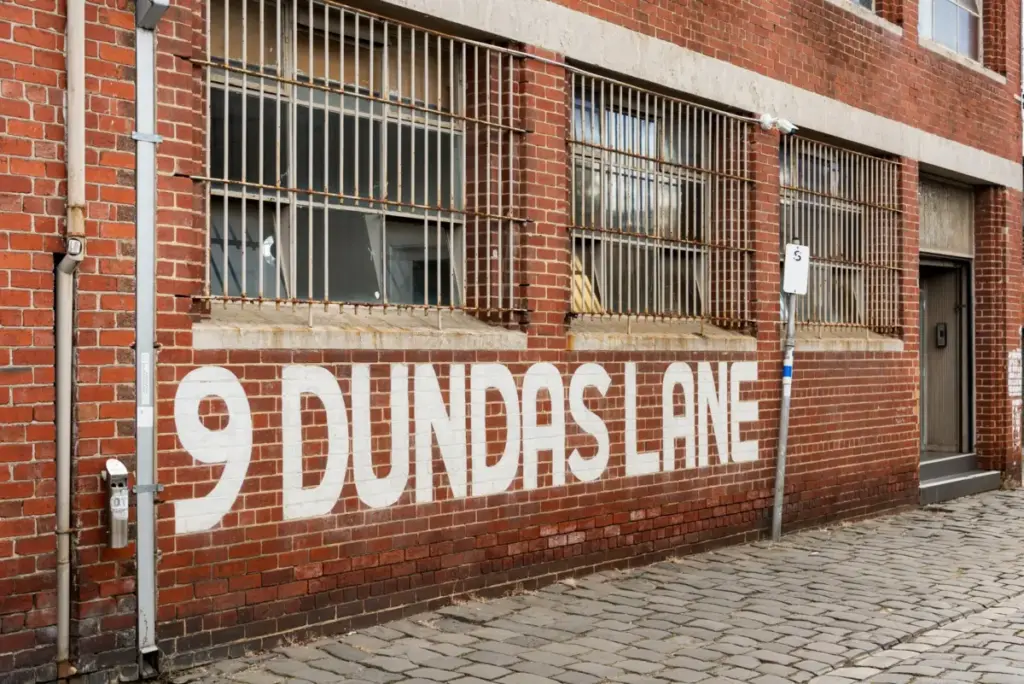
MELBOURNE, Australia — For nearly fifty years, 9 Dundas Lane in the inner-south Melbourne suburb of Albert Park has stood as an impregnable fortress of independent Australian rock and roll. Housed within a deceptively unassuming former biscuit factory, this historic property has served as the heartbeat of the Mushroom Group, nurturing the careers of global superstars and domestic legends alike. Now, in a bittersweet milestone for the nation’s music community, the legendary headquarters has officially been placed on the open market.
The announcement marks the end of a golden era for the independent music powerhouse founded by the late, visionary entrepreneur Michael Gudinski. Having called Dundas Lane home since 1980—eight years after the company’s inception in St Kilda—Mushroom Group is preparing to transition to a brand-new, state-of-the-art facility in Melbourne’s East End.
Real estate agencies Marshall White and Stonebridge, acting under instructions from Advise Transact, have been jointly appointed to manage the sale of the 525-square-meter freehold corner landholding. Featuring three street frontages, approximately 1,080 square meters of versatile building space, warehouse-scale proportions, and an upper-level rooftop terrace, the property is expected to attract immense interest from both commercial investors and cultural preservationists alike.
As current CEO Matt Gudinski notes, the address is globally renowned, holding a sacred place in the annals of modern music history. "If the walls could talk, they’d have one hell of a story," aptly summarizes an estate where decades of counter-culture, chart-topping records, and legendary tour logistics were conceived.
Detailed Chronology: From Crumbly Biscuits to Rock Royalty
To understand the cultural weight of 9 Dundas Lane, one must look back at its unusual evolution. Long before it echoed with the sound of platinum-selling masters and high-stakes tour negotiations, the structure functioned as a utilitarian industrial biscuit factory. Its sturdy bones—defined by expansive open-plan warehouse layouts, high ceilings, and industrial finishes—lent themselves naturally to the creative chaos of the music business.
The Genesis: St Kilda Beginnings (1972–1980)
Michael Gudinski founded Mushroom Group in 1972, initially establishing operations in nearby St Kilda. In its infancy, the label fought tooth and nail to carve out space for Australian artists in a market dominated by multinational conglomerates. Gudinski’s relentless grit and entrepreneurial flair quickly turned Mushroom into a formidable independent force, necessitating a headquarters that could match the company’s explosive growth and expanding roster of subsidiary labels, publishing arms, and booking agencies.
The Move to Albert Park (1980)
In 1980, Mushroom Group made the pivotal move to 9 Dundas Lane, Albert Park. This relocation coincided with the golden age of Australian pub rock and the dawn of the New Wave movement. Within these walls, a tight-knit collective of executives, producers, publicists, and booking agents forged an empire.
Over the subsequent decades, Dundas Lane witnessed the seismic shifts of the industry: the analog-to-digital transition, the rise and fall of physical retail, the streaming revolution, and the enduring dominance of live entertainment. Through it all, the Albert Park office remained a constant—a physical anchor for an independent label that resolutely refused to sell out to foreign conglomerates, maintaining its fiercely proud Australian identity.
Supporting Context & Metrics: The Architectural and Cultural Footprint
The property itself is a masterclass in adaptive reuse, blending raw industrial heritage with functional commercial workspaces.
Property Specifications
- Land Area: 525 sqm freehold corner landholding.
- Frontage: Triple street frontage, ensuring exceptional natural light and accessibility.
- Building Area: Approximately 1,080 sqm in total.
- Layout: Approximately 490 sqm across each of its two main structural levels, complemented by a 100 sqm upper-level office and an expansive rooftop terrace.
- Zoning & Potential: Retains its warehouse-scale character while offering modern corporate infrastructure, making it uniquely suited for creative agencies, tech firms, architectural practices, or residential conversion (subject to council approval).
The Roster of Legends
The true value of 9 Dundas Lane, however, lies not in its square meterage, but in its cultural ledger. It is difficult to overstate the volume of Australian musical history that passed through its doors. Superstars and critical darlings who signed deals, recorded, or strategized within the building include:

- Pop Royalty: Kylie Minogue
- Rock Icons: Jimmy Barnes, Hunters & Collectors, Paul Kelly, Skyhooks, Split Enz
- Indigenous Pioneers: Yothu Yindi, Archie Roach
- Modern Standard-Bearers: Vance Joy, The Temper Trap, Vika & Linda, Dan Sultan, The Teskey Brothers
Furthermore, the site is the spiritual and operational birthplace of Frontier Touring. Founded by Gudinski, Frontier grew to become the preeminent concert promoter in the Southern Hemisphere, orchestrating massive stadium and arena tours for global titans such as Taylor Swift, The Rolling Stones, Billy Joel, Madonna, Bruce Springsteen, and the Foo Fighters. Today, Frontier operates as just one of more than 20 distinct businesses functioning under the expansive Mushroom Group umbrella.
Official Statements: Honoring the Past While Embracing the Future
The decision to sell the Dundas Lane property follows Mushroom Group’s landmark 50th-anniversary celebrations in 2023. That milestone year featured a wave of retrospective releases—most notably the all-star covers compilation Mushroom: 50 Years of Making Noise—and the theatrical premiere of Ego, The Michael Gudinski Story, a critically acclaimed documentary capturing the life and legacy of the man who shaped modern Australian music.
Reflecting on the impending sale, CEO Matt Gudinski offered a deeply personal perspective on leaving the family company’s historic home:
"Dundas Lane has been an incredible part of Mushroom’s history and is globally renowned in the music industry. I’ve been coming here my entire life, and it’s hard to overstate what this place means to everyone at Mushroom. As we look ahead, finding the right custodian to carry Dundas Lane’s storied history into its next chapter is incredibly important to us. It will be sad to leave so many memories behind, but we’re excited for what the future might hold for this iconic address."
The transition comes on the heels of Mushroom Group’s announcement earlier this year regarding its relocation to a brand-new, standalone warehouse-style headquarters on Little Collins Street in Melbourne’s East End. This modern facility will consolidate the company’s vast array of domestic and international touring networks, record labels, talent management divisions, event curation teams, music publishing houses, creative services, film production units, and merchandising departments under one roof.
In its official marketing and corporate statement regarding the sale, the independent powerhouse encapsulated the sentiment of a generation:
"The building stands as a tangible piece of the Mushroom story and Australia’s rich music history. If the walls could talk, they’d have one hell of a story."
Future Outlook: A New Chapter for Albert Park and Mushroom
As 9 Dundas Lane hits the market via Marshall White and Stonebridge, real estate analysts anticipate robust competition from a diverse buyer pool. Properties combining historical cachet, freehold corner positioning, and creative industrial architecture are exceptionally rare in Melbourne’s inner-south.
For the Australian music industry, the sale closes a tangible chapter of an era defined by gut instinct, fierce loyalty, and larger-than-life personalities like Michael Gudinski. Yet, true to the ethos of the organization he built, the move to Little Collins Street proves that Mushroom Group is not resting on its laurels. By consolidating its sprawling modern empire into a forward-looking hub, the company is positioning itself for the next fifty years of music-making.
Meanwhile, the old biscuit factory at 9 Dundas Lane awaits its next steward. Whether it becomes a high-end architectural firm, a creative tech hub, or a sanctuary for the next wave of Melbourne innovators, the new owners will inherit more than just bricks and mortar—they will become the custodians of Australian rock-and-roll mythology.