Executive Overview
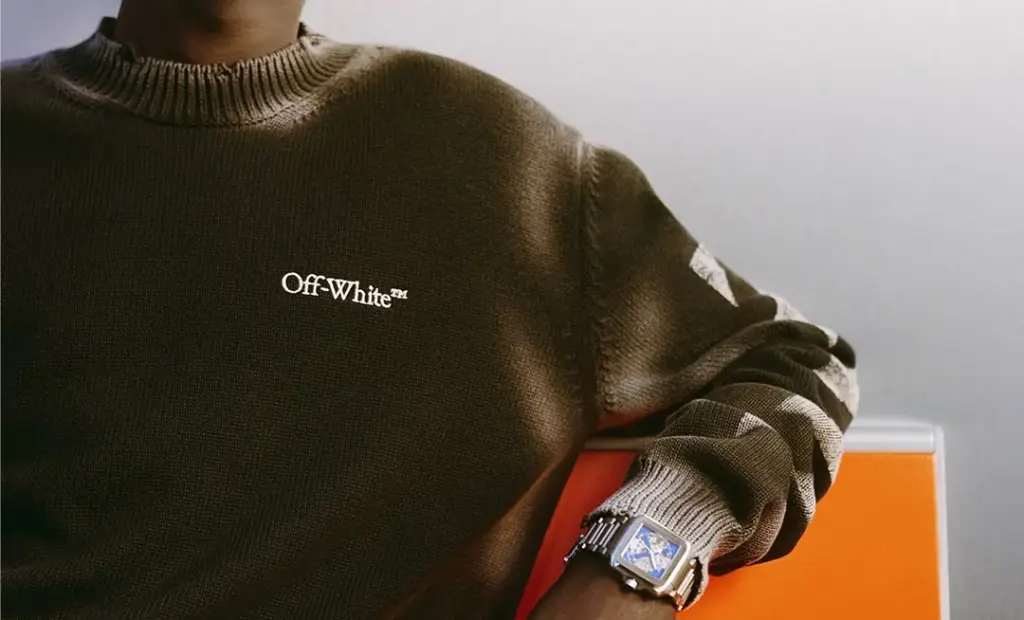
The luxury streetwear landscape has reached a defining watershed moment. On a Monday morning that sent tremors through the global fashion industry, luxury streetwear label Off-White announced the departure of its creative director, Ib Kamara. Having stepped into the creative helm in 2022, Kamara held the monumental responsibility of being the first individual to officially occupy the role following the tragic and untimely passing of the brand’s visionary founder, Virgil Abloh, in November 2021.
Kamara’s exit is far more than a routine creative shuffle; it marks a profound breakpoint in modern fashion history. In the wake of Abloh’s death, Off-White has found itself adrift in a rapidly transforming consumer market. Buffeted by a succession of corporate acquisitions, dwindling secondary market demand, retrenched brick-and-mortar retail footprints, and a desperate struggle to recapture its once-unrivaled cultural cachet, the brand is undergoing an identity crisis.
Compounding these internal struggles is a broader macro-economic cooling toward high-end streetwear. To combat slumping revenues and shifting consumer appetites, Off-White’s current parent company, Bluestar Alliance, has engineered a radical pivot. By launching budget-friendly sub-brands like L/AB c/o Off-White and striking distribution deals with mass-market retailers such as Pacsun and Costco, the label is intentionally blurring the lines between high luxury and mass accessibility.
As Off-White enters a fall season devoid of a successor creative director and missing from the official fashion week schedules, industry analysts are left asking a pressing question: Can a brand built entirely on the singular cultural genius of one man survive by reinventing itself as a mass-market player, or has the cultural engine of Off-White officially gone quiet?
Detailed Chronology: From Cultural Hegemony to Corporate Turmoil
To understand the weight of Ib Kamara’s departure and Off-White’s current strategic pivot, one must trace the dizzying trajectory of the label from its meteoric rise to its present-day corporate odyssey.
The Abloh Golden Era (2013–2021)
Founded by Virgil Abloh in 2013, Off-White quickly transcended its origins as a high-concept streetwear experiment to become the definitive zeitgeist of modern fashion. At the height of the streetwear boom, Off-White sat comfortably at the absolute nexus of colliding worlds: high luxury, underground skate culture, contemporary art, hip-hop, and youth sociology.
Abloh’s genius lay not merely in industrial quotation marks, diagonal stripes, and zip-ties, but in his cultural omnipresence. Serving simultaneously as the artistic director of menswear at Louis Vuitton and the chief architect of Off-White, Abloh weaponized his eclectic taste, profound cultural clout, and multi-disciplinary network to make Off-White the most sought-after brand in the world. For consumers, wearing Off-White wasn’t just about owning a hoodie or a pair of Nike sneakers; it was about participating in a high-stakes cultural conversation.
The Ownership Carousel and the Search for Direction
When Abloh passed away in late 2021 after a private, courageous battle with cancer, Off-White was left without its compass. The brand’s ownership structure had already begun to shift prior to his death. New Guards Group (NGG)—the Italian production and distribution powerhouse—had acquired Off-White in 2019. Shortly thereafter, in December 2019, luxury e-commerce platform Farfetch acquired New Guards Group.
The turbulence accelerated in July 2021, just months before Abloh’s passing, when luxury conglomerate LVMH Moët Hennessy Louis Vuitton acquired a majority 60% stake in Off-White, leaving Abloh with the remaining 40% and control over the brand’s overarching intellectual property.
Following Abloh’s death, Off-White spent several rudderless years without a dedicated creative director, relying instead on internal design teams and advisory collectives. Recognizing the need for institutional stabilization, LVMH and NGG tapped Ib Kamara—editor-in-chief of Dazed and a close creative collaborator of Abloh—in the fall of 2022 to steer the creative ship. Kamara was tasked with preserving Abloh’s monumental legacy while injecting fresh energy into the collections. However, the corporate shuffle was far from over. In July 2024, Farfetch (which had faced its own severe financial restructuring) sold Off-White to Bluestar Alliance, a New York-based brand management company renowned for scaling lifestyle and heritage brands through licensing and mass distribution.
Supporting Context & Metrics: The Cooling of High-End Streetwear
Bluestar Alliance’s acquisition of Off-White signaled an immediate shift in corporate philosophy—moving away from pure, uncompromising luxury toward commercial scalability. This pivot was not born out of whim, but out of stark economic reality. The appetite for high-end, hyped streetwear has experienced a prolonged and painful cooling-off period globally.
Resale Data and Retail Retrenchment
Data provided to industry publication Glossy from The RealReal’s August Resale Report illustrates the changing tides on the secondary market—a traditional barometer for streetwear health. Historical tracking reveals that Off-White has seen its GMV (Gross Merchandise Value)—the total monetary value of the brand’s products sold on the platform—plunge by nearly 9% over the course of a single year.
While Bluestar Alliance, as a private entity, does not break out granular revenue reporting for its individual subsidiaries, the broader fashion media has relentlessly documented Off-White’s fading cultural footprint. The brand’s retreat has manifested physically as well as digitally: since early 2025, Off-White has quietly shuttered its prominent flagship boutique in New York City and systematically dismantled its retail network across mainland China, a market that once fueled exponential growth for Western luxury labels.
The Mass-Market Shift: Pacsun, Costco, and L/AB
Faced with shrinking luxury margins and declining cultural resonance, Bluestar Alliance has opted to democratize the brand. In June, Off-White shocked purists by launching “L/AB c/o Off-White,” a brand-new sub-brand explicitly engineered to pivot away from the label’s traditional luxury price points.
Products within the L/AB line are significantly more accessible, featuring everyday essentials like T-shirts and hoodies retailing in the $100 range—a stark departure from the four-figure pricing structures typical of main-line Off-White. Simultaneously, Off-White brokered strategic distribution deals with mass-market and mid-tier retailers, including Pacsun and Costco, to secure high-volume sales.
In statements to the press at the time of the launch, Bluestar Alliance CEO Joey Gabbay defended the strategy, describing L/AB as an "important evolution" of the brand and emphasizing that management sees "significant opportunity" in building up sub-brands as powerful new revenue drivers. Additional strategic adjustments have included launching a boutique collection of timepieces, rolling out a rotating series of celebrity collaborators (such as musician Kid Cudi), and abruptly shifting fashion week presentations from Paris to New York.
Following Kamara’s departure, Off-White released a concise press statement confirming that it neither has a successor creative director lined up nor any plans to stage a runway show during the upcoming September fashion week calendar.
Official Statements and Industry Analysis
The departure of Ib Kamara and the subsequent commercial maneuvers of Bluestar Alliance have elicited sharp commentary from fashion insiders, designers, and business owners who watched Abloh build the empire from the ground up.
Cesar Cruz on the Crisis of Identity
Cesar Cruz, a seasoned stylist, designer, and founder of luxury menswear and tailoring brand Sebastian Cruz Couture, offered a candid critique of Off-White’s post-Abloh trajectory in an interview with Glossy.
"That’s not to say there haven’t been other impressive collections since [Abloh’s passing]," Cruz noted. "But based on my analysis as a designer and business owner, I don’t think Off-White has yet found its footing since Virgil. The biggest problem is identity or a lack thereof. Under Abloh, Off-White was always greater than its products. It had a cultural point of view. It was a conversation between streetwear, luxury, art, music, and youth culture. Virgil himself was the person connecting all of those worlds."
Cruz summarized the current state of the label with a sobering metaphor: "Now, the cultural engine has gone quiet."
Nnagozie Ifebi on Decoupling from the Past
Echoing these sentiments, Nnagozie Ifebi, founder of the independent streetwear brand Multiversity, emphasized that Off-White’s original visual vocabulary was inextricably bound to Abloh’s personal ethos.
"After he died, Off-White could retain the visual vocabulary, but retaining the meaning behind that vocabulary was much harder," Ifebi explained.
In recent years, Off-White has attempted to lean into its heritage through archival tributes, most notably the 10×10 collection, which enlists contemporary collaborators to reimagine ten iconic pieces designed by Abloh from the brand’s historic archive. However, Ifebi argues that this backward-looking strategy may ultimately be a trap. He suggests that Off-White would be far better served by breaking free from the gravitational pull of Abloh’s ghost and forging an entirely independent path forward.
"I don’t think Off-White needs to return to the Abloh era to succeed. In fact, attempting to recreate that period may be the wrong objective," Ifebi stated. "The opportunity is to determine which elements of Off-White are permanent brand codes and then give its next creative leadership enough freedom to establish a new worldview around them."
Future Outlook: Navigating the Crossroads
As Off-White stands today at a profound historical crossroads, the path forward remains shrouded in uncertainty. The label is confronted with two diametrically opposed futures:
- The Heritage Preservation Route: Attempting to recapture the lightning-in-a-bottle magic of the Abloh era by appointing another high-profile visionary designer, returning to the high-fashion runways of Paris, and attempting to claw back its status as a top-tier luxury status symbol—despite unfavorable macroeconomic headwinds for high-end streetwear.
- The Commercial Scaling Route: Leaning fully into the playbook of Bluestar Alliance by transforming Off-White and its sub-brands (such as L/AB) into widely accessible, high-volume lifestyle properties distributed through mass-market retail channels, effectively trading exclusivity for broad profitability.
Whichever direction Bluestar Alliance ultimately chooses, Ib Kamara’s exit closes the book on the transitional chapter of Off-White. The era of trying to faithfully mimic the blueprint left behind by Virgil Abloh has officially run its course. For Off-White to endure in a saturated fashion ecosystem, its leadership must realize that honoring Abloh’s legacy does not mean living in his shadow. It requires defining what Off-White means to a new generation of consumers who demand authenticity, cultural relevance, and a reason to care long after the zip-ties have been cut.