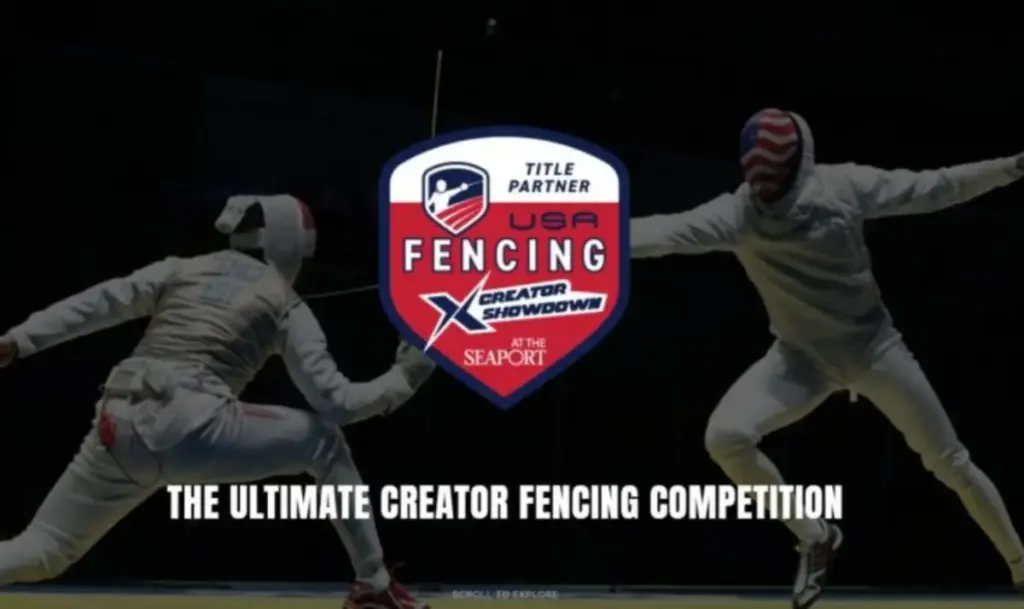
Executive Overview
For centuries, competitive fencing has occupied a paradoxical space in the global sporting landscape. It is simultaneously one of the most culturally evocative disciplines—imbued with the romanticism of swashbuckling cinema, theatrical duels, and historical prestige—and an intensely esoteric athletic pursuit. Modern fencing is a lightning-fast, high-stakes game of physical chess played out on a narrow 14-meter strip, requiring a devastating blend of explosive speed, tactical discipline, and razor-sharp reflexes. Yet, despite its rich history and status as a foundational Olympic sport, it has historically struggled to capture the sustained mainstream viewership enjoyed by major stick-and-ball sports or motor racing.
Enter the digital age’s ultimate growth engine: social media influencers.
Between September 21 and 23, the national governing body for competitive fencing in the United States, USA Fencing, executed an ambitious, high-visibility marketing play in the heart of New York City: the Creator Showdown. By inviting 12 of the internet’s most prominent digital creators—collectively commanding an astounding audience of more than 215 million followers—onto the fencing strip, USA Fencing is attempting to rewrite the playbook for sports marketing.
The event mirrors successful creator-led crossover models that have supercharged fan acquisition across diverse disciplines, from YouTube cycling teams and professional pickleball tournaments to high-speed auto racing circuits. By pairing internet heavyweights with elite Team USA Olympians, the organization aims to demystify foils, épées, and sabers, translating complex athletic rules into viral entertainment. More importantly, this star-studded spectacle is a calculated funnel designed to drive prospective athletes directly to TryFencing.org, directing foot traffic to the organization’s 800 member clubs nationwide ahead of the 2028 Summer Olympics in Los Angeles.
Detailed Chronology & Event Mechanics
The New York City Creator Showdown was meticulously engineered over a three-day period from September 21 to 23, utilizing the trendy backdrop of the Heineken Riverdeck to stage a series of custom athletic challenges. Rather than traditional, rigid tournament brackets, the event was designed for modern digital consumption—episodic, visually dynamic, and optimized for short-form video feeds.
The Roster: Creators Meet Olympians
The event’s competitive engine relied on an unlikely fusion of digital native celebrities and world-class martial athletes. The 12 participating creators featured some of the most recognizable faces across YouTube, TikTok, and Instagram, including viral acrobats, dancers, and lifestyle influencers such as Sofie Dossi, Merrick Hanna, itsPikaaa, and JoJo Sim.
These digital dynasts were thrown directly into the deep end, trading their ring lights and studio spaces for protective jackets, breeches, and weapons. They squared off against four of the brightest stars of Team USA Fencing:
- Maia Chamberlain
- Bryce Louie
- Mitchell Saron
- Lauren Scruggs
To elevate the pop-culture crossover appeal even further, the event pulled in legendary acting talent, featuring special guest appearances from Dolph Lundgren and Mandy Patinkin.
Bridging Pop Culture and Reality
Patinkin’s involvement carried a profound historical resonance, serving as an explicit nod to his iconic portrayal of Inigo Montoya in The Princess Bride—a cinematic touchstone that has introduced generations of fans to the romanticized art of the blade.
This meta-referencing of cinematic fencing is not accidental; it is a core pillar of USA Fencing’s recruitment strategy. From Star Wars and Pirates of the Caribbean to The Parent Trap, cinematic swordplay serves as an upper-funnel cultural gateway that most traditional sports simply cannot replicate. By leaning into these pop culture touchstones and blending them with the genuine athletic prowess of modern Olympians, USA Fencing created an immersive spectator experience that dismantled the barrier between fiction and reality.
Supporting Context & Metrics: The Creator Economy Meets the Strip
The Creator Showdown is far from an isolated marketing stunt; it represents the maturation of a broader industry-wide trend. Over the past several years, sports organizations have increasingly recognized that traditional broadcasting models no longer suffice to capture Gen Z and Alpha demographics. Influencer partnerships have successfully revitalized sports as diverse as cycling, pickleball, and Formula 1. Basketball and football leagues routinely integrate creators into All-Star weekends and high-profile matchups to capture younger audiences.
Overcoming Fencing’s Traditional Broadcast Hurdles
Fencing has historically faced unique barriers to mass-market television adoption. Unlike soccer or basketball, where the action is easily parsed by a casual viewer, fencing presents distinct visual challenges:
- High-Speed Bladework: Foil and saber tips move so rapidly that tracking them with the naked human eye—let alone a standard television camera—can be nearly impossible for the uninitiated.
- Complex Rules: The concept of "right-of-way" (priority rules determining who scores a touch when both fencers attack simultaneously) adds a layer of adjudication that can alienate casual observers.
- The Mask Problem: Traditional fencing gear includes wire-mesh masks that completely obscure the athletes’ faces. While essential for safety, this literal and figurative barrier prevents viewers from forging emotional connections with the competitors, robbing broadcasts of vital facial expressions and star power.
The Creator Showdown directly addressed these hurdles through technological intervention and creative staging. Cloudflare, serving as an official event sponsor, integrated innovative Tip Tracker technology. By visually highlighting the movement of the blades as they cut through the air, the technology democratized the viewing experience, allowing audiences to follow the action intuitively. Furthermore, by placing creators and unmasked Olympians side-by-side in relaxed, challenge-based formats, the event successfully humanized the sport’s top competitors, elevating their individual name recognition.
Official Statements & Strategic Vision
The mastermind behind this digital evolution is USA Fencing CEO Phil Andrews, whose forward-thinking leadership has prioritized avant-garde marketing and community outreach. Speaking exclusively to Tubefilter, Andrews unpacked the multi-layered strategy that guided the curation of the event.
"There were a few factors—reaching different audiences, different sectors, but also people who genuinely see the value in that relationship ahead of the 2028 Summer Olympics in Los Angeles," Andrews explained.
The selection process was deliberately balanced. USA Fencing sought to reunite with digital creators who had previously engaged with the sport while simultaneously courting new partners curious about its mechanics. This careful calibration ensured that content generated from the event felt authentic rather than overly corporate. Set to viral soundtracks—such as Future’s “Mask Off” punctuating high-octane athletic highlights—the resulting media seamlessly blended internet culture with elite athletics.
However, Andrews was careful to emphasize that vanity metrics like views and likes are ultimately just a means to an end. The true Key Performance Indicator (KPI) for the Creator Showdown is grassroots conversion.
"Our goal is to send people to TryFencing.org where our 800 clubs around the nation have made offers to come in and try the sport," Andrews stated. "Ultimately, that’s the real goal for us."
By transforming digital engagement into tangible foot traffic, USA Fencing is establishing a direct pipeline from the smartphone screen to the local athletic club. This strategy bridges the gap between passive digital consumption and active, physical participation.
Future Outlook: The Road to LA 2028 and Beyond
As the digital assets from the New York City event continue to roll out across USA Fencing’s multiformat social media networks, the early returns suggest a resounding success. The campaign has demonstrated that traditional sports federations do not need to alter the fundamental rules of their games to appeal to digital natives; rather, they must change how the stories are told and who is telling them.
The timing of this digital push is no coincidence. With the 2028 Summer Olympic Games slated for Los Angeles, American national governing bodies are under immense pressure to capitalize on the home-soil spotlight. Building household names out of athletes like Maia Chamberlain, Bryce Louie, Mitchell Saron, and Lauren Scruggs years in advance is crucial for maximizing ticket sales, broadcast viewership, and Olympic enthusiasm.
Recognizing the undeniable momentum generated by the inaugural event, USA Fencing has already confirmed that the Creator Showdown will return in 2027, establishing the crossover competition as a permanent fixture on the organization’s annual calendar.
For an organization rooted in centuries of classical tradition, embracing TikTok trends, YouTube influencers, and high-tech visual trackers might have once seemed like an unorthodox gamble. Yet, as the success of the Creator Showdown proves, sometimes the best way to secure a sport’s future is to boldly step off the strip and meet the modern audience precisely where they are scrolling.