Executive Overview
In the landscape of British television, few institutions command the same quiet reverence, intellectual intimidation, and national devotion as the BBC’s iconic quiz show Mastermind. For decades, the black leather chair has served as a crucible where everyday intellectuals face the intense, rhythmic cadence of the host’s questioning, racing against a relentless two-minute timer. While contestants typically choose subjects steeped in traditional academia—ranging from the military campaigns of the Roman Empire to the complex literary works of Charles Dickens—the true magic of the program often surfaces in the wonderfully obscure realms of human fascination.
Enter Emily Medhurst, a policy researcher whose appearance on a recent Monday night episode of the BBC quiz show instantly elevated the concept of niche expertise to high art. Medhurst chose as her specialist subject the history of moquette—the durable, woven wool-and-synthetic fabric used to upholster the seats of London’s vast public transport network, Transport for London (TfL).
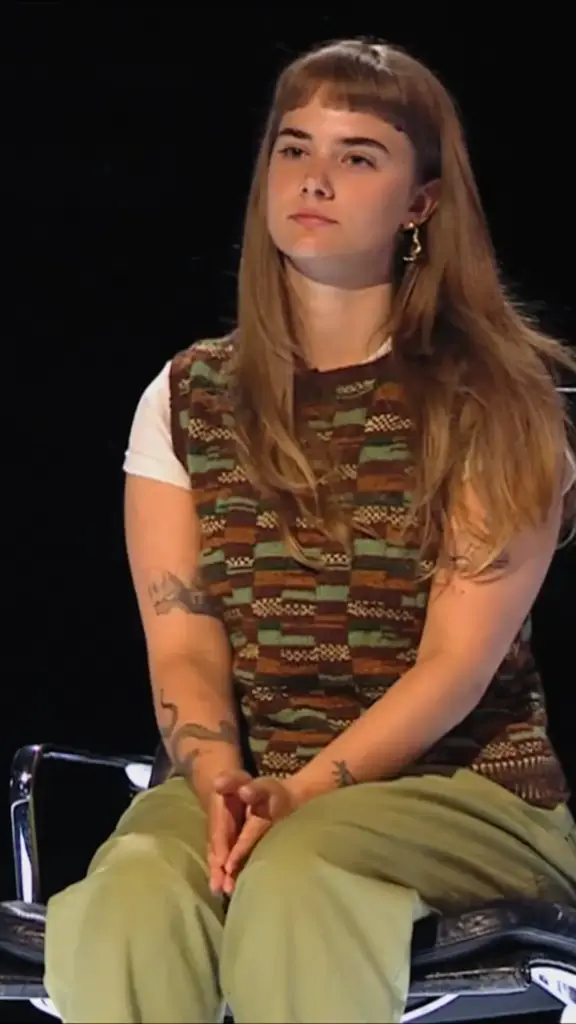
What followed over the course of two intensely focused minutes was not merely a display of encyclopedic memory, but a masterclass in cultural presentation. Facing host Clive Myrie, Medhurst navigated a barrage of rigorous questions regarding industrial designers, transit lore, and specific textile iterations with calm, unflappable precision. Adding a touch of sartorial genius that sent social media into a frenzy, Medhurst appeared on set wearing a custom-knitted sweater vest explicitly designed to match the Overground moquette pattern featured in her questions.
This report provides a comprehensive examination of Medhurst’s viral appearance, the fascinating history of public transport textiles, the mechanics of her extraordinary performance, and the wider cultural resonance of specialized knowledge in contemporary media.
Detailed Chronology: From the Studio Floor to Viral Stardom
The journey of Emily Medhurst’s viral triumph began long before the studio cameras rolled at the BBC. Selecting a specialist subject as specific as the upholstery of London’s transit system requires a deep, abiding passion that bridges industrial history, design, and urban anthropology.
The Lead-Up to the Black Chair
When applicants apply for Mastermind, they are tasked with proposing a specialist subject narrow enough to demonstrate profound expertise, yet broad enough to sustain a rigorous two-minute round of questioning. While many opt for notable historical figures, classic rock bands, or landmark sci-fi franchises, Medhurst recognized the untapped narrative potential of everyday design. As millions of commuters mindlessly sit, lean, and stand across the capital’s sprawling network of tubes, buses, and overground trains every day, few pause to consider the intricate patterns beneath them—let alone the century-long design pedigree that birthed them.
Medhurst spent months poring over design archives, studying the evolution of fabric manufacturing, and tracking the transition from early 20th-century geometric designs to modern contemporary prints. However, her preparation was not limited to mental recall; it extended into the physical realm. Recognizing the visual power of television, Medhurst undertook a personal crafting project: knitting her own sweater vest featuring an exact replica of the iconic London Overground moquette pattern.

Inside the Two-Minute Crucible
When Medhurst took her place in the iconic black leather chair under the steady gaze of host Clive Myrie, the atmosphere in the studio shifted. The opening bell rang, signaling the start of the two-minute specialist subject round.
Myrie wasted no time diving into the deep end of transit history. The questions hurled at Medhurst tested the absolute limits of design history. Among them was a query regarding which iconic London Underground line featured a distinctive moquette branded with the iconic Yellow Pages telephone directory logo—a question Medhurst fielded with effortless accuracy (the Circle line).
Another complex question challenged her to identify the former official War Artist responsible for creating two notable moquettes named Alperton and Arnot. Without missing a beat, Medhurst correctly identified British painter and designer Paul Nash, showcasing a depth of art-historical knowledge that extended far beyond standard trivia.
As the buzzer sounded to signal the end of the round, Medhurst had amassed an exceptionally high score, driven by a near-perfect set of answers delivered with remarkable composure. But it was the visual reveal—when the camera panned down to highlight her hand-knitted, TfL-themed sweater vest—that truly sealed her legacy in Mastermind history.
Supporting Context & Metrics: The Surprising World of Moquette
To truly appreciate the magnitude of Medhurst’s achievement, one must understand what moquette is and why its history is so uniquely tied to the cultural fabric of London.
What is Moquette?
Derived from the French word for "carpet," moquette is a heavy, woven pile fabric where the cut warp threads create a dense, durable surface. Unlike standard flat-weave fabrics or modern synthetic leathers, moquette is uniquely suited for heavy-duty public transport applications due to several key characteristics:
- Durability: The combination of wool (typically around 80%) and synthetic nylon (around 20%) provides high tensile strength, resisting years of friction from millions of passengers.
- Stain and Dirt Camouflage: The intricate, multi-colored geometric patterns are specifically engineered to disguise everyday wear, dust, and minor stains between deep-cleaning cycles.
- Breathability: Unlike vinyl or plastic seating, natural wool fibers offer temperature-regulating properties, keeping seats cool in the summer and warm in the winter.
A Century of Design Evolution
Transport for London’s archive of moquettes is widely regarded by design historians as one of the finest corporate design collections in the world. Pioneering figures in mid-century modernism, avant-garde artists, and contemporary textile studios have all contributed to the visual identity of London’s transit network.

The history of TfL moquette spans several distinct eras:
- The Early Era (Pre-1930s): Characterized by conservative, heavy wool patterns designed primarily for longevity and functional comfort.
- The Modernist Boom (1930s–1950s): Following the formation of the London Passenger Transport Board in 1933, visionary design managers like Frank Pick commissioned prominent artists and designers—including Paul Nash and Enid Marx—to inject bold, modernist aesthetics into everyday travel.
- The Contemporary Revival (2000s–Present): Modern collaborations with design firms such as Wallace Sewell and designers like Fernando Solis have produced iconic updates, including the signature Overground and Elizabeth line patterns that weave contemporary artistic sensibilities into daily transit.
The Social Media Phenomenon
Within minutes of the broadcast concluding, clips and screenshots of Medhurst’s appearance flooded social media platforms, transforming her into an overnight internet icon. The intersection of hyper-niche academic trivia, deadpan delivery, and DIY fashion struck a profound chord with viewers.
Engagement metrics across X (formerly Twitter), TikTok, and Instagram surged. Key highlights from public reactions included:
- Cultural Praise: Commentators lauded the appearance as a refreshing antidote to superficial television casting, proving that genuine, eccentric human passions make for the most compelling viewing.
- Design Appreciation: Architecture and design communities rallied behind the segment, using the moment to educate the public on the hidden artistic heritage embedded within everyday public infrastructure.
- Sartorial Adulation: Medhurst’s hand-knitted sweater vest became a viral sensation in its own right, with thousands of users praising the dedication required to knit a custom garment matching the exact weave of a train seat.
Official Statements and Personal Reflections
Following the widespread acclaim, Emily Medhurst took to social media to share her reflections on the experience, shedding light on why she chose such an unconventional subject and the joy of uncovering transit lore.
"TfL has such a rich history of design, and it was so fun to dive in and learn more about the amazing designers, manufacturers and lore behind the fabric that 2 to 4 million people park themselves on every day," Medhurst shared in a statement to her followers.
Medhurst also elaborated on the meticulous process behind her outfit choice, confirming that the pattern on her sweater vest was inspired by the 2016 update by designer Fernando Solis, which built upon the original 2008 design by renowned textile studio Wallace Sewell.
Industry figures and cultural commentators were quick to join the chorus of praise. David Rowe, a prominent design commentator, noted:

"Niche knowledge is exactly what we need more of in the world, but when you realise that the pattern on her top is the subject of one of the questions… that’s just phenomenal."
Host Clive Myrie, known for his graceful and encouraging demeanor on the show, expertly guided the rapid-fire exchange, allowing Medhurst’s encyclopedic knowledge to shine without interruption. The dynamic between Myrie’s steady journalistic delivery and Medhurst’s enthusiastic expertise exemplified the very best of British public service broadcasting.
Future Outlook: The Enduring Legacy of Niche Expertise
As television programming increasingly moves toward algorithmically driven formats and predictable content, Emily Medhurst’s appearance on Mastermind serves as a powerful reminder of the captivating nature of authentic, unadulterated human curiosity.
The episode—which is currently available for catch-up streaming on BBC iPlayer—has sparked renewed interest not only in the quiz show itself, but in the broader appreciation of industrial design and urban history. Transport for London has long enjoyed a dedicated fanbase of transport enthusiasts, often referred colloquially as "trainspotters" or transit nerds, but Medhurst’s performance bridged the gap between niche subculture and mainstream cultural celebration.
Looking forward, industry analysts expect to see a rise in applicant submissions featuring increasingly creative, design-focused, and unconventional specialist subjects on upcoming seasons of Mastermind. Medhurst has set a remarkably high benchmark—not just in terms of score and recall, but in the holistic theatricality of bringing her subject to life through bespoke knitwear.
Ultimately, Medhurst’s triumph on the black leather chair proves that passion can be found in the most unexpected places. Whether it is the grand sweep of global history or the tactile weave of a London Overground seat, genuine enthusiasm has an undeniable power to captivate, educate, and unite a nation.