Executive Overview
Few cultural artifacts collide as dramatically as the intersection of Anthony Burgess’s dystopian masterpiece A Clockwork Orange, Stanley Kubrick’s controversial 1971 cinematic adaptation, and the 1960s British music royalty who desperately wanted to shape it. Long before Malcolm McDowell was immortalized in bowler hat, white jumpsuit, and kohl-rimmed eyelashes as the ultraviolent antihero Alex DeLarge, the project bounced through the corridors of Hollywood and British counterculture like a pinball.
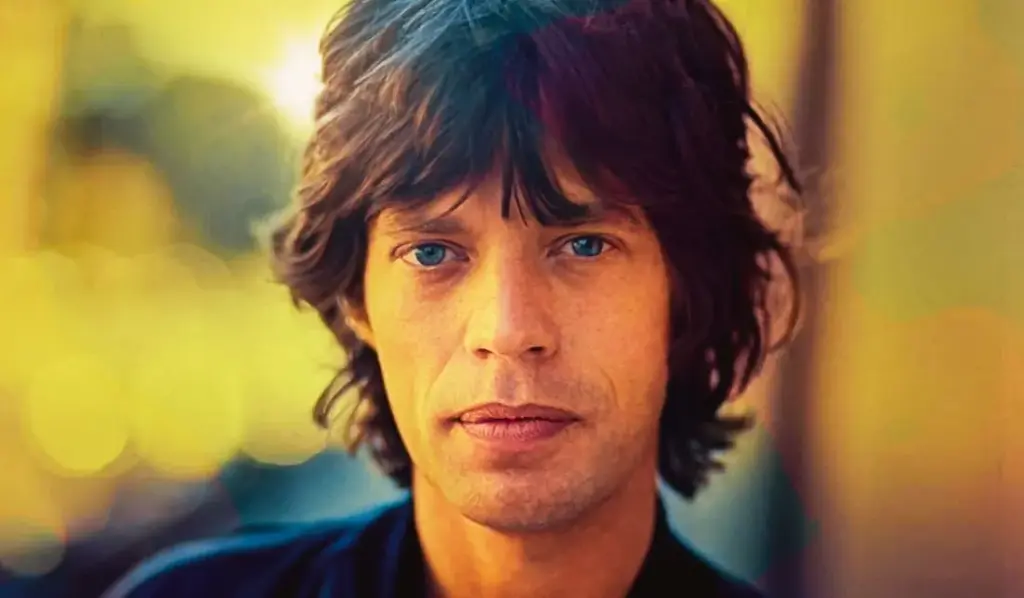
Among the most astonishing revelations of this chaotic pre-production era is a formal, highly passionate letter dated 1967. Addressed to the film’s original screenwriter, Terry Southern, the document features the signatures of all four members of The Beatles—John Lennon, Paul McCartney, George Harrison, and Ringo Starr. Their mission? To vehemently protest the potential casting of English actor David Hemmings and demand that Rolling Stones frontman Mick Jagger take on the iconic lead role.
This deep dive examines the bizarre intersection of the Fab Four, the Rolling Stones, and one of the most provocative films of the 20th century. By analyzing archival discoveries, firsthand accounts from Malcolm McDowell, and the historical realities of 1960s film adaptations, we unpack how close the world came to experiencing a fundamentally different cinematic milestone—one where rock-and-roll aristocracy ruled the dystopian screen.
Detailed Chronology: From Burgess’s Novel to Kubrick’s Masterpiece
1962–1967: The Genesis of a Controversial Manuscript
When Anthony Burgess published A Clockwork Orange in 1962, the novel was immediately recognized as a linguistic and philosophical tour de force. Inventing Nadsat—a slang heavily influenced by Russian—Burgess created a terrifyingly plausible near-future where teenage delinquency, state-sponsored psychological conditioning, and free will clashed.
Hollywood caught wind of the novel almost immediately. Independent film producer Si Litvinoff acquired the film rights in the mid-1960s, envisioning a provocative counterculture film. To adapt the dense, slang-heavy text, Litvinoff enlisted Terry Southern, the celebrated American screenwriter fresh off the successes of Dr. Strangelove (another Kubrick collaboration) and Candy.
As Southern began shaping the script, the question of casting became the ultimate industry puzzle. How do you cast a charismatic, classical-music-loving psychopath who speaks in riddles and commits unspeakable acts of "ultraviolence," yet retains enough audience magnetism to carry a feature film?
The 1967 Intervention: The Beatles’ Manifesto
In the burgeoning, interconnected world of 1960s London and New York counterculture, artistic boundaries were porous. Pop stars, filmmakers, and novelists regularly socialized in the same exclusive circles. By 1967, The Beatles were at the absolute zenith of their global cultural dominance, fresh off the release of Sgt. Pepper’s Lonely Hearts Club Band.
Intense fans of Burgess’s novel and deeply plugged into the avant-garde film scene, the members of The Beatles learned that British actor David Hemmings—then riding high on the critical success of Michelangelo Antonioni’s Blow-Up (1966)—was being considered by the creative team for the role of Alex.
The prospect of Hemmings playing the youthful delinquent horrified the band. In response, John, Paul, George, and Ringo took collective action. They drafted and signed a blistering letter addressed directly to screenwriter Terry Southern. The text read:
"We, the undersigned, do hereby protest with extreme vehemence as well as shattered illusions (in you) the preference of David Hemmings above Mick Jagger in the role of Alex in [A] Clockwork Orange."
This wasn’t merely a casual remark over afternoon tea; it was a formal, unified petition from the most famous men on the planet, lobbying Hollywood creatives to hand the career-defining role to their friendly rivals in The Rolling Stones.
Mick Jagger’s Vision for the Droogs
While historians and biographers have debated whether Mick Jagger was ever formally offered the role by a studio, evidence strongly suggests that Jagger was not only interested but actively scheming to bring the entire Rolling Stones entourage into the cinematic fold.
In the late 1960s, the Rolling Stones were eager to make a splash in narrative cinema. They had previously flirted with various film projects (including a rumored attempt to adapt J.R.R. Tolkien’s The Lord of the Rings). To Jagger, A Clockwork Orange represented the ultimate vehicle.
According to accounts from the era, Jagger’s vision wasn’t for a solo star vehicle; he wanted a package deal. If Jagger was going to play Alex DeLarge, his loyal gang of "droogs"—Pete, Georgie, and Dim—were slated to be played by his fellow Rolling Stones bandmates, Keith Richards, Brian Jones, and Charlie Watts.
Imagine, for a moment, the cinematic reality of the world’s most notorious bad boys of rock stepping into Kubrick’s dystopian London as a synchronized gang of ultra-violent youths. It would have blurred the lines between reality and fiction to an unprecedented degree, transforming the film into a meta-commentary on youth rebellion, celebrity, and media panic.
Supporting Context & Metrics: The Ultimate Counterfactual
To understand why this casting never materialized—and why it remains one of the greatest "what ifs" in film history—we must examine the shifting landscape of film production rights and the ultimate auteur who took over the project: Stanley Kubrick.
The Rights Shift and Kubrick’s Arrival
Despite Si Litvinoff and Terry Southern’s early enthusiasm, the film stalled. The property bounced around, and fears regarding the extreme violence and sexual content made major Hollywood studios deeply hesitant.
Eventually, the rights transferred to Stanley Kubrick. By the time Kubrick became involved, the initial counterculture panic over casting rock stars had largely evaporated. Kubrick was an exacting, methodical auteur who preferred working with professionally trained actors who could submit entirely to his grueling directorial vision.
Malcolm McDowell, who would ultimately secure the role of Alex, had caught Kubrick’s eye in Lindsay Anderson’s 1968 film if…. McDowell possessed a theatrical background coupled with an innate, disarming charm that allowed audiences to sympathize with a monster.
Debunking the Myths
Over the decades, several myths have crystallized around the Jagger-Clockwork Orange connection.
- The Rights Rumor: The International Anthony Burgess Foundation has repeatedly debunked rumors that Mick Jagger personally purchased the film rights to Burgess’s novel before Kubrick got involved. While Jagger and the Stones were certainly interested in starring, they never legally controlled the intellectual property.
- The Soundtrack Legend: Another persistent rumor suggested that The Beatles were in line to compose the psychedelic, avant-garde soundtrack for the film. This, too, is historically unfounded. Kubrick ultimately opted for Walter (now Wendy) Carlos’s groundbreaking electronic Moog synthesizer interpretations of classical works like Beethoven and Rossini, alongside traditional musical cues.
Official Statements & Archival Evidence
The veracity of this bizarre Hollywood footnote is cemented by tangible archival documents and firsthand testimonies that emerged decades later.
The Christie’s Auction Discovery
The 1967 protest letter signed by Lennon, McCartney, Harrison, and Starr did not remain a hidden myth. It surfaced publicly when it was put up for auction by Christie’s. The document provided undeniable physical proof that the inner sanctum of The Beatles actively monitored and attempted to influence Hollywood casting decisions. The intersection of literature, pop music, and cinema captured in those four signatures represents a rare moment of cross-pollination between two of the 20th century’s most influential cultural forces.
Malcolm McDowell’s 2022 Revelations
Fifty years after the film’s initial 1971 release, Malcolm McDowell reflected on this alternate history during an interview at the Torino Film Festival. Offering a first-person perspective on his friendship with Jagger during the late 1960s, McDowell recalled:
"We used to be friends. We were hanging around in New York. At the time, we were the ‘in-crowd’ with Andy Warhol and all. One evening, we were hanging out at somebody’s apartment on the east side of Central Park… We were sitting in a window seat and talking because Jagger wanted to play Alex in A Clockwork Orange. Before Kubrick got hold of the property, Mick Jagger and the Stones wanted to do it!"
McDowell’s recollection bridges the gap between internet rumor and lived reality. It confirms that the ambition was genuine, the conversations were happening in upscale Manhattan apartments, and the rock stars of the era genuinely viewed Burgess’s dystopian vision as their rightful cultural playground.
Future Outlook: The Legacy of an Alternate Reality
What would A Clockwork Orange have looked like with Mick Jagger in the lead role and the rest of the Rolling Stones as his droogs?
Cinematic history would undoubtedly be altered. A Jagger-led adaptation would have likely leaned heavily into pop-art aesthetics, functioning more as an extended, high-budget music video or psychedelic happening in the vein of Performance (1970). It would have capitalized entirely on the real-world notoriety of the Stones, trading psychological depth and classical cinematic precision for raw, untamed countercultural electricity.
Instead, the world received Stanley Kubrick’s ice-cold, masterclass psychological thriller. Kubrick’s version stripped away the superficial rock-and-roll posturing and replaced it with chilling aesthetic symmetry, brutal realism, and Malcolm McDowell’s career-defining performance—a portrayal so complete that it is now impossible to picture anyone else donning the white codpiece.
Yet, the archival existence of the Beatles’ 1967 letter remains a fascinating monument to an era when pop stars dared to dictate the artistic direction of major literature and film. It serves as a reminder that the cultural giants of the 1960s did not merely consume art; they sought to actively rewrite it, pushing boundaries to ensure their vision of the future made it to the silver screen.