Executive Overview
In the high-stakes, high-glamour world of celebrity physical fitness, star trainers often build their reputations on sculpting the physiques of A-list actors, pop icons, and supermodels. Ben Bruno is no stranger to this elite tier; his client roster boasts household names like Jessica Biel, Chelsea Handler, and Kate Upton. Yet, in a refreshing pivot that has captured the attention of the health and wellness community, Bruno routinely shifts the spotlight away from Hollywood to celebrate his ultimate "model student": his mother-in-law, Tracey.
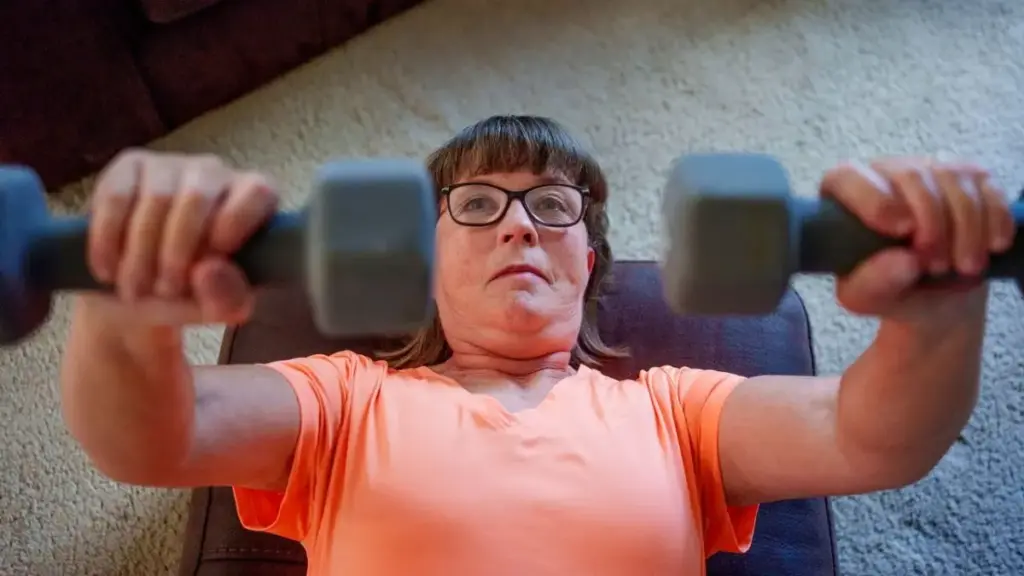
Diagnosed with osteopenia and plagued by debilitating chronic shoulder and lower-back pain, Tracey had never touched a dumbbell in her life when she began training with Bruno three years ago. Faced with physical limitations that initially prevented her from completing even basic movements, Tracey’s journey serves as a powerful testament to the transformative potential of progressive strength training. Today, she is completely pain-free, working out consistently for just 20 to 30 minutes a few times a week, and has scaled her dumbbell usage from a meager 5 pounds up to 20 pounds.
This feature explores the mechanics of Tracey’s inspiring physical turnaround, breaking down the exact beginner-friendly full-body dumbbell routine designed by Ben Bruno. Furthermore, this report examines the broader implications of strength training for aging populations, the physiological science of reversing bone density loss, and how foundational exercise principles can radically alter health outcomes later in life.
Detailed Chronology: The Journey from Pain to Empowerment
Phase 1: The Baseline—Diagnosis and Limitations
Three years ago, Tracey’s physiological profile was typical of many older adults approaching retirement age who have led largely sedentary lives regarding resistance exercise. Alongside the diagnostic reality of osteopenia—a condition characterized by lower-than-normal bone density that serves as a precursor to osteoporosis—she suffered from nagging, persistent lower-back pain and chronic discomfort in her shoulders.
These ailments severely limited her day-to-day functional mobility. Simple tasks that most take for granted—reaching overhead, bending down, or standing up from a seated position—became sources of physical stress. When Ben Bruno first attempted to introduce her to structured physical training, the initial hurdle was stark: Tracey simply could not perform the fundamental bodyweight movements required for a standard routine. Her muscular imbalances, joint stiffness, and lack of core stability made even unweighted exercises a formidable challenge.
Phase 2: Designing for Accessibility
Recognizing that existing high-end or standard beginner programs were often too complex, overly intimidating, or poorly tailored for populations dealing with bone density issues and joint pain, Bruno went back to the drawing board. This challenge catalyzed the creation of his dedicated beginner strength training framework—a system intentionally engineered so that individuals like Tracey (and Bruno’s own mother) could exercise safely and effectively without risking injury.
The core philosophy was simplicity coupled with progressive overload. Bruno stripped away flashy, overly complicated movements, focusing instead on foundational human movement patterns: squatting, hinging, pushing, pulling, and carrying.
Phase 3: Gradual Progression and Breakthroughs
Tracey’s routine was deceptively modest: 20 to 30 minutes per session, performed just two to three times per week. She began with ultra-light 5-pound dumbbells, prioritizing immaculate form, joint protection, and consistency over heavy lifting or high-intensity exhaustion.
As her neuromuscular coordination improved and her stabilizing muscles strengthened, Bruno carefully introduced variations to ramp up the challenge. A couch was used to standardize squat depths; resistance bands were looped around her knees to prevent valgus collapse (caving inward); foam rollers were incorporated for balance during lunges. Slowly but surely, the 5-pound weights gave way to 10-pound, 15-pound, and eventually 20-pound dumbbells.
The results speak for themselves. Today, Tracey moves with confidence, grace, and—most importantly—without pain. Her journey illustrates that physical transformation is not the exclusive domain of twenty-something models; it is available to anyone willing to embrace consistency and progressive resistance.
Supporting Context & Metrics: The Science of Strength After 50
To truly appreciate Tracey’s turnaround, one must examine the physiological mechanisms at play when an aging body is introduced to resistance training.
Combating Osteopenia and Sarcopenia
As humans age, two silent conditions threaten independence and mobility:
- Sarcopenia: The age-related loss of muscle mass and function, which typically begins around age 30 and accelerates past age 60.
- Osteopenia (and later Osteoporosis): The gradual reduction of bone mineral density, leaving bones fragile and increasingly susceptible to fractures.
Traditional medical advice for decades often focused on low-impact aerobics or avoiding strenuous activity for older adults with joint pain. However, modern exercise science has flipped this paradigm on its head. Bone is a living, dynamic tissue that responds to mechanical loading. When muscles pull against bones during resistance exercises—such as squats, deadlifts, and overhead presses—they stimulate osteoblasts, the cells responsible for bone formation.
The Metrics of Consistency
Tracey’s workout schedule—three sessions a week, lasting under 30 minutes—challenges the common misconception that effective fitness requires hours in the gym every single day.
- Frequency: 2–3 times per week allows for adequate muscle protein synthesis while ensuring sufficient recovery time for connective tissues, which heal more slowly in older adults.
- Duration: 20–30 minutes maximizes focus, prevents mental fatigue, and keeps cortisol (stress hormone) levels manageable.
- Progression: Moving from 5 lbs to 20 lbs represents a 300% increase in load capacity, achieved incrementally over months and years without acute injury.
The Beginner-Friendly Dumbbell Workout: Step-by-Step Breakdown
For those inspired by Tracey’s trajectory, Ben Bruno has shared the foundational full-body dumbbell routine that propelled her success. Below is the detailed breakdown of the exercises, including form cues and modifications used in Tracey’s training sessions.
Block 1: Lower Body & Pulling
1A. The Box-Assisted Squat with Resistance Band
- Sets: 2 | Reps: 10
- Execution: Hold a single dumbbell vertically against your chest ( goblet style) once you are comfortable with your body weight. Stand with your feet shoulder-width apart, with a small looped resistance band placed just above your knees. Position a couch or sturdy box a few feet behind you.
- Form Cues: As you lower your hips back and down, actively push your knees outward against the resistance band to prevent them from caving inward. Lightly tap your glutes on the couch to ensure consistent depth before driving back up through your heels.
- Why it works: The band activates the gluteus medius for knee stability, the chest-held dumbbell builds upper-back and core strength, and the couch provides a physical target to eliminate guesswork on depth.
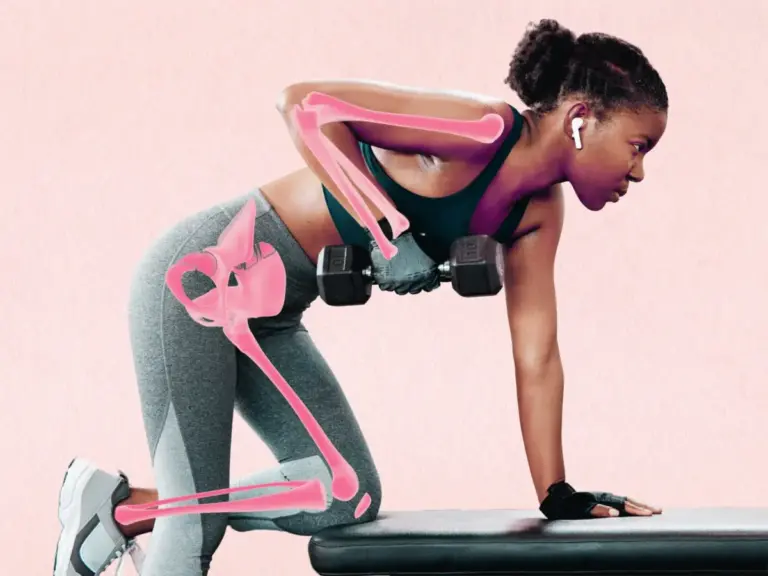
1B. Single-Arm Row
- Sets: 2 | Reps: 8–10 per side
- Execution: Place one knee and the corresponding hand on a stable bench or elevated surface to support your torso, keeping your back flat and parallel to the floor. With your free hand, hold a dumbbell hanging straight down.
- Form Cues: Pull the dumbbell upward toward your hip, driving your elbow back while keeping it tucked close to your ribcage. Squeeze your shoulder blades together at the top of the movement before lowering the weight with control.
- Why it works: Strengthens the upper back, lats, and biceps while improving unilateral stability and supporting posture.
Block 2: Posterior Chain & Pressing
2A. Romanian Deadlift (RDL)
- Sets: 2 | Reps: 10
- Execution: Hold a pair of dumbbells in front of your thighs with an overhand grip. Stand tall with your feet hip-width apart and a soft bend in your knees.
- Form Cues: Keep your spine neutral and shoulders pulled back. Hinge primarily at your hips, pushing your glutes backward as if trying to touch a wall behind you. Lower the dumbbells along the front of your shins until you feel a deep stretch in your hamstrings, then squeeze your glutes to return to the starting position.
- Why it works: Targets the posterior chain (glutes, hamstrings, and lower back), directly counteracting the postural strains of modern sedentary living.
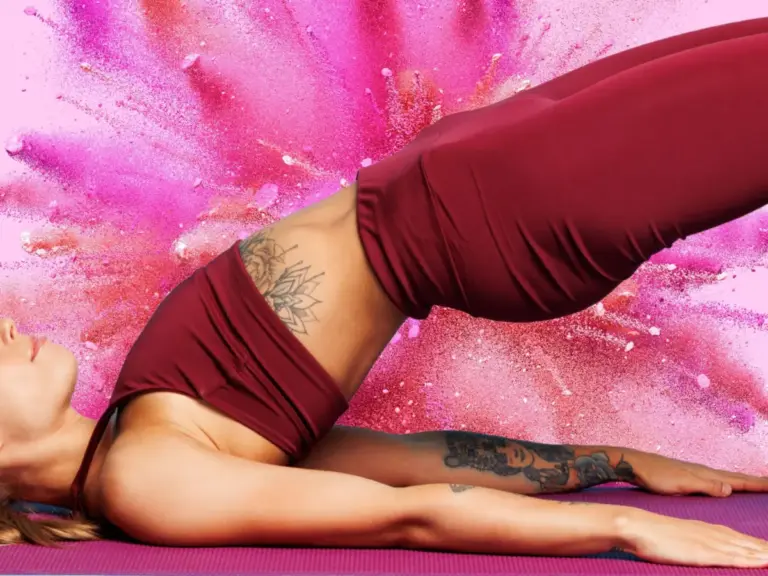
2B. Bridge-Position Floor Press
- Sets: 2 | Reps: 8–10
- Execution: Lie flat on your back with your knees bent and feet flat on the floor. Lift your hips into a glute bridge position, keeping your glutes engaged and your body in a straight line from shoulders to knees. While holding this bridge, press a pair of dumbbells straight up over your chest.
- Form Cues: Lower the dumbbells slowly until your upper arms gently touch the floor, then press them back to the starting position. Maintain tension in your glutes and core throughout the entire set.
- Why it works: Combines a lower-body isometric hold (glute bridge) with an upper-body pressing movement (chest press), challenging core stability while working the chest, shoulders, and triceps.
Block 3: Unilateral Stability & Core
3A. Reverse Lunge with Support
- Sets: 2 | Reps: 8 per side
- Execution: Hold a dumbbell in one hand and grasp a stable support structure—such as a long foam roller placed vertically on the floor or the back of a sturdy chair—with your other hand for balance.
- Form Cues: Step backward with one foot and lower your hips until both knees form roughly 90-degree angles. Keep your torso upright, then push off your front foot to return to the starting position.
- Why it works: Unilateral leg training improves balance and corrects side-to-side strength imbalances. The foam roller modification allows individuals with stability concerns to reap the benefits of lunges without fear of falling.
3B. "Elbows Out" Triceps Extension
- Sets: 2 | Reps: 12–15
- Execution: Lie on your back or sit upright, holding a light dumbbell in both hands (or two separate dumbbells).
- Form Cues: Allow your elbows to flare out slightly as you bend your arms to lower the weight behind or beside your head, then extend your arms back up, focusing on contracting the triceps.
- Why it works: Isolates the triceps and builds arm strength safely without placing undue stress on the wrists or shoulders.
3C. The Standard Plank
- Sets: 2 | Time: 1 minute per set
- Execution: Assume a forearm plank position with your elbows directly beneath your shoulders, your body forming a straight line from your head to your heels.
- Form Cues: Engage your core, squeeze your glutes, and tuck your pelvis slightly to prevent your lower back from sagging. Breathe steadily throughout the hold.
- Why it works: Builds isometric core endurance, protecting the spine and enhancing overall structural integrity.
Official Statements and Expert Perspectives
While Ben Bruno has built his professional reputation on training Hollywood elite, his recent revelations regarding his mother-in-law highlight a profound philosophical shift in how fitness professionals view longevity and accessible programming.
In his widely shared social media commentary, Bruno emphasized that the true measure of a training program’s success is not how many pounds a celebrity can shed for a red-carpet event, but rather how effectively it can improve the quality of daily life for everyday individuals. By designing routines that prioritize safety, manageable volume, and progressive overload, trainers can bridge the gap between clinical rehabilitation and functional fitness.
Fitness industry analysts note that stories like Tracey’s are instrumental in dismantling the psychological barriers that keep older adults out of the weight room. Too often, aging populations believe that starting a strength training routine requires navigating crowded, intimidating gym floors or lifting heavy, dangerous iron. Bruno’s approach—utilizing household items like couches, resistance bands, and foam rollers alongside modest dumbbells—proves that effective resistance training can be democratized for any demographic.
Future Outlook: The Paradigm Shift in Longevity Fitness
As global populations age, the intersection of strength training and longevity medicine is experiencing unprecedented growth. The medical community increasingly recognizes resistance exercise not merely as a cosmetic endeavor, but as a critical therapeutic intervention for maintaining metabolic health, preserving bone mineral density, and preventing falls—a leading cause of morbidity among older adults.
The framework demonstrated by Ben Bruno and executed brilliantly by Tracey points toward a future where customized, home-based strength training becomes a standard prescription for healthy aging. As more trainers and fitness platforms shift their focus from extreme transformations to sustainable, lifelong functional health, the narrative around aging is changing.
Tracey’s journey from chronic pain and osteopenia to empowered, pain-free strength serves as a timeless reminder: it is never too late to pick up your first dumbbell, challenge your physical boundaries, and rewrite your physiological future.