Executive Overview
For decades, the footwear industry operated on an unwritten, ironclad social contract: shoes were meant to protect, stabilize, and complement the silhouette. While apparel frequently ventured into avant-garde territory, footwear remained largely anchored to utility. Even the wildest runway pumps historically adhered to traditional geometries—a standard heel, a recognizable arch, and a conventional toe box.
That social contract has officially been torn to shreds.
As the fashion calendar rolled through the early months of 2026, a peculiar and undeniable transformation took hold of the global runways. From the minimalist cobblestones of Copenhagen Fashion Week to the storied ateliers of Paris and Milan, footwear has emerged as the ultimate canvas for sartorial subversion. Shoes in 2026 are no longer merely functional accessories; they are sculptural, challenging, and frequently uncanny objects of desire.
This shift marks a fascinating psychological and stylistic pivot. As ready-to-wear collections return to a baseline of simplicity—focusing on exceptional tailoring, wearable basics, and pared-back silhouettes—designers are shifting all of their experimental energy downward. Footwear is where the modern fashion avant-garde is choosing to take its wildest risks.
From Havaianas debuting its first-ever heeled flip-flop with a rubber big-toe cap, to Chloé’s nostalgic, sold-out jelly heels that evoke a childhood toy, the industry is entering an era defined by tactile curiosity, PVC transparency, weaponized toe points, and a subtle infusion of fetishistic subtext. This is the era of the "freaky" shoe, a moment where comfort meets provocation, and where the world’s most elite brands are betting that consumers are ready to put their best, weirdest foot forward.
Detailed Chronology of the 2026 Footwear Revolution
To understand how high fashion arrived at this surrealist footwear landscape, one must trace the rapid-fire succession of runway moments that defined the aesthetic trajectory of 2026. The evolution has been swift, moving from subtle geometric anomalies to outright sculptural rebellion in a matter of months.
Early 2026: The PVC and Moulded Bootie Influx
The tone for the year was set early on during the international designer showcases. At the debut Loewe runway show helmed by Jack McCullough and Lazaro Hernandez, the fashion world was introduced to footwear molded entirely from futuristic PVC. These booties weren’t just transparent novelties; they were interactive experiences. Designed to be mixed and matched with an array of neon socks at the wearer’s whim, they blurred the line between hosiery and heavy-duty footwear, challenging the traditional integrity of shoe construction.
Simultaneously, Chanel delivered one of the most viral accessory moments of the year by introducing heel-only sandals. Pushing the absolute limits of footwear definition, these minimalist creations featured structural heels anchored with scant structural support, appearing almost gravity-defying as they accompanied breezy, beach-adjacent ready-to-wear looks.
Spring/Summer 2027 Previews: Copenhagen and the Big-Toe Cap
As the global fashion circuit progressed into the warm-weather preview seasons, the movement solidified. Copenhagen Fashion Week—frequently a barometer for what modern, forward-thinking dressers actually want to wear—served up the season’s most talked-about footwear juxtaposition.
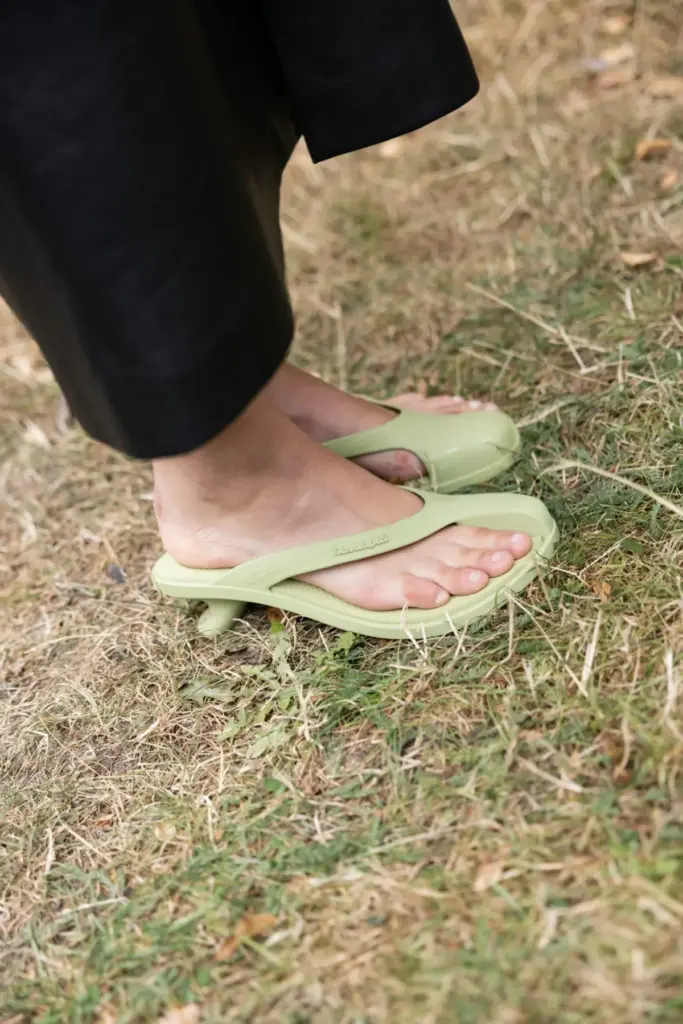
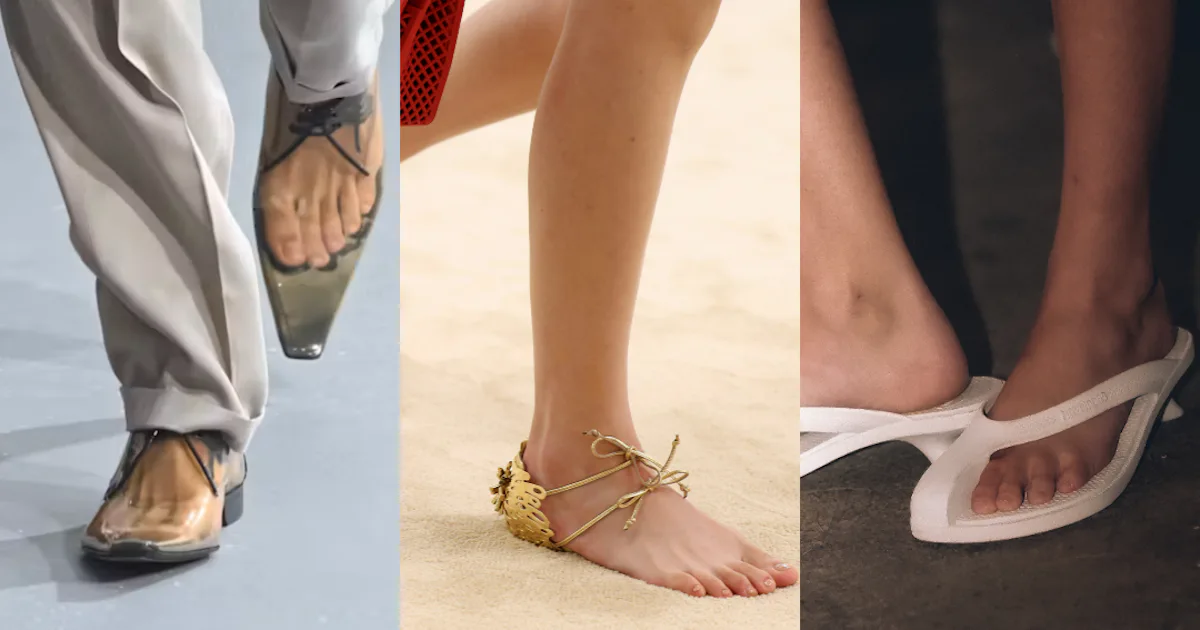
During the Studio Constance presentation, the brand partnered with casual footwear giant Havaianas to debut an unexpected hybrid: the brand’s very first heeled sandal. Featuring an unmistakable rubber big-toe cap paired with a tilted heel, the design bridged the gap between beach-shack casual and high-fashion surrealism. It was a clear confirmation that comfort-adjacent brands were willing to enter the surrealist fray, transforming iconic rubber thongs into elevated, architectural statements.
Mid-2026: The Weaponization of the Toe Point
While transparency and rubber dominated one side of the spectrum, structural aggression took over the other. Anthony Vaccarello at Saint Laurent began manipulating the physical geometry of the shoe, experimenting with exaggerated toe lengths. Moving past standard pointed pumps, Vaccarello introduced styles with multi-inch extended points sharp enough to command immediate attention.
Saint Laurent also expanded its PVC footprint, offering clear iterations of its classic pumps and updating men’s loafers with transparent panels. These designs allowed wearers to proudly display intricate pedicures while keeping their feet safely shielded from the grimy realities of city streets—a brilliant marriage of high-glam exhibitionism and urban pragmatism.
Supporting Context & Metrics: The Rise of the "Perverted" Accessory
The consumer appetite for these unconventional designs is not merely an isolated runway phenomenon; it is backed by hard data and industry metrics. According to the Q2 Index published by Lyst—which tracks the most sought-after fashion items globally—weird, nostalgic, and hyper-tactile shoes have officially captured the cultural zeitgeist.
| Brand / Designer | Shoe Model | Defining Feature | Cultural / Market Impact |
|---|---|---|---|
| Chloé | Heeled Jelly Shoe | Nostalgic translucent rubber, nostalgic Polly Pocket aesthetic | Constantly sold-out status; heavily favored by viral style icons. |
| Skims | Jelly Shoes | Modernized molded resin, minimalist form | Broad market accessibility, bridging comfort and nostalgic camp. |
| Saint Laurent | Brigitte / Babylone PVC Pumps | Transparent PVC, weaponized multi-inch toe points | Redefining evening wear through clinical transparency and severe angles. |
| Valentino | Révélé Open-Toe Pump | Toe cleavage encased by PVC straps | Blending classic spectator aesthetics with fetish-adjacent geometry. |
| Studio Constance x Havaianas | Heeled Flip-Flop | Rubber big-toe cap, tilted kitten heel | Marrying casual beach heritage with high-fashion surrealism. |
The Psychology of Footwear Risk
Industry analysts note a distinct psychological shift driving these purchasing habits. As macroeconomic shifts and trend fatigue drive consumers toward reliable, high-quality capsule wardrobes—relying on perfect white tees, exceptional denim, and classic tailoring—the desire for self-expression has to find an outlet elsewhere.
Footwear has become that outlet. Consumers who might hesitate to wear a wildly avant-garde jacket or an eccentric pair of trousers are jumping headfirst into "perverted" and experimental shoes. These pieces serve as conversational anchors, instantly transforming a basic outfit into an intentional fashion statement with minimal styling effort.
Furthermore, the obsession with clear materials—PVC, jelly plastics, and sheer mesh—points to a broader cultural fixation on transparency, personal grooming, and bodily exhibitionism. The designer pedicure has risen to the status of a luxury accessory in its own right, and these shoes provide the window through which it can be admired.
Official Statements and Industry Perspectives
The embrace of subversion in footwear has not gone unnoticed by the creative directors orchestrating these trends. Speaking on the modern appetite for the unexpected, designers have increasingly leaned into the idea that footwear should provoke a reaction rather than simply blend into the background.
"When clothes become a canvas of pure simplicity, the accessories must do the heavy lifting of telling a story. We are no longer interested in shoes that whisper; shoes need to have a point of view, a slight awkwardness that makes you look twice."
— Anonymous Parisian Footwear Director
Critics and cultural commentators have similarly noted the fetishistic undertones of 2026’s biggest shoe trends. The use of restrictive PVC straps, elongated toes that mimic anatomical distortion, and the return of the toe-bar sandal all point to a subtle, playful kinkiness infiltrating mainstream luxury.
Alessandro Michele’s work at Valentino, particularly with the Révélé open-toe pumps, exemplifies this philosophy. By encasing "toe cleavage" in tight transparent PVC straps, the design highlights and restrains the foot simultaneously. It creates an optical illusion that is equal parts clinical and alluring, proving that high fashion is finding fertile ground in the tension between comfort and constraint.
Similarly, celebrity placements have accelerated the normalization of these eccentric styles. When figures like Kylie Jenner step out in sold-out Chloé jelly heels, or Julia Fox pushes the boundaries in Marc Jacobs runway creations, the aesthetic trickles rapidly from the elite echelons of Paris Fashion Week into the wider cultural consciousness.
Future Outlook: Where Do We Step Next?
As the fashion industry looks toward upcoming seasons, the big question remains: Is the "freaky shoe" era a fleeting novelty, or a permanent structural shift in how we adorn our feet?
All indicators suggest that there is no turning back to the era of the mundane pump. The commercial success of transparent, highly architectural, and tactile footwear has proven that consumers are eager to embrace a sense of play in their wardrobes. As manufacturing technologies improve—allowing for more durable molded plastics, sustainable rubber innovations, and lighter structural materials—the barriers to producing truly bizarre, wearable art are lower than ever.
In the near future, we can expect to see an even greater blurring of lines between athletic heritage brands and luxury surrealism. Collaborations like the Studio Constance and Havaianas partnership signal that legacy comfort brands are willing to license their DNA to high-concept designers, opening up entirely new categories of hybrid footwear.
Ultimately, footwear has graduated from an afterthought to the focal point of modern style. Whether consumers choose to embrace weaponized toe points, transparent PVC loafers, or nostalgic jelly kitten heels, one thing is certain: the days of boring shoes are officially behind us. Pick your poison, weirdos—the pavement awaits.