Executive Overview
The Formula 1 Monaco Grand Prix has long transcended its status as merely a premier motorsport event, evolving instead into an elite cultural nexus where high-stakes racing intersects with global luxury, high fashion, and international celebrity. In late May, the Mediterranean principality played host to one of the most star-studded weekends on the global calendar. Amidst a backdrop of roaring engines, multi-million-dollar superyachts, and relentless tabloid scrutiny, rapper and entrepreneur Rich the Kid stepped away from the recording studio to immerse himself entirely in the high-octane festivities.
Through an exclusive PAPER Diary feature, Rich the Kid offered an unfiltered, behind-the-scenes look at his time in Monaco. Eschewing the conventional tourist path, the multi-platinum artist navigated the exclusive enclave with an insider’s access—dining on $50 million yachts, acquiring bespoke timepieces, partaking in caviar-heavy delicacies, and holding court in elite European nightlife venues alongside fellow hip-hop heavyweights Offset and Gunna.
While mainstream media outlets remained fixated on viral pop-culture spectacles—such as the rampant tabloid chatter surrounding Kim Kardashian and Lewis Hamilton’s purported public displays of affection, or Travis Scott’s widely discussed DJ booth mishap—Rich the Kid’s excursion offered a masterclass in modern celebrity leisure. This report provides an exhaustive, journalistic exploration of the rapper’s Monaco itinerary, contextualizing his movements within the broader economic and cultural ecosystem of the F1 Grand Prix weekend, and examining the symbiotic relationship between hip-hop culture and elite motorsport lifestyle.
Detailed Chronology: A Weekend of Luxury and Velocity
Day One: Setting the Tone in the Principality
"Day One; Life’s good, everything Gucci," remarked Rich the Kid as he touched down in Monaco, immediately establishing the lavish aesthetic that would define his trip. The Mediterranean port city, renowned for its Belle Époque architecture and ultra-exclusive harbor, was operating at peak capacity. For elite travelers, Day One of the Grand Prix weekend is characterized by rapid transitions from private aviation to maritime luxury.
For the "Plug Walk" artist, the opening hours of the trip were dedicated to establishing a base of operations and acquiring local accouterments. Eschewing standard accommodations, the rapper’s itinerary quickly shifted toward the port, where the world’s most opulent vessels serve as floating hospitality suites for the global elite.
Maritime Opulence: Lunch on a $50 Million Superyacht
One of the defining centerpieces of Rich the Kid’s Monaco diary was his time spent aboard a multi-million-dollar vessel. Docked in Port Hercule—where berth space during Grand Prix week commands astronomical fees—the rapper documented multiple moments aboard a floating palace valued at approximately $50 million.
"Lunch on a $50 million yacht," he noted, capturing an afternoon of fine dining against the shimmering backdrop of the French Riviera. The experience underscored the intersection of rap royalty and maritime wealth. Aboard the vessel, the atmosphere was a blend of high-end gastronomy and leisurely indulgence. It was here that the rapper embraced a new ritual for the trip, noting, "I started smoking cigars," while taking in panoramic views of the Mediterranean coastline and the bustling harbor below.
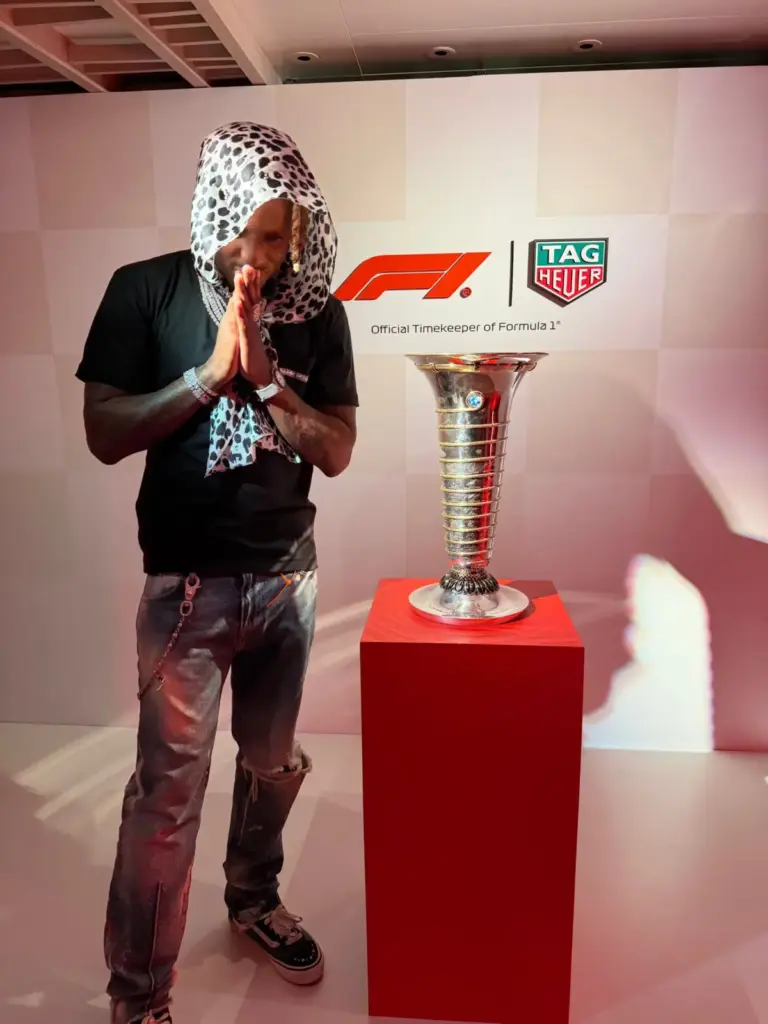
The afternoon also featured moments of playful defiance against the hyper-curated environment of ultra-luxury. Posing near restricted areas of the vessel or dockside installations, Rich the Kid cheekily captioned one snapshot, "They told me not to touch!"—a nod to the rigid security and immaculate preservation protocols that govern high-society spaces during race weekend.
Trackside and Beyond: Getting Close to the Action
While the social calendar of Monaco is demanding, the core attraction remains the legendary Circuit de Monaco—a tight layout of turns and straights carved through the streets of Monte Carlo and La Condamine. Unlike traditional racetracks with expansive gravel traps and run-off areas, the Monaco circuit features unforgiving steel barriers, leaving zero margin for error.
Rich the Kid traded VIP hospitality suites for direct engagement with the environment, capturing moments "At the race on the track" and "On the way to the race." Walking the asphalt where Formula 1 legends like Ayrton Senna, Michael Schumacher, and Lewis Hamilton have chased immortality offered the artist a visceral appreciation for the sport’s danger and precision. The juxtaposition of street-level grit—the smell of burning rubber and high-octane fuel—with the surrounding luxury created a sensory overload that heavily informed his daily dispatches.
Nightlife and Brotherhood: Clubbing with Offset and Gunna
As the sun set over the Mediterranean, the focus of the Grand Prix weekend shifted seamlessly from the tarmac to the exclusive clubs of Monte Carlo. Monaco’s nightlife during F1 week is legendary, drawing world-class DJs, Hollywood actors, fashion icons, and rap royalty to venues where table minimums reach the tens of thousands of dollars.
Rich the Kid linked up with fellow hip-hop luminaries Offset and Gunna for a high-profile night out. "Club with the guys, Gunna and Offset," he shared, documenting a gathering that served as a reminder of rap music’s dominant cultural footprint on international luxury events. The trio’s presence commanded the room, blending high-fashion streetwear with bespoke jewelry, and anchoring one of the most exclusive parties of the European spring calendar.
Culinary Indulgences and Bespoke Acquisitions
No luxury trip is complete without high-end gastronomy and retail therapy. Throughout his diary entries, Rich the Kid highlighted his appreciation for fine dining, punctuated by a recurring demand: "MORE CAVIAR!" The delicacy, a staple of elite Monaco hospitality, served as the fuel for his fast-paced schedule.
Between the races and the nightlife, the rapper also made time for high-end retail acquisitions. In a city globally recognized as a capital for haute horlogerie, Rich the Kid commemorated his trip by securing a new high-end timepiece. "Got a new watch in Monaco," he stated, showcasing a piece of master craftsmanship that added to an already formidable collection of jewelry and accessories. This acquisition encapsulates the traditional souvenir of the ultra-wealthy traveler: timeless, portable, and inherently valuable.
Supporting Context & Metrics: The Economics of F1 and Hip-Hop
The Monaco Grand Prix as a Cultural Catalyst
To fully appreciate Rich the Kid’s excursion, one must understand the unique economic and social ecosystem of the Monaco Grand Prix. Established in 1929, the race is the crown jewel of the FIA Formula One World Championship. Over the decades, it has transformed from a purely athletic competition into a multi-day festival of conspicuous consumption.
During Grand Prix weekend, Monaco’s population swells exponentially. Hotel rates routinely surge by 300% to 500%, and prime superyacht berths in Port Hercule can cost upwards of hundreds of thousands of dollars for a single weekend. The event attracts an estimated 100,000+ visitors, heavily weighted toward high-net-worth individuals, tech founders, venture capitalists, fashion designers, and A-list entertainers.
The Convergence of Rap Culture and Motorsport
In recent years, the intersection between hip-hop artists and Formula 1 has grown exponentially. Once dominated by traditional pop culture icons, Hollywood actors, and European aristocracy, the paddock and its surrounding VIP events have increasingly welcomed rap royalty. Artists like Travis Scott, ASAP Rocky, Offset, Gunna, and Rich the Kid are no longer just fans in the grandstands; they are active participants in the lifestyle narrative of the sport.
This convergence is driven by several mutually beneficial factors:
- Brand Alignment: Formula 1 has aggressively modernized its image under Liberty Media’s ownership, seeking younger, more diverse global demographics. Hip-hop artists bring unmatched cultural currency, trendsetting influence, and massive digital reach.
- Aesthetic Synergy: Both high-end motorsport and modern hip-hop culture celebrate speed, precision engineering, rare automobiles, bespoke fashion, and high-stakes success.
- Global Mobility: Top-tier rappers operate on international schedules, making transit between global fashion weeks, recording studios in Los Angeles or Atlanta, and European sporting events seamless.
Tabloid Noise vs. Authentic Leisure
While international media outlets dedicated thousands of column inches to viral moments—such as the intense speculation surrounding celebrity romances and high-profile DJ booth mishaps—creatives like Rich the Kid utilized the week differently. By curating his PAPER Diary, the rapper carved out a narrative focused on ownership, leisure, and appreciation of craft. Whether evaluating a $50 million yacht, examining precision watchmaking, or enjoying fine dining, his dispatch offered a refreshing counter-narrative to the manufactured chaos of the mainstream gossip columns.
Official Statements and Industry Perspectives
While artists often let their visuals and lifestyle documentation speak for themselves, industry analysts and lifestyle commentators have weighed heavily on the shifting dynamics of celebrity presence at elite sporting events.
Sarah Jenkins, a luxury hospitality analyst based in London, noted the strategic value of such appearances:
"When artists like Rich the Kid document their time at events like the Monaco Grand Prix, they aren’t just taking a vacation; they are reinforcing a lifestyle brand. The modern rap artist functions as an independent media house. By bypassing traditional magazine profiles and publishing unfiltered diaries through platforms like PAPER, they maintain absolute narrative control while showcasing elite consumption patterns to millions of impressionable followers."
Furthermore, cultural commentators have highlighted how hip-hop’s embrace of events like F1 signals a broader democratization of spaces that were historically exclusive. Formula 1’s historic reputation as an insular, elitist European sport has been fundamentally disrupted by the influx of American pop-culture heavyweights, transforming the pit lane into a global runway.
Future Outlook: The Expanding Footprint of Rap in Elite Sports
As Formula 1 continues its aggressive global expansion—particularly with the explosive growth of the sport in North America, catalyzed by the success of Netflix’s Drive to Survive and the addition of races in Miami and Las Vegas—the overlap between motorsport and hip-hop culture is projected to intensify.
For Rich the Kid, the Monaco Grand Prix served as a well-deserved respite from intensive studio sessions, but it also laid the groundwork for future creative endeavors. As artists increasingly bridge the gap between music, fashion, luxury lifestyle, and sports, trips like these are no longer viewed as mere vacations. They serve as research, inspiration, and networking milestones in an interconnected global economy.
Whether returning to the studio to channel the relentless energy of the race track into upcoming musical projects or collaborating with luxury fashion houses inspired by European aesthetic traditions, Rich the Kid’s Monaco takeover demonstrates that the modern hip-hop mogul operates without geographic or cultural boundaries. As the engine roars fade from the streets of Monte Carlo and the superyachts depart the harbor, the imprint left by hip-hop culture on the principality remains indelible—proving once again that wherever the elite gather, rap royalty will not just be present, but will help define the standard of luxury.