Executive Overview
When individuals step into a gym, their minds are typically occupied with familiar fitness goals: building lean muscle, improving cardiovascular endurance, dropping body fat, or enhancing athletic performance. Rarely is bone density the primary metric driving a workout. Yet, skeletal health remains one of the most critical, yet frequently overlooked, markers of long-term vitality, functional independence, and overall longevity.
Bones are far from inert, static scaffolding. They are dynamic, living tissues that constantly adapt to the physical forces and stresses imposed upon them. As humans age, however, natural physiological shifts alter this delicate balance of tissue breakdown and regeneration. Women, in particular, face a steep decline in bone density following menopause, shedding up to 20% of their bone mass in the span of just five to seven years.

This comprehensive report examines the biological mechanisms of bone deterioration, explores the critical interplay between impact loading and resistance training, and provides a structured, expert-designed protocol intended to stimulate bone formation, preserve bone quality, and stave off osteoporosis.
Detailed Chronology of Skeletal Aging
Understanding how to protect the skeletal system requires tracking the natural lifecycle of human bone mass from early development through senior adulthood.

The Peak Years: Building the Reserve
Skeletal development is a cumulative process. Throughout childhood, adolescence, and early adulthood, the human body deposits more bone tissue than it removes. This ongoing accumulation drives bone mineral density upward until it reaches its physiological zenith—commonly referred to as peak bone mass—around the age of 30, particularly in women.
During this foundational window, the body acts like a financial savings account; every deposition of calcium and structural protein represents a deposit that will fund skeletal health later in life. Individuals who engage in high-impact sports, heavy resistance training, and maintain optimal nutrition during these formative decades establish a robust structural reserve. This reserve acts as a buffer against the inevitable bone loss that occurs with advanced age.

The Menopausal Shift and Rapid Loss
As individuals progress through middle age, the cellular machinery responsible for maintaining bone density begins to shift. For women, this transition is sharply accelerated by the onset of menopause and the corresponding drop in estrogen levels. Estrogen plays a vital protective role in skeletal health by regulating the lifespan and activity of osteoclasts—the cells responsible for breaking down bone tissue.
When estrogen plummets, osteoclast activity outpaces the rate at which osteoblasts (bone-forming cells) can rebuild tissue. This imbalance triggers a rapid deceleration of bone health, with many women losing up to 20% of their bone density in the five-to-seven-year window immediately following menopause.

Without targeted interventions to slow this trajectory, the structural integrity of the skeleton compromises, paving the way for porous, fragile bones and an elevated risk of debilitating fractures.
Supporting Context & Metrics: The Science of Bone Remodeling
To combat age-related skeletal degradation, fitness professionals and medical researchers emphasize the necessity of understanding the mechanics of bone biology and physical adaptation.

Bone Density Versus Bone Quality
Physicians evaluate skeletal strength through two primary lenses: bone mineral density (BMD) and bone quality.
- Bone Density: Refers to the total concentration of minerals (such as calcium) packed within a specific volume of bone. It serves as a primary statistical indicator of fracture risk.
- Bone Quality: Encompasses the micro-architecture, rate of micro-damage accumulation, and turnover rate of the bone matrix.
As individuals age, bone quality naturally declines alongside density. Consequently, older adults become increasingly dependent on maintaining high bone density to preserve overall skeletal strength. When density drops below clinical thresholds, conditions such as osteopenia and osteoporosis develop. In an osteoporotic state, bones become exceptionally porous and brittle, rendering them vulnerable to catastrophic fractures from minor, everyday incidents, such as a low-level trip or a simple fall at home.

The "Use-It-or-Lose-It" Principle of Movement
Bones respond directly to mechanical loading through a process known as mechanotransduction. When physical stress is applied to the skeleton, the mechanical strain is detected by specialized mechanosensory cells embedded within the bone matrix.
[Mechanical Stress / Impact]
       ↓
[Activation of Osteocytes (Mechanotransduction)]
       ↓
[Chemical Signaling to Osteoblasts]
       ↓
[Targeted Bone Deposition & Micro-Damage Repair]
This cellular communication prompts the body to direct resources to areas experiencing high stress, fortifying the structure and repairing micro-fractures before they can expand into major structural failures. Movement, therefore, is not merely a mechanism for calorie burning or muscle toning; it is a vital biological command instructing the skeletal system to reinforce itself.

Official Statements and Expert Insights
Medical authorities and high-performance conditioning coaches emphasize that conventional, low-impact exercise alone is insufficient for arresting bone loss. A targeted approach integrating both impact and heavy load is mandatory.
Dr. Susan Bukata, MD, professor and chair of orthopedics at UC San Diego Health, underscores the necessity of targeted mechanical stress. "Bone density is an important indicator of how likely bones are to break," Dr. Bukata explains. "When you have osteoporosis, your bones become brittle and porous, making them more likely to fracture from minor falls… It is really about loading your bones repeatedly that gives the signal the cells need to stimulate bone formation and repair."

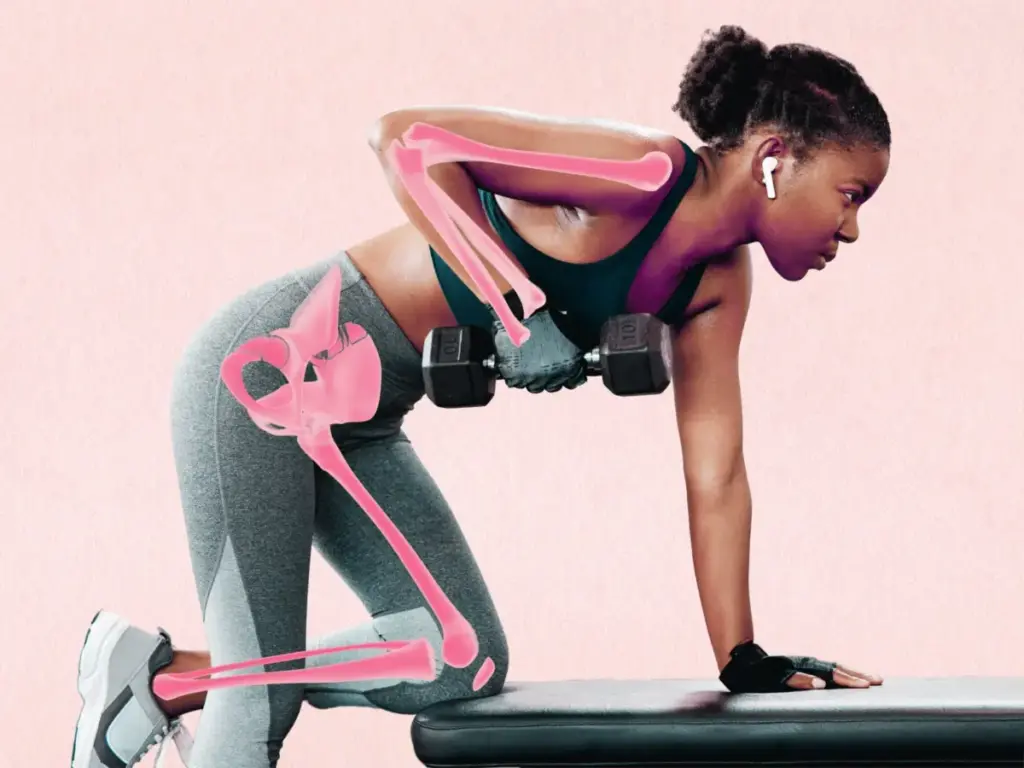
Complementing this medical perspective, Jojo Kelly, CPT, head coach at Tone House, highlights the dual requirements of modern training regimens. "Bone and cartilage are a use-it-or-lose-it situation," Kelly notes. "Contrary to what many people believe, running and jumping actually promote healthy bones and cartilage. The other way we want to stimulate bone growth is through resistance training. During a lift, the muscle connected to its tendon pulls on where it attaches to the bone, causing the bone to react and remodel."
Key Workout Metrics for Bone Stimulation
To achieve meaningful osteogenic adaptation, fitness routines must meet specific physiological thresholds:

- Weight-Bearing Activity: At least 30 minutes of daily weight-bearing movement (e.g., walking, running, dancing, stair climbing) where the body works against gravity.
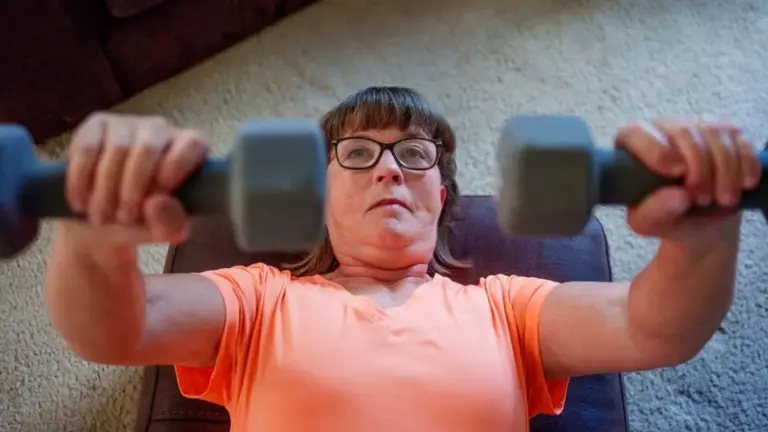
- Resistance Loading: Strength training performed two to three times per week, utilizing loads equivalent to 70% to 85% of an individual’s one-rep maximum (or an exertion level of 8 to 9 out of 10) for sets of three to eight repetitions.
Future Outlook: A Bone-Protective Training Protocol
Translating clinical recommendations into practical application requires a well-structured exercise routine. The following comprehensive, bone-strengthening protocol—designed by Jojo Kelly—combines dynamic warm-ups, multi-joint compound lifts, unilateral movements, and stability-focused finishers.
Equipment Needed
- Two sets of dumbbells (one medium-to-heavy set for major compound movements, and one lighter set for backup or adjustment).
- A resistance band.
Phase 1: The Dynamic Warm-Up
Purpose: To open up the hips, hamstrings, thoracic spine, and glutes while preparing the nervous system for loading.

- The World’s Greatest Stretch: A dynamic mobility sequence targeting the hips, thoracic spine, and hamstrings to improve overall functional range of motion.
- Banded Pull-Apart: Integrates shoulder mobility and upper-body range of motion using a resistance band.
- Banded Glute Bridge: Activates the gluteal complex and enhances pelvic and hip stability.
- Push-Up on Knees: Prepares the shoulder girdle, chest, and triceps for heavy pressing movements while promoting joint stability.
Phase 2: Set #1 – Compound Movements
Compound exercises recruit multiple joints and large muscle groups simultaneously, allowing for the application of heavier loads and maximal skeletal stress.
- Front Squat: A lower-body compound movement that targets the quadriceps and core while encouraging an upright spinal posture, fostering structural strength and stability.
- Box Jumps: A high-impact plyometric exercise that builds explosive lower-body power while delivering the rapid, high-magnitude force signals critical for stimulating bone growth.
- Dumbbell Deadlifts: A foundational hinge movement that strengthens the posterior chain (glutes, hamstrings, lower back) while applying direct axial load through the hips and spine.
Phase 3: Set #2 – Unilateral Movements
Unilateral exercises train one side of the body at a time, correcting muscular imbalances, enhancing balance, and reducing asymmetrical injury risks.

- Split Squats: A single-leg lower-body exercise targeting the quads and glutes while testing and improving foundational stability.
- Single-Arm Chest Press: A pressing movement that targets the pectoral muscles, anterior deltoids, and triceps while demanding extensive core stabilization to resist rotational forces.
Phase 4: Finisher & Functional Integration
Integrates grip strength, endurance, and postural integrity.
- Farmer’s Carry: A full-body stability drill utilizing heavy loads in each hand, challenging grip strength, core integrity, and shoulder stability.
- Bent-Over Row: Targets the upper back, latissimus dorsi, and rear shoulders while requiring sustained isometric core engagement to support posture and spinal health.
Conclusion
Safeguarding skeletal health requires a proactive, long-term commitment that transcends standard fitness goals. Because bone density naturally peaks in early adulthood and faces steep declines during transitional life phases like menopause, relying on passive aging strategies is a recipe for vulnerability. By deliberately integrating high-impact weight-bearing activities and progressive resistance training into daily life, individuals can harness the natural adaptive biology of mechanotransduction. Through consistent mechanical loading, structured movement, and proper progression, building stronger, more resilient bones remains entirely within reach at any stage of life.