Executive Overview
British retail titan Mike Ashley has spent the better part of four decades building a formidable, multibillion-pound commercial empire on a singular, cold-eyed premise: buying low from the distressed and desperate, integrating the assets ruthlessly, and scaling them for mass profitability. From humble origins with a single Sports Direct store in southeast England, Ashley has systematically expanded his footprint to devour household-name high street brands, sporting giants, and logistics networks. Today, his overarching vehicle, Frasers Group, commands an extraordinary ecosystem that spans value retail, commercial real estate, logistics, and consumer finance.
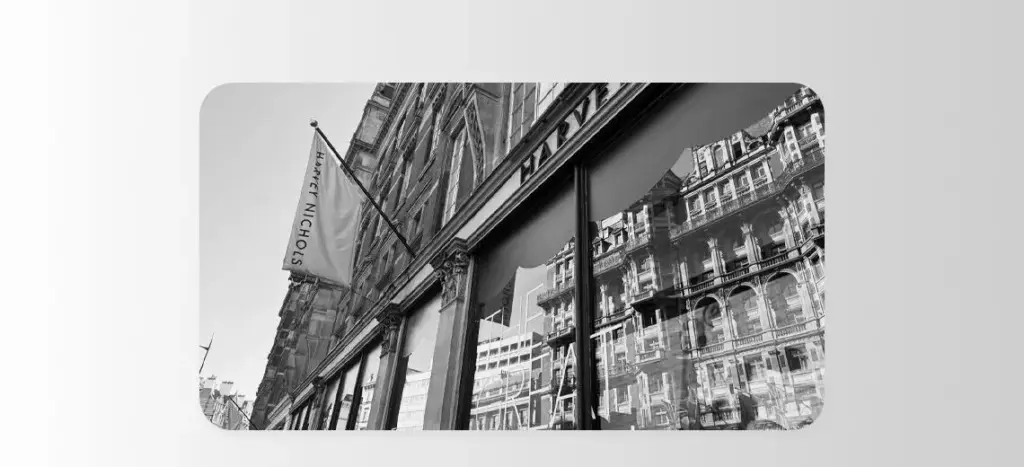
Yet, Ashley’s ambitions have long transcended the tracksuit-and-sneakers domain that made his fortune. In his boldest and most culturally sensitive maneuver to date, the billionaire is aggressively steering Frasers Group deeper into the upper echelons of high-end fashion and prestige retail, culminating in a landmark move to acquire the iconic British department store, Harvey Nichols.
This high-stakes acquisition is far more than a simple corporate takeover; it serves as a litmus test for whether a retail tactician forged in the fires of discount sports apparel can successfully navigate the delicate, perception-driven universe of global luxury. For an industry watching with a mixture of awe and acute anxiety, the move raises existential questions. Following the turbulent, short-lived acquisition and subsequent collapse of luxury e-tailer Matches in 2023—a debacle that left high-end designers burned, unpaid, and stripped of inventory—brands are understandably hesitant to embrace Frasers Group’s aggressive playbook.
This article explores the mechanics of Ashley’s retail empire, the cultural and economic hurdles facing Harvey Nichols, the lingering trauma of the Matches liquidation, and the unprecedented positioning of Frasers Group as it seeks to control virtually every touchpoint of the modern consumer journey.
Detailed Chronology & Historical Trajectory
To understand the seismic nature of Frasers Group’s luxury push, one must first trace the meteoric, often controversial evolution of Mike Ashley’s business philosophy.
The Sports Direct Foundation (1982–2000s)
Ashley founded Sports Direct in 1982 in Maidenhead, England, launching a retail model centered on deep discounting, immense buying power, and a relentless focus on volume. Eschewing traditional luxury sensibilities, Ashley positioned his stores as high-velocity boxes that moved massive amounts of inventory at razor-thin margins. As the enterprise scaled into the 2000s, it swallowed competing chains, lesser-known brands, and eventually evolved into Frasers Group (renamed from Sports Direct International in 2019 to reflect a broader lifestyle and luxury pivot).
Throughout this period, Ashley earned a reputation as an astute corporate vulture. When iconic high street brands hit structural or financial walls, Ashley was routinely waiting in the wings, deploying cash reserves to snap up coveted real estate and intellectual property at distressed valuations.
The Luxury Pivot and the Flannels Era
As the traditional British high street faced structural decline—accelerated by the rise of e-commerce and shifting consumer habits—Ashley recognized that pure-play value retail had a ceiling. To capture higher-margin demographics, Frasers Group acquired Flannels, a multi-brand luxury menswear and womenswear retailer founded in the north of England.
Flannels became the proving ground for Frasers’ luxury ambitions. The group invested heavily in rolling out high-concept flagship stores in regional UK cities, stocking high-end luxury houses like Gucci, Balenciaga, and Burberry. Simultaneously, Frasers began accumulating strategic equity stakes in major fashion entities, including Hugo Boss, Mulberry, Burberry, and Puma, positioning itself simultaneously as a shareholder, wholesale customer, and retail competitor to the very houses whose products it sold.
The Matches Debacle (Early 2023)
The true inflection point—and the primary source of industry-wide trauma—occurred in late 2023 when Frasers Group acquired high-end luxury e-commerce platform Matches from private equity firm Apax Partners. Promoted initially as a vital stepping stone into global digital luxury, the acquisition quickly turned into a corporate execution.
Citing insurmountable financial losses, Frasers placed Matches into administration less than three months after taking control. The sudden wind-down caught the fashion ecosystem completely off guard. Dozens of independent luxury brands, heritage houses, and emerging designers were left owed substantial sums of money. In many instances, brands struggled desperately simply to retrieve their physical inventory from Matches’ warehouses as administrators moved in. The fallout severely fractured trust between the independent luxury design community and Frasers Group, casting a long, skeptical shadow over all of Ashley’s subsequent high-end maneuvers.
Supporting Context & Market Metrics
The backdrop against which Frasers Group is acquiring Harvey Nichols is defined by profound structural shifts within the British and global luxury markets. Understanding the scale of this transaction requires evaluating the unique financial architecture of Frasers Group alongside the historical weight of its latest acquisition.
The Anatomy of Frasers Group’s Ecosystem
What separates Frasers Group from traditional retail conglomerates or private equity firms like Authentic Brands Group (ABG) is the sheer breadth of its operational integration. While ABG typically acquires distressed brands and licenses them out to third-party operators, Ashley’s methodology demands deep operational control.
Frasers now commands an unprecedented vertical and horizontal slice of the retail value chain:
- Real Estate: Through strategic property acquisitions, Frasers owns numerous shopping centers, retail parks, and outlet destinations across the UK. This means the group can act as landlord, retailer, logistics provider, and financier all at once.
- Logistics & Consumer Credit: The group operates its own sophisticated warehousing and delivery networks while offering consumer credit facilities to drive sales conversion.
- Omni-Channel Reach: From mass-market discount stores to regional luxury flagships via Flannels, Frasers touches consumers at every socioeconomic level.
As international fashion reporter Zofia Zwieglinska noted on the Glossy Fashion Podcast, “Frasers is buying up different parts of the fashion supply chain and the customer journey. You’re talking about essentially owning every part of the customer experience.”
The Decline and Heritage of Harvey Nichols
Founded in 1831, Harvey Nichols is indisputably one of the crown jewels of British retail. Based in its iconic Knightsbridge flagship store in London, the department store achieved legendary cultural status during the 1990s. Under the guidance of pioneering creative director Mary Portas, Harvey Nichols became synonymous with irreverent advertising campaigns, cutting-edge window displays, and an elite fashion curation that rivaled Harrods and Selfridges.
Its place in popular culture was cemented by appearances in the iconic British sitcom Absolutely Fabulous, where the store served as a shorthand for decadent, London-centric luxury—comparable only to the cultural footprint of Barneys New York in Sex and the City.
However, the decades since its 1990s peak have been punishing. Harvey Nichols has struggled to maintain its competitive edge against deep-pocketed neighbors like Harrods and Selfridges, both of which boast massive international tourism backing and state-of-the-art experiential retail footprints. Furthermore, the broader British luxury market has faced severe macroeconomic headwinds, most notably the UK government’s contentious decision to scrap tax-free shopping for international visitors—a policy change that has diverted billions in luxury spending away from London and toward continental European capitals like Paris, Milan, and Madrid.
Official Statements & Industry Perspectives
The acquisition of Harvey Nichols has ignited fierce debate across executive boardrooms, fashion media outlets, and designer studios. Industry analysts point out that while Ashley has an unmatched genius for balance sheets and cost-efficiency, luxury retail operates on an entirely different psychological currency: prestige, trust, and emotional resonance.
During a recent deep-dive discussion on the Glossy Fashion Podcast, senior fashion reporter Danny Parisi and Zofia Zwieglinska dissected the complex realities facing the Frasers-Harvey Nichols alignment.
Addressing the lingering ghost of the Matches collapse, Zwieglinska emphasized how brand sentiment has soured toward Ashley’s empire:
"Because of what happened with Matches, there is concern around what is worth keeping [with Harvey Nichols]. There might be brands too that are less keen to be associated with Frasers, considering how brands were affected [with Matches]."
This sentiment captures the core paradox of Frasers Group’s luxury ambitions. In mass-market sports retail, suppliers have little leverage; they need Sports Direct’s volume to survive. In luxury fashion, however, brand equity is everything. If heritage design houses feel their prestige is diluted—or worse, their financial security threatened by sudden administrative wind-downs—they can simply withdraw their wholesale distribution or refuse to supply altogether.
Yet, despite the skepticism, Parisi stressed that underestimating Mike Ashley is a perennial corporate mistake:
"In the next year or two, we will definitely be hearing more about Frasers Group. It doesn’t seem to be slowing down."
Future Outlook: Can Mass-Market Muscle Revive High-End Elegance?
As Frasers Group turns its attention toward revitalizing Harvey Nichols, the road ahead is fraught with both monumental opportunity and severe risk. Translating a business model rooted in value-driven sports retail into a profitable luxury department store ecosystem will require a delicate balancing act.
The Multi-Million-Pound Transformation Challenge
Acquiring Harvey Nichols is merely the opening salvo; the true cost will lie in the capital expenditure required to modernize the enterprise. Analysts suggest that breathing new life into the brand will demand:
- Physical and Experiential Overhauls: Flagship locations, particularly the Knightsbridge store, require substantial investments in interior design, experiential retail spaces, hospitality integrations, and digital infrastructure.
- Brand Relationship Repair: Frasers must actively rebuild trust with luxury conglomerates (such as LVMH, Kering, and Richemont) and independent designer houses, proving that its financial stability and operational strategies will not jeopardize supplier capital.
- Identity Clarification: Harvey Nichols must rediscover its distinct voice. In a modern retail landscape dominated by experiential giants and seamless e-commerce, a department store cannot survive on heritage alone; it must offer a compelling, differentiated reason for affluent consumers to step through its doors.
The Verdict on Frasers Group’s Trajectory
Whether Mike Ashley’s latest gamble pays off will depend entirely on Frasers Group’s willingness to adapt its corporate culture. If the group attempts to force its aggressive, margin-squeezing sports retail tactics onto a fragile luxury ecosystem, it risks alienating the very brands and clientele that define Harvey Nichols’ existence.
Conversely, if Frasers leverages its formidable supply chain, real estate portfolio, and financial muscle to give Harvey Nichols the breathing room and investment it desperately needs, the deal could redefine the future of British high-end retail.
One thing remains unequivocally certain: Mike Ashley and Frasers Group are rewriting the rules of modern retail engagement, and the global fashion industry ignores their next move at its peril.