On a bright spring morning earlier this year, Meredith Hayden spent her hours at a local garden center selecting hydrangeas and botanical starters to landscape her Hamptons yard, locally known as "The Barn." Later that day, she mapped out her seasonal vegetable crops, tested recipes for dinner, spent time with her dog Poppy, and wound down the evening with a crisp glass of rosé and reality television.
Scroll through Hannah Neeleman’s digital footprint, and you will find an eerily parallel curation: from-scratch panna cotta, homemade beef pies, freshly harvested vegetables culled from a greenhouse, and a life entirely anchored to the domestic sphere.
To the casual observer scrolling through social media feeds, the similarities between these two prominent digital creators are striking. Hayden is the culinary force behind Wishbone Kitchen, a private-chef-turned-food-media-personality with a rapidly scaling multimedia brand. Neeleman—better known as Ballerina Farm—is a Juilliard-trained former ballerina, mother of nine, and the architect of a multi-million-dollar agricultural enterprise in Utah selling custom protein powders, sourdough starters, and enamel cookware.
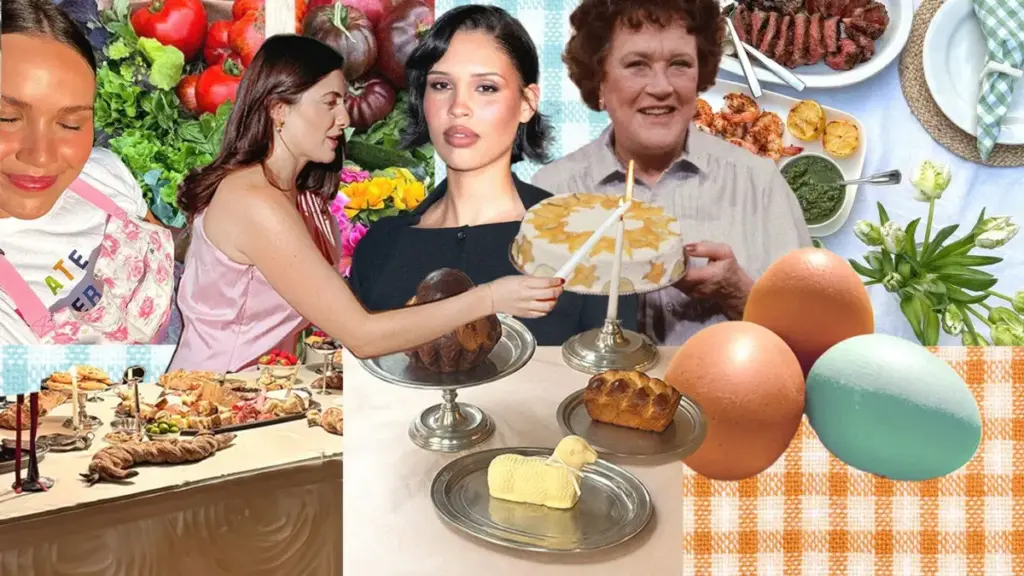
Visually, the dividing line between their worlds is razor-thin. Both women demonstrate a profound reverence for a perfectly ripened heirloom tomato, a devotion to salted French butter, and tablescapes adorned with soft linens, fresh wildflowers, tapers, and antique china. Yet, culturally, they are perceived to inhabit entirely different universes. One is celebrated as a modern, independent culinary entrepreneur; the other is frequently scrutinized—or idolized—as the ultimate symbol of the "tradwife" (traditional wife) movement.
This article investigates the modern convergence of homemaking content, aesthetic signifiers, and political ideology. By examining the commercialization of domesticity, historical precedents from Julia Child to Betty Friedan, and the modern fashion runways redefining women’s workwear, we explore a central question: When the dress, the recipe, and the aesthetic are identical, where does the difference actually reside?
Detailed Chronology: From Pandemic Escapism to Aesthetic Convergence
To understand how domesticity became a battlefield of cultural and political signaling, one must trace the timeline of how digital consumption and aesthetics evolved over the past decade.
1. The Pandemic Catalyst and the Rise of "Cottagecore" (2020–2021)
When global lockdowns confined millions indoors, a collective yearning for simplicity, self-sufficiency, and rural escapism took root. "Cottagecore" emerged as a dominant digital subculture. Baking bread from scratch, cultivating indoor herb gardens, and wearing prairie dresses transformed from niche hobbies into widespread forms of digital therapy. Brands specializing in hyper-feminine, nostalgic silhouettes—such as Dôen, LoveShackFancy, Hill House Home, and Sandy Liang—built intensely loyal followings. At this stage, the aesthetic was largely politically neutral; it represented a collective sigh of relief against the hyper-accelerated burnout of modern urban life.
2. The Commercialization of the Hearth (2022–2023)
As pandemic restrictions faded, the habits formed during isolation did not. Instead, they professionalized. Creators who mastered the art of aestheticized domestic labor began converting their digital followings into lucrative commercial operations. Wishbone Kitchen transitioned from Hamptons private catering content to mainstream food media, while Ballerina Farm scaled its agricultural operations into an international direct-to-consumer powerhouse. Concurrently, creators like Nara Smith emerged on TikTok and Instagram, delivering hyper-laborious from-scratch cooking videos—making everything from childhood snacks like Cheez-Its to bubblegum and cough drops—with serene, deadpan detachment.
3. The Ideological Collision and the "Tradwife" Discourse (2024–Present)
By the mid-2020s, the boundary between aesthetic preference and political ideology had completely collapsed. The term "tradwife"—a portmanteau for traditional wife—gained mainstream cultural currency, describing women who publicly embrace submissive gender roles, male breadwinners, and domestic management. However, a fascinating paradox emerged: many of the women embodying or adjacent to this aesthetic were, in reality, highly successful, self-made digital entrepreneurs who served as the primary financial engines of their households.
This tension fueled intense cultural anxiety, culminating in literary explorations such as Caro Claire Burke’s bestselling novel Yesteryear, a satirical look at a farm-dwelling content creator whose domestic life unravels. When Neeleman was asked about the novel’s striking parallels to her own life during a widely read Q&A, she responded with characteristic composure: "I’m surprised it didn’t come sooner, honestly."
The mainstreaming of this aesthetic reached a watershed moment when progressive Los Angeles retailer Reformation partnered with Nara Smith for a high-profile capsule collection. The collaboration sparked fierce debate across digital platforms like Reddit and fashion columns alike, marking the official moment when the progressive, eco-conscious urban consumer market and the traditional domestic aesthetic became indistinguishable.
Supporting Context & Metrics: The Paradox of the Digital Homemaker
To analyze the economic and sociological dimensions of this phenomenon, consider the structural mechanics driving modern domestic content creation.
The Audience Demographic: Data from major lifestyle and social media analytics firms indicates that the primary consumers of high-production homemaking content are Gen Z and Millennial women living in dense urban environments—renters who lack yards, kitchens with counter space, or agrarian access. For these viewers, the content functions as an immersive, sensory escape rather than a literal blueprint for daily life.
The Revenue Engine: Unlike traditional homemakers of the mid-20th century, modern domestic creators operate as media executives. Monetization spans multiple streams: brand partnerships, direct-to-consumer physical goods (cookware, apparel, pantry staples), platform ad revenue, and long-form media deals.
The Rorschach Effect: As cultural critics have noted, the modern tradwife and domestic creator function as a sociological Rorschach test. Observers project their own anxieties onto the content: feminists see a dangerous regression into patriarchal servitude; conservatives see a moral reclamation of family values; capitalists see brilliant brand positioning. Meanwhile, the creators themselves often articulate a much simpler motivation: personal creative fulfillment.
Official Statements and Industry Insights
Industry leaders, creators, and fashion icons have increasingly weighed in on the cultural weight carried by domestic labor and its visual vocabulary.
Reflecting on her career trajectory, Meredith Hayden emphasizes the importance of reframing how society views domestic labor. In an interview with Teen Vogue, Hayden noted:
"We need to reframe how we think of domestic labor—rather than something you have to do, [it’s] something you get to do."
Describing her deliberate modeling of Wishbone Kitchen after culinary pioneers like Martha Stewart and Ina Garten, Hayden added:
"I just started poking around and looking at resumes of different online chefs. If Martha Stewart started a catering company and then turned that into what she has now… then I could probably do something similar. It was literally that black and white."
Similarly, Ashley Coiffard, co-founder of the Brooklyn Heights bakery and wine bar L’Appartement 4F, highlights how exposure to multi-generational European lifestyle traditions reshaped her relationship with food and community. Recalling a transformative visit to her husband’s family in Bandol, France, Coiffard shared:
"She picked the lettuce from her garden, and she picked the olives from the olive trees that she planted, and made olive oil. I just liked how simple and delicious and fresh everything was."
This revaluation of domesticity has even permeated high fashion. During the Miu Miu Spring 2026 Ready-to-Wear presentation in Paris, the runway was dominated by creative recontextualizations of the apron—transformed from a domestic symbol of servitude into leather, crochet, bejeweled, and utilitarian statements of agency. Explaining the collection, designer Miuccia Prada told reporters:
"The apron fascinates me as an emblem. It symbolizes women, from factories through to serving to the home. It is about protection and care—for me, it is a symbol of the effort and hardship of women."
Crucially, Prada’s designs did not erase the historical burden of women’s domestic labor; rather, they weaponized that history as an expression of personal agency and artistic resilience.
Future Outlook: Reclaiming the Hearth Without Ideological Conscription
The friction at the heart of modern domestic content creation exposes a deeper cultural exhaustion. For a generation that watched millennial "girlboss" ambition curdle into systemic burnout, and was subsequently offered traditional submission as a regression-based antidote, the search for a third path is urgent. This third path seeks personal pleasure, creative sanctuary, and domestic restoration without ceding individual autonomy.
Historically, second-wave feminist icons like Betty Friedan rightly critiqued mid-century domesticity—not because baking or housekeeping were inherently oppressive, but because society dictated them as a woman’s only acceptable horizon. Yet, contemporaries of Friedan, such as Julia Child, approached the kitchen not through obligation, but through rigorous intellectual curiosity, experimentation, and joy.
The lesson of creators like Meredith Hayden, Ashley Coiffard, and culinary forebears like Martha Stewart and Ina Garten is clear: the political or social meaning of domesticity does not reside in the garment worn, the loaf of bread baked, or the table set. It resides entirely in whose life it is in service of.
When society becomes hyper-fluent in cultural coding—where a Dôen dress, a sourdough starter, or an apron is instantly weaponized as a political dog whistle—we run the risk of flattening women’s agency. We conscript individuals into ideological narratives they never signed up for, reducing complex human lives to flat caricatures.
Ultimately, the future of domestic content and lifestyle media points toward a liberating realization: you can love the aesthetics of the hearth, take profound joy in the labor of cooking, and cherish the art of gathering without surrendering your autonomy. There is no need to burn the prairie dress. The difference was never in the dress at all.



.jpg)
.jpg)

.jpg)
.jpg)