In the hyper-saturated landscape of modern reality television, few cultural phenomena match the sociological and viral potency of Netflix’s Love Is Blind. Since its inception, the social experiment—where single men and women seek out romantic validation in isolated "pods" before ever laying eyes on one another—has served as fertile ground for intense public scrutiny, passionate online fan communities, and unexpected internet memes.
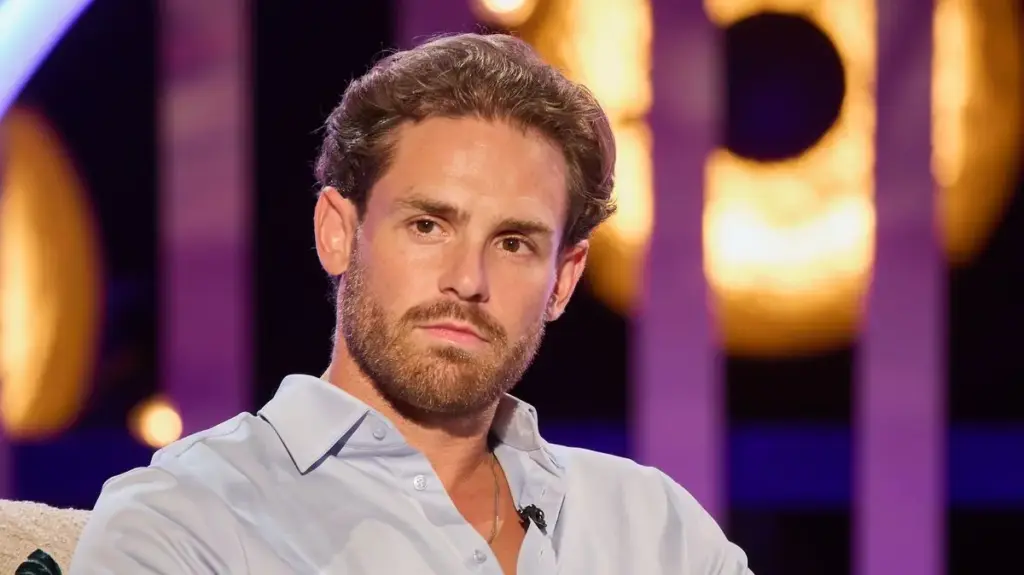
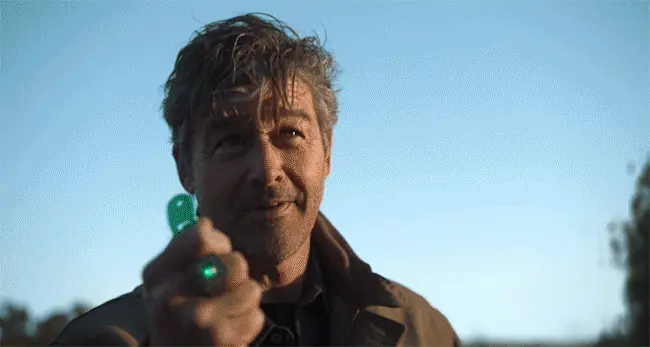
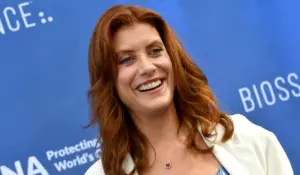
Yet, as the third season of Love Is Blind UK recently concluded its dramatic run, the discourse surrounding the cast evolved far beyond the typical post-finale post-mortems regarding broken engagements and incompatible values. Instead, a peculiar, highly specific visual comparison captured the imagination of the internet: viewers became utterly convinced that 33-year-old entrepreneur and season three contestant Ryan Roberts bears an uncanny, unmistakable resemblance to none other than Harry Potter icon and global film star Emma Watson.
What began as a quiet, lingering sense of déjà vu among late-night bingers quickly metastasized into a widespread Reddit phenomenon and social media debate. While Ryan sports facial hair and a masculine, contemporary aesthetic entirely distinct from the British actress famed for portraying Hermione Granger, thousands of fans insist that the structural geometry of his face—specifically his eyes and micro-expressions—mirrors the award-winning actress.
This unexpected cultural crossover highlights the fascinating psychology of facial recognition in the streaming era, proving that audiences scrutinize the physical appearances of unscripted television personalities with the analytical rigor of forensic investigators. Beyond the viral meme, however, Ryan’s time on Love Is Blind UK was defined by high-stakes romance, logistical incompatibility, a sudden altar-side split, and a definitive closing of the chapter on his relationship with fellow contestant Cuba Riggs.
This investigative feature examines the anatomy of the viral resemblance, the chaotic trajectory of Ryan and Cuba’s romance, the broader implications of reality television fame, and where the central figures stand in the wake of the show’s explosive reunion special.
Detailed Chronology: From Pods to Podiums and the Birth of a Viral Theory
To fully understand how a reality television entrepreneur became mentally tethered to a Hogwarts alumnus in the public consciousness, one must trace the chronological arc of Love Is Blind UK Season 3 and its subsequent digital afterlife.
Phase One: The Pods and Initial Connections
When the latest iteration of the Netflix dating juggernaut premiered, audiences were introduced to 30 hopeful singletons stepping into the pods in search of authentic, looks-blind emotional validation. Among them was Ryan Roberts, a 33-year-old business entrepreneur whose charismatic demeanor and polished conversational style quickly distinguished him among the male cohort.
It did not take long for Ryan to zero in on Cuba Riggs, a dynamic fitness instructor whose spiritual outlook and physical discipline created an immediate bridge between the two participants. Through the opaque glass partitions of the pods, Ryan and Cuba forged a rapid, intense bond. Their early conversations, characterized by mutual vulnerability and shared life aspirations, made them fan-favorites early in the season. Viewers watched as the pair seemingly checked off every box required to build a stable, long-term foundation.
Phase Two: The Real World and the Cracking Facade
As is standard for the Love Is Blind format, the real test of any pod-born romance begins the moment the couples step out into the physical world, merging their distinct lifestyles, living arrangements, and demanding careers. For Ryan and Cuba, this transition proved insurmountable.
Ryan’s professional life as an entrepreneur frequently required him to travel abroad for extended periods. This constant transcontinental movement collided sharply with the domestic rhythms Cuba sought to establish as they attempted to build their life together. The physical distance exposed underlying communication gaps, turning what was once effortless pod chemistry into a grinding sequence of logistical frustrations. Despite attempting to push through the hurdles, the tension culminated in a dramatic climax: Ryan made the unilateral, unexpected decision to break off the engagement before they ever reached the altar, shattering Cuba’s expectations and leaving the audience stunned.
Phase Three: The Reunion and the Epiphany
Months after the cameras stopped rolling, the cast reconvened for the mandatory Love Is Blind UK reunion special—a high-stakes forum designed to clear the air, dissect past grievances, and offer fans closure. It was during the broadcast of these early episodes and the subsequent reunion that the internet’s collective subconscious finally diagnosed a nagging psychological itch.
As viewers studied Ryan’s facial expressions, reactions, and close-up camera angles, the missing puzzle piece fell into place. He looked remarkably, hauntingly like Emma Watson. A Reddit user posted the initial revelation, writing: "Whole time watching the show I knew Ryan reminded me of someone and it wasn’t until the reunion that it clicked lol."
What followed was an avalanche of digital validation. Social media feeds flooded with side-by-side comparisons, animated GIF threads, and humorous dissections of Ryan’s facial architecture, cementing a pop culture meme that would outlive the narrative drama of the show itself.
Supporting Context & Metrics: The Anatomy of a Doppelgänger Phenomenon
To appreciate why the Ryan Roberts-Emma Watson comparison generated such intense traction across Reddit, X (formerly Twitter), and Instagram, one must analyze the cognitive science of facial recognition alongside the metrics of modern streaming engagement.
The Cognitive Science of Facial Recognition
Psychologists note that human beings are hardwired for pareidolia and facial matching—the evolutionary urge to identify patterns, faces, and familiar traits in unfamiliar stimuli. When millions of viewers watch a multi-episode reality television series, their brains relentlessly search for reference points to categorize and understand new personalities.
In Ryan’s case, the resemblance to Emma Watson bypasses superficial gender markers like hair length and facial hair. Instead, fans pointed to specific anatomical commonalities:
The Orbital Region: Multiple viewers specifically cited Ryan’s eyes and gaze as the primary trigger for the Hermione Granger comparison.
Micro-Expressions: The way Ryan tilts his head during emotional disclosures, combined with specific smiling patterns and emotional cadence, closely mirrored public interview footage of the British actress.
Symmetry and Proportion: The upper-third facial structure exhibits structural parallels that trick the viewer’s brain into processing a familial or identical link, despite the obvious differences in biological sex and secondary sexual characteristics.
Social Media Amplification and Metrics
The digital footprint of the comparison scaled rapidly following the reunion broadcast. Within 48 hours of the episode airing:
Reddit Engagement: Threads dedicated to the "Ryan and Emma Watson phenomenon" generated hundreds of upvotes and sprawling comment chains, with users sharing variations of "This scratched an itch that I couldn’t put my finger on for the whole show."
Polarization: The debate was notably divisive. While a vocal contingent of the fanbase championed the theory—with one user exclaiming, "I said, ‘I’m getting Hermione vibes from Ryan!!’ He didn’t see it at all"—an equally passionate faction rejected the premise entirely, responding with incredulous comments such as "I don’t see it" and "uhhh what."
Streaming Synergy: The viral chatter directly fueled increased engagement with Netflix’s platform metrics, coinciding with promotional bundles (such as Sky Stream partnerships offering free Netflix subscriptions) that drove legacy viewers back into the streaming ecosystem to verify the claims themselves.
Official Statements and Cast Updates: Where Are They Now?
With the dust of the social experiment firmly settled, both Ryan Roberts and Cuba Riggs have addressed the public, clarifying their current emotional states, their reflections on the experiment, and their absolute refusal to revisit their failed romance.
Ryan Roberts Closes the Book
Speaking candidly to Netflix’s digital companion publication Tudum, Ryan made it abundantly clear that any hopes fans harbored for a reconciliation with Cuba were entirely unfounded. The entrepreneur emphasized that time away from the intense bubble of production provided vital clarity.
"I figured out in my body how I’m actually feeling now that the dust is settled," Ryan shared with Tudum. "It’s not something I want to move forward with."
Ryan’s statement put an immediate end to speculation that post-show reflection might bridge the gap caused by his demanding international travel schedule. For him, the experiment served its purpose as a high-intensity crucible of self-discovery, but his romantic ties to the franchise are permanently severed.
Cuba Riggs Embraces a New Philosophy
Meanwhile, fitness instructor Cuba used the reunion platform to reflect on the hard-learned lessons of the pods and the harsh reality of the real world. While she remains open to the concept of love, she noted that her approach to dating has fundamentally shifted.
"Just because they tick off the spiritual box doesn’t mean they’re my person," Cuba reflected during the reunion special, summarizing the core takeaway of her turbulent journey on Love Is Blind UK.
Cuba confirmed to viewers that while she is not actively hunting for a partner, she approaches the dating market with renewed wisdom, emotional resilience, and a sharper eye for authentic compatibility beyond shared spiritual or conversational interests.
Future Outlook: The Ever-Evolving Legacy of Reality TV Culture
As the third season of Love Is Blind UK recedes into the archives of streaming history, the legacy left by contestants like Ryan Roberts offers a fascinating glimpse into the future of unscripted television culture.
Gone are the days when a reality show contestant was judged purely on their narrative arc within an edited 60-minute episode. Today’s digital audiences consume television through a multi-screen, hyper-connected lens. They dissect casting choices, analyze facial expressions frame-by-frame, and construct sprawling digital ecosystems of memes, fan theories, and celebrity doppelgängers within hours of a broadcast.
Whether Ryan Roberts embraces his status as the internet’s unofficial male doppelgänger of Emma Watson or quietly returns to his entrepreneurial endeavors away from the public eye, his time on Netflix has secured a unique footnote in reality television lore. He proved that in the grand experiment of love being blind, the audience’s vision is remarkably sharp—capable of connecting a dating show entrepreneur in London to a Hogwarts wizard with just a single, telling glance.
Season 3 of Love Is Blind UK is available to stream in its entirety exclusively on Netflix.