Executive Overview
The intersection of art, politics, and industry economics has long been a volatile battleground, but few contemporary cases illustrate this friction as clearly as the career trajectory of Academy Award-winning actress Susan Sarandon. Speaking candidly at a press conference during the 83rd Venice International Film Festival on September 6, 2026, the 79-year-old screen icon revealed that she remains effectively blacklisted by major Hollywood studios. Her professional marginalization stems directly from her vocal, sustained advocacy for Palestinian rights and her public critique of United States foreign policy in the Middle East—a stance that initially cost her representation with the United Talent Agency (UTA) in late 2023.
Sarandon’s remarks, delivered alongside her creative team and co-stars for the psychological drama The Echo Chamber, brought a decades-old debate regarding political speech in the American entertainment industry back into sharp focus. While major studio executives continue to distance themselves from the veteran actress, Sarandon maintains that international audiences and independent filmmakers have welcomed her with open arms. Her experience underscores a broader, systemic shift within Hollywood—one where prominent voices advocating for marginalized geopolitical populations often find themselves navigating closed doors in domestic boardrooms, even as global cultural landscapes evolve.
Detailed Chronology: From Rally Stage to Studio Exile
The sequence of events leading to Sarandon’s current industry standing spans several years of escalating tensions between her personal activism and corporate risk management within major talent agencies and film studios.
November 2023: The Turning Point in New York City
The foundational catalyst for Sarandon’s current professional friction occurred in the autumn of 2023. On November 17, 2023, amidst escalating conflict in the Middle East following the events of October 7, Sarandon participated in a prominent pro-Palestinian rally and march in Union Square, New York City. Taking the stage, she called publicly for an immediate Israel-Gaza ceasefire.
During her remarks, Sarandon addressed the climate of fear experienced by various communities, stating: "There are a lot of people afraid of being Jewish at this time and are getting a taste of what it feels like to be a Muslim in this country."

The statement immediately drew severe backlash across media platforms, igniting fierce debates regarding historical context, the framing of persecution, and the responsibilities of public figures navigating complex international conflicts.
December 2023: Agency Dismissal and Public Apology
Less than a month after her appearance at the Union Square rally, the professional consequences materialized swiftly. In early December 2023, United Talent Agency (UTA) officially dropped Sarandon as a client, severing a long-standing business relationship.
Faced with mounting industry pressure and widespread criticism, Sarandon issued a formal public apology later that month. She acknowledged that her phrasing had been a "terrible mistake," clarifying that her words had inadvertently implied that Jewish communities had not historically faced profound persecution—a notion she flatly rejected.
"My phrasing was a terrible mistake, as it implies that until recently Jews have been strangers to persecution, when the opposite is true," Sarandon stated in her apology. "I intend to continue my commitment to peace, truth, justice, and compassion for all people. I hope that we can meet with love and willingness to engage in dialogue, especially with those with whom we disagree."
2024–2025: Pivot to European Production and Domestic Activism
Following her dismissal by UTA and the informal cooling of her domestic employment prospects, Sarandon shifted her focus. Rather than retreating from public life, she pivoted toward independent European cinema, stage productions, and international artistic collaborations. She successfully secured new representation in the United Kingdom and Italy, allowing her career to continue outside the traditional studio system.

Concurrently, Sarandon remained a fixture in domestic political movements. In June 2025, she joined fellow actor Mark Ruffalo and thousands of demonstrators in New York City to participate in rallies opposing Donald Trump’s presidency, aligning herself once more with prominent left-wing political coalitions.
September 2026: Venice Film Festival Revelations
The issue returned to the global stage during the 83rd Venice International Film Festival, where Sarandon appeared in competition for The Echo Chamber, a film based on the final screenplay by legendary Italian filmmaker Bernardo Bertolucci. During a packed press conference on Sunday, September 6, 2026, Sarandon was asked about the durability of the professional fallout from her 2023 remarks.
"In terms of the power structure, I’ve still had movies taken away recently because there are agencies that are telling people not to hire me still," Sarandon told Metro and other international outlets. "But that’s the power structure. I think within the people, certainly internationally, I feel welcome. So it depends. If it’s a major studio, I think there is, not just with me but with other people, that have been told that that is impossible."
Her remarks were met with an immediate, spontaneous 20-second burst of applause from the press corps and attendees inside the venue.
Supporting Context & Metrics: Career Legacy and Political Shifts
To fully understand the weight of Sarandon’s current predicament, one must evaluate both her towering cinematic legacy and her decades-long history of public activism, alongside her evolving observations regarding American political awareness.

Five Decades of Cinematic Excellence
Susan Sarandon’s career is anchored by critical acclaim and commercial resonance spanning more than fifty years. Her filmography includes legendary titles that have shaped modern American cinema:
- The Rocky Horror Picture Show (1975): Established her cult status and pop-culture endurance.
- The Witches of Eastwick (1987): Cemented her presence in mainstream Hollywood blockbusters.
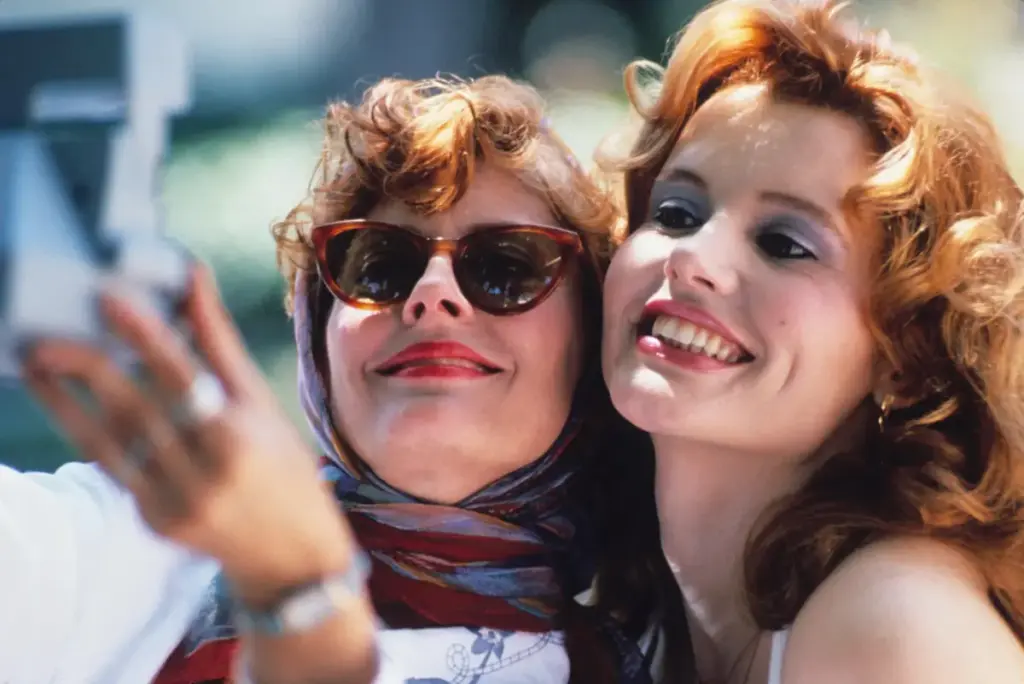
- Thelma & Louise (1991): Directed by Ridley Scott and co-starring Geena Davis, this cultural touchstone earned her an Academy Award nomination and solidified her status as a cinematic icon.
- Dead Man Walking (1995): Earned her the Academy Award for Best Actress in a Leading Role.
Across her career, Sarandon has accumulated an Oscar, a BAFTA, an Actor Award, and nominations for seven Emmys and ten Grammys. Her professional stature makes her exclusion from major studio slates all the more stark, highlighting a cultural divide between artistic merit and corporate risk aversion.
A History of Anti-War and Left-Wing Advocacy
Sarandon’s political engagement is far from a recent phenomenon. Her anti-war advocacy dates back decades, most notably marked by her prominent opposition to the 2003 United States-led invasion of Iraq. Alongside her then-partner, actor Tim Robbins, Sarandon utilized high-profile public platforms, television appearances, and peaceful protests to voice dissent against government military actions—a period that also generated minor professional friction, though not to the extent of the totalizing studio blacklists reported today.
Shifting Narratives on U.S. Foreign Policy
At the Venice press conference, Sarandon expanded beyond her personal employment status to reflect on how public perception within the United States regarding the Middle East has transformed over the past three years.
"I think that the narrative has completely changed in terms of the historical relevance of Palestine and the ties of Zionists with America and our politics—that has been a major revelation for people, how much money the United States gives to Israel," Sarandon noted. She pointed to a growing public awareness of institutional ties, financial aid packages, and security integrations, suggesting that while studio executives have maintained conservative boundaries, the grassroots American public has become increasingly informed and polarized regarding foreign interventions.

Official Statements and Industry Reactions
The atmosphere surrounding Sarandon’s participation in The Echo Chamber highlighted the complex dynamics between daring independent directors and cautious studio accountants.
The Echo Chamber, directed by Andrea Pallaoro and co-starring Alicia Vikander and Luca Marinelli, tells the story of an aging singer named Ava (played by Sarandon) coaxed back into the recording studio by a producer battling opioid addiction. The project itself exists outside the standard Hollywood studio machinery, relying on European financing and artistic independence.
During the press conference, Sarandon explicitly credited director Andrea Pallaoro for his courage in casting her despite industry whispers:
"In terms of being able to do this film, I thank Andrea for that because he didn’t listen to the warnings."
Pallaoro and her co-stars sat alongside her as she detailed the ongoing pressure exerted by major agency networks. While major agencies have reportedly cautioned producers against attaching Sarandon to commercially backed domestic productions, independent European arthouse cinema has provided a viable, albeit geographically distinct, sanctuary for her talents.

"There are still some people in Hollywood who have not relaxed their feelings towards me," Sarandon reflected. "But I’ve found my family, I’ve found my people, and I’m okay."
Future Outlook: Navigating the Divide Between Hollywood and Independent Cinema
As The Echo Chamber prepares for its Italian theatrical release on September 10, 2026, following its high-profile premiere at the Venice Film Festival, Susan Sarandon’s professional roadmap points firmly away from traditional Los Angeles studio lots and toward international co-productions.
The controversy surrounding her career illuminates ongoing systemic challenges within the modern entertainment industry:
- The Corporate Risk Threshold: Major Hollywood studios, heavily reliant on global box office receipts, international financing syndicates, and corporate conglomerates, remain hyper-sensitive to geopolitical controversies. Talent agencies often act as proactive gatekeepers, mitigating perceived brand risks by steering casting directors away from outspoken political figures.
- The Rise of Alternative Financing: As demonstrated by The Echo Chamber, European art-house cinema and independent production networks offer a functional counterweight to domestic blacklists, allowing veteran actors with specialized global appeal to bypass traditional studio constraints.
- The Polarization of Public Speech: Sarandon’s case serves as a permanent case study regarding the limits of free expression for high-net-worth public intellectuals and artists in the United States, illustrating that while public sentiment may shift over time, corporate institutional memory regarding political activism remains long and unforgiving.
For Sarandon, the path forward appears clear. While the gates of major Hollywood studios may remain closed for the foreseeable future, her enduring global popularity, combined with the unwavering support of boundary-pushing independent auteurs, ensures that her cinematic journey will continue on her own terms.