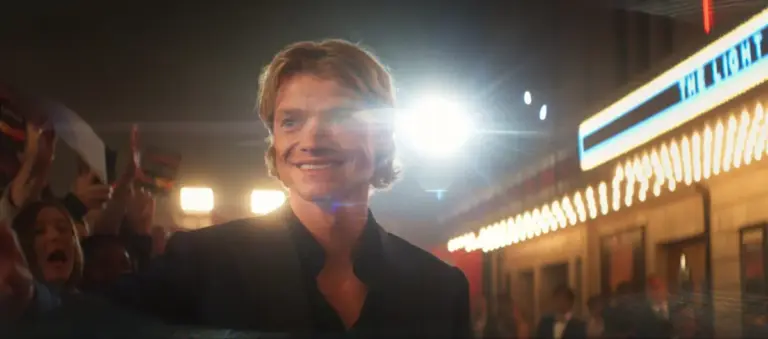
Acclaimed South Korean auteur Lee Chang-dong returns with Possible Love, a profoundly rich, structurally intricate, and emotionally resonant cinematic achievement that marks his first feature since his 2018 masterwork, Burning. Premiering to widespread critical acclaim, Possible Love explores the chasms of South Korean classism, labor exploitation, and domestic psychology. The film centers on two marriages positioned on opposite sides of a vast social divide, quietly unspooling a narrative where surprise and inevitability exist in absolute balance.
Led by powerhouse performances from Jeon Do-yeon as Mi-ok and Sul Kyung-gu as her embattled husband, Ho-seok, the film deftly weaves together the micro-tragedies of corporate downsizing with the macro-anxieties of modern economic disenfranchisement. Cinematographer Kim Ji-yong anchors the film’s poetic ambiguities in a coolly discreet visual reality, while Lee’s peerless direction ensures that every scene pulses with a sense of urgent psychological realism.
Serving as the second installment in a planned 10-film, multi-auteur project remaking Krzysztof Kieślowski and Krzysztof Piesiewicz’s legendary Dekalog series—following Asghar Farhadi’s Parallel Tales—Possible Love takes its thematic inspiration from the Tenth Commandment: "Thou shalt not covet." Rather than adapting the original narrative of Dekalog 10, Lee uses the biblical commandment as a springboard to examine how desire, envy, and class aspirations shape the inner lives of individuals systematically left behind by the engines of modern capitalism.
Detailed Chronology: The Unraveling of the Social Fabric
The Aftermath of the Strike
The narrative of Possible Love is rooted in the gritty, prosaic reality of a provincial industrial town. Ho-seok, a heavy-industry worker and veteran of the local factory—the region’s largest employer—finds himself thrust into sudden unemployment following a bitter, ultimately unsuccessful labor strike. The fallout from the plant’s sweeping layoffs extends far beyond economic hardship, triggering a grim wave of suicides among the working-class community.
During a funeral for a fallen colleague, a drunken altercation erupts as Ho-seok is ostracized by former strike comrades who view his continued presence with suspicion. The escalating tension is expertly defused by Mi-ok, whose sharp emotional intelligence consistently steers her family away from total collapse. However, this public display of working-class trauma catches the attention of Ye-ji (Cho Yeo-jeong), a wealthy, ambitious aspiring filmmaker shooting a documentary on the human toll of corporate restructuring.
Entering the Bourgeois Orbit
While Ho-seok flatly rejects Ye-ji’s overtures, viewing her camera as an intrusive capitalist lens, Mi-ok agrees to become an interview subject. What begins as a transactional documentary relationship slowly morphs into an unequal, fragile friendship. This social crossover draws Mi-ok into the upper-class orbit of Ye-ji’s charismatic husband, Sang-woo (Zo In-sung).
Sang-woo initially treats the working-class interlopers with a polite, casual patronage. However, his disinterest turns into a toxic fascination when Mi-ok, emboldened by wine, displays a tipsily flirtatious curiosity toward him. Dinners between the two couples eventually migrate to Sang-woo and Ye-ji’s sprawling coastal estate—a hyper-controlled bourgeois paradise featuring a winding forest path, a private beach, and a guard hut managed by Min-sik (Kang Chang-gwon), Sang-woo’s childhood friend turned deferential factotum.
As the foursome navigate this web of uneasy, easily ruptured alliances, Mi-ok and Ho-seok’s young son, Cheol (Jung Seop), watches quietly from the periphery. A taciturn boy who hides in closets and lurks near doorways to eavesdrop on adult conversations, Cheol symbolizes the silent generation inheriting the psychological scars of their parents’ class warfare.
Supporting Context & Metrics: The Architecture of Class and Desire
The Thematic Legacy of Dekalog 10
Possible Love carries the brief, poignant dedication: "In memory of Dekalog 10 by Krzysztof Kieślowski and Krzysztof Piesiewicz." While Kieślowski’s original episode functioned as a drolly comic cautionary tale about stamp-collecting brothers consumed by greed, Lee Chang-dong reinterprets the Tenth Commandment through an existential lens.
In Lee’s universe, covetousness is explored primarily as a "thought crime"—an internal state of mind rather than a physical transgression like theft or murder. The film poses a fundamental question: How can a filmmaker make internal, invisible action endlessly compelling? Lee achieves this by mapping the physical geography of desire against the stark realities of socioeconomic immobility.
Socioeconomic Metrics in Modern South Korea
To fully appreciate the gravity of Possible Love, one must examine the socio-economic backdrop that informs Lee’s narrative. South Korea’s rapid post-war modernization has left deep scars regarding income inequality, labor rights, and generational poverty. According to recent labor organization data:
- Household Debt-to-GDP Ratios: South Korea consistently ranks among the highest in household debt among OECD nations, driven heavily by soaring urban and coastal real estate prices.
- Corporate Restructuring Impacts: Industrial towns reliant on single-employer manufacturing hubs face severe localized depressions when restructuring occurs, mirroring the fictional factory town in the film.
- Class Mobility Stagnation: Sociological studies indicate a growing perception among South Korea’s younger demographics that traditional avenues of upward social mobility (such as elite education and corporate employment) are increasingly out of reach, fueling the exact psychological despair depicted in characters like Ho-seok and Cheol.
Official Statements & Critical Reception
The premiere of Possible Love has generated widespread critical analysis regarding Lee Chang-dong’s distinct directorial philosophy and his stance on the ethics of representation.
In press notes accompanying the film’s festival run, Lee addressed the recurring ethical dilemma of artists extracting trauma from marginalized communities for aesthetic or commercial gain:
"There is a constant temptation for those who document human suffering to shape the realities of others according to their own artistic will. To capture a life truthfully, one must relinquish the desire to control it. Characters must be allowed to breathe, to retain their strange, unknowable idiosyncrasies, much like real human beings who defy easy narrative categorization."
Lead actress Jeon Do-yeon spoke about the intricate psychological layers required to bring Mi-ok to life:
"Mi-ok is not simply a victim of poverty, nor is she a social climber. She possesses a remarkable capacity for radical optimism. Even when confronted with the stark contrast between her own shabby reality and the gleaming world of the bourgeoisie, she maintains an internal dignity that refuses to be diminished by her material standing."
Cinematographer Kim Ji-yong discussed the visual strategy employed to contrast the industrial gloom of the working-class district with the blinding opulence of the coastal villa:
"We wanted the camera to feel like an invisible observer—discreet, cool, and non-judgmental. The wealth in Sang-woo’s world is shot in a way that feels almost blinding, hard to look at directly, whereas the spaces inhabited by Mi-ok and Ho-seok are grounded in heavy, tactile shadows that reflect the weight of their unresolved grief."
Future Outlook: The Legacy of Possible Love in Contemporary Cinema
As the second chapter in the ambitious global anthology reimagining Kieślowski’s Dekalog, Possible Love elevates the artistic bar for the entire project. By refusing to offer pat resolutions or moralizing verdicts, Lee Chang-dong delivers a work that lingers in the consciousness long after the credits roll.
The film’s exploration of non-covetousness offers a paradoxical form of liberation. As Mi-ok and Ho-seok eventually find solace sitting on a brand-new marble bench—built during happier times—the film suggests that there is profound comfort in accepting the limits of one’s reality. Understanding that you have no need to envy the illusory outlines of another person’s life is presented not as a defeat, but as a hard-won emotional victory.
Looking forward, Possible Love is projected to become a major contender on the international festival circuit and awards season. Its nuanced critique of labor exploitation, combined with its poetic meditation on human desire, cements Lee Chang-dong’s status as one of the definitive cinematic voices of the 21st century.
Ultimately, the film circles back to the resonant metaphor introduced in Lee’s previous work, Burning: the zen koan about the tangerine. In Possible Love, the characters learn that no matter how convincing the pretense of wealth, status, or unattainable dreams might be, sometimes true peace comes from remembering a simple, grounding truth—that, regardless of how brightly it glows in the imagination, there is no tangerine at all.