Executive Overview
The digital creator economy is undergoing a structural paradigm shift. For years, digital content creators have relied on a fragmented matrix of third-party platforms to monetize their audiences, capture subscriber revenue, distribute exclusive content, and foster community engagement. A creator might use Patreon for subscriptions, Discord for community spaces, X or Instagram for top-of-funnel reach, and various payment processors for tipping and merchandise. This decentralization often creates friction, diluting both the creator’s profit margins and the community’s overall engagement.
Enter Bijan Tehrani and Ed Craven. The Australian entrepreneurial duo, best known for co-founding the massively successful virtual casino and betting platform Stake.com in 2017 before disrupting the live-streaming landscape with Kick, are once again expanding their digital footprint. Their latest venture, Club, has officially emerged from its beta testing phase, accompanied by a dedicated mobile application and a staggering multimillion-dollar infrastructure backing.
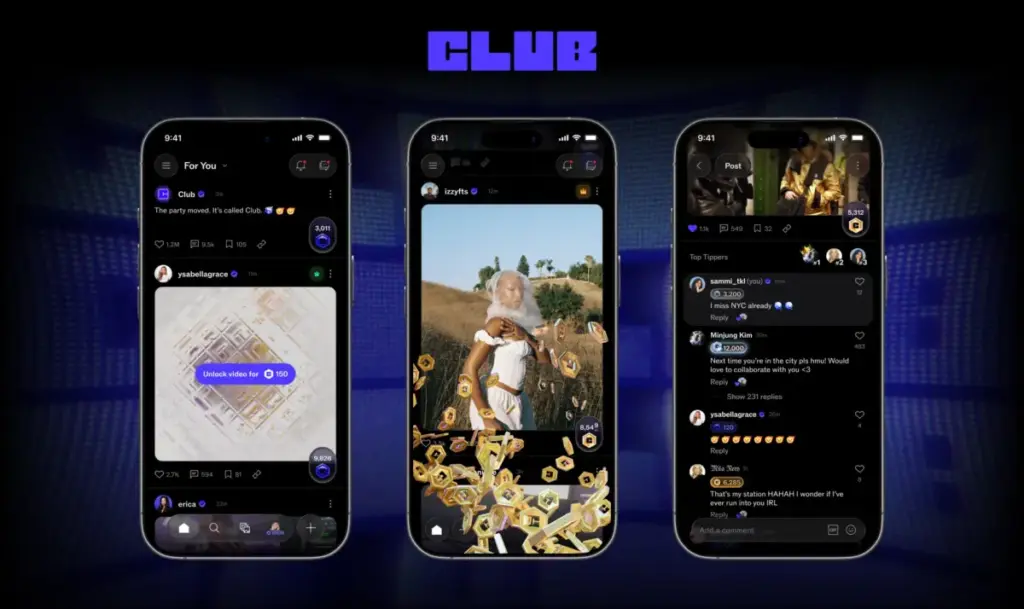
Positioned as an all-in-one ecosystem for superfan communities, Club seeks to consolidate revenue streams—such as subscriptions, direct tipping, paywalled content, and an integrated in-app currency known as Club Cash—into a single, highly optimized space. To lead this ambitious endeavor, Tehrani and Craven enlisted Henrik Pohlmann to serve as Chief Executive Officer.
True to the founders’ track record of high-stakes, high-impact rollouts, the official public debut of Club is underscored by a historic financial investment: the acquisition of the prime digital real estate Club.com for a staggering $10 million. This acquisition instantly ranks the transaction among the most expensive domain name sales in internet history, signaling to the creator economy that the backers of Kick and Stake are playing for keeps.
This comprehensive report examines the trajectory of Club, analyzing its product architecture, beta performance metrics, strategic positioning within a crowded creator-economy landscape, and the broader business philosophy of its founders as they pivot toward sustainable monetization and hyper-focused community spaces.
Detailed Chronology: From iGaming Giants to Creator Economy Innovators
1. The Genesis: Stake.com and the Foundations of Digital Scale (2017)
Long before they set their sights on live streaming or creator monetization, Bijan Tehrani and Ed Craven established themselves as heavyweights in the online entertainment and iGaming sectors. In 2017, the duo launched Stake.com, a crypto-centric online casino and sports betting platform. Stake grew at a meteoric pace, largely due to innovative marketing strategies, strategic high-profile sponsorships (including deals with superstar Drake and major sports organizations), and a deep understanding of digital community dynamics.
The success of Stake provided Tehrani and Craven with immense financial capital and, crucially, a profound understanding of how to build, scale, and monetize high-engagement digital platforms operating at global volumes.
2. The Streaming Disruption: The Birth of Kick (2022–2023)
Armed with the capital and technical expertise acquired through Stake.com, Tehrani and Craven turned their attention to the live-streaming sector, which had long been dominated by Amazon-owned Twitch. In late 2022, they launched Kick, a live-streaming platform designed to directly challenge legacy giants by offering significantly more favorable revenue splits for creators (famously a 95/5 split in favor of the streamer) and more permissive content policies.
To fast-track Kick’s visibility and market penetration, the platform’s leadership orchestrated a series of blockbuster, headline-grabbing talent acquisitions. In mid-2023, Kick made waves across the digital landscape by securing exclusive or non-exclusive streaming contracts with some of the internet’s most recognizable and high-traffic creators, including xQc (Felix Lengyel) and Amouranth (Kouranaृती/Stephanie Amouranth). These splashy signings instantly legitimized Kick as a viable alternative to Twitch and YouTube Gaming, driving millions of users to the platform within its first year of operation.
3. Pivoting to Sustainability: The Evolution of Kick (2024–2026)
As Kick matured from an aggressive upstart into an established streaming ecosystem, its operational strategy necessarily evolved. While headline-grabbing talent acquisitions were essential for initial customer acquisition, long-term viability required robust, scalable monetization frameworks.
Leadership steadily shifted its focus toward sustainable revenue generation and ecosystem maturity. This strategic pivot was punctuated by the rollout of platform-wide monetization features, such as the introduction of mid-roll advertisements designed to generate steady revenue streams for both the platform and its top-tier creators. This operational evolution laid the crucial groundwork for Tehrani and Craven’s next logical business expansion: addressing the fragmented nature of creator-fan monetization outside of live-streaming broadcasts.
4. The Beta Phase of Club (Early 2026)
Building on the infrastructural learnings of Kick, Tehrani, Craven, and newly appointed CEO Henrik Pohlmann quietly initiated the beta phase of Club earlier this year. Conceived as a dedicated home for superfan communities centered around individual creators, Club was engineered to eliminate the friction creators face when juggling multiple platforms for community engagement and monetization.
During its restricted beta run, Club quietly accumulated 100,000 active members across its nascent ecosystem. Impressively, individual creator spaces demonstrated immediate product-market fit: a single creator’s Club page managed to amass more than 30,000 dedicated members during this testing window alone. These promising metrics validated the core thesis that creators and their superfans were actively seeking a consolidated, frictionless digital environment.
5. The Official Public Launch and the $10 Million Domain (Late 2026)
With the beta metrics pointing decisively toward success, Club officially emerged from its testing phase, accompanied by the rollout of its dedicated mobile application and a suite of advanced social features, most notably a new feature dubbed Communities.
To cement the platform’s authority and market presence, the founders executed one of the most expensive domain acquisitions in web history, paying $10 million to secure the Club.com URL. This bold move mirrored the aggressive, attention-grabbing tactics seen during Kick’s early days, immediately elevating Club’s brand awareness on a global scale and setting the stage for its next phase of enterprise growth.
Supporting Context & Metrics: Analyzing the Architecture of Club
The Product Ecosystem: Features and Monetization
In the modern creator economy, monetization fragmentation is public enemy number one. Creators are forced to stitch together a patchwork of tools to capture the financial value of their communities. Club is explicitly designed to solve this systemic issue by unifying multiple revenue streams under a single, cohesive user interface.
- Integrated Subscriptions: Creators can establish recurring revenue tiers that offer fans exclusive perks, badges, and early access to content, mirroring the subscription models found on Twitch, YouTube, and Patreon, but tailored specifically for hyper-engaged superfan communities.
- Direct Tipping and Micro-Transactions: Fans can show direct financial appreciation to their favorite creators through streamlined, low-friction tipping mechanisms embedded directly into the platform interface.
- Paywalled Content: Club enables creators to gate specific digital assets, posts, videos, or behind-the-scenes updates behind a paywall, ensuring that premium content is monetized directly without relying solely on ad-revenue models.
- Club Cash: To facilitate seamless in-app transactions, the platform introduced Club Cash, a proprietary in-app digital currency. This mechanism reduces transaction friction, encourages micro-spending, and streamlines payouts for international audiences.
- Communities Feature: Alongside the official app launch, Club introduced a dedicated "Communities" feature, injecting deeper social elements that allow fans to interact not just with the creator, but with one another, fostering organic brand loyalty and community retention.
Comparative Market Positioning
The creator platform ecosystem is undeniably crowded. Giants like Patreon, Substack, Discord, and Fanfix all compete for a share of creator wallets and fan engagement. However, Club enters the market with distinct competitive advantages:
- Deep Pockets and Venture Backing: Backed by the financial success of Stake.com and Kick, Club has access to substantial liquidity. This financial muscle enables high-profile marketing campaigns, aggressive talent onboarding, and robust technical infrastructure from day one.
- Executive Experience: Led by CEO Henrik Pohlmann alongside seasoned internet entrepreneurs Tehrani and Craven, Club’s leadership team understands the operational mechanics of scaling high-volume digital communities.
- Holistic Consolidation: Unlike Discord (which excels at community chat but requires external tools for monetization) or Patreon (which excels at subscriptions but lacks native, real-time social community spaces), Club integrates real-time social interaction directly with multi-tiered monetization.
Official Statements and Leadership Vision
The official launch of Club and its corresponding mobile application was accompanied by clear statements from its leadership regarding the platform’s core mission and long-term philosophy.
In an official corporate statement, co-founder Bijan Tehrani emphasized the ethical and economic imperative of supporting modern digital creators:
"Creators deserve a platform that supports their success. With the official launch of Club and its app, it’s now easier than ever for creators to build lasting businesses around the audiences they’ve worked hard to grow."
This sentiment echoes the foundational philosophy that drove the creation of Kick. While Kick sought to disrupt live streaming by shifting power and revenue splits back into the hands of broadcasters, Club aims to democratize and streamline community-based micro-economies.
CEO Henrik Pohlmann, who has overseen the platform’s transition from its initial beta phase to its commercial public release, highlighted the importance of user experience and scalable infrastructure during the rollout:
"Our beta metrics—surpassing 100,000 total members and seeing single creator pages scale past 30,000 members—proved that the demand for a unified superfan ecosystem is immense. By launching the Club.com domain and our dedicated app, we are providing both creators and fans with the elite digital infrastructure they require to thrive in an increasingly competitive creator economy."
Future Outlook: What Lies Ahead for Club and the Creator Economy
As Club steps out of its beta shadow and invites the broader digital world through its heavily funded Club.com portal, several critical questions remain regarding its trajectory over the coming years:
1. Attracting Top-Tier Talent
Just as Kick relied on marquee signings like xQc and Amouranth to establish instant credibility, Club will likely leverage its financial resources and industry connections to onboard prominent creators across gaming, lifestyle, education, and entertainment. The ultimate test will not be how many creators sign up for initial promotional runs, but how many choose to migrate their core, paying communities to Club on a permanent basis.
2. Balancing Monetization and User Experience
Aggressive monetization features—while lucrative for creators and the platform—can sometimes alienate casual fans if not balanced carefully. Club’s integration of Club Cash, paywalls, and subscriptions will need to be meticulously managed by creators to ensure that community spaces remain welcoming and engaging rather than feeling like relentless sales funnels.
3. Regulatory and Compliance Scalability
Given the backgrounds of Tehrani and Craven in the iGaming sector via Stake.com, regulatory scrutiny and compliance infrastructure will be closely monitored by industry observers. While Club is an entertainment and community platform rather than a gambling site, operating global payment rails, in-app currencies, and creator payouts across multiple international jurisdictions requires rigorous legal, financial, and data-protection compliance.
Conclusion
The launch of Club represents a calculated, high-capital assault on the status quo of creator monetization. By bringing together subscriptions, tipping, paywalled content, proprietary in-app currency, and robust social communities under a single digital roof, Bijan Tehrani, Ed Craven, and Henrik Pohlmann have constructed a formidable contender in the creator-economy arena. Backed by a $10 million digital storefront and proven scaling playbooks, Club is poised to redefine how superfan communities interact, engage, and generate sustainable economic value in the years to come.