Executive Overview
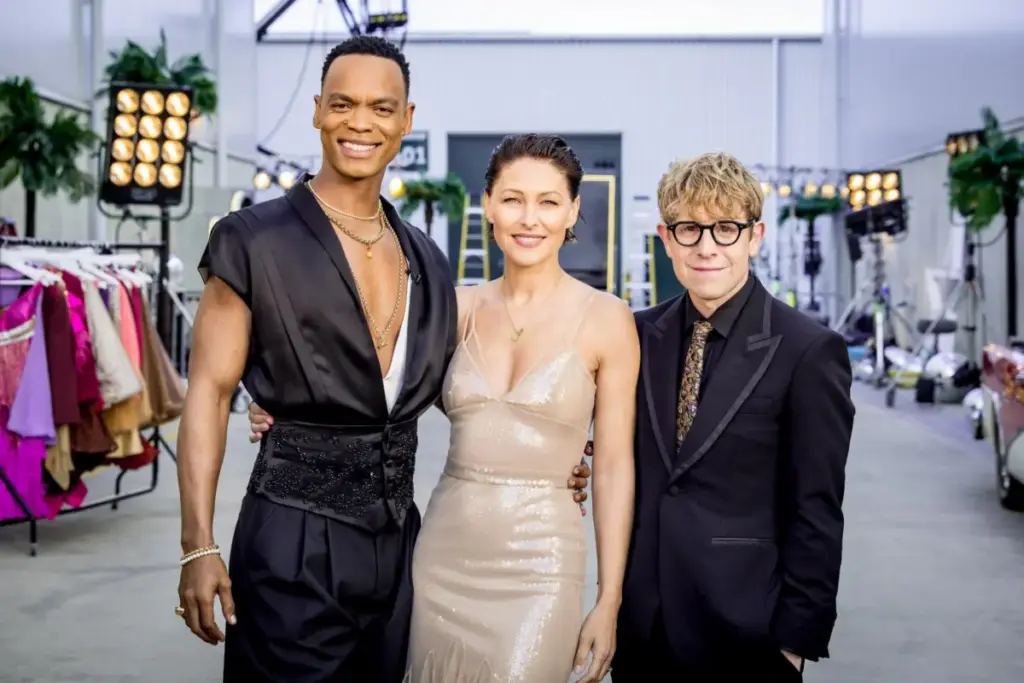
The high-stakes world of Saturday night television rarely experiences a pivot as sharp or as swift as the one witnessed on Strictly Come Dancing this past weekend. Following a tumultuous season premiere that was widely lambwed by critics and social media commentators alike, the newly minted presenting trio of Emma Willis, Josh Widdicombe, and professional-dancer-turned-host Johannes Radebe faced a barrage of public skepticism. The first live show was plagued by technical hiccups, mistimed cues, and palpable nerves, leading many armchair critics to question whether the BBC had made a catastrophic error in completely overhauling its presenting roster.
However, television is an unforgiving medium that rewards resilience. Just seven days later, during the eagerly anticipated Movie Week, the narrative underwent a seismic shift. Johannes Radebe, in particular, transitioned from looking overwhelmed and out of his depth to emerging as the undisputed star of the evening. Bolstered by tireless rehearsals and subtle yet critical production adjustments, Radebe proved why the show’s producers took a calculated gamble on him.
Concurrently, the broader competition delivered stunning redemption arcs on the dancefloor, shifting public perception and setting the stage for what promises to be one of the most unpredictable series in Strictly history. This report examines the turnaround of the new hosting team, the mechanics of live-television production under pressure, and the standout performances that defined a watershed weekend for the flagship BBC series.
Detailed Chronology: From Opening Night Chaos to Movie Week Redemption
The Week One Fallout: A Baptism of Fire
When the curtains rose on the opening live show of the latest Strictly Come Dancing series, expectations were stratospheric. The introduction of an entirely new presenting line-up—replacing established fan favorites—was always destined to draw intense scrutiny. Yet, the sheer volume of negative feedback caught many by surprise.
From the outset, the pacing felt disjointed. For Radebe, the challenges were painfully acute. As the host stationed upstairs in the contestants’ holding area—traditionally known as the "Clauditorium" during Claudia Winkleman’s tenure—Radebe was tasked with catching couples immediately after they descended from the judges’ dais. During the premiere, timing proved to be his greatest adversary. Couples were frequently only halfway up the stairs when Radebe was forced to reel off voting details for a vote that wasn’t even active that week. This logistical mismatch broke the natural rhythm of the post-dance interviews, leaving interactions feeling flat, rushed, and occasionally bewildering for viewers at home.

Comparisons were inevitably drawn to past presenting missteps in British television history, with some observers likening the situation to Olly Murs’ rocky tenure on The X Factor—a gifted entertainer handed the opportunity of a lifetime before being fully seasoned in the art of live television anchoring. As a wave of harsh commentary swept across platforms like X (formerly Twitter), the pressure on Radebe, Willis, and Widdicombe reached a boiling point.
Movie Week Transformation: Finding the Flow
Fast forward seven days, and the atmosphere inside the studio was entirely transformed. Whatever transpired behind the scenes during the intervening week—whether through intensive coaching, strategic script doctoring, or sleepless nights in rehearsal—paid immediate dividends.
Radebe returned to screens looking assured, deeply empathetic, and entirely in command of his environment. Rather than rushing through dialogue to meet rigid broadcast markers, he allowed moments to breathe. His genuine emotional investment in the contestants’ journeys shone through, occasionally bringing him to the brink of tears as he celebrated stellar routines.
Downstairs, Emma Willis continued to anchor the production with the polished professionalism that has defined her decorated television career, while Josh Widdicombe settled comfortably into his comedic role, absorbing the lessons of week one and finding a natural rapport with the studio audience. By the time the credits rolled on Movie Week, the initial panic had dissipated, replaced by a growing consensus that the new presenting team was finally finding its collective stride.
Supporting Context & Metrics: The Anatomy of Live Television Pressure
Presenting a live television show viewed by millions is an underrated discipline. It requires a delicate balance of timing, active listening, unscripted adaptability, and charisma. While viewers often assume that charm alone is sufficient, the mechanics of live broadcasting demand rigorous technical precision.

The Unique Burden of the Upstairs Host
Among the three presenters, Radebe arguably shoulders the most complex logistical burden. While Willis and Widdicombe operate primarily downstairs with the safety net of an autocue and structured cues, Radebe must operate in an entirely reactive space:
- Unscripted Evaluations: He is required to process and respond immediately to subjective, often unpredictable critiques delivered seconds earlier by the judging panel.
- Emotional Transition: He must pivot instantly from technical dance critiques to celebratory or consoling human interactions with the celebrity contestants.
- Spatial Isolation: Unlike co-hosts who can bounce off one another physically, the upstairs host operates largely as a solo act, holding the fort independently while managing live broadcast timing.
The successful navigation of these hurdles during Movie Week highlights not only Radebe’s personal growth but also the responsiveness of the production team behind the scenes. By adjusting the pacing and giving the upstairs segment room to unfold naturally, the BBC successfully mitigated the structural flaws that hampered the premiere.
Official Statements and Industry Reaction
The rapid rehabilitation of the presenting team has sparked widespread discussion across the British media landscape, drawing commentary from television insiders, former colleagues, and supportive family members.
Industry analysts have noted that the BBC’s decision to recruit a professional dancer with limited mainstream presenting experience—passing over safer, more traditional broadcasting veterans—was a bold gamble that inherently carried early friction. However, supporters argue that Radebe’s intimate understanding of the contestants’ psychological and physical vulnerabilities gives him a unique authenticity that cannot be manufactured in a traditional presenting academy.
Amidst the online noise, high-profile figures rallied around the team. Notably, Willis’s husband publicly defended her role as a natural fit for the franchise, while viewers increasingly used social media to champion Radebe’s warmth and dedication. The overarching sentiment within television circles is one of cautious optimism: while challenges remain as the competition intensifies, the foundation laid during Movie Week demonstrates that the new era of Strictly is capable of winning over its toughest critics.

The Dancefloor Surprises: Form, Favorites, and Early Exits
While the presenting drama dominated early-week headlines, Movie Week itself delivered a series of electrifying performances that fundamentally shifted the competitive landscape of the series.
Dramatic Turnarounds
- Shaun Wright-Phillips: Having endured a bruising premiere with a clunky Cha Cha that landed him squarely at the bottom of the leaderboard, the former England footballer stunned viewers and judges alike with an energetic, joyous Jive. By completely letting go of his inhibitions, Wright-Phillips executed a dramatic stylistic pivot that likely secured his safety for another week.
- Sarah Storey: The legendary Paralympian delivered a masterclass in improvement, rocketing up the leaderboard with a remarkable nine-point increase following a Mary Poppins-themed Charleston that many likened to West End standards.
- Cach Mercer: The Love Island winner cemented his status as a front-runner to watch, laying down formidable technical foundations with a sultry Samba that showcased natural rhythm and performance flair.
Danger Zones
Conversely, not all contestants found their footing. Celebrity hairdresser Chris Appleton struggled to convince either the judges or the voting public during his second outing, placing him precariously close to the bottom of the standings. Speculation is mounting that he may face the dreaded dance-off first, even as veteran actors like Melanie Walters lean heavily into established fandom support to stay afloat.
Future Outlook
As Strictly Come Dancing marches deeper into its autumn schedule, the stakes will only continue to rise. For the presenting trio, the trials of Week One now serve as a valuable baptism by fire. Having weathered the initial storm of public scrutiny, Emma Willis, Josh Widdicombe, and Johannes Radebe have proven their capacity to adapt under extreme pressure.
For Radebe specifically, the journey from a hesitant debutant to the beating heart of Movie Week demonstrates a rare resilience. While filling the shoes of Claudia Winkleman remains one of the most formidable challenges in modern British television, Radebe’s Movie Week triumph suggests he is more than up to the task. As the competition winnow down the field of celebrity dancers, the chemistry between the hosts and the contestants will be vital in maintaining the warmth, joy, and escapism that has made Strictly a national institution for over two decades.