Executive Overview
Two decades after cheating death in a catastrophic 300mph jet-car accident, television presenter Richard Hammond has opened up about the lingering psychological and physiological toll of his injuries. Best known for his tenure anchoring high-octane motoring institutions alongside longtime collaborators Jeremy Clarkson and James May, Hammond remains one of British broadcasting’s most recognizable faces. Yet, away from the roaring engines and glossy production values of Top Gear and The Grand Tour, the 56-year-old star lives with a private, persistent anxiety: the fear that the catastrophic trauma he sustained to his brain in 2006 will eventually precipitate early-onset dementia.
In recent candid interviews, Hammond articulated the daily psychological friction of living with a reconstructed brain. Simple lapses in memory—such as misplacing household keys—no longer register as ordinary human forgetfulness. Instead, they trigger a profound, visceral dread regarding his neurological future.
This deep-seated fear exists in stark contrast to his adrenaline-fueled public persona. Having officially stepped away from motoring television in 2024, Hammond has embraced a radically different chapter of life. Supported by his partner, Keira Glen, he has pivoted toward endurance sports, wild swimming, and a quieter lifestyle in the countryside. However, the legacy of his high-speed career continues to ripple through his family, particularly as his daughter, Izzy, carves out her own path as a competitive motorsport driver.
This article explores the lasting physical and mental consequences of Hammond’s historic crash, the broader medical context surrounding traumatic brain injuries and cognitive decline, and his transition into a new phase of life away from the world’s fastest tracks.
Detailed Chronology: From the Edge of Eternity to the Present Day
September 2006: The 300mph Catastrophe
The defining moment of Richard Hammond’s life occurred on September 20, 2006, at the former RAF Elvington airbase near York. While filming a segment for the BBC’s immensely popular Top Gear, Hammond was piloting a Vampire jet-powered dragster designed to break British land speed records.

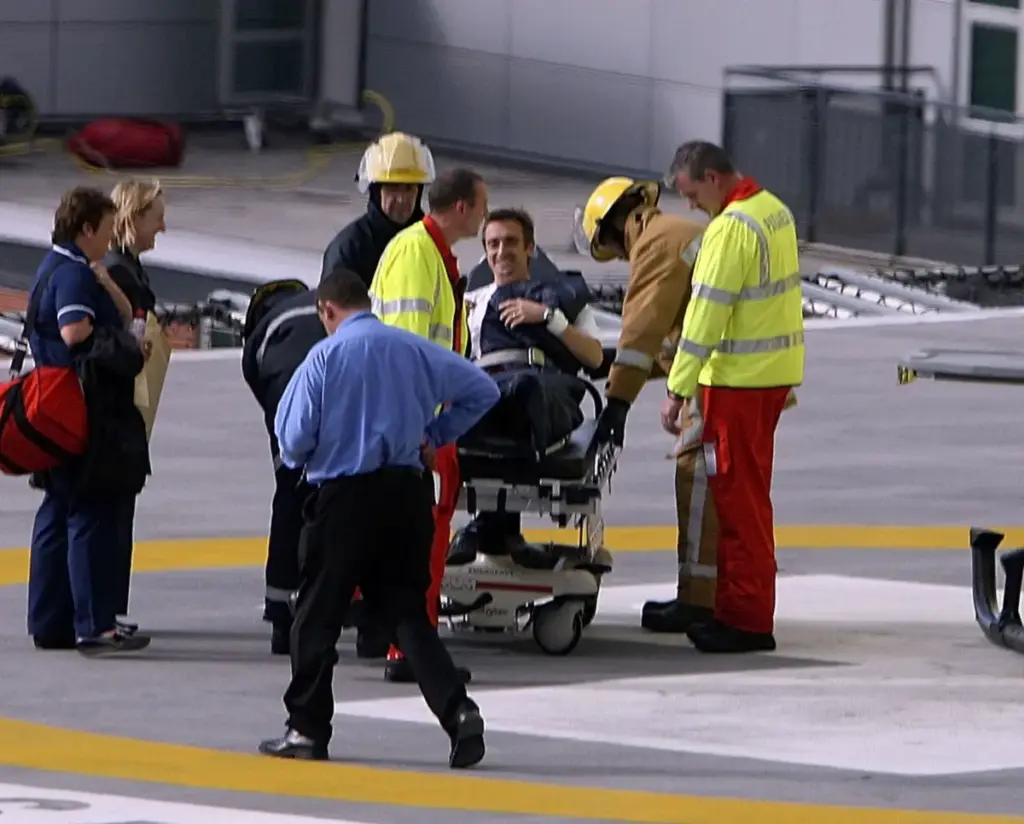
Traveling at approximately 288 to 300 miles per hour, the front-right tire of the vehicle failed catastrophically. The dragster veered off the runway, deploying its parachute too late, and cartwheeled violently across the grass. Hammond suffered a severe traumatic brain injury (TBI), leading to a two-week coma and extensive physical trauma. The incident brought production of Top Gear to a temporary halt and shocked millions of viewers worldwide who tuned in week after week to watch the trio’s perilous antics.
Recovery and the Psychological Aftermath
Hammond’s physical recovery was miraculous, allowing him to return to television screens by early 2007. However, the physical healing masked a complex and protracted psychological battle. In the months and years following the accident, Hammond openly discussed battling depression, emotional volatility, memory loss, and personality changes—common sequelae of diffuse axonal injury and severe concussive trauma.
While his public-facing recovery was celebrated as a triumphant return to form, the internal adjustment was far more challenging. Friends and family noted shifts in his processing speed, short-term memory retention, and stress thresholds.
2017: The Grand Tour Incident
Just as viewers and colleagues hoped Hammond’s high-risk days were behind him, disaster struck again. While filming an episode of Amazon Prime’s The Grand Tour in St. Gallen, Switzerland, in June 2017, Hammond crashed a Rimac Concept One electric supercar. The vehicle plummeted down a hill and burst into flames.
Miraculously, Hammond managed to crawl out of the wreckage moments before the car was engulfed in fire. The crash left him with a fractured knee, which required immediate surgery involving 13 pins and a metal support plate. This second major impact added further structural strain to a body already battered by years of stunt driving and vehicular mishaps.

2024–2026: Stepping Down and Turning a New Page
By 2024, the original trio of Hammond, Clarkson, and May officially wrapped their tenure on The Grand Tour, handing over the reins to a fresh lineup of presenters: Francis Bourgeois, James Engelsman, and Thomas Holland. For Hammond, stepping away from car-based entertainment marked a definitive end to an era defined by speed, combustion, and recurrent peril.
Today, at age 56, Hammond’s primary challenges are no longer dodging mechanical failures on remote tracks, but managing the quiet, unyielding echoes of his past choices.
Supporting Context & Metrics: The Intersection of TBI and Cognitive Decline
The Medical Reality of High-Impact Traumatic Brain Injuries
Neurologists and neuropsychologists have long studied the correlation between severe traumatic brain injuries (TBIs) and the accelerated onset of neurodegenerative conditions, including chronic traumatic encephalopathy (CTE) and various forms of dementia.
When a brain undergoes a violent deceleration event—such as Hammond’s 300mph crash—the delicate neural pathways and axons shear within the skull. This diffuse axonal injury can cause immediate cell death and initiate chronic neuroinflammatory processes.
According to clinical research:

- Individuals who sustain a severe TBI face a significantly elevated statistical risk of developing dementia later in life compared to the general population.
- The latency period between a traumatic brain injury and the clinical manifestation of cognitive decline can span decades, often aligning with the natural aging process in mid-to-late life (ages 50 through 70).
- Everyday cognitive slips—such as misplacing objects or struggling with word retrieval—are common features of normal aging, but for TBI survivors, they frequently trigger heightened anxiety regarding the integrity of their neural networks.
Hammond’s Personal Reflections on Neurodegeneration
In his recent interview with The Sunday Times, Hammond articulated this existential dread with striking vulnerability:
"Brain-wise, yeah. I mean, I worry. I’m scared. Of course. That was a big impact. Will it lead to onset of dementia? I don’t know. Every time I lose my keys, and I do lose things, I think: ‘Oh Christ, is that brain injury, or is that just I’m 56? And we all do it’ … So yeah, there is a legacy from that. I will carry that forever."
This psychological burden is shared by many high-performance athletes, combat veterans, and stunt professionals who have absorbed major concussive forces throughout their careers. The uncertainty of whether minor cognitive lapses represent normal physiological aging or the early stages of a progressive neurodegenerative disorder remains an invisible heavy weight.
Official Statements and Family Dynamics
The Next Generation: Izzy Hammond and Formula E
The motoring gene—and the appetite for high-speed competition—has manifested strongly in the next generation of the Hammond family. Richard’s daughter, Izzy Hammond, has carved out her own niche in the motorsport world, competing as a driver in Formula E-adjacent fields and high-performance racing series.
Earlier this year, Izzy made headlines when she walked away completely unscathed from a severe racing accident. While the incident made public news, it forced Richard Hammond to confront a delicate parental paradox: balancing his instinctive paternal protection with his respect for his daughter’s professional autonomy.

Speaking exclusively to Metro, Hammond reflected on watching his daughter enter the perilous world of professional motorsport:
"I’m a father, like any other father. I don’t want to see my little girl hurt, but I don’t want to hold her back from opportunities that present themselves. She’s carving her own career, so I can sit back and watch her do that and only applaud."
Passing the Torch on Screen
The transition away from high-speed television production also brought a sense of closure to Hammond’s professional life. Alongside Clarkson and May, Hammond appeared in cameo roles during the debut season of the revamped Grand Tour, formally passing the baton to the new generation of hosts: Francis Bourgeois, James Engelsman, and Thomas Holland.
While the new presenting trio has spoken candidly about the pressure of stepping into the shoes of three broadcasting titans, Hammond has expressed immense relief at being able to watch from the sidelines rather than from inside a burning or rolling chassis.
Future Outlook: Embracing a Healthier, Grounded Chapter
Lifestyle Overhaul and Endurance Sports
In the wake of stepping down from grueling television schedules and embracing a more sustainable lifestyle, Hammond has actively sought out new physical outlets. Encouraged by his partner, Keira Glen, Hammond has traded the race track for running trails and open water.

"I’ve taken up more serious running, and I’m going to have a go at a small triathlon next year. Which means I’ve had to take up wild swimming," Hammond revealed to The Sunday Times.
Despite initial reservations about the freezing temperatures of open-water swimming, he confessed that he has grown to "absolutely love it." This rigorous physical conditioning serves a dual purpose: maintaining cardiovascular health and providing mental clarity as he navigates the uncertainties of middle age.
Looking Ahead
Richard Hammond’s journey over the past twenty years is a testament to resilience, the limits of human endurance, and the enduring psychological costs of a life lived at maximum velocity. While the ghosts of Elvington and St. Gallen still linger in the form of physical titanium plates in his knee and daily cognitive anxieties, Hammond is successfully redefining his narrative.
No longer defined solely by the smoking wreckage of supercars or the roar of jet engines, he stands today as a survivor, a supportive father watching his daughter blaze her own trail, and a man quietly and bravely reclaiming his future one stride—and one cold swim—at a time.