Paris Fashion Week has always been the ultimate crucible of high fashion—a high-stakes arena where heritage maisons, avant-garde disruptors, and emerging design talents converge to write the next chapter of sartorial history. As the global fashion ecosystem descends upon the French capital for the Spring 2027 collections, the traditional rhythm of the Parisian calendar has undergone a striking evolution.
While the historic French heavyweights—including Dior, Chanel, and Saint Laurent—continue to anchor the week with their institutional gravity, the opening night script has been rewritten. In a bold departure from recent seasons, the boundary-pushing label Vaquera stepped back from its customary role of closing out the inaugural evening. Instead, the mantle was seized by Matières Fécales, who delivered a seismic opening statement by shutting down the historic Plaza de la République for a visceral, unforgettable Spring 2027 spectacle.
Beyond the shifting schedules and dramatic outdoor takeovers, the Spring 2027 season is defined by high-profile creative succession. Industry insiders and critics alike are keeping their eyes peeled for highly anticipated inaugural debuts at legacy houses such as Courrèges and Carven, signaling a generational handover that promises to redefine contemporary luxury.
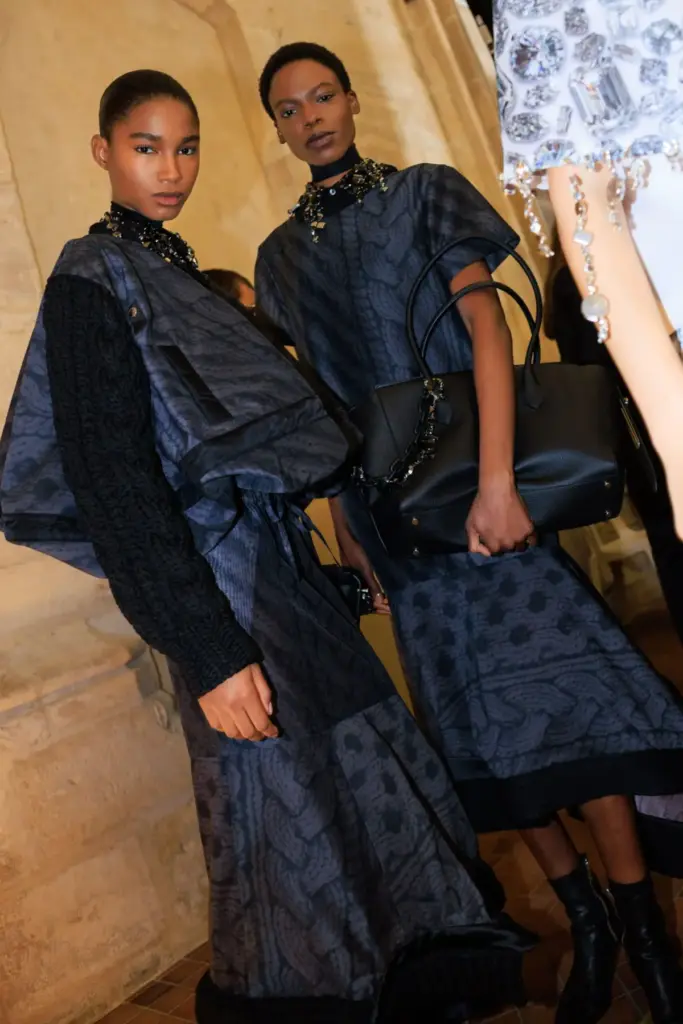
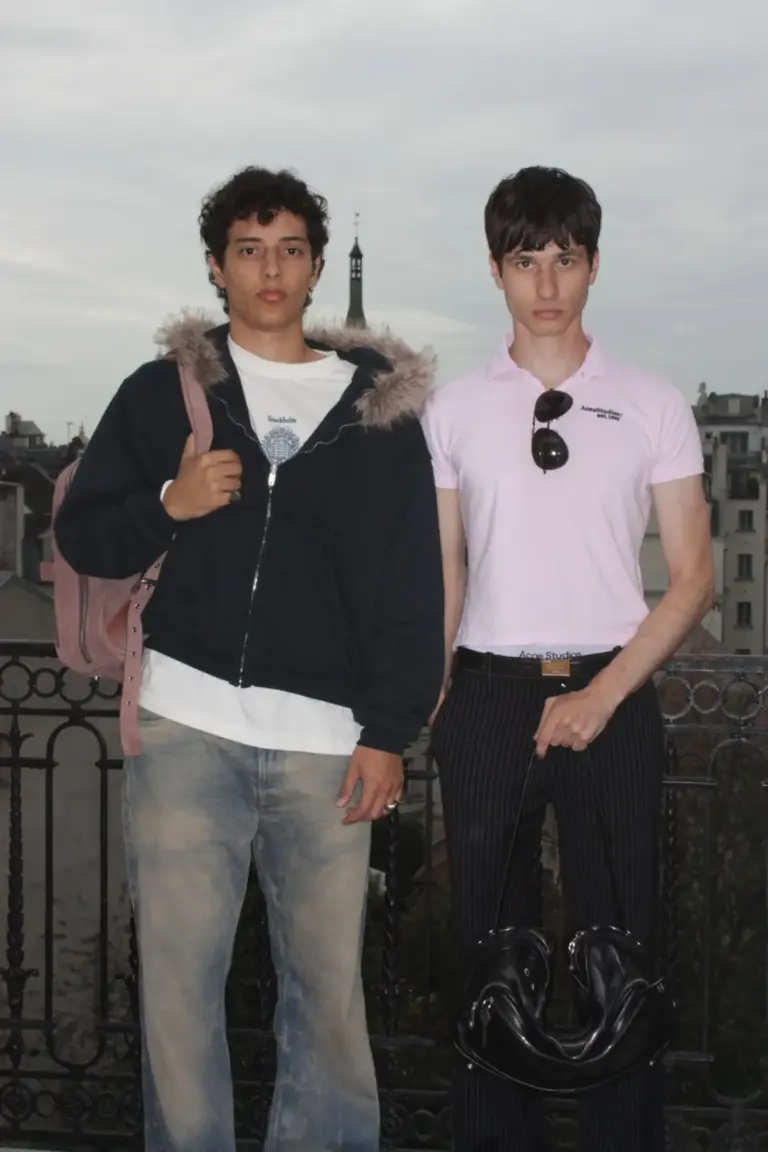
Yet, as any seasoned fashion observer knows, the true pulse of Paris Fashion Week beats far away from the blinding lights of the front row and the pristine geometry of the runways. It is found in the frantic, highly caffeinated, and deeply collaborative ecosystem of the backstage area. Through the lens of acclaimed photographer Acielle Tanbetova of StyleDuMonde, we embark on an exclusive, immersive journey behind the scenes of the Spring 2027 shows. This is an intimate look at the meticulous craftsmanship, raw emotion, and artistic chaos that precede the ephemeral perfection of the runway.
Detailed Chronology: A Shift in the Parisian Paradigm
Opening Night Reinvented: Matières Fécales Takes the Plaza
The traditional choreography of Paris Fashion Week has long relied on a familiar cadence. Editors, buyers, and influencers jet in from New York, London, and Milan, settling into a rigorous routine of back-to-back presentations. Traditionally, the first night offered a playful yet structured introduction to the week’s creative output.
For Spring 2027, that convention was shattered. Matières Fécales—known for their grotesque, beautiful, and hyper-surrealist approach to body modification and apparel—commandeered the Plaza de la République. By transforming one of Paris’s most iconic civic squares into an open-air runway, the brand signaled that the boundaries between public space and haute couture are increasingly porous. The dusk-lit presentation utilized the urban grit of the plaza to frame ethereal, otherworldly silhouettes, proving that the new guard of designers is uninterested in the sanitized isolation of traditional white-cube venues.
The Institutional Anchors and Generational Shifts
While radical outdoor takeovers set an energetic tone, the heart of the week remains anchored by French fashion royalty. Houses like Dior and Chanel continue to command immense logistical footprints, drawing global crowds and setting commercial and aesthetic trajectories for the upcoming seasons.
However, the real narrative tension of Paris Fashion Week Spring 2027 lies in its transitional moments. The industry is currently experiencing a massive wave of creative director appointments, and the Spring 2027 calendar marks the proving ground for several incoming designers. At houses like Courrèges and Carven, the pressure is palpable. These brands are navigating the delicate tightrope of honoring archival heritage while injecting the radical contemporary perspectives demanded by a new generation of consumers. The debut collections from these houses are not merely runway shows; they are ideological statements about where fashion is heading in the latter half of the decade.
The Backstage Tapestry: Captured by Acielle Tanbetova
While the runway offers a polished, twenty-minute distillation of a designer’s vision, the backstage area serves as the chaotic, beating heart where that vision is brought to life. Acielle Tanbetova’s photographic chronicle of the Spring 2027 backstage moments captures the raw, unfiltered reality of fashion week.
From the hushed concentration of lead makeup artists sketching final looks on exhausted models, to the frantic last-minute tailoring of a couture gown using nothing more than safety pins and raw instinct, these images peel back the curtain on the immense labor required to create magic. We see models laughing over shared takeout containers, designers clutching swatches with trembling hands, and hair stylists executing intricate, sculptural architecture on hair in mere minutes. It is a portrait of collective endeavor—a reminder that a fashion show is ultimately a communal triumph born from intense pressure.
Supporting Context & Metrics: The Anatomy of Modern Paris Fashion Week
The Economic and Cultural Footprint
Paris Fashion Week is not merely a cultural touchstone; it is an economic juggernaut. According to economic impact studies conducted by the Fédération de la Haute Couture et de la Mode (FHCM), a single Paris Fashion Week season injects hundreds of millions of euros into the local economy, spanning hospitality, gastronomy, transport, and event production.
Global Audience Reach: Digital streaming and social media integration ensure that physical attendance is merely the tip of the iceberg. Spring 2027 shows are projected to generate billions of digital impressions across platforms like Instagram, TikTok, and YouTube, with real-time engagement spiking during key debuts.
The Sustainability Imperative: As the fashion industry faces heightened scrutiny regarding its environmental impact, the Spring 2027 season highlights a growing commitment to sustainable production. From Matières Fécales utilizing public urban spaces rather than constructing resource-heavy temporary sets, to maisons sourcing deadstock fabrics and implementing zero-waste backstage protocols, ecological consciousness is steadily weaving its way into the fabric of the event.
The Rise of Experiential Presentation Models
The decision by Matières Fécales to close down the Plaza de la République underscores a broader structural shift in how collections are presented. Traditional indoor runway shows are increasingly being complemented—or replaced—by immersive, public-facing theatrical experiences. Brands recognize that in an era of digital saturation, consumer engagement requires spatial disruption. By embedding shows directly into the urban fabric of Paris, designers are democratizing access to high fashion, allowing everyday Parisians and global fans to bear witness to the creative process as it unfolds in real time.
Official Statements and Industry Perspectives
The evolving landscape of Paris Fashion Week has elicited strong reactions from industry leaders, designers, and cultural commentators alike.
On the Shift in Scheduling and Public Integration:
"Fashion has outgrown the four walls of the traditional salon," notes a senior curator at the Palais Galliera. "When a brand like Matières Fécales takes over the Plaza de la République, they aren’t just staging a show; they are engaging in a dialogue with the city itself. It forces fashion to reckon with the public sphere, disrupting everyday life in a way that feels electric and necessary."
On the Pressure of Creative Debuts:
Reflecting on the wave of new creative director appointments at legacy houses such as Courrèges and Carven, a leading luxury retail buyer observes:
"The Spring 2027 season is a litmus test for the industry’s appetite for renewal. Consumers are looking for authenticity and a clear point of view. The incoming designers don’t just have to sell clothes—they have to re-articulate the soul of historical houses for a consumer base that values both heritage and disruptive modernity."
On the Intimacy of the Backstage Lens:
Photographer Acielle Tanbetova reflects on the philosophy guiding her backstage documentation:
"On the runway, everything is calculated, rehearsed, and absolute. But backstage, you see the humanity of fashion. You see the sweat, the anxiety, the friendships, and the sheer artistic dedication. That is where the real story lives. My goal is to freeze those fleeting, authentic moments before the heavy machinery of the show takes over."
Future Outlook: Where Haute Couture Meets the Next Decade
As Paris Fashion Week Spring 2027 progresses toward its grand finale, the ripples of this season’s disruptions will be felt across the global retail and design landscapes for months to come. The successful execution of radical outdoor presentations signals that the future of fashion staging will likely prioritize spatial innovation and public engagement over insular exclusivity.
Furthermore, the performance of the newly appointed creative directors at houses like Courrèges and Carven will establish a crucial benchmark for luxury conglomerates and independent labels alike. As these brands navigate the fine line between commercial viability and artistic radicalism, the lessons learned on the Paris runways will dictate the macro trends of tomorrow.
Ultimately, the Spring 2027 season reminds us why Paris remains the undisputed capital of the fashion world. It is a city capable of honoring centuries of tailoring tradition while fearlessly embracing the avant-garde chaos of the future. Through the meticulous eye of creators, photographers, and visionary designers, Paris Fashion Week continues to prove that style is not merely about what we wear, but how we imagine the world anew.