Executive Overview
In the fast-paced world of daytime television, plot twists are a daily occurrence, but real-life drama can occasionally eclipse fiction. Chris McKenna, widely recognized by daytime drama enthusiasts for his compelling portrayal of Jack Brennan on ABC’s long-running soap opera General Hospital, has found himself navigating a severe medical crisis. Just weeks after his character was dramatically written off the canvas in a shocking storyline, McKenna announced he would undergo emergency surgery to remove an aggressive cyst that had silently "eaten away" a portion of his jawbone.
The discovery, which came completely by chance following routine dental work for a broken crown, underscores the unpredictable nature of health and the vital importance of preventative medical and dental screenings. While facing a grueling recovery period that includes a significant bone graft, McKenna has maintained his trademark optimism. This unexpected health hurdle compounds a transitional period for the actor, arriving hot on the heels of his sudden departure from General Hospital in September 2025.
This comprehensive report examines the timeline of McKenna’s medical diagnosis, the mechanics of the dental anomaly he faces, the professional backdrop of his recent exit from daytime television, and the broader implications for his career and recovery.
Detailed Chronology: From a Broken Tooth to Emergency Surgery
The sequence of events leading up to McKenna’s oral surgery began with an ordinary, albeit inconvenient, household mishap: a broken dental crown. For most individuals, repairing a broken crown is a routine, if tedious, dental appointment that involves impression-taking, temporary fittings, and a subsequent permanent placement. However, for McKenna, this minor dental repair served as a literal lifesaver.
The Incidental Finding
During the initial diagnostic procedures required to fix the broken crown, McKenna’s dental team captured standard X-ray imaging of his oral cavity. While reviewing the films to ensure no deeper root damage existed beneath the compromised tooth, the dental professionals noticed an anomalous dark spot deep within the bone structure of the jaw.
Further diagnostic evaluation revealed that the spot was not merely a localized infection or a minor cavity, but a rapidly developing cyst. Over time, the growth had expanded aggressively, silently eroding the surrounding bone tissue.
The Announcement on Social Media
Taking to X (formerly Twitter) on October 5, McKenna shared the alarming news with his followers, pairing his announcement with an image of the dental X-ray.
"I had a broken crown fixed last month and they discovered a spot on my x-ray," McKenna wrote to his followers. "Turns out I need emergency surgery in the morning to remove a cyst that has eaten away my jawbone and have a bone graft."
Rather than projecting panic, the actor pivoted quickly to dark humor and gratitude. In a subsequent post, he quipped about the upcoming pharmaceutical regimen accompanying his post-operative care: "The good news is I’m gonna be on pain meds for weeks and my tweets might be hilarious."
When a concerned fan suggested that he also look into removing his impacted wisdom teeth—citing risks associated with cyst formation and potential malignancy—McKenna offered insight into his dental team’s conservative approach. He replied that his surgeon had explicitly advised against prophylactic wisdom tooth extraction given their specific anatomical positioning, noting that intervention was unwarranted unless active symptoms or complications arose.
Supporting Context & Medical Mechanics: Understanding Jaw Cysts and Bone Grafts
To fully grasp the severity of what Chris McKenna is experiencing, it is helpful to examine the medical science behind odontogenic cysts, bone resorption, and the restorative procedures required to rebuild a compromised jaw.
What is an Odontogenic Cyst?
Cysts within the jawbones—frequently referred to in dental medicine as odontogenic cysts—are pathological pockets filled with fluid, semi-solid material, or gas. They often develop slowly over months or years without presenting external symptoms. Because they grow silently within the cancellous bone of the mandible or maxilla, they are rarely detected until they reach an advanced stage or are discovered incidentally via panoramic X-rays or dental computed tomography (CBCT) scans, precisely as happened in McKenna’s case.
As these cysts expand, they exert constant hydrostatic pressure on the surrounding bone tissue. This pressure triggers osteoclastic activity—a process where specialized cells break down bone tissue. Over time, this results in the structural degradation or "eating away" of the bone, leaving the jaw fragile and susceptible to pathological fractures if left untreated.
The Surgical Interventions: Enucleation and Bone Grafting
Treating an aggressive jaw cyst typically requires a multi-step surgical procedure:

- Enucleation and Curettage: The surgeon must carefully access the lesion, completely remove the cyst lining (the epithelial sac) to prevent recurrence, and clean the surrounding bony cavity.
- Bone Grafting: Because the cyst has consumed a measurable volume of the jawbone, a void remains. To restore structural integrity and encourage natural bone regeneration, the surgeon fills the cavity with a bone graft material. This can consist of autografts (bone harvested from another part of the patient’s body), allografts (processed human donor bone), xenografts (animal-derived bone minerals), or synthetic alloplasts. Over several months, the body uses this scaffold to lay down new, living bone tissue through a process known as osseointegration and osteoinduction.
- Healing and Recovery: The recovery timeline for a significant jawbone graft varies depending on the size of the defect. Patients typically experience localized swelling, dietary restrictions (shifting from soft foods to a gradual return to normal chewing), and a strict regimen of antibiotics and pain management.
McKenna’s acknowledgment that "this is gonna hurt" is entirely consistent with the clinical realities of procedures involving bone harvesting and structural grafting in the sensitive oral-maxillofacial region.
Professional Backdrop: The Sudden Exit from General Hospital
McKenna’s medical crisis unfolds against the backdrop of a major professional transition. Earlier in the year, the actor had captured the attention of daytime television audiences with his compelling work on ABC’s General Hospital.
The Rise and Fall of Jack Brennan
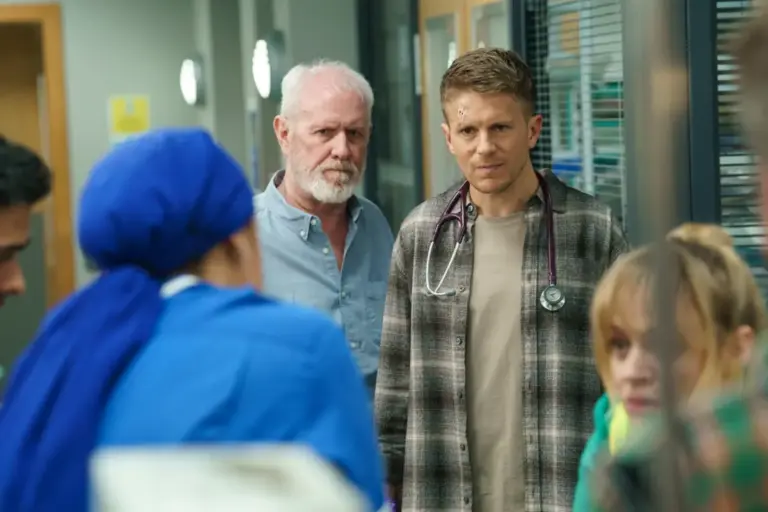
Joining the cast of General Hospital in February 2025 as Jack Brennan, McKenna quickly established himself as a dynamic presence on the canvas. The character was immediately woven into high-stakes corporate and interpersonal plots, eventually sparking significant romantic chemistry with fan-favorite character Nina Reeves, portrayed by Emmy-winning actress Cynthia Watros.
Just as the pairing began to gain traction and viewers eagerly anticipated the evolution of their dynamic, the show’s creative team executed a shocking narrative turn. In September 2025, Jack Brennan was abruptly written off the show in dramatic fashion: his lifeless body was discovered floating in the iconic Metro Court swimming pool, bringing a sudden end to his time in Port Charles.
Grace Under Pressure
For many actors, an unexpected termination or sudden character death can be a source of deep frustration. However, McKenna approached his departure from the soap opera world with remarkable equanimity and professional grace.
In an interview with TV Insider following his exit, McKenna reflected on his tenure with profound gratitude:
"I’m really grateful. It’s disappointing how it’s ending right now, but this was a gift."
This same philosophical, resilient mindset has clearly carried over into his personal life as he confronts his current health scare. Whether dealing with the abrupt conclusion of a high-profile television role or facing emergency reconstructive jaw surgery, McKenna has consistently chosen humor, appreciation, and proactivity over despair.
Future Outlook: Recovery and Beyond
As Chris McKenna embarks on the road to physical recovery, the coming weeks will require patience, medical supervision, and adherence to post-operative protocols.
Health and Rehabilitation
The immediate priority for the actor is healing from the jawbone enucleation and managing the integration of the bone graft. While dental surgeries in this category demand downtime—and temporarily sideline actors from active physical filming—medical prognostications for incidentally discovered, treated jaw cysts are generally highly favorable, provided the entire pathological lining has been excised and secondary infection is averted.
With the support of his young son, Spencer—whom McKenna frequently highlights as a central source of joy and stability in his life—the actor has a robust personal support system to keep his spirits high during the recovery process. Furthermore, his humorous outlook regarding post-operative pain medication suggests that fans can continue to expect witty updates from him on social media as the healing progresses.
Career Prospects
Professionally, McKenna’s reputation as a versatile character actor, combined with his gracious handling of his General Hospital exit, positions him well for future opportunities in television and film once he is fully recovered. The entertainment industry respects resilience, and McKenna’s ability to navigate both professional setbacks and unexpected personal health emergencies with unwavering grace speaks volumes about his character.
Ultimately, what began as a routine fix for a broken crown transformed into a dramatic medical wake-up call. By virtue of a fortunate coincidence, a hidden threat to his health was uncovered and addressed before catastrophic structural damage occurred. As Chris McKenna recovers behind the scenes, both his loyal fanbase and the broader entertainment community are watching closely, wishing him a smooth surgery, a swift bone-graft integration, and the prompt return of his signature comedic voice to the digital landscape.