Executive Overview
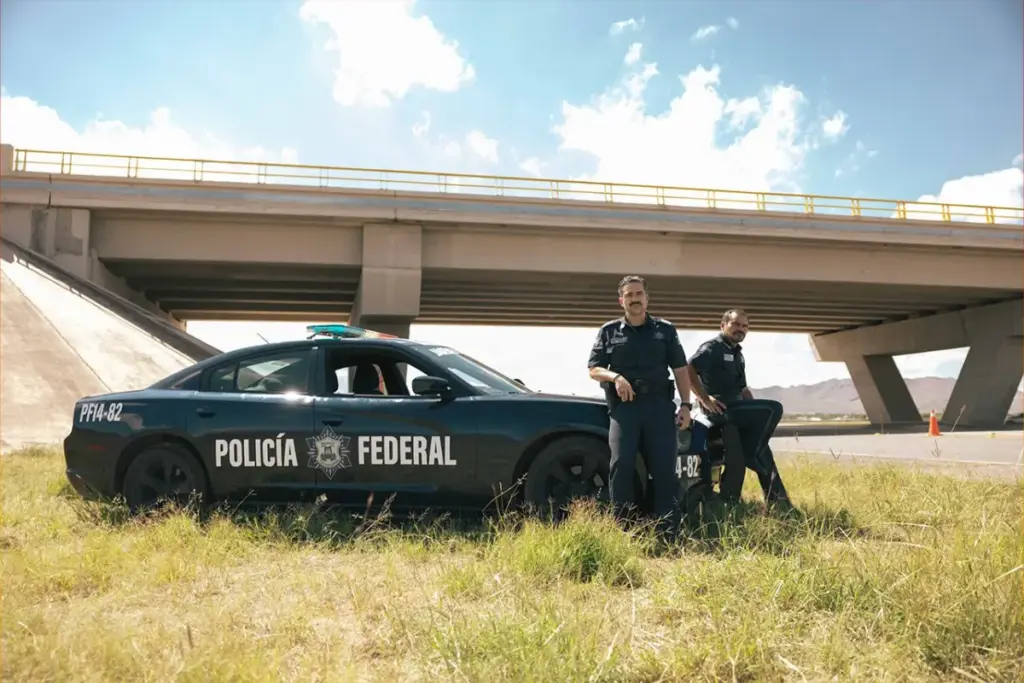
Netflix’s latest true-crime-inspired feature, Facing El Chapo, has rocketed to the top of the platform’s streaming charts since its release on Friday, August 21, 2026. Directed and produced with a gritty, cinematic realism, the film plunges viewers into the heart of Mexico’s relentless drug war. The narrative follows two dedicated Mexican law enforcement officers—anchored by a tense, high-stakes performance from Alfonso Herrera as officer Arturo Carmona—who find themselves fighting for survival during the final, agonizing hours of their shift. Their crime? Crossing paths with one of the most ruthless and powerful cartel bosses in modern history.
While the film operates as a pulse-pounding, fictionalized crime thriller, its bones are rooted in harrowing reality. The title directly evokes Joaquín "El Chapo" Guzmán Loera, the former supreme leader and co-founder of the Sinaloa Cartel. Facing El Chapo dramatizes the atmospheric tension and existential dread surrounding the infamous kingpin’s 2016 recapture, offering audiences a localized, ground-level perspective on the collateral damage left in the wake of transnational organized crime.
Beyond its cinematic achievements, the release of Facing El Chapo has reignited global fascination with the rise, fall, and ultimate imprisonment of Guzmán. It serves as a stark reminder of an era defined by institutional corruption, daring prison breaks, and an unprecedented multi-billion-dollar international drug trafficking empire. This comprehensive report explores the true story behind the film, the chaotic chronology of El Chapo’s legendary evasion of justice, his current status within the United States penal system, and the broader geopolitical impact of his downfall.
Detailed Chronology: The Rise, Escapes, and Ultimate Fall of Joaquín "El Chapo" Guzmán
To truly understand the stakes depicted in Facing El Chapo, one must examine the staggering timeline of Joaquín Guzmán Loera’s criminal career. For decades, El Chapo was not merely a drug trafficker; he was a mythic figure who operated with virtual impunity, outmaneuvering international intelligence agencies through a combination of brutal violence, sophisticated infrastructure, and systemic bribery.
The Formative Years and the Rise of the Sinaloa Cartel
Born in Badiraguato, Sinaloa—the traditional cradle of Mexican drug trafficking—Guzmán entered the narcotics trade under the tutelage of Miguel Ángel Félix Gallardo, the godfather of the Guadalajara Cartel. Following Gallardo’s arrest in 1989, the cartel fractured, paving the way for Guzmán and his associates to establish the Sinaloa Cartel. Under his leadership, the organization revolutionized the logistics of drug smuggling, utilizing high-speed boats, private jets, commercial trucks, and eventually an intricate network of cross-border tunnels equipped with electricity, rail systems, and ventilation.
By the early 1990s, the Sinaloa Cartel had become a dominant force in the global cocaine and marijuana trade, later expanding into heroin and synthetic opioids like fentanyl and methamphetamine. The vast wealth generated by these operations bought protection at every level of Mexican society, shielding Guzmán from law enforcement for years.
The First Arrest and Daring 2001 Prison Break
The first major chink in El Chapo’s armor appeared on June 9, 1993, when he was captured in Guatemala near the Mexican border and subsequently extradited. Convicted of bribery and drug trafficking, Guzmán was sentenced to 20 years in the maximum-security Puente Grande prison in Jalisco.
Despite being behind bars, Guzmán continued to run his cartel empire with astonishing autonomy, reportedly living a life of luxury inside the prison with access to guards, inmates, and contraband. Fearing an impending extradition to the United States, Guzmán executed his first cinematic prison break on January 19, 2001. As urban legend—and subsequent official investigations—confirmed, El Chapo reportedly escaped by hiding inside a laundry cart, rolled out past security checkpoints by a corrupt prison maintenance worker. For the next 13 years, he remained a fugitive, expanding his cartel’s reach while taunting international authorities.
The Mazatlán Capture and the 2015 Tunnel Escape
Guzmán’s second act of defiance came to a temporary halt on February 22, 2014, when a joint operation involving Mexican Marines and U.S. Drug Enforcement Administration (DEA) agents tracked him to a beachfront hotel in Mazatlán, Sinaloa. Captured without a shot being fired, El Chapo was transferred to the Altiplano maximum-security prison.
However, the Sinaloa Cartel’s engineering prowess proved superior to the Mexican penal system once again. On July 11, 2015, Guzmán pulled off his most audacious escape yet. Accessing a hole dug beneath the shower area of his cell, he descended into a sophisticated, 1.5-kilometer (nearly one-mile) ventilated tunnel equipped with a motorcycle modified to run on tracks. The tunnel led straight to an unfinished building outside the prison walls, instantly restoring El Chapo to fugitive status and humiliating the administration of then-President Enrique Peña Nieto.
The Final Reckoning: Recapture and Extradition
El Chapo’s freedom following his second escape was short-lived. Stung by the international embarrassment of the tunnel breakout, Mexican authorities intensified their manhunt, aided by intelligence intercepts and Guzmán’s own vanity—specifically, his desire to meet with Hollywood actor Sean Penn and actress Kate del Castillo to produce a biographical film.
On January 8, 2016, a pre-dawn raid by the Mexican Marine Corps in Los Mochis, Sinaloa, code-graded Operation Black Swan, cornered the drug lord. After a bloody firefight that left five cartel operatives dead, Guzmán attempted to flee through the city’s storm drain system—a desperate echo of the tactical realities dramatized in films like Facing El Chapo. Wet, cold, and cornered, he hijacked a civilian vehicle before being intercepted by federal highway police on a nearby motel highway.
Recognizing that Mexican prisons could not safely hold the drug lord, the Mexican government approved his extradition to the United States on January 19, 2017—almost exactly 16 years to the day after his first prison break.
Supporting Context & Metrics: The Scale of the Sinaloa Empire
To contextualize the dramatic stakes of Facing El Chapo, it is vital to examine the sheer economic and logistical scale of the enterprise Guzmán commanded. The Sinaloa Cartel was not merely a gang; it was a multinational corporation operating with corporate efficiency and paramilitary brutality.
- Global Reach: At its peak, the cartel distributed drugs to more than 50 countries, serving as the primary supplier of illicit narcotics into the United States, Europe, and Asia.
- Financial Footprint: During his historic 2019 trial in Brooklyn, federal prosecutors estimated that Guzmán accumulated a personal fortune exceeding $14 billion through drug trafficking proceeds. The U.S. government sought forfeiture of this entire sum, though a significant portion remains hidden in shell companies, real estate, and offshore accounts.
- Human Toll: The cartel wars spearheaded by Guzmán and his rivals resulted in tens of thousands of violent deaths, forced disappearances, and the displacement of entire communities across Mexico. The systemic corruption fostered by his wealth deeply compromised judicial systems, local police forces, and political offices.
- The Trial of the Century: Guzmán’s 2019 trial in the U.S. District Court for the Eastern District of New York lasted nearly three months. It featured testimony from 56 cooperating witnesses—including former top lieutenants, accountants, and mistresses—who detailed horrific accounts of contract killings, torture, and industrial-scale corruption. On July 17, 2019, a federal jury convicted Guzmán on all 10 criminal counts, including engaging in a continuing criminal enterprise, international drug trafficking, and firearm violations.
Official Statements and Institutional Perspectives
The legacy of El Chapo Guzmán continues to loom large over international law enforcement, diplomatic relations between the U.S. and Mexico, and the global entertainment industry.
Following Guzmán’s conviction in 2019, then-Acting U.S. Attorney General Richard Donoghue delivered a stern warning to transnational criminal organizations:
"There is no escape, there is no hiding place, and there is no way out. Today, Joaquín Guzmán Loera was sentenced to spend the rest of his life in prison in the United States. This verdict and sentence send a clear and unmistakable message to those who import poison into our communities: American law enforcement will pursue you to the ends of the earth, and justice will be served."
Mexican authorities, while celebrating the dismantling of the Sinaloa Cartel’s historic leadership, have continuously grappled with the structural aftermath of his arrest. The fragmentation of the cartel following his extradition did not end the drug trade; instead, it triggered internal power struggles, most notably between Guzmán’s sons (known as Los Chapitos) and veteran cartel co-founder Ismael "El Mayo" Zambada, leading to continuous waves of localized violence in Sinaloa and surrounding states.
Film critics and cultural analysts reviewing Netflix’s Facing El Chapo have noted the shift in modern storytelling. Rather than glorifying the kingpin—a critique often leveled against early seasons of biographical narco-dramas—recent cinematic projects increasingly pivot toward the psychological toll borne by ordinary law enforcement officers, ordinary citizens, and front-line workers caught in the crossfire of systemic corruption and cartel violence.
Future Outlook: Where is El Chapo Now, and What Lies Ahead?
Today, Joaquín "El Chapo" Guzmán is completely isolated from the outside world. Following his conviction, U.S. District Judge Brian Cogan sentenced him to life imprisonment plus an additional 30 years—a sentence specifically designed to ensure he would never draw breath as a free man again.
Life at ADX Florence
Guzmán is currently serving his life sentence at the United States Penitentiary, Administrative Maximum Facility in Florence, Colorado—universally known as ADX Florence or the "Alcatraz of the Rockies."
Widely considered the most secure prison in the United States, ADX Florence houses the nation’s most dangerous terrorists, spies, and cartel leaders. Guzmán resides in solitary confinement within the facility’s ultra-secure H-Unit or general restrictive housing. Under these conditions:
- Inmates are locked in single-man cells for 23 hours a day.
- Cells are constructed of poured, reinforced concrete designed to prevent self-harm, structural breaching, or tunneling.
- Contact with other human beings is strictly minimized; recreation is conducted alone in a concrete pit resembling an empty swimming pool.
- Communication with the outside world—including media interviews, phone calls, and unmonitored mail—is heavily restricted under "Special Administrative Measures" (SAMs) designed to prevent him from directing cartel operations from behind bars.
Despite legal appeals filed by his defense teams over the years—citing harsh conditions of confinement and alleged jury misconduct—none of these efforts have succeeded in overturning his conviction or securing a transfer.
The Enduring Shadow of the Sinaloa Cartel
As Facing El Chapo streams to millions of homes globally, the real-world narrative surrounding the Sinaloa Cartel continues to evolve. Even with El Chapo locked away in the Colorado mountains, and subsequent high-profile arrests of other cartel leaders, the global demand for illicit narcotics ensures that transnational trafficking networks adapt, pivot, and survive.
The film serves not only as an entertaining piece of true-crime fiction, but as an enduring cultural artifact examining the human cost of a multi-decade war on drugs. Through stories like Facing El Chapo, the world is reminded that while individual kingpins can be imprisoned, the systemic conditions that allow empires like El Chapo’s to rise require constant, vigilant global scrutiny.