Executive Overview
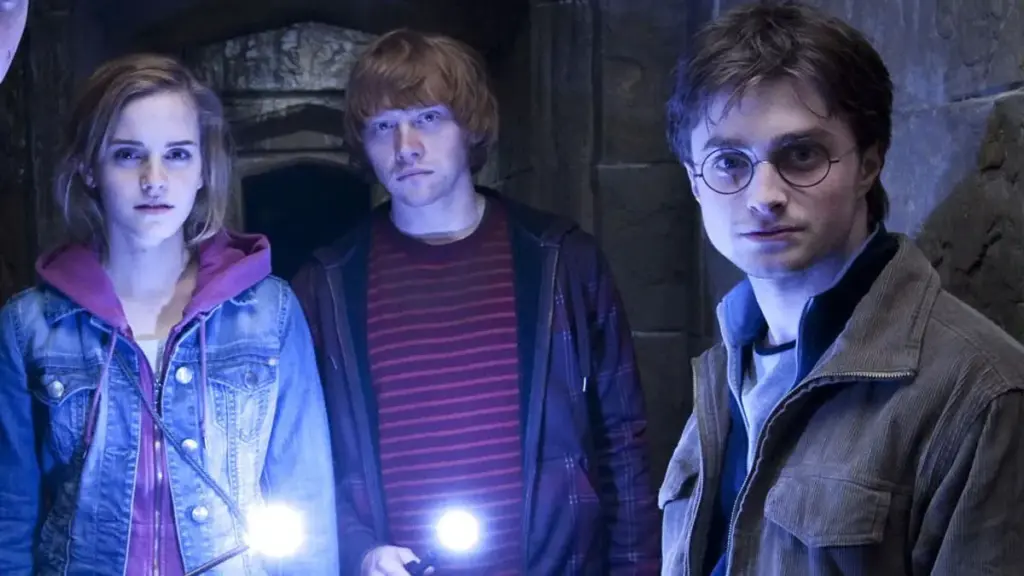
Nearly two decades after hanging up his crimson-and-gold robes, original Harry Potter film star Rupert Grint is officially returning to the magical universe that defined his childhood. In a major theatrical announcement, producers confirmed that Grint will reprise his iconic role as the loyal, quick-witted, and endlessly endearing Ron Weasley in the Broadway production of Harry Potter and the Cursed Child.
The 38-year-old actor, who famously grew up on-screen alongside Daniel Radcliffe and Emma Watson across all eight cinematic adaptations of J.K. Rowling’s fantasy masterworks, is scheduled for a limited 17-week engagement at New York City’s Lyric Theatre. His run will commence on February 2 and run through May 30 of next year. Grint’s arrival follows hot on the heels of former co-star Tom Felton, who brought his cinematic portrayal of Draco Malfoy to the Broadway stage in a run concluding on January 30.
Yet, this high-profile return has not arrived without turbulence. While legions of nostalgic fans have flooded social media with excitement, celebrating the chance to see a foundational cast member step back onto Platform Nine and Three-Quarters, the announcement has simultaneously ignited fierce debate online. Navigating the complex intersection of childhood nostalgia, artistic legacy, and contemporary cultural discourse surrounding franchise creator J.K. Rowling, Grint’s casting has sharply divided the global fandom.
This comprehensive report examines the announcement’s details, Grint’s reflections on returning to the role as an adult and a father, the strategic vision of the production team, and the broader social context fuelling the polarizing public reaction.
Detailed Chronology: From the Silver Screen to the Broadway Stage
The Phenomenon Begins (2001)
To understand the significance of Rupert Grint’s theatrical casting, one must revisit the autumn of 2001. A then-11-year-old Grint, having sent in a rap video audition featuring an original song about his desire to play Ron Weasley, was cast in Chris Columbus’s cinematic adaptation of Harry Potter and the Philosopher’s Stone. Alongside Radcliffe’s Harry Potter and Watson’s Hermione Granger, Grint captured the hearts of millions. His portrayal of the accident-prone, fiercely loyal youngest brother of the Weasley clan established him as a cornerstone of British family cinema.
Over the next decade, Grint inhabited the character through formative adolescent years, weathering global superstardom, media scrutiny, and billions of dollars at the box office. When the film franchise concluded in 2011 with Harry Potter and the Deathly Hallows – Part 2, Grint, like his young co-stars, stepped away from the wizarding world to pursue diverse acting projects in independent film, television, and theatre—most notably making his Broadway debut in Terrence McNally’s play It’s Only a Play in 2014.
The Cursed Child Phenomenon
Years after the books and films concluded, the franchise expanded onto the stage. Penned by Jack Thorne based on an original story by J.K. Rowling, John Tiffany, and Thorne, Harry Potter and the Cursed Child premiered in London’s West End in 2016 before transferring to Broadway’s Lyric Theatre in 2018. The play, set 19 years after the events of the final novel, follows Harry—now an overworked employee of the Ministry of Magic—and his youngest son, Albus Severus Potter, as they grapple with the dark legacy of the past.
While the stage production has continually rotated its cast, featuring brilliant actors taking on the adult incarnations of Harry, Hermione, and Ron, the introduction of original cinematic cast members has marked a new era for the multi-award-winning play. Tom Felton’s current tenure as Draco Malfoy paved the way, proving that audiences hungered for direct continuity between the films they grew up watching and the live theatrical experience.
Now, with Grint stepping in directly after Felton departs, the Broadway production has engineered a brilliant succession plan that bridges the generational divide of the franchise.
Supporting Context & Metrics
The economics and logistics surrounding Grint’s 17-week engagement at the Lyric Theatre underscore the enduring commercial muscle of the Harry Potter intellectual property.
- Theatrical Scale: The Lyric Theatre, located in the heart of Broadway’s theater district, underwent massive structural renovations specifically to house The Cursed Child, boasting a custom-designed auditorium that submerges ticket-holders into the wizarding aesthetic from the moment they enter the lobby.
- Run Duration: Running precisely 17 weeks from February 2 to May 30, Grint’s limited engagement is expected to drive unprecedented ticket demand, likely prompting secondary market surges and massive tourist influxes to New York City during the late winter and spring seasons.
- The "Legacy Casting" Trend: Grint is part of a broader industry shift toward legacy casting in long-running stage productions. By injecting original film actors into theatrical sequels or spin-offs, producers create a symbiotic marketing loop that appeals simultaneously to die-hard cinephiles and dedicated theatergoers.
- Aesthetic Continuity: Grint’s casting serves as a living timeline. The narrative themes of The Cursed Child—parenthood, aging, generational trauma, and the passage of time—mirror the exact life stages of the actors who originally played the trio. Grint, now a father himself, approaches the role with lived experiences that parallel Ron Weasley’s mature domestic life in the post-Voldemort era.
Official Statements and Reflections
Rupert Grint on Stepping Back into Ron’s Shoes
Reflecting on the monumental milestone, Grint expressed a profound sense of emotional resonance regarding his return to the character that shaped his formative years.
"Ron Weasley has been a part of me since I was 11 years old, and I can’t wait to meet him again in this stage of life," Grint shared in a statement. "There is something so full-circle and so special about stepping back into Ron’s shoes now when we are both fathers; it is somehow both very familiar and completely new.
And the joy of being back on Broadway, this time in a role that defined so much of my life, is truly exciting. The first time I saw Cursed Child onstage, I was blown away, and I can’t wait to set foot back on Platform Nine and Three-Quarters and pick up where I left off. I am overjoyed to join this exceptional cast and crew at the Lyric Theatre this winter."
Producers’ Perspective: Sonia Friedman and Colin Callender
The show’s veteran lead producers, Sonia Friedman and Colin Callender, emphasized how Grint’s personal growth aligns with the thematic progression of the character within the script. In a joint statement, they noted:
"We, along with all the wizarding world fans around the globe, watched Rupert grow up through his portrayal of Ron while preserving the qualities at the very heart of the character—his humour, his bravery, and of course, that unmistakably cheeky grin—like an invisible thread woven throughout the years.
His return creates a powerful bridge between the story audiences first fell in love with and the story of family, legacy, and the passage of time that Harry Potter and the Cursed Child carries forward."
Controversy and Cultural Context
Despite the widespread commercial appeal and the nostalgic joy expressed by many ticket-buyers, Grint’s return to the franchise has exposed deep ideological fractures within the broader Harry Potter fan community.
The Fandom Divided
Within hours of the announcement, social media platforms—particularly X (formerly Twitter) and Reddit—saw an influx of sharply divergent reactions. On one side, theater enthusiasts lamented the timing, noting that Grint’s arrival in February misses Tom Felton’s departure in January by mere days, robbing fans of a potential on-stage reunion between the former Slytherin and Gryffindor rivals. Comments such as, "Too bad it’s after Tom leaves. Would have been cool to see them together again," and "Tom Felton if you can hear me pls extend again," highlighted the appetite for a broader cinematic reunion.
However, a more contentious wave of responses emerged from fans grappling with the political baggage associated with the franchise. A vocal segment of the fandom expressed outright disappointment at Grint’s decision to re-affiliate with an enterprise directly tied to author J.K. Rowling.
Comments reading, "Ah well that’s disappointing," and "This really is disappointing," circulated widely among users who have distanced themselves from the brand over the past several years.
The J.K. Rowling Discourse
The root of this internal fandom friction lies in J.K. Rowling’s heavily publicized public statements regarding sex, gender identity, and transgender rights. Rowling has faced sustained international criticism from LGBTQ+ advocacy groups, progressive fans, and several stars of the original Harry Potter films—including Daniel Radcliffe and Emma Watson—for her views on biological sex and self-declared gender identity.
While Rowling has consistently denied accusations of transphobia, asserting in previous essays and interviews that she respects every trans person’s right to live authentically, she has simultaneously criticized modern gender identity frameworks, labeling certain concepts as "quasi-religious" and "anti-science."
This cultural backdrop has placed original cast members in a delicate position. For many fans, any active participation in or financial benefit derived from officially sanctioned wizarding world properties is viewed as an endorsement of Rowling’s socio-political stances.
Conversely, supporters of Grint’s casting were swift to defend the actor, separating the artistry of the performers from the author’s personal platform. Defenders pointed out that actors must make professional artistic choices, with one supporter writing: "Rupert can be a trans ally AND be an actor at the same time. Welcome back, Mr. Weasley, you’re brilliant!" Another user added, "All the negative comments, give me a break."
Future Outlook
As the winter theatrical season approaches, all eyes will be on the Lyric Theatre. Rupert Grint’s 17-week residency represents a critical stress test for how modern entertainment properties manage legacy nostalgia in an era of heightened sociopolitical awareness.
Commercially, the production is primed for historic box-office receipts. The allure of seeing a foundational member of the Golden Trio return to live performance—now embodying a mature, paternal version of Ron Weasley—is an opportunity few theatergoers will want to miss.
Artistically, Grint’s transition from film actor to Broadway stage performer in a high-fantasy universe offers a fascinating narrative arc. Whether the production can successfully navigate the surrounding cultural noise and keep the focus squarely on theatrical craftsmanship will depend on the strength of Grint’s performance when the curtain rises on February 2.
For better or worse, the magic is back on Broadway—and the wizarding world is once again the center of the global cultural conversation.