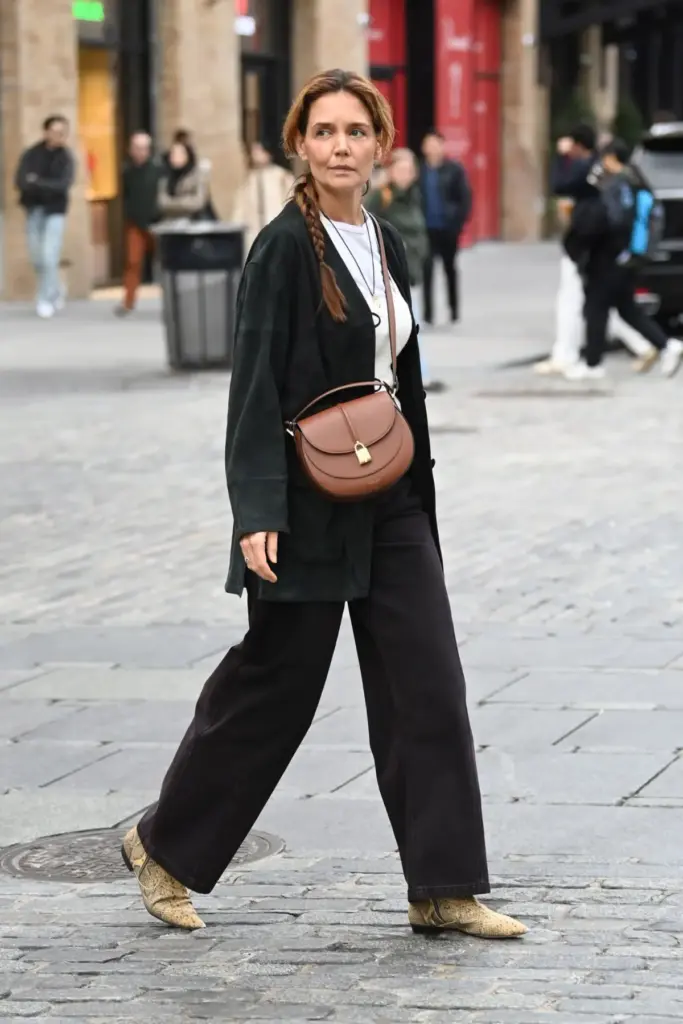
In the fast-evolving landscape of modern fashion, specific trends flare up with algorithmic ferocity only to burn out just as quickly. Over recent years, the industry has seen the rapid rise and cyclical death of micro-movements—from the viral "tomato girls" and "coastal grandmas" to the hyper-specific archetype of the "office siren." Among these, the movement colloquially dubbed "quiet luxury" dominated cultural discourse, emphasizing understated elegance, neutral palettes, and logo-free minimalism.
Like all codified trends pushed to the point of self-parody, quiet luxury eventually found itself relegated to the cultural dustbin alongside its eccentric predecessors. Yet, while the specific terminology may have fallen out of fashion lexicon, the underlying principles have proven remarkably resilient. Two years past the zenith of peak quiet luxury, the consumer appetite for considered, investment-worthy clothing and accessories shows no signs of abating. If anything, the industry pendulum is swinging further toward uncompromising quality.
Today’s shoppers are increasingly discerning about what earns a coveted spot in their wardrobes, favoring exceptionally crafted materials and silhouettes designed to endure for years rather than a fleeting handful of seasons. Quiet luxury may no longer be the industry buzzword du jour, but its core philosophy has quietly evolved into the new industry standard.
Amidst this broader structural shift, independent accessories label DeMellier has emerged as a fascinating case study. Launched in 2017—an era dominated by Demna’s tongue-in-cheek $2,000 Ikea-inspired tote bags and the ubiquitous saturation of "millennial pink"—DeMellier was founded on a prophetic understanding of shifting consumer demands. Today, the brand occupies a rare sweet spot in the global market: a favorite of Hollywood A-listers and European royalty alike, yet priced to remain attainable for the modern, middle-income luxury enthusiast alienated by skyrocketing four-figure designer price tags.
Detailed Chronology
The Genesis: Looking Past Industry Shortcuts (2010–2017)
The structural foundations of DeMellier were laid by Mireia Llusia-Lindh, a native of Barcelona whose resume reads as a masterclass in global business and strategy. Educated across Barcelona and Switzerland before earning an MBA from Harvard Business School, Llusia-Lindh cut her teeth as a strategy advisor for elite consumer and luxury goods conglomerates, including Burberry and LVMH.
Observing the traditional luxury landscape from the inside, Llusia-Lindh identified systemic flaws: an over-reliance on industry shortcuts, male creative directors designing exclusively from an abstracted male gaze, and wildly inflated price tags built on heritage rather than intrinsic craftsmanship. In 2010, she initially launched the accessories venture Milli Millu, which served as an operational sandbox before undergoing a complete strategic and creative rebrand in 2017 to become DeMellier. The name itself reflects a personal heritage: "De" originating from Llusia-Lindh’s Spanish grandmother, paired with "Mellier," a nod to her French-descended surname.
Navigating Global Headwinds and Scaling Up (2018–2023)
Launching an independent accessories label in a market saturated by century-old heritage houses is an uphill battle under the best of circumstances. Doing so while navigating the severe global economic headwinds that plagued retail over the subsequent six years makes DeMellier’s rapid ascent all the more remarkable.

Rather than chasing hyper-fast trend cycles, the brand focused on meticulous craftsmanship, partnering with family-run factories in Europe. In 2022, the launch of The New York bag proved to be a watershed commercial moment, bridging the gap between structural contemporary design and timeless utility. By 2023, the brand’s digital-first direct-to-consumer model was complemented by critical wholesale validation, highlighted by a major retail partnership with global luxury powerhouse Net-a-Porter.
The Retail Evolution: From Digital Native to Flagship Presence (Present and Beyond)
Having mastered the digital-first direct-to-consumer ecosystem alongside multi-brand retail partnerships, DeMellier is preparing for its next major evolutionary leap. This autumn marks the opening of the brand’s very first brick-and-mortar flagship store on Sloane Square in London, signaling a transition from a digital darling to an established physical presence in the global luxury capital.
Supporting Context & Metrics
The Pricing Paradox and the Alienation of the Middle Market
To understand DeMellier’s market penetration, one must examine the broader socioeconomic shifts in the luxury accessories market. Millennial consumers and older demographics often recall an era when middle-income shoppers could comfortably gift or purchase an iconic Mulberry bag for an 18th birthday, or when major designer handbags featured three-figure price tags rather than intimidating four-digit barriers to entry.
Over the past decade, however, legacy luxury houses have systematically priced out vast swathes of the shopping public, with standard leather goods frequently clearing the £1,000 threshold. DeMellier deliberately carved out a counter-positioning strategy. With nearly all of its handcrafted European bags priced comfortably under £700—ranging from the entry-level Nano Montreal at £365 to mid-sized staples around £475—the brand has captured a disillusioned consumer base seeking genuine luxury craftsmanship without prohibitive markups.
The A-List and Royal Endorsement Roll Call
While organic customer acquisition remains the bedrock of the brand’s business model, DeMellier’s marketing engine has benefited from an extraordinary roster of celebrity endorsements. The brand’s pieces have been spotted on an ever-growing, Met Gala-worthy roll call of A-listers, including:
- Katie Holmes
- Reese Witherspoon
- Emily Blunt
- Kristen Bell
- Jessica Alba
- Renée Zellweger
- Emily Ratajkowski
- Gigi Hadid
- Irina Shayk
- Rosie Huntington-Whiteley
- Elsa Hosk
Crucially, the brand has achieved what most legacy houses can only dream of: securing the definitive royal seal of approval. The Princess of Wales, Queen Camilla, and Meghan, the Duchess of Sussex, have all been publicly photographed carrying DeMellier’s streamlined silhouettes, cementing the label’s status as a symbol of tasteful, democratic elegance.
Official Statements
Reflecting on the founding philosophy and the turbulent shifts within the global fashion industry, Mireia Llusia-Lindh emphasizes the intentional divergence from traditional luxury playbooks:

"I felt there were many shortcuts taken in the fashion industry, and I wanted to do things differently—to design handbags that are modern and of the highest quality, ethically and sustainably made but also attainable and socially conscious," Llusia-Lindh reflects.
"For me, building a successful brand starts with strong values and what differentiates you from the rest. From the very beginning, we chose not to follow traditional luxury norms—male creative directors designing for women, overpriced products, or fleeting trends."
Elaborating on the brand’s collaborative, consumer-centric design ethos, Llusia-Lindh notes how internal demographics directly influence commercial success:
"It’s so important to understand your customer. Our design process is deeply collaborative, and with a large female team of different ages, backgrounds and countries, we know that if we all love a new bag, it’s very likely to be a success, as we are customers too. The New York [priced from £395], which we launched in 2022, very quickly became one of our best-sellers and most iconic bags. Its belted detail felt contemporary yet timeless, and it has resonated strongly with our customers. We have since expanded the family with The Midi New York and The New York Shoulder."
Beyond product aesthetics, Llusia-Lindh stresses that modern consumers evaluate brands through an ethical lens, demanding accountability and purpose beyond commercial output:
"Customers are increasingly discerning and want to understand how pieces are made, who is making them, and what a brand stands for beyond the product itself. For example, reaching a million life-saving vaccines and medical treatments funded through our A Bag, A Life initiative a year ago—having now reached two and a half million—was one of the most meaningful milestones for me."
Future Outlook
As the dust settles on the hyper-trend cycles of the early 2020s, the fashion landscape has permanently pivoted toward intentional consumption. The demise of "quiet luxury" as a viral internet hashtag has done nothing to diminish consumer demand for enduring style, ethical manufacturing, and accessible quality.

DeMellier’s trajectory offers a clear blueprint for independent design houses navigating a post-trend economy. By rejecting the arbitrary price inflation of legacy luxury, maintaining rigorous ethical standards through European craftsmanship, and embedding social responsibility into its core business model—such as the impactful A Bag, A Life philanthropic initiative—the brand has secured long-term consumer trust.
Looking ahead to the grand opening of its inaugural flagship store on Sloane Square this autumn, DeMellier is no longer just an online discovery or a celebrity-spotted accessory; it is a fully realized lifestyle destination. As Llusia-Lindh concludes:
"With retail destinations on the horizon, we’re inviting our community to step deeper into our world, one built on empowerment, purpose and timeless design."
For an industry constantly racing toward the next digital micro-trend, DeMellier’s steady, values-driven ascent serves as proof that timeless design and ethical consciousness are the ultimate luxury investments.