Executive Overview
Nearly 240 years after the onset of the French Revolution ignited a socio-political earthquake that forever reshaped Western civilization, France’s contemporary television sector is quietly executing a creative revolution of its own. Today, French TV producers, distributors, and creators are proving that they possess a distinct formula for breathing new life into historical fiction. By artfully blending elements of the past, present, and future, the country’s prestige television landscape has emerged as a powerhouse on the international stage.
At this year’s prestigious Unifrance Rendez-vous, hosted in the picturesque Normandy coastal city of Le Havre, premium Gallic period dramas and high-concept thrillers are aggressively spearheading sales catalogs. From SND’s recent acquisition of the Toronto-bound biographical series Alice: Pioneer of Cinema to France Télévisions’ genre-bending thriller Swapped and Wild Bunch’s bold new adaptation of Stendhal’s classic 19th-century novel The Red and the Black, French storytelling is capturing the imaginations of international buyers.
The industry’s current momentum is not merely a nostalgic retreat into velvet corsets and cobblestone streets. Instead, it is a sophisticated, highly strategic reinvention of historical narratives. Driven by high production values, universal themes of empowerment and equality, and a distinct creative audacity, French television executives are successfully proving that heritage content can resonate deeply with modern, global audiences. Furthermore, in an era marked by tightening budgets across the global media landscape, France’s robust financing models and cost-efficient production infrastructure have positioned its creative sector as an indispensable weapon in the competitive streaming wars.
Detailed Chronology: From Heritage Staple to Modern Reinvention
To understand the current boom in French period drama, one must examine how the genre has evolved over the past several years. Historically, French television leaned heavily on classic adaptations and traditional costume dramas—works that, while visually resplendent, often struggled to break out beyond domestic borders or traditional European markets.
However, a pivotal shift occurred around 2024, acting as a catalyst for the modern renaissance we witness today. During this period, distributors like France TV Distribution (FTD) began testing international appetites with ambitious, high-end limited series. A landmark example was the 2024 historical drama The Huguenots, which went on to secure distribution deals across an impressive 29 territories, punctuated by a major strategic partnership with HBO Max covering France and Belgium. This unprecedented cross-platform success demonstrated to the industry that domestic historical tales, when produced with cinematic scope and universal resonance, possessed immense cross-cultural viability.
Capitalizing on this momentum, the subsequent production cycles leading into 2025 and 2026 saw an influx of genre-blending and character-driven historical narratives. Projects like George: Untamed Spirit made major waves at international markets such as Mipcom, setting the stage for the current slate of groundbreaking series being showcased at Le Havre.
Today’s chronology of French television is defined by an acceleration of creative risks. Producers are no longer content with straightforward chronological retellings; instead, they are infusing 19th- and early 20th-century settings with contemporary social themes, feminist perspectives, and thriller pacing. By reimagining established aesthetic formats—much like American and British hits such as Bridgerton, The Knick, and The Gilded Age—French creators have carved out a unique space where historical authenticity meets modern-day relevance.
Supporting Context & Metrics: Economics, Aesthetics, and Global Appeal
The resurgence of French television is underpinned by a unique convergence of economic realities, aesthetic advantages, and strategic international partnerships. In today’s turbulent global entertainment economy—where media conglomerates and streaming platforms are aggressively cutting budgets and scaling back on risk—financial efficiency has become a critical differentiator.

According to industry leaders, French production companies possess a distinct economic advantage: the ability to deliver top-tier, high-end television series with budgets significantly lower than those of their North American or British counterparts. This cost-efficiency does not come at the expense of quality. On the contrary, French producers manage to achieve breathtaking cinematic aesthetics, meticulous set designs, and elaborate period costumes while maintaining lean production budgets.
Speaking to this fiscal strength, Alexis Reybet Degat, Head of TV Series & Library Distribution at SND, notes:
"In fact, in today’s economy, this has become our best weapon. We produce high-end series with budgets far smaller, and in times where everyone is trying to reduce their costs, it’s a decisive advantage."
Beyond economics, French series benefit immensely from built-in geographical and cultural intellectual property. Paris, for instance, functions almost as a globally recognized brand in its own right. The instantly recognizable architecture, romantic boulevards, and historic neighborhoods provide an evocative backdrop that immediately draws international eyes. However, industry veterans are quick to caution that postcard aesthetics alone are not enough to sustain a global hit.
Reybet Degat emphasizes this point, noting that French heritage only travels successfully when anchored by a deeply universal narrative:
"French heritage travels only if it is supported by a true, universal narrative. Alice isn’t just a story about a French globally renowned figure. It’s the struggle of a woman who fights to be considered equal. Heritage is the background. What we sell is what happens in it. For what makes a show stand out in this ever-so-crowded landscape is its production value, the finesse of its narrative, a unique story, and memorable characters."
Furthermore, France’s national production landscape remains remarkably resilient compared to many of its European neighbors, largely due to a sophisticated, stable domestic financing ecosystem. By working synchronously with streamers, linear broadcasters, and international partners from the very early stages of development, French distributors have mastered a strategic windowing approach that maximizes both local impact and global reach.
Official Statements: Industry Leaders on the New Wave of French Fiction
The transformation of the French television sector is championed by some of the most respected sales and acquisitions executives in the European media landscape. Their insights shed light on the creative philosophies driving today’s most anticipated series.

Julia Schulte, Senior Vice President of International Sales at France TV Distribution, highlights the deep-rooted historical connection her company shares with the genre, while acknowledging the profound shift currently taking place across European buying desks:
"We’ve always been tied to period dramas, and what we are now witnessing is a true comeback, a hunger for premium period dramas with high production value from distributors and buyers across Europe and beyond."
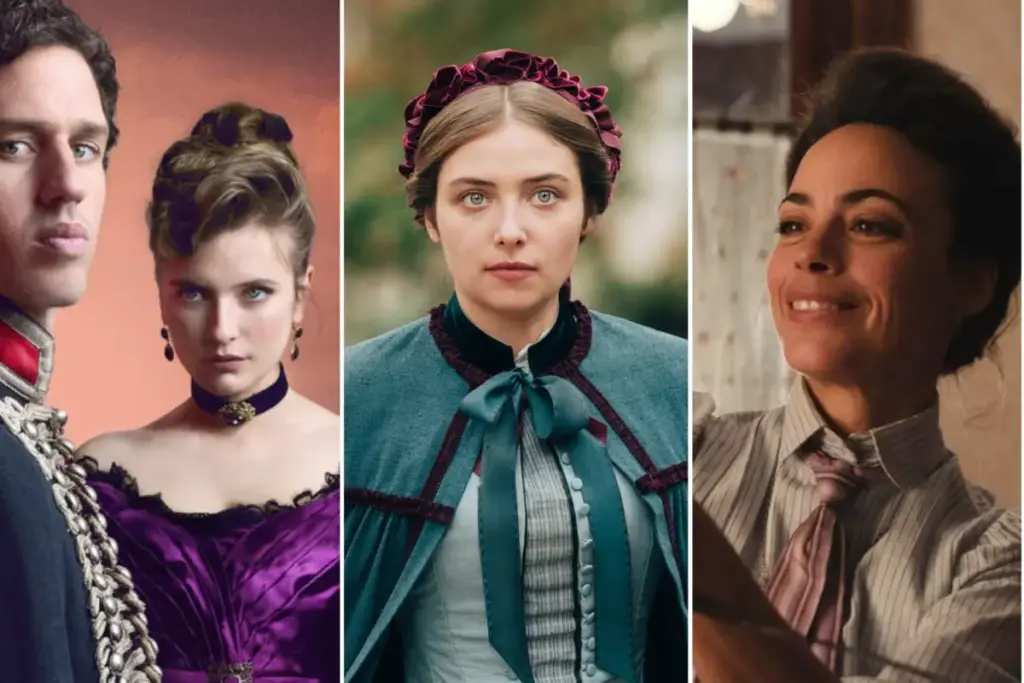
Schulte points to FTD’s Le Havre centerpiece, Swapped, as a prime example of this new wave. A gripping six-part limited series set in the gritty underbelly of 1890s Paris, Swapped follows Rose (played by Lula Cotton-Frapier), a young woman who leaves her rural home to work as a wet nurse for an affluent bourgeois family in a desperate bid to secure a better future for her own child.
"This female-led, character-driven series is both modern in its narrative approach and in its filmmaking, bringing new life to French period drama with a truly powerful and empowering message," Schulte explains. "Beyond Rose, our main protagonists Odette [Barbara Probst] and Hélène [Alexia Giordano] drive this thriller with grit and wit, giving Swapped a fresh and up-to-date energy."
Echoing this sentiment is Diana Bartha, Head of Sales & Acquisitions at Wild Bunch, who underscores the enduring psychological appeal of historical fiction for global audiences:
"Historical fiction has always been a relatively safe and enduring proposition. It has a long shelf life, travels well across cultures, and connects with something universal: our appetite for storytelling and our fascination with the past. In an increasingly competitive distribution market, these qualities make historical fiction particularly attractive to producers and broadcasters."
Wild Bunch is making massive waves at the Unifrance Rendez-vous with Alice: Pioneer of Cinema, a major six-part international co-production between France, Canada, and Belgium. Starring Oscar nominee Bérénice Bejo (The Artist) as Alice Guy—widely recognized as the very first female fiction filmmaker in cinematic history—the series has been acquired for world sales by SND ahead of its high-profile showcase in Toronto and Le Havre.
Discussing the dual appeal of SND’s slate, which pairs Alice with the Series Mania-winning contemporary military thriller R91 (set aboard a French nuclear aircraft carrier), Reybet Degat notes:

"Both series, while having almost nothing in common, share the most important thing in contemporary TV. Each opens up a world never-before seen on screen (R91 is a modern thriller set on a French nuclear aircraft carrier, Alice tells the birth of cinema in France from a female perspective and unveils a universal story within it). Two premium dramas, ambitious yet accessible to global audiences."
Bartha further elaborates on the bold, creative risks being taken by a fresh generation of French showrunners:
"Period dramas such as The Knick, Bridgerton and The Gilded Age have been pioneering this idea of reinvention, and I do believe in our new generation of French fiction producers, bringing a fresh creative bold energy to the industry. They are reinventing established format aesthetics, taking creative risks, pushing boundaries and blending modern issues with French authenticity, all the while achieving real international success."
Future Outlook: Navigating Challenges and Embracing Opportunities
As the international television industry looks toward the horizon, the outlook for French content remains exceptionally bright, provided creators continue to lean into their unique strengths. In troubled global economic times, industry executives agree that the appetite for premium, high-quality entertainment has not diminished; rather, audience expectations have evolved.
For FTD, Wild Bunch, SND, and their network of producers, the strategy moving forward relies heavily on maintaining a distinct cultural signature—often referred to affectionately as the "French Touch." By aggressively showcasing domestic talent on the international festival circuit, French distributors are successfully building early awareness and standing out in an increasingly saturated media ecosystem.
Ultimately, French fiction is viewed by global consumers as an extension of the nation’s legendary art de vivre. Just as French fashion, gastronomy, and art have captivated international markets for centuries, television drama has firmly established itself as a powerful, modern vehicle for cultural expression. By marrying meticulous historical detail with progressive, empowering narratives, forward-thinking production strategies, and unbeatable economic value, French television has proven that its newest revolution is only just beginning.