Executive Overview
The intersection of social media and global commerce is shifting once again, and at the center of this evolution is TikTok. Recent developments point to a significant strategic pivot: the short-form video giant is laying the groundwork to capture the entirety of its users’ digital financial lives. According to recent reports, hidden code discovered within the current iteration of the TikTok U.S. iPhone application indicates that the platform is exploring the integration of direct payments and peer-to-peer (P2P) money transfers directly through its Direct Messaging (DM) interface.
This rumored initiative—potentially powered by an international expansion of TikTok Pay—would fundamentally change how users interact with the platform. No longer just a destination for viral trends, entertainment, and burgeoning e-commerce via TikTok Shop, the app is positioning itself to rival legacy financial applications like Venmo, PayPal, and Apple Pay. By streamlining transactions, introducing "tap to accept" functionalities, and allowing users to attach comments to peer-to-peer transfers, TikTok is leaning into the social-finance phenomenon that has captivated younger generations.
While a TikTok spokesperson has clarified that a feature of this specific nature is not currently undergoing active public testing, the discovery of underlying framework code suggests that development is underway behind closed doors. This strategic push is far from accidental. It arrives on the heels of explosive projections for TikTok Shop—which is anticipated to clear over $100 billion in Gross Merchandise Value (GMV) during the 2026 calendar year—and aligns with aggressive international fintech licensing applications filed earlier this year.
As digital real estate within Direct Messages increasingly becomes the prime battleground for user retention and monetization across the tech landscape, TikTok’s pursuit of native financial services could represent the most disruptive platform shift since the invention of social checkout.
Detailed Chronology: Uncovering the TikTok Pay Infrastructure
The trail leading to TikTok’s rumored direct payment feature is mapped across software updates, international rollouts, and regulatory filings. Understanding how this financial ecosystem is coming together requires a detailed look at the chronology of events shaping the platform’s fintech ambitions.
The Southeast Asian Blueprint: TikTok Pay’s Regional Origins
Long before Western tech analysts began spotting code snippets in U.S. iOS builds, TikTok’s parent company, ByteDance, was already operationalizing financial technology in overseas markets. TikTok Pay is not a completely novel concept; the proprietary payment gateway is already established and functioning in select Asian markets, including Vietnam, Malaysia, and Thailand.
In these regions, TikTok Pay serves as the infrastructural backbone for TikTok Shop, allowing consumers to settle digital marketplace transactions seamlessly without being redirected to external payment processors like credit card gateways or third-party digital wallets. By keeping the entire transaction loop within the app, TikTok reduces friction, lowers cart abandonment rates, and avoids external transaction fees. The primary question for Western markets has never been if ByteDance wanted to scale this capability globally, but when and how regulatory environments would permit it.
The Discovery of U.S. App Code
The latest phase of this saga came to light via an exclusive report by Bloomberg, which analyzed hidden code tucked away inside the U.S. version of the TikTok iPhone app. According to the findings, the application’s framework contains direct references to a "tap to accept" mechanism embedded squarely within the chat and Direct Messaging infrastructure.
Crucially, the discovered code points not just to e-commerce checkouts, but to peer-to-peer interactions. References to transaction-specific comments—similar to the public and private memos popularized by Venmo—indicate that users may soon be able to settle debts, split bills, or send monetary gifts to one another within a conversation thread.
International Licensing and Regulatory Moves
Software code is only one piece of the puzzle. To operate as a financial institution or money transmitter, a tech platform must navigate a complex web of global regulatory bodies. TikTok has proven that it is willing to do the heavy lifting required to secure these operational permissions.
Earlier this year, TikTok made waves in the international fintech community by applying for two distinct and highly strategic licenses. The first—a "direct credit company" license—hints at ambitions that stretch far beyond simple payment processing, effectively pointing toward virtual banking capabilities such as credit issuing and lending. The second license establishes TikTok as an "electronic money issuer," a regulatory classification that parallels the operational framework of companies like Venmo, PayPal, and Cash App.
While the direct payment features currently discovered in the app code are likely tied to the electronic money issuer framework, the dual application strategy demonstrates that TikTok’s leadership views financial services as a core pillar of the platform’s long-term enterprise value.
Supporting Context & Metrics: The Engine Driving the Pivot
TikTok’s aggressive push into financial services does not exist in a vacuum. It is supported by massive commercial growth, shifting consumer behaviors, and a thriving creator economy that naturally intersects with personal finance.
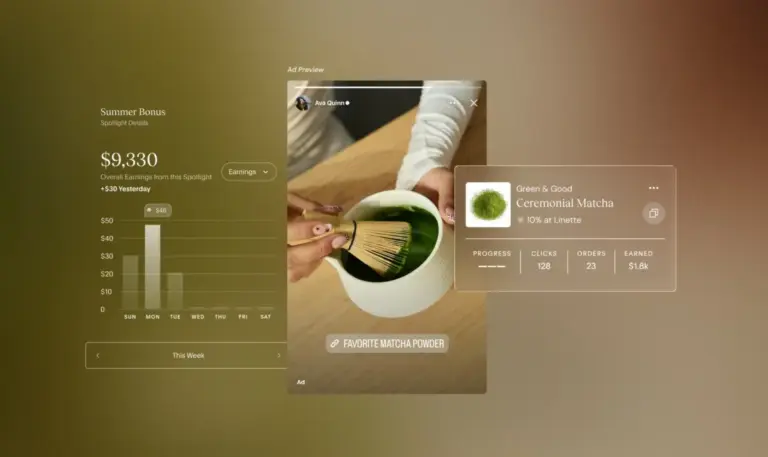
The Meteoric Rise of TikTok Shop
The most compelling catalyst for TikTok’s fintech expansion is the unstoppable growth of TikTok Shop. Launched with the intent of keeping users inside the app from discovery to purchase, TikTok Shop has radically outperformed initial industry expectations.
Market analysts project that TikTok Shop will generate well over $100 billion in Gross Merchandise Value (GMV) during the 2026 calendar year. To put this figure in perspective, it places TikTok shoulder-to-shoulder with established e-commerce heavyweights. However, as transaction volumes scale into the tens of billions of dollars, relying on third-party payment infrastructure introduces significant friction, data-sharing limitations, and processing costs. Building a proprietary, closed-loop financial system like TikTok Pay becomes an economic imperative to protect profit margins and optimize the user experience.
The Power of #FinTok and Gen Z Financial Literacy
User demographics also play a crucial role in shaping TikTok’s product roadmap. Studies consistently show that younger demographics—particularly Gen Z—increasingly turn to social media platforms rather than traditional banking institutions for financial education, advice, and product discovery.
The thriving #FinTok community serves as a prime example of this cultural shift. Millions of users flock to the hashtag daily to consume content related to budgeting, investing, credit card selection, and personal wealth management. By integrating financial tools directly into the social fabric of the app—allowing users to act on financial advice seamlessly within the same ecosystem where they consume it—TikTok is capitalizing on a level of user trust that legacy banks have struggled to capture among younger generations.
The DM as the New Commerce and Social Hub
Direct Messaging has ceased to be a simple text-based utility. Across the social media landscape, DMs have transformed into primary hubs for engagement, content sharing, and monetization.
- Instagram has continuously updated its DM infrastructure with advanced e-commerce integrations, professional tools, and consumer-facing features guided by head of Instagram Adam Mosseri.
- YouTube recently overhauled and relaunched its native direct messaging and sharing capabilities, transforming DMs into powerful discovery tools that keep viewers inside the Google ecosystem.
TikTok’s strategy aligns with this broader industry trend. By fusing its booming e-commerce marketplace and rumored peer-to-peer payment rails directly into its DM architecture, TikTok is turning private conversations into high-conversion economic zones.
Official Statements and Industry Response
The revelation of TikTok’s hidden payment code has naturally generated widespread speculation across the tech, finance, and social media sectors.
In response to inquiries from Bloomberg, a TikTok spokesperson issued a measured statement clarifying that a feature of this nature is not currently being tested with the public. This nuance is critical: it indicates that while software engineering teams are actively drafting, prototyping, and embedding financial frameworks within the application’s source code, the product is still in its early incubation phase.
Industry analysts note that tech companies frequently experiment with experimental features in internal development builds long before public betas or rollouts occur. This allows engineering teams to stress-test system architectures, security protocols, and compliance measures well in advance.
Financial sector observers have also weighed in on the potential competitive ramifications. Traditional fintech giants and digital wallet providers are closely monitoring ByteDance’s movements. If TikTok successfully marries social media engagement, video-driven e-commerce, and native peer-to-peer payments under one roof, it could effectively disintermediate traditional banking apps for a massive segment of the digitally native population. Security and data privacy advocates, meanwhile, have signaled that any rollout of financial infrastructure by a platform with ByteDance’s ownership structure will face intense regulatory scrutiny from lawmakers in Washington and Brussels.
Future Outlook: What Lies Ahead for Social Fintech
As we look toward the remainder of 2026 and beyond, the trajectory of TikTok’s financial services initiative will depend on a delicate balance between engineering capabilities, regulatory compliance, and user adoption.
Short-Term Realities vs. Long-Term Ambitions
Based on the current stage of development, everyday users should not expect to see a fully functional peer-to-peer payment system or Western rollout of TikTok Pay overnight. Navigating the regulatory landscape of electronic money issuance in the United States and Europe requires extensive legal approvals, compliance audits, and robust anti-money laundering (AML) frameworks.
However, the inclusion of these code snippets in current iOS builds proves that the foundation is being laid. When the feature eventually moves from internal codebases to public testing, it will likely launch in a phased rollout—perhaps beginning with creator-to-fan tipping, moving to closed-loop marketplace purchases via TikTok Shop, and ultimately opening up to full peer-to-peer money transfers among friends.
The Convergence of Social Media and Financial Services
TikTok’s evolution offers a clear glimpse into the future of the digital economy. The historical boundaries separating entertainment apps, e-commerce stores, and financial institutions are rapidly dissolving.
When users can watch a video review of a product, purchase that product instantly using a native one-click checkout, split the cost with a friend inside a direct message thread using attached transaction notes, and manage their digital balance all within a single application, the traditional digital journey is entirely rewritten.
If TikTok successfully brings its rumored direct payment vision to the global market, it will not only solidify its dominance as an e-commerce titan but also cement its status as a foundational player in the modern fintech revolution.