Executive Overview
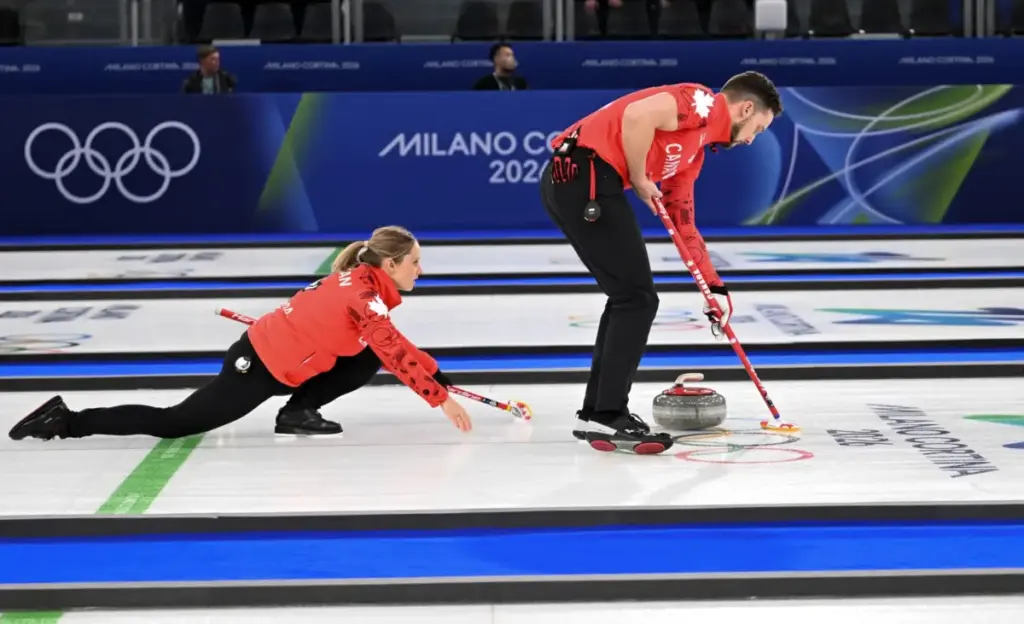
The 2026 Milano Cortina Winter Olympics have delivered the high-speed thrills, gravity-defying aerials, and nail-biting finishes that spectators have come to expect from the global showcase. Yet, amid the dazzling performances on snow and ice, an entirely different kind of storm has been brewing inside the typically polite, understated confines of the curling venue. Known historically as "The Roaring Game"—a sport steeped in 16th-century tradition, strict sportsmanship, and polite etiquette—curling has been rocked by an unexpected and fiery cheating scandal involving powerhouse contenders from Canada.
What began as a subtle on-ice dispute during a high-stakes men’s round-robin match between Canada and Sweden has rapidly escalated into a full-scale international controversy. Viral video clips, fierce post-match denials, and direct interventions by technical umpires in both the men’s and women’s tournaments have cast a harsh spotlight on the enforcement of legacy rules in modern, high-definition sports. At the center of the debate is a fundamental question of athletic integrity: how strictly should tactile infractions be judged when fractions of an inch can alter the trajectory of a 44-pound granite stone?
This comprehensive report examines the anatomy of the Milano Cortina curling controversy, breaking down the mechanics of the sport, the specific rules at the heart of the scandal, the official reactions from international bodies, and the broader implications for the future of Olympic curling.
Detailed Chronology: How a Routine Match Ignited an International Debate
To understand the magnitude of the Milano Cortina curling controversy, one must trace the rapid escalation of events that transformed a standard round-robin schedule into headline news across sports media outlets worldwide.
The Catalyst: Canada vs. Sweden Men’s Match
The trouble began during a marquee men’s matchup between traditional curling giants Canada and Sweden. The tension was already palpable, given the historic rivalry between the two nations on the international sheet. During a critical phase of the game, Swedish players turned their attention to veteran Canadian curler Marc Kennedy immediately after he delivered a stone.
According to World Curling Federation regulations, once a stone crosses the hog line, the player must cleanly release it. Any subsequent physical contact—even a microscopic graze from a fingertip—is strictly forbidden because the human touch can subtly alter the stone’s temperature, rotation, and momentum as it glides down the pebbled ice toward the house.
Swedish skips and sweepers vocally alerted the on-ice officials, claiming that Kennedy’s finger had maintained contact with the rock fractionally past the permissible release zone. While match officials did not immediately call a formal violation during real-time play, high-definition broadcast cameras captured the moment from multiple angles. Soon, looping video clips flooded social media platforms, showing what appeared to be Kennedy’s hand lingering near the granite handle. A tense, sharp verbal exchange on the ice followed between the opposing rinks, shattering the serene silence traditionally associated with the sport. Kennedy firmly denied any intentional wrongdoing, maintaining that his delivery was legal and standard, but the damage to the afternoon’s decorum was already done.
The Women’s Tournament Escalation
The controversy refused to stay isolated to the men’s draw. Later that very same day, the women’s tournament experienced a parallel flashpoint that immediately amplified the debate.
During a fiercely contested match, prominent Canadian skip Rachel Homan found her team on the receiving end of a strict umpire intervention. Technical officials reviewed and ultimately removed one of Canada’s stones from play, citing the exact same infraction: an illegal touch past the release point.
Homan and her rink strongly contested the ruling, arguing that the enforcement was overly pedantic, inconsistent with historical precedent, and unfairly applied during a crucial juncture of the competition. While men’s player Marc Kennedy escaped an on-ice penalty only to face public scrutiny online, Homan’s team faced direct, punitive action from the officiating crew. This convergence of incidents involving Canada’s premier curling squads transformed isolated procedural complaints into a systemic debate regarding how officiating crews monitor and police technical rulebook violations at the elite Olympic level.
Supporting Context & Metrics: The Physics, Rules, and Traditions of Curling
To fully grasp why a microscopic fingertip touch or a disputed stone removal has sparked such intense fury, one must examine the unique physics and structural foundations of curling.
Anatomy of the Sheet and Equipment
Curling is executed on a meticulously prepared sheet of ice measuring approximately 146 to 150 feet in length and roughly 15 feet in width. The surface is deliberately sprayed with tiny water droplets that freeze into small bumps known as "pebble." This textured surface reduces friction, allowing the 44-pound (19.1 kg) Ailsa Craig granite stone to glide smoothly down the sheet.
Players wear specialized footwear featuring dual soles: one shoe possesses a Teflon slider for gliding across the ice, while the other features a high-friction rubber sole for pushing off and maintaining balance. Sweepers utilize specialized carbon-fiber brushes to vigorously sweep the ice ahead of the moving stone. This sweeping action serves two vital purposes:

- Debris Removal: It clears away microscopic dust and frost particles that could physically impede the stone’s path.
- Thermal Friction: The intense friction generated by rapid sweeping slightly melts the top layer of the ice pebble, creating a thin film of water that allows the stone to travel farther and curl significantly less.
Scoring, Strategy, and the Power of the "Hammer"
A standard Olympic curling match consists of 10 ends (rounds). In four-person team play, each squad throws eight stones per end, alternating deliveries between players: the lead, the second, the third (or mate), and finally the skip (captain), who dictates the team’s overarching strategy.
Points are scored within the "house"—a 12-foot-diameter target marked at each end of the sheet. At the conclusion of an end, only the team with the stone(s) closest to the center button scores points. A team earns one point for every stone closer to the center than the opponent’s best-positioned rock.
The ultimate strategic asset in curling is the hammer—the right to deliver the final stone of an end. Because the team with the hammer holds the scoring advantage, tactics often involve intentionally blanking an end (scoring zero points) or strategically conceding a single point to retain the hammer for the subsequent round. This chess-like layer of tactical foresight is why curling is frequently dubbed "chess on ice."
Wheelchair Curling at the Winter Paralympics
Expanding beyond standard Olympic play, wheelchair curling is a premier mixed-gender Paralympic sport introduced at the 2006 Winter Games in Turin, Italy. Utilizing the exact same sheet dimensions and house targets as traditional curling, wheelchair curling adapts the game for athletes with lower-limb physical impairments. Competitors use specialized delivery sticks to propel the granite stones from a stationary position. To maintain competitive equity under these mechanical constraints, wheelchair curling does not feature sweeping, placing an even higher premium on precise initial delivery weight and tactical shot-making.
Official Statements and Institutional Response
As the Milano Cortina cheating allegations continued to dominate sports news cycles, international governing bodies moved quickly to address the fallout, calm simmering tensions among national federations, and clarify officiating protocols.
The World Curling Federation’s Stance
In a formal statement released following the Canada-Sweden dispute, the World Curling Federation (WCF) reiterated its commitment to fair play, transparency, and the rigorous enforcement of established rules. Officials emphasized that modern broadcast technology—including high-speed, high-definition multi-angle cameras—offers a level of microscopic scrutiny that historical rulebooks were never originally designed to accommodate.
"Curling relies fundamentally on self-policing, integrity, and mutual respect among competitors," a WCF spokesperson noted. "While technical innovations in broadcast media provide incredible entertainment value for fans at home, they also place an unprecedented spotlight on split-second, human-error-margin mechanics. Our officiating crews are tasked with applying the rules consistently and fairly based on real-time evidence, while technical committees continuously review how modern technology interacts with traditional gameplay."
National Federation Reactions
Representatives from Curling Canada issued balanced statements acknowledging the intense competitive environment of the Milano Cortina Games while defending their athletes’ integrity. Team members stressed that high-level elite competition breeds high emotions, and that split-second deliveries under immense national pressure can occasionally create optical illusions on television broadcasts.
Meanwhile, Swedish and other European curling federations called for absolute clarity and heightened vigilance from technical umpires. They argued that if rules regarding stone releases are codified in the rulebook, they must be enforced with zero tolerance, regardless of whether an infraction is spotted by an on-ice opponent or flagged via a digital replay monitor.
Future Outlook: Protecting the Integrity of "The Roaring Game"
The curling controversy at the 2026 Milano Cortina Winter Olympics serves as a watershed moment for a sport that has experienced explosive global growth over the past two decades. As curling transitions further into the primetime television spotlight, the intersection of traditional sportsmanship and modern technological surveillance will inevitably reshape how the game is officiated and perceived.
Moving forward, international sports regulators face a critical modernization challenge. To prevent similar controversies from overshadowing athletic achievements in future Olympic cycles, governing bodies are already discussing several potential reforms:
- Automated Release Sensors: Exploring embedded sensor technology within granite handles and hog lines to provide objective, automated data on stone releases, thereby removing human bias and visual ambiguity from tactile infractions.
- Streamlined Replay Protocols: Establishing clear, transparent guidelines for when and how video review can be initiated by technical officials during live international competition.
- Educational Outreach: Enhancing viewer education programs to help casual fans and global audiences understand the intricate physics and rule structures governing elite-level curling.
Despite the temporary turbulence in Milano Cortina, the enduring appeal of curling remains untouched. Beneath the fiery debates over finger-drags and rule enforcement lies a sport defined by profound skill, intense tactical brilliance, and deep-rooted camaraderie. As the 2026 Winter Games march toward their climactic medal rounds, the curling sheets of Italy will undoubtedly continue to provide world-class drama, reminding global audiences precisely why "The Roaring Game" remains one of the crown jewels of the Winter Olympics.