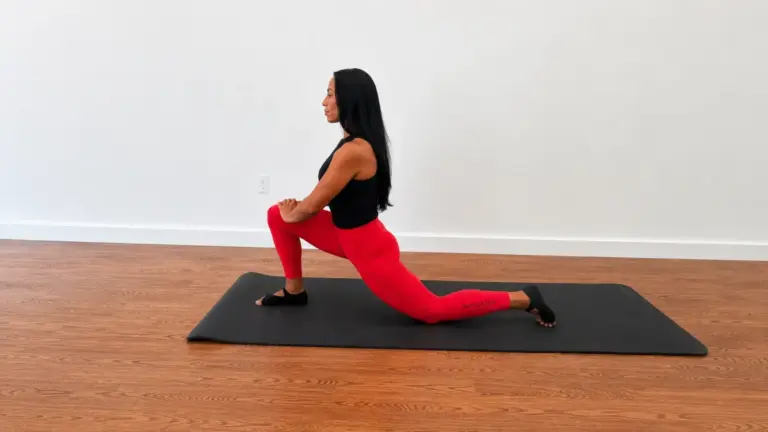
In the modern landscape of physical fitness, the traditional barriers to entry remain stubbornly high. Gym memberships demand monthly financial commitments, cumbersome commutes, and rigid time blocks that clash with contemporary professional and domestic responsibilities. For millions of individuals striving to maintain a consistent exercise regimen, the prevailing narrative has long dictated that an effective strength-training routine requires heavy iron: racks of dumbbells, heavy barbells, and plate-loaded machines.
However, a fundamental shift in behavioral fitness science and home-workout culture is challenging this dogma. Consistency—not sheer load—is the ultimate currency of physical transformation. To achieve true consistency, fitness enthusiasts and busy parents alike are learning to ruthlessly eliminate the friction between intention and execution.
Enter the minimalist resistance band routine: a highly efficient, 20-minute, full-body strength protocol that utilizes little more than a long-looped resistance band and an exercise mat. Born out of necessity by parents navigating the chaotic landscape of small children—where heavy, unattended dumbbells present genuine safety hazards—this streamlined approach to functional fitness proves that major muscle hypertrophy, core stability, and cardiovascular conditioning do not require a commercial gym setup. This report explores the mechanics, structural methodology, physiological benefits, and broader lifestyle integration of the resistance band revolution.
Detailed Chronology & Practical Methodology: The 20-Minute Resistance Band Protocol
The architecture of the routine is deceptively simple, designed to target major muscle groups through compound and isolation movements while minimizing transition times. By strategically replacing traditional free weights with elastic resistance, practitioners manipulate the strength curve, challenging muscles throughout both the concentric and eccentric phases of every repetition.
Core Protocol Parameters
Total Duration: 20 minutes or less
Equipment Required: Long-looped resistance band (e.g., standard light-to-medium fitness loops) and an exercise mat
Rest Intervals: 15 to 30 seconds between sets to maintain elevated heart rates and metabolic conditioning
Repetition Range: 8 to 15 reps per set, depending on the movement and individual fitness level
Step-by-Step Exercise Breakdown
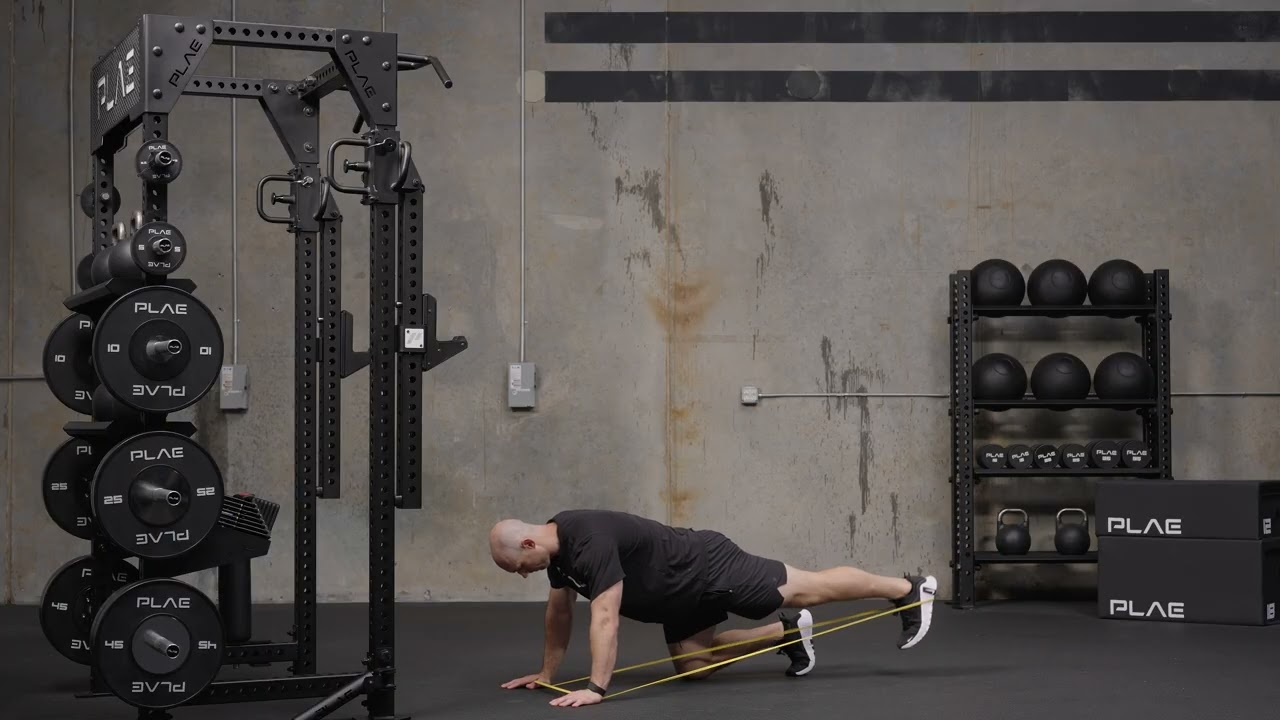
1. Quadruped Glute Kickback
Prescription: 3 sets | 10–15 reps per side | 15–30 seconds rest
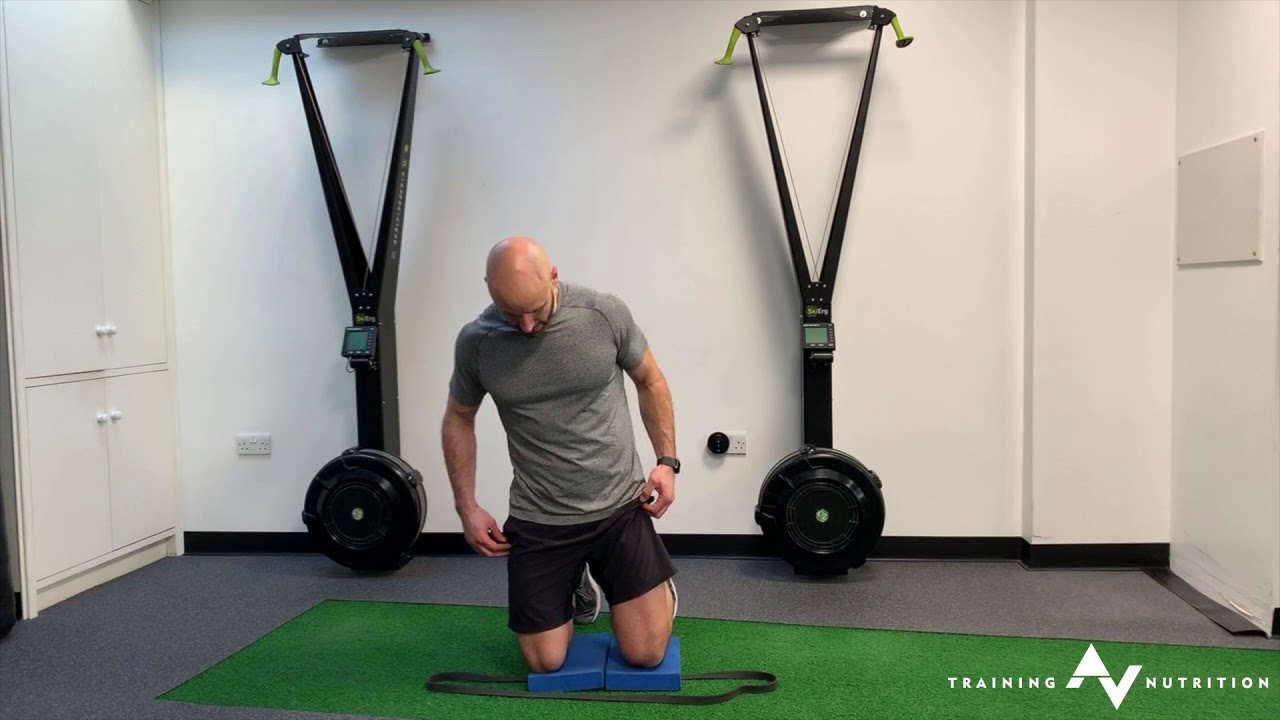
Execution & Focus: Begin in a quadruped position (hands and knees on the mat) with the resistance band secured around one foot and the opposite handle or loop anchored beneath your hands or knees. Engage the transverse abdominis and core stabilizers before driving the working leg backward against the elastic tension.
Physiological Impact: Beyond targeting the gluteus maximus and hamstrings, this movement serves as a severe test of anti-rotational core stability. Maintaining a flat back and preventing pelvic wobble requires deep neuromuscular control.
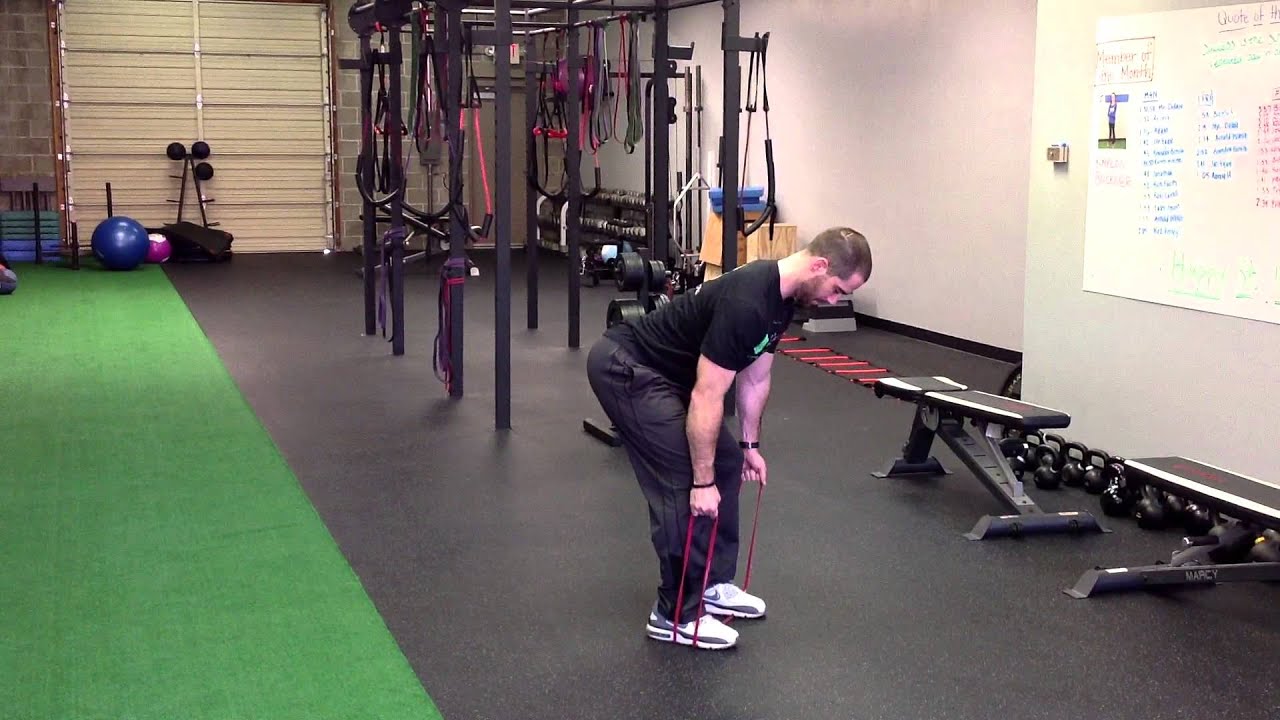
Execution & Focus: Stand on the center of the resistance band with feet hip-width apart, hinge at the hips with a flat back, and grasp the band handles. Pull your elbows back toward your hips while squeezing your shoulder blades together at the apex of the movement.
Physiological Impact: This fundamental pulling exercise directly counteracts the postural degradation associated with desk jobs and childcare, strengthening the latissimus dorsi, rhomboids, rear deltoids, and erector spinae.
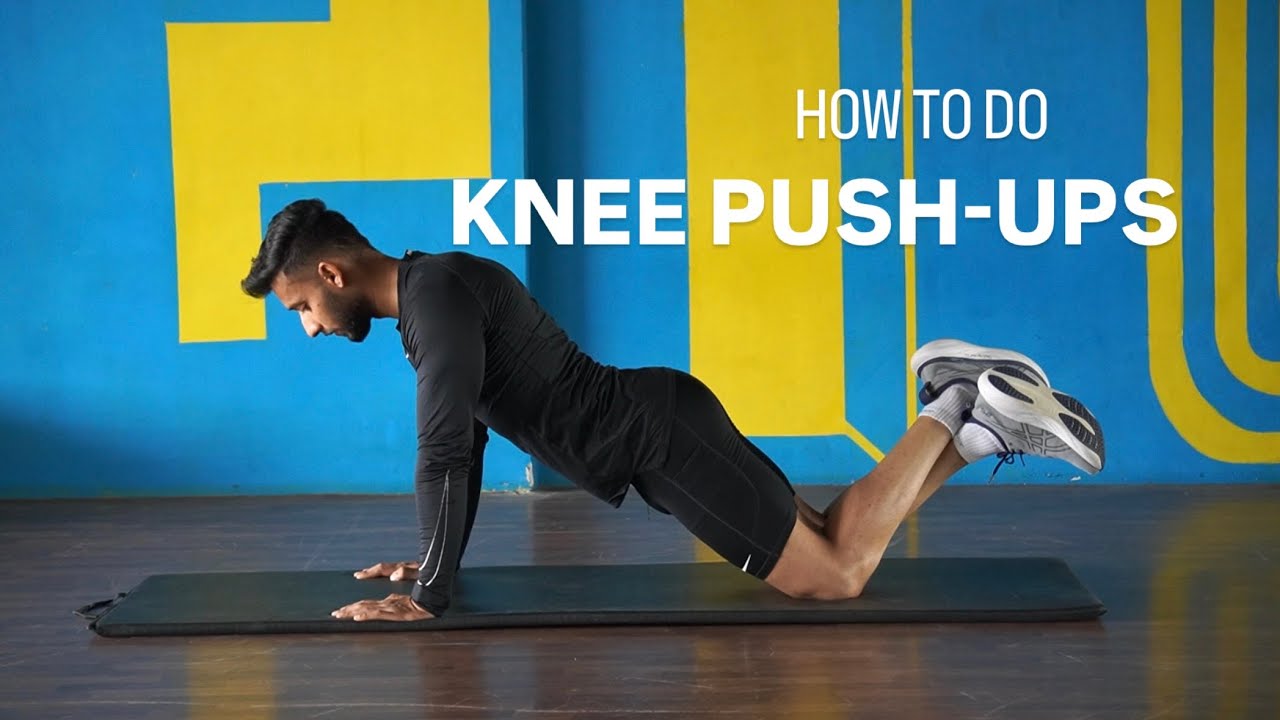
Execution & Focus: Lower to the mat on your knees, keeping your body in a straight line from knees to shoulders. Lower your chest toward the floor with elbows tucked at a 45-degree angle, then press upward forcefully.
Progressions & Scalability: Beginners can regress the movement via wall push-ups or elevated surface presses (using a couch or sturdy bench). Advanced practitioners can incorporate standard toe push-ups or hybrid routines (e.g., executing one toe push-up followed by knee push-ups), progressively increasing the ratio of toe push-ups every two to three weeks to drive progressive overload.
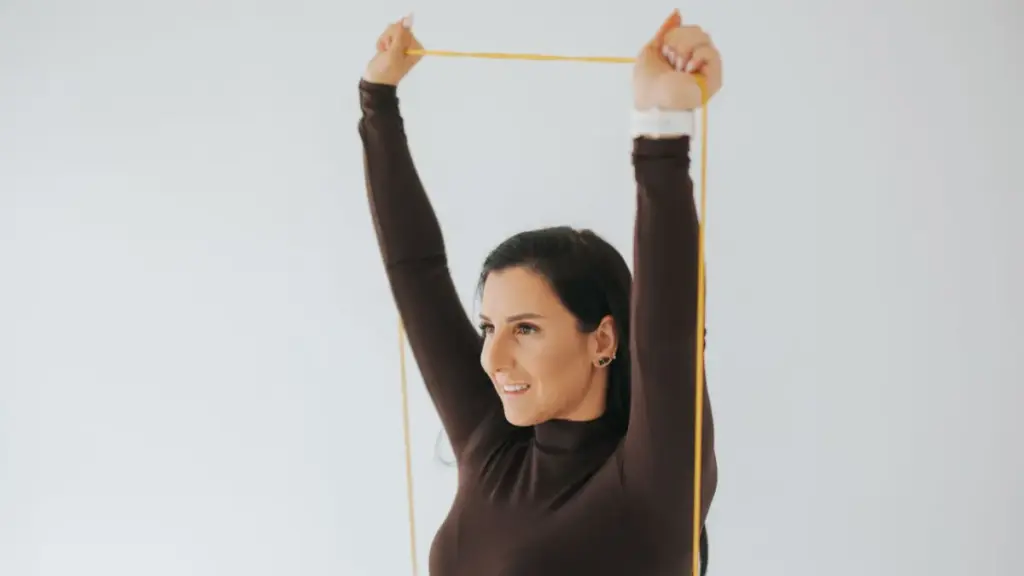
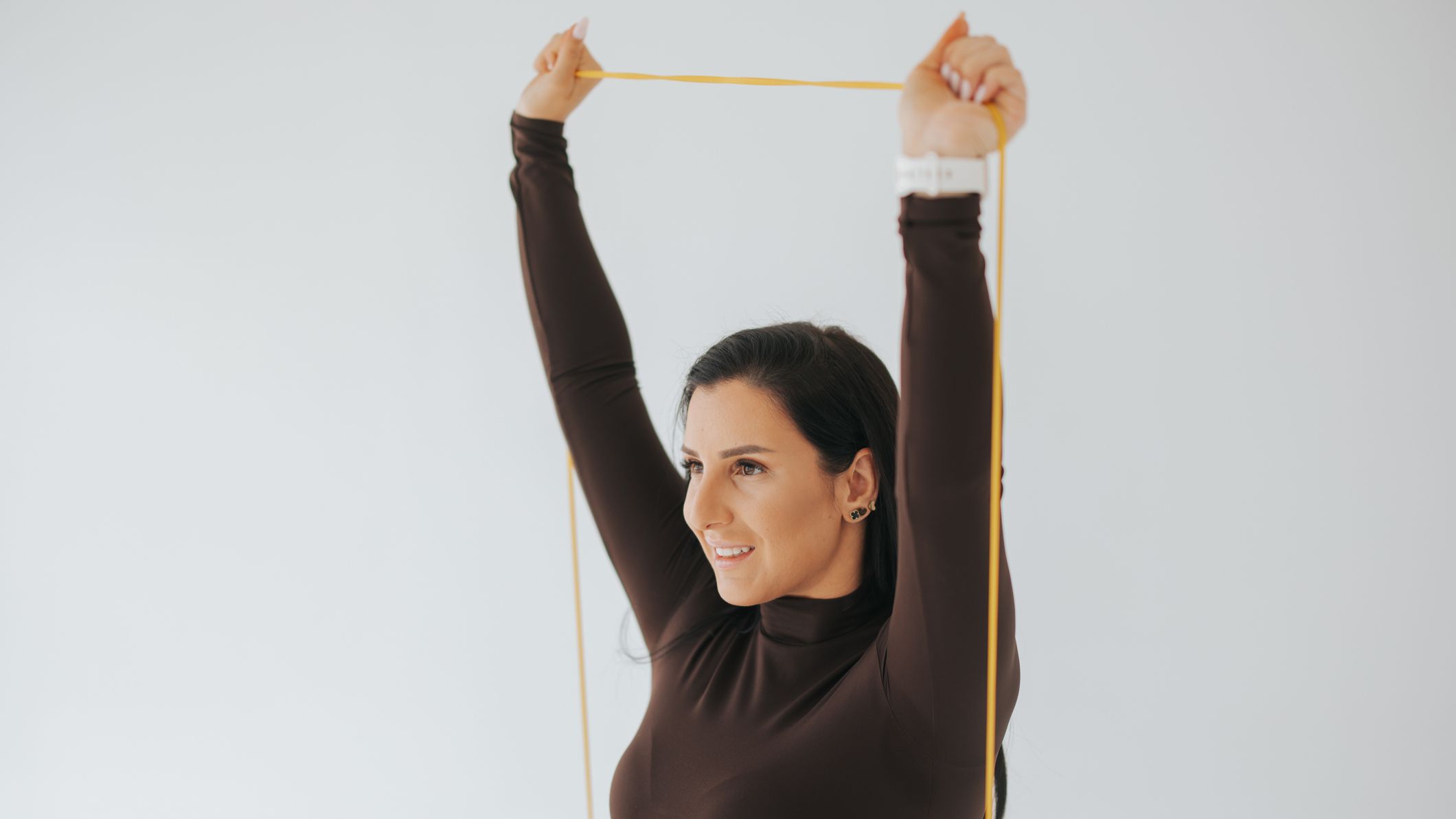
Execution & Focus: Kneel tall on both ends of the resistance band, bringing your hands to shoulder height with palms facing forward or inward. Press the handles overhead until your arms are fully extended, then lower with control.
Physiological Impact: Kneeling eliminates the assistance of the lower body, forcing the anterior deltoids, triceps, and core musculature to work in unison to stabilize the spine against the upward vertical load.
Execution & Focus: Execute rapid, bodyweight air squats continuously for 30 seconds, focusing on depth, chest elevation, and explosive rising mechanics.
Physiological Impact: Added on days when time permits, this metabolic finisher spikes the heart rate, provides a cardiovascular challenge, and thoroughly fatigues the quadriceps, hamstrings, and glutes.
Supporting Context & Metrics: Why Elastic Resistance Works
To understand the efficacy of resistance bands, one must examine the physics of elastic resistance versus traditional gravity-based free weights. Dumbbells and barbells exert a constant vertical load dictated by gravity; a 20-pound dumbbell weighs 20 pounds at the bottom, middle, and top of a curl.
Resistance bands, however, operate on variable resistance profiles. As the band stretches, the tension increases exponentially. This matches the human strength curve more effectively in many movements—muscles are typically stronger at the top of a range of motion, and the band provides peak resistance precisely at that point.
Comparative Metrics of Minimalist Home Training
Space Efficiency: Requires less than 4 square feet of floor space compared to a dedicated home gym or commercial facility footprint.
Financial Economy: High-quality resistance band sets cost a fraction of a single month’s gym membership or a full set of adjustable dumbbells.
Injury Mitigation: Elastic resistance reduces sheer stress on joint capsules at the initiation of movements, making it an exceptional modality for joint rehabilitation and longevity.
Official Statements & Expert Perspectives
Physical therapists, strength and conditioning coaches, and behavioral psychologists increasingly champion minimalist, equipment-light training modalities for populations struggling with time constraints.
"The greatest workout in the world is completely useless if you do not consistently perform it," notes Dr. Elena Vance, a specialist in clinical exercise physiology. "When parents or busy professionals strip away the logistical friction—driving to the gym, waiting for equipment, setting up heavy plates—they lower the psychological barrier to entry. Resistance bands offer a scalable, highly effective mechanical stimulus that triggers muscular adaptation without demanding an hour of preparation."
Furthermore, pediatric safety advocates praise the shift away from loose, heavy iron weights in domestic environments. Heavy dumbbells left in living rooms or multi-purpose spaces represent documented tipping and crushing hazards for toddlers and young children. Substituting heavy steel with pliable, easily storable elastic bands removes domestic safety risks entirely while keeping fitness equipment accessible.
Future Outlook: The Evolution of Accessible Fitness
As remote work persists, hybrid schedules expand, and domestic responsibilities continue to intensify, the fitness industry is witnessing a permanent decentralization. Consumers are moving away from the all-or-nothing mindset that dictates that a workout must take 60 to 90 minutes inside a traditional facility to be "valid."
The future of functional health lies in micro-workouts, movement snacking, and adaptable tools like resistance bands. By proving that major muscle hypertrophy, core stability, and cardiovascular endurance can be forged in a 20-minute window right in the living room, this methodology democratizes fitness. For the parent watching children, the executive between Zoom calls, or the traveler on the road, the message is clear: consistency trumps complexity, and strength is always within arm’s reach.